Lamborghini Temerario Spyder: 907 HP and No Roof
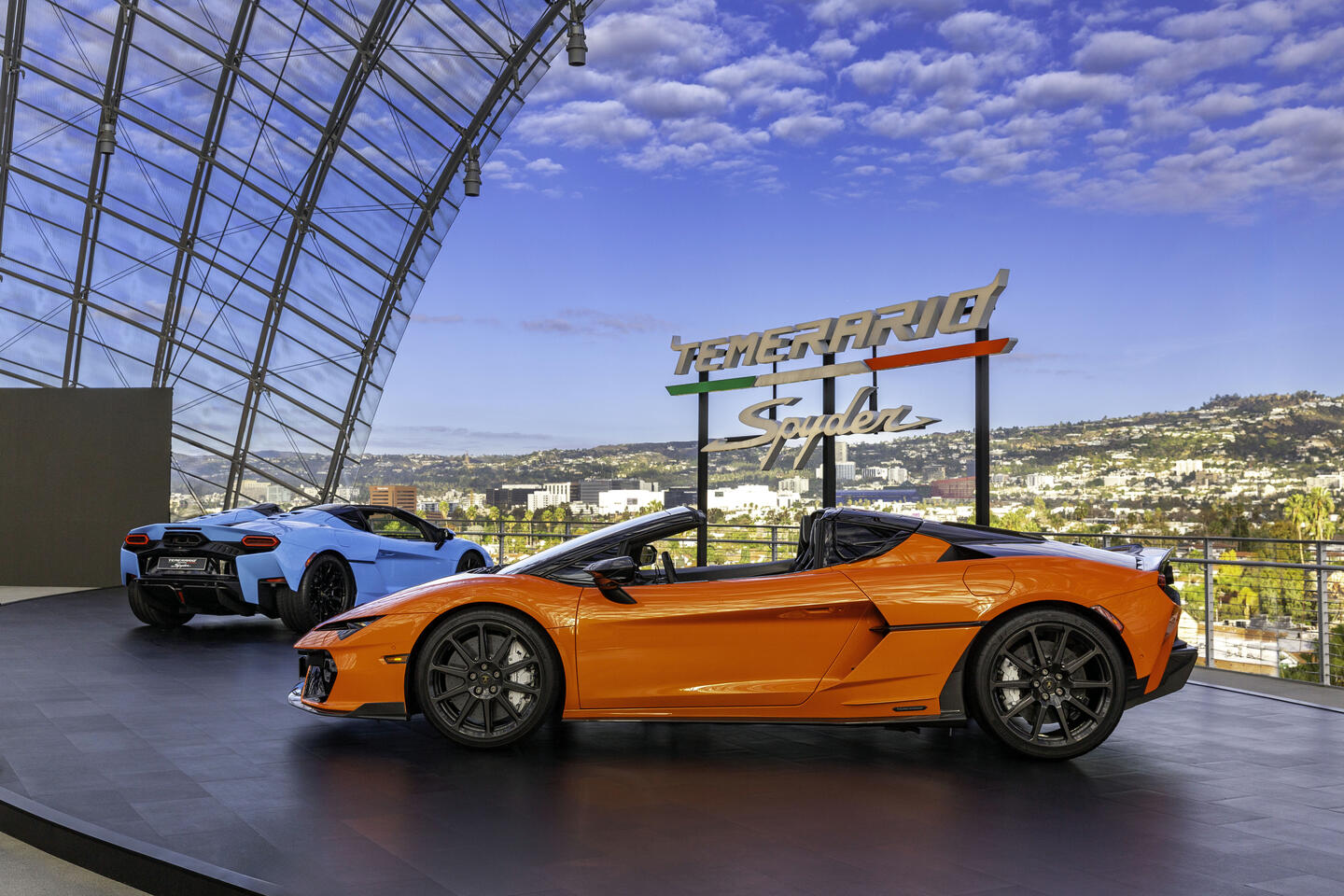
The Lamborghini Temerario Spyder arrives with 907 horsepower, a 10,000-rpm V8 and the brand’s first retractable hardtop, revealed in Los Angeles.
By Nik J. Miles | Test Miles
Lamborghini has found a new way to make a 907-horsepower supercar more entertaining: remove the roof and let the driver hear absolutely everything.
Unveiled at the Academy Museum of Motion Pictures in Los Angeles on November 18, the 2027 Lamborghini Temerario Spyder combines a twin-turbocharged V8, three electric motors and an electrically operated folding hardtop. It replaces the Huracán Spyder’s familiar open-air formula with something considerably more complicated, and potentially more rewarding.
The headline numbers are properly outrageous. Lamborghini claims 0–62 mph in 2.8 seconds, 0–124 mph in 7.3 seconds and a top speed of approximately 213 mph. Those are manufacturer figures, not independent Test Miles results.
Lamborghini Temerario Spyder Gets a Clever New Roof
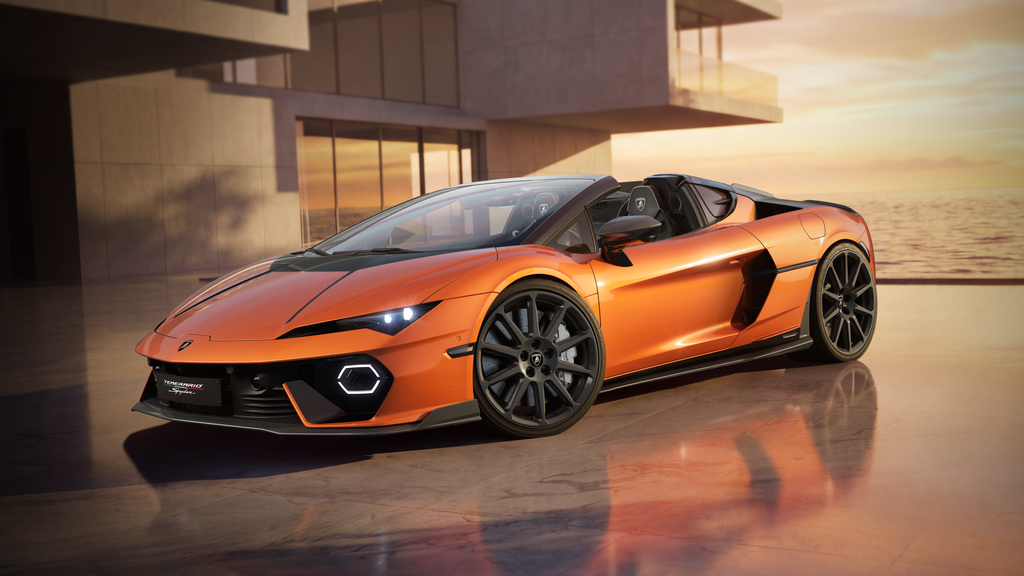
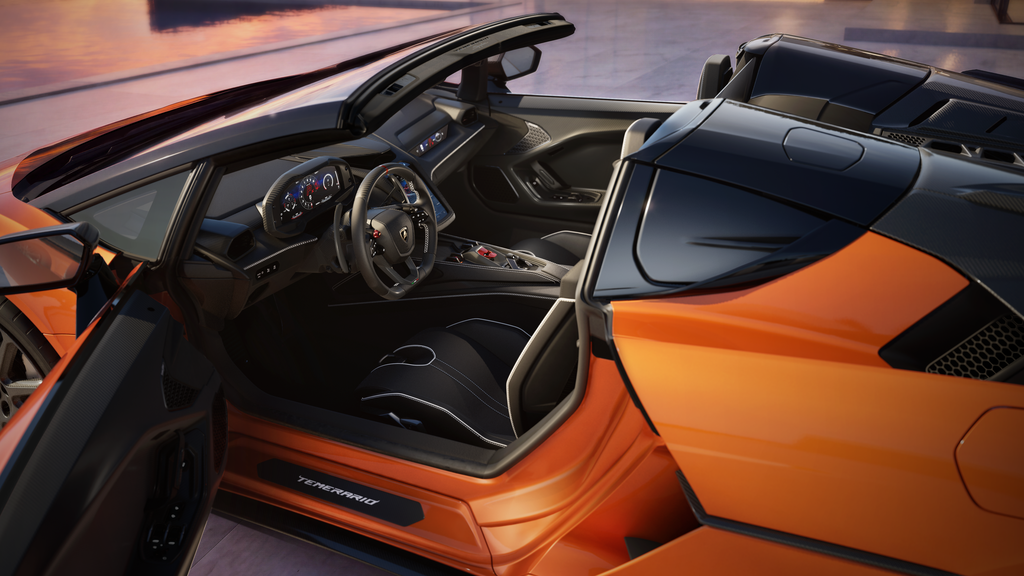
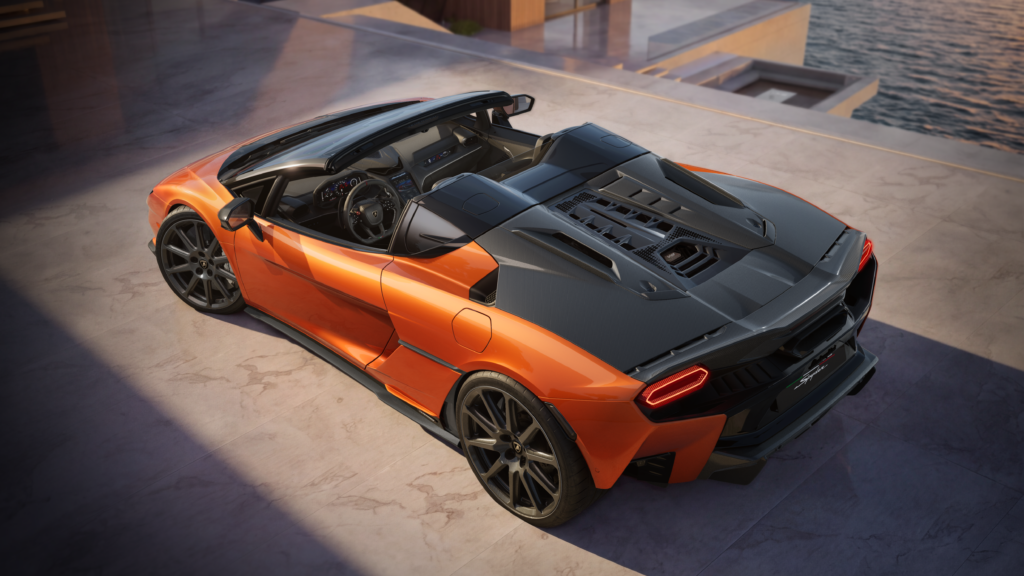
For the first time in Lamborghini’s history, one of its Spyders uses a fully retractable hardtop. Previous open-top models relied on removable roof panels or folding soft tops. The Temerario introduces a mechanically operated metal roof that preserves the coupe’s sleek shape when closed.
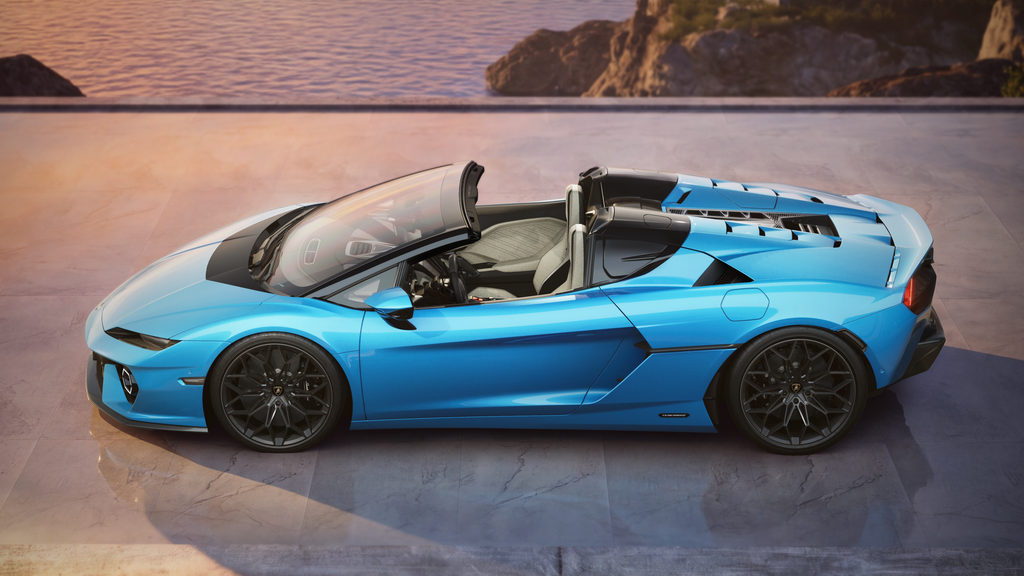
Rather than folding horizontally into the rear bodywork, the roof stores vertically behind the seats. Ten electric actuators control the patented mechanism, eliminating a conventional electro-hydraulic system.
According to Lamborghini, this vertical arrangement allows the vehicle’s center of gravity to sit approximately 3 millimeters lower with the roof open. That sounds microscopic, but managing weight placement matters in a car designed for extraordinary cornering forces.
The hardtop also has a more obvious advantage: it allows owners to enjoy open-air driving without permanently accepting the wind noise and exposure associated with a fabric roof.
An electronically adjustable rear window provides another useful feature. Drivers can regulate how much engine sound enters the cabin, even when the roof is raised.
For a machine with a 10,000-rpm V8, that might be the most important window in the entire car.
You may also enjoy: Lamborghini Temerario Teaser: Is the Roof Coming Off?
907 Horsepower and an Engine That Revs to 10,000 RPM
Behind the passenger compartment sits a 4.0-liter twin-turbocharged V8 producing approximately 789 horsepower on its own. Three axial-flux electric motors supplement the gasoline engine, creating a combined output of 920 metric horsepower, equivalent to approximately 907 U.S. horsepower.
Two electric motors power the front axle while a third works with the rear drivetrain. This configuration provides electrified all-wheel drive and allows the vehicle to manage power distribution between the axles.
The V8 uses a flat-plane crankshaft, titanium connecting rods and twin turbochargers. Its normal maximum engine speed reaches 10,000 rpm, increasing to 10,250 rpm under Launch Control conditions.
These are exceptionally high engine speeds for a turbocharged production V8, especially one installed in an open-top road car.
The electric-drive system adds immediate motor response while the combustion engine supplies the mechanical character Lamborghini considers essential.
Unlike a conventional hybrid vehicle, the Temerario’s plug-in hybrid architecture can also use externally supplied electricity. The Department of Energy and EPA explanation of plug-in hybrids helps clarify why electrical assistance and gasoline performance can coexist.
The engineering matters more than the enormous power figure. Electric motors help fill gaps in engine response and support traction, while the V8 remains the centerpiece of the driving experience.
You may also enjoy: Dubai Police Lamborghini Temerario Has 907 HP and a Mission
What Happens When You Remove a Supercar’s Roof?
Removing a fixed roof creates an engineering problem. A closed vehicle can use its roof as part of its structural system, while a convertible must achieve the necessary stiffness through its remaining body structure.
Lamborghini says the Temerario Spyder’s aluminum spaceframe provides 6 percent greater static torsional rigidity and 9 percent greater dynamic bending stiffness than the previous Huracán Spyder.
That comparison is encouraging, although it doesn’t establish how the new Spyder compares directly with the Temerario coupe. Nor does it replace independent driving evaluation.
The broader challenge is controlling body movement, suspension behavior and aerodynamic turbulence without compromising the open-air experience.
Lamborghini says suspension development reduces secondary vibrations on uneven road surfaces by 20 percent. Wind management also receives special attention around the windshield and rear cabin structures.
You may also like:
The tires remain critical to transmitting all that performance to the road. Lamborghini specifies Bridgestone tire options, while carbon-ceramic brakes include ten-piston front calipers.
You may also enjoy: Lamborghini Temerario Tricolore Is a Bespoke Blueprint
A Surprisingly Practical Side to a 213-MPH Convertible
Practicality is rarely the first consideration when purchasing a Lamborghini, but the company has made several improvements worth examining.
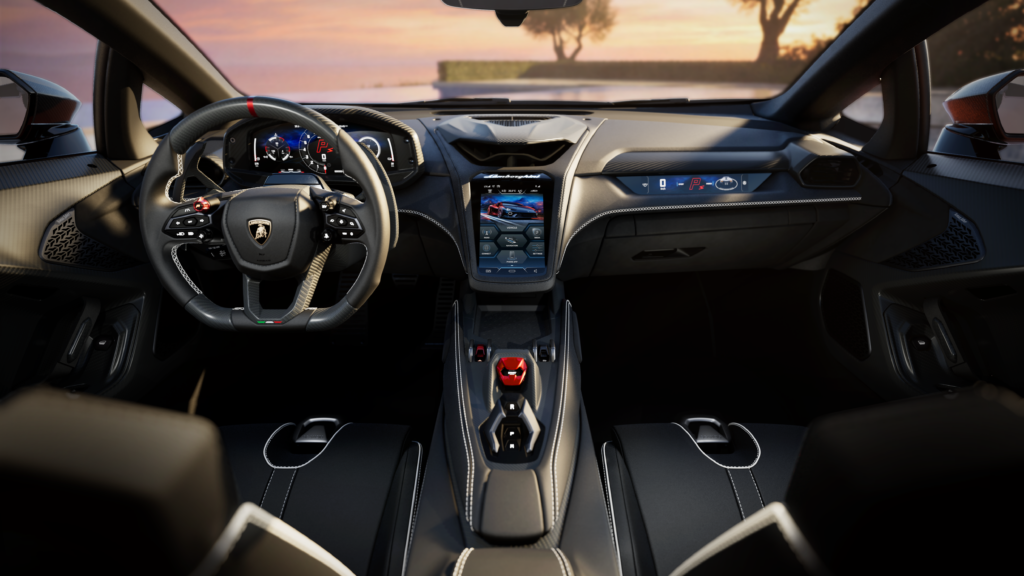
Compared with the Huracán EVO Spyder, the Temerario Spyder offers approximately 1.8 inches more legroom and nearly 0.9 inch more headroom. Lamborghini says the cabin can accommodate occupants approaching 6 feet 7 inches tall.
There is also a three-level neck warmer built into the seats, allowing occupants to enjoy roof-down driving in cooler conditions. The front luggage compartment provides approximately 4 cubic feet of storage.
Buyers can specify an optional Sonus faber sound system, although the available Akrapovič titanium exhaust may be the more appropriate soundtrack.
The optional exhaust weighs approximately 25 pounds, according to Lamborghini, and reduces exhaust-system weight by 12 percent compared with the standard arrangement.
The Spyder also offers extensive Ad Personam personalization, with approximately 400 exterior colors and numerous interior finishes.
Anyone considering ownership should also investigate battery servicing, high-voltage component coverage and the maintenance requirements of a complex hybrid supercar. The Department of Energy’s electric and hybrid maintenance guidance provides useful background, while NHTSA’s recall database is a useful ownership resource as vehicles enter service.
You may also enjoy: Lamborghini Monterey Car Week: Miura Meets 801-HP Urus

How Much Does the 2027 Lamborghini Temerario Spyder Cost?
Car and Driver reports a starting U.S. price of $390,900, with orders opening November 18, 2026, and initial customer deliveries expected in spring 2027. Buyers should confirm destination charges, options and final purchase pricing with Lamborghini.
That puts the Temerario Spyder firmly into the territory occupied by the Ferrari 296 GTS and McLaren Artura Spider. All three use electrification to deliver extraordinary performance, but each makes different decisions about engine character, styling and the driver’s relationship with the machinery.
The Lamborghini’s appeal includes the distinctive sound and rev range of its V8, dramatic bodywork and a more versatile retractable roof.
Fuel economy figures for the Spyder remain in the approval stage. Once ratings become available, buyers should compare the vehicle’s gasoline and electricity consumption using the EPA plug-in hybrid fuel economy label, rather than assuming hybrid technology guarantees economical motoring.
There are also compromises. The folding roof introduces additional mechanical complexity, and its long-term reliability remains unproven. Extraordinary performance brings significant tire, brake and insurance considerations.
At this price, buyers should expect both remarkable engineering and a careful explanation of how that engineering will be supported throughout ownership.
You may also enjoy: Lamborghini Cancels Electric Supercar, Saves the V12
Why Lamborghini Chose Los Angeles
The California unveiling was deliberate. Lamborghini identifies the United States as its largest global market, with Southern California particularly important for open-top supercars.
The November reveal also celebrates 50 years since the introduction of the Lamborghini Silhouette in 1976, the company’s first series-production open-top model.
For Lamborghini, the Temerario Spyder illustrates its current performance philosophy. Electric motors are becoming increasingly important, but the emotional character of a powerful combustion engine remains central to the product.
There is a convincing argument for that approach. At this level, buyers already have more acceleration than they could realistically use on public roads. What separates one expensive supercar from another is the experience of driving it.
The Temerario Spyder promises something worth investigating: the combined response of electric motors, a spectacular high-revving V8 and the opportunity to hear that engine without a roof between you and the outside world.
The unanswered questions concern real-world refinement, roof durability, driving feel and how much of the coupe’s precision survives the conversion to a Spyder.
Those deserve a proper road test. Until then, Lamborghini has created a fascinating proposition: a convertible with more than 900 horsepower, enough engineering to make a Formula One garage feel under-equipped, and a roof that can politely remove itself when the weather improves.