Why the Rolls-Royce Luxury Experience Is the Real Product
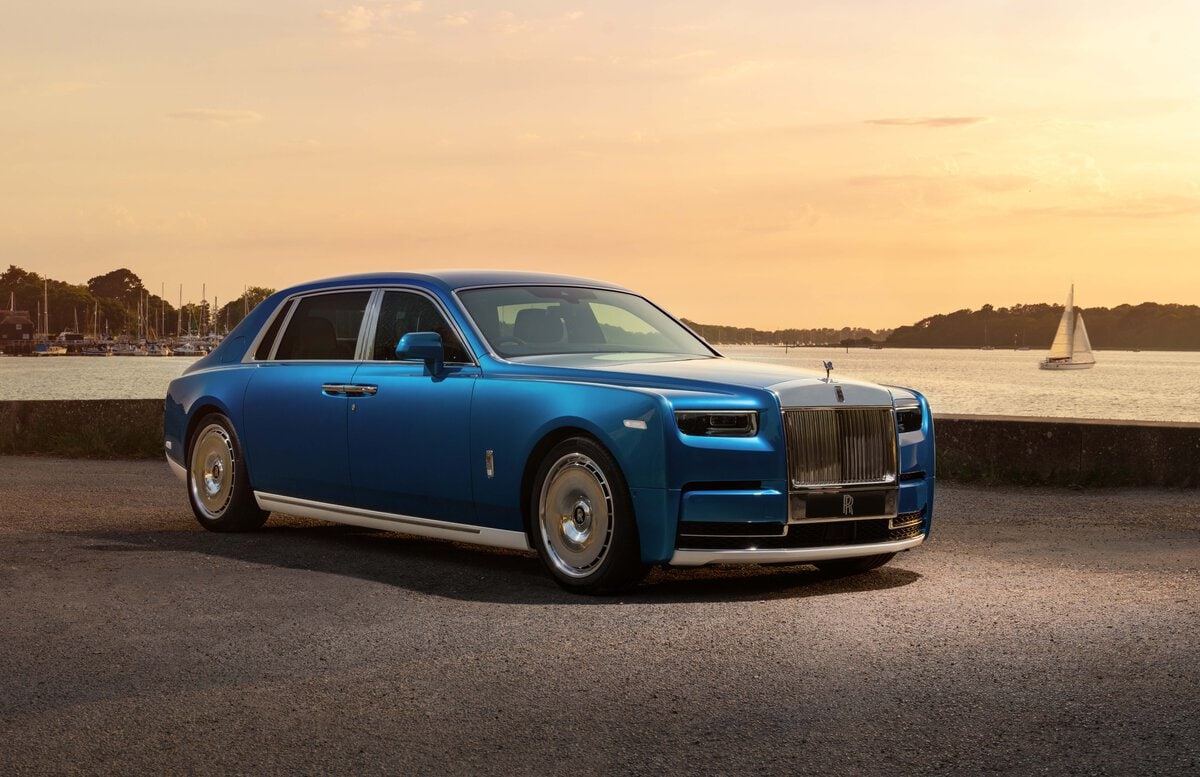
The Rolls-Royce Luxury Experience turns commissioning, craftsmanship and anticipation into a product that may matter more than the car.
Most luxury automakers sell vehicles, even when the showroom language suggests something grander. Rolls-Royce increasingly behaves as though the automobile is only the physical center of a much larger proposition. After spending time with Chief Executive Chris Brownridge, I came away thinking the company may be right.
The familiar Rolls-Royce qualities still matter. The cabin must be quiet, the materials must feel extraordinary, and the craftsmanship must hold up under the sort of scrutiny that comes with a very large check. Yet Brownridge repeatedly returned to relationships, access, anticipation and memory rather than horsepower or acceleration. His argument was that “the world of Rolls-Royce isn’t just about motor cars.”
That changes the question. Instead of asking only what a Rolls-Royce buyer receives on delivery day, it is more revealing to ask what the client experiences before the car arrives and what remains after the keys are handed over. At this end of the market, the story surrounding the automobile is becoming part of the automobile’s value.
You may also enjoy:
The Rolls-Royce Luxury Experience Starts Before Delivery
Many premium brands concentrate their theater around the sale. There is the elegant showroom, the careful reveal and perhaps a branded cover pulled away with suitable ceremony. Rolls-Royce is stretching that moment into a relationship that can begin months or years earlier and continue long after the finished car leaves Goodwood.
Brownridge described a broader luxury world involving hospitality, travel and carefully managed contact with the company. The objective, as he put it, is to make “every moment the client spends with us” enjoyable. That may sound like polished corporate language, but Rolls-Royce has built physical spaces and business programs around it.
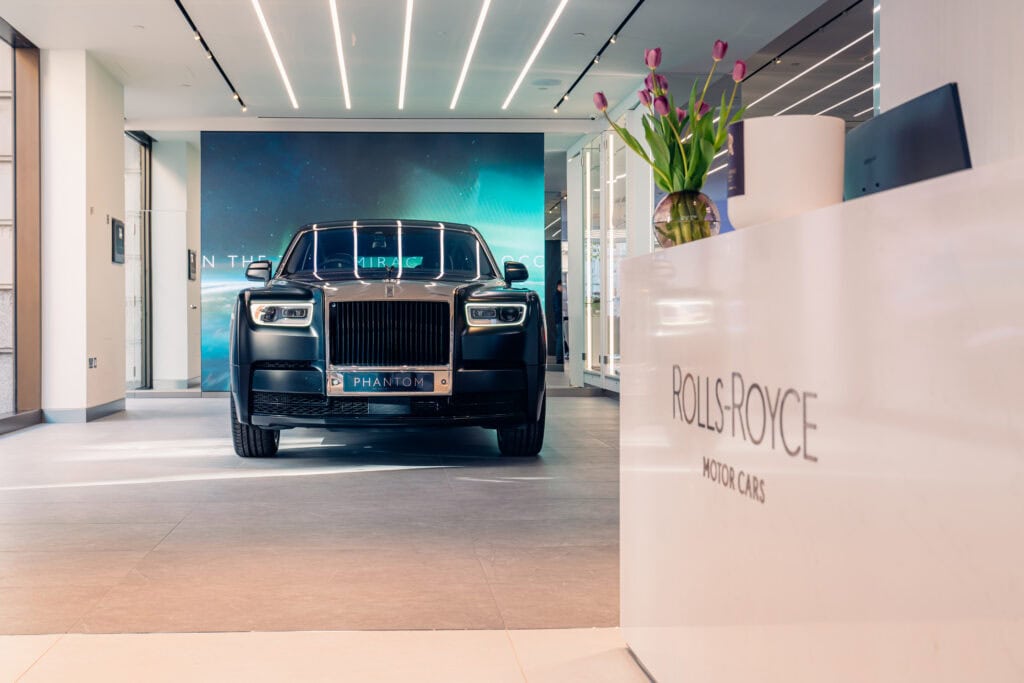
The clearest evidence is its Private Office network, where clients can meet directly with designers and client-experience specialists. These are not ordinary retail appointments dressed up with better coffee. The conversation can start with a place, a memory, a material, a family story or an artistic reference, then develop into a commission whose most important details may never appear on a public options list.
There is also hard business logic beneath the soft language. Rolls-Royce reported that the value of Bespoke content in each motor car rose 10 percent in 2024, a record, while the company committed more than £300 million to extend its Goodwood facility for more complex Bespoke and Coachbuild work. That investment was not framed as a race for mass production. It was a bet that deeper personalization and a richer client relationship can create more value than simply building more cars. The Rolls-Royce Luxury Experience, in this reading, is not an ornamental extra. It is a value strategy.
You may also enjoy: Why Rolls-Royce Project Nightingale Is Bigger Than a Car
Waiting Becomes Part of the Value
Modern commerce has trained us to treat waiting as a failure. We click, swipe and expect a package by morning, while any delay generates a tracking alert and a small personal crisis. Rolls-Royce is moving deliberately in the other direction, asking clients to see time as evidence of care rather than evidence of inefficiency.
“The best things in life are worth waiting for,” Brownridge said. In the context of a major commission, the wait can include visits to Goodwood, conversations with designers, private previews, material reviews and access to parts of the development process that most customers never see. The client is not simply sitting beside an empty garage bay and staring at a calendar.
Research into experiential purchases helps explain why that approach can work. Studies have found that anticipation can be more pleasurable when people are waiting for an experience rather than a possession. Rolls-Royce effectively combines the two, turning the creation of a physical object into a sequence of experiences that begins well before ownership.
There is an obvious caution here. Artificial scarcity and needless delay can masquerade as exclusivity, and no amount of champagne can make poor execution feel special. Rolls-Royce’s version is persuasive only when the time is genuinely used for design, engineering, craft and access that would be impossible in a conventional production schedule.
That distinction matters. Patience becomes valuable when clients can see what it enables and feel included in the process. The anticipation is not empty space between payment and delivery. It becomes one of the things being purchased.
You may also enjoy: Rolls-Royce Phantom Centenary: Woodwork Reimagined
Private Offices Turn Buyers Into Participants
Rolls-Royce now has Private Offices in Goodwood, Dubai, Shanghai, New York and Seoul. The New York location, for example, gives North American clients direct access to a U.S.-based designer and a specialist client-experience manager. The purpose is to understand not merely what color a customer likes, but what the finished commission is supposed to mean.
This is where the company’s vocabulary is important. Rolls-Royce generally calls the person ordering a car a client, and the word fits the relationship better than buyer. A buyer selects from what exists. A client enters a process with people whose expertise shapes an outcome that did not previously exist in quite that form.
The difference is not unlimited consumer control. The strongest commissions are collaborations, with craftspeople and designers interpreting an idea through materials, proportion and technique. A client might bring the emotional starting point, but the credibility of the result depends on specialists knowing when to encourage an idea, when to refine it and when to say that something will not work.
Brownridge said luxury consumption is moving away from simply having things and toward “creating experiences and memories that you can share.” Academic research gives that observation substance. Experiential purchases tend to become more closely tied to identity and social connection than material purchases alone, especially when people can retell the story.
A deeply personalized Rolls-Royce is both object and story. Its paint may recall a particular coastline, its veneer may reference a family property, or its embroidery may capture a private symbol. The owner receives a car, but also a narrative involving the people who translated that reference into something tangible.
You may also enjoy: Rolls-Royce Bespoke Boom: $380M Goodwood Expansion
Project Nightingale Makes the Strategy Concrete
Project Nightingale is the clearest expression of this philosophy. It is the first Rolls-Royce Coachbuild Collection, an open-top, two-seat electric motor car limited to 100 examples and built by hand at Goodwood. At 5.76 meters long, it is almost the length of a Phantom, but its significance is not best explained with a tape measure.
The car and the surrounding program were conceived together. Rolls-Royce says participating clients receive access to closed testing facilities, inner design studios, master craftspeople and private events connected to the project’s creative story. That makes the finished automobile one chapter in a multi-year experience rather than the single event around which everything else revolves.
Brownridge described the car itself as “the masterpiece,” which is an important choice of words. The experience does not replace the product. It increases the client’s understanding of the product, showing the decisions, failed attempts, human skills and technical work hidden beneath a finished surface that might otherwise appear effortless.
He also spoke about giving clients “behind the curtain experiences and insights” as the project develops. That access is difficult to copy because it depends on institutional confidence. A brand must be willing to reveal how work is done without allowing the process to feel staged or turning confidential development into public entertainment.
Project Nightingale therefore functions as more than an ultra-rare vehicle. It is a demonstration of how Rolls-Royce thinks luxury can be packaged when the commission, the waiting, the access and the final object are designed as one continuous product. Most buyers will never be invited into that program, but the underlying idea can influence the rest of the brand.
You may also enjoy: Rolls-Royce Ghost Savile Row Has 250,000 Stitches
Craftsmanship Gives the Story Credibility
At Goodwood, visitors encounter the instruction to “strive for perfection.” It is a formidable phrase to place on a wall because everyone who walks past it is invited to judge whether the company lives up to it. Brownridge’s point was that Rolls-Royce employees work with that brief every day.
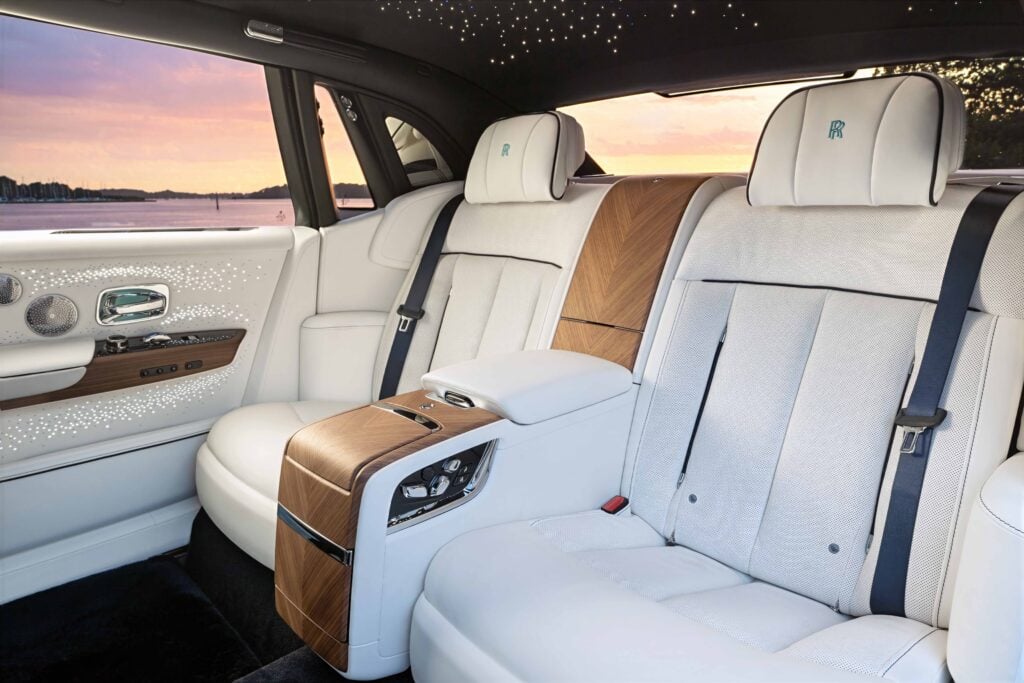
Craftsmanship is what prevents the broader experience from becoming mere hospitality. A private meeting has limited meaning unless the people on the other side of the table can translate an unusual request into wood, leather, metal, paint, embroidery or light. The human competence behind the commission gives the ceremony its legitimacy.
That work also explains why time matters. Some materials resist the idea drawn on paper. Some finishes require new processes, repeated trials or quality checks that cannot be hurried. Rolls-Royce has said that a small number of Project Nightingale details require entirely new manufacturing techniques that are still being developed, a useful reminder that bespoke work is engineering as well as decoration.
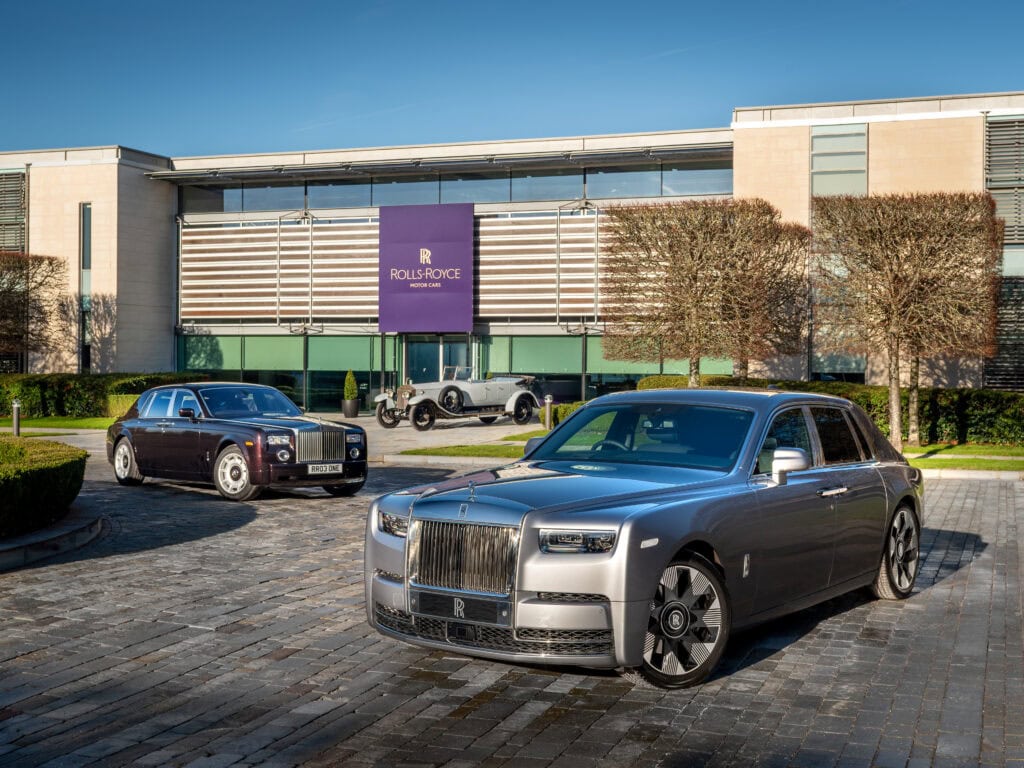
The company’s expansion at Goodwood reinforces that priority. Rolls-Royce said the site employed more than 2,500 people at the beginning of 2025, including manufacturing and craft specialists, and could produce up to 28 cars a day. Those figures are modest by automotive standards, but that is precisely the point: the facility is being developed to handle complexity and value, not ordinary industry volume.
Luxury brands often borrow the visual language of craft because handwork suggests rarity and care. Rolls-Royce has to go further by preserving real skills and developing new ones while helping clients understand the difference. The story works only if the seam, surface or inlay at the end of the process is as convincing as the story told about it.
You may also enjoy: Spectre Bailey: A Rolls-Royce About the Power of the Heart
What Rolls-Royce Is Really Selling
Spend enough time around Rolls-Royce and it becomes noticeable how rarely the most interesting conversations begin with horsepower. People discuss the inspiration behind a commission, the artisan who solved a difficult detail, the origin of a color or the experience of visiting Goodwood. Specifications remain necessary, but they are not what gives the car emotional staying power.
Most of us cannot remember the processor in last year’s phone. We do remember where we were when something mattered, who was present and how the moment felt. Research on experiential spending suggests that experiences endure partly because they live in memory and in the stories people tell others.
That does not mean the automobile has become irrelevant. A Rolls-Royce still has to deliver the calm, presence, engineering and material quality promised by its name. If the car were ordinary, the journey surrounding it would feel like a very elaborate distraction.
The more accurate conclusion is that Rolls-Royce is selling a layered product. One layer is the motor car. Another is the creative process, followed by access, anticipation, personal recognition and the memory of having participated in something rare. Competitors can match a performance number or add another screen more easily than they can reproduce a relationship built over years.
Brownridge sounded notably relaxed when asked what keeps him awake, answering, “Nothing keeps me up. I sleep very well indeed.” He added that every day in the role had been a wonderful experience and that the feeling had not diminished over time. A chief executive’s enthusiasm is not a substitute for results, but it is revealing that he described leadership through experience rather than production totals.
Perhaps that is the company’s real wager. The greatest luxury is no longer merely owning something scarce. It is being recognized, included and given a story that cannot be ordered with one click. The journey matters as much as the arrival, although this particular journey does come with considerably nicer leather.