Rolls-Royce Ghost Savile Row Has 250,000 Stitches
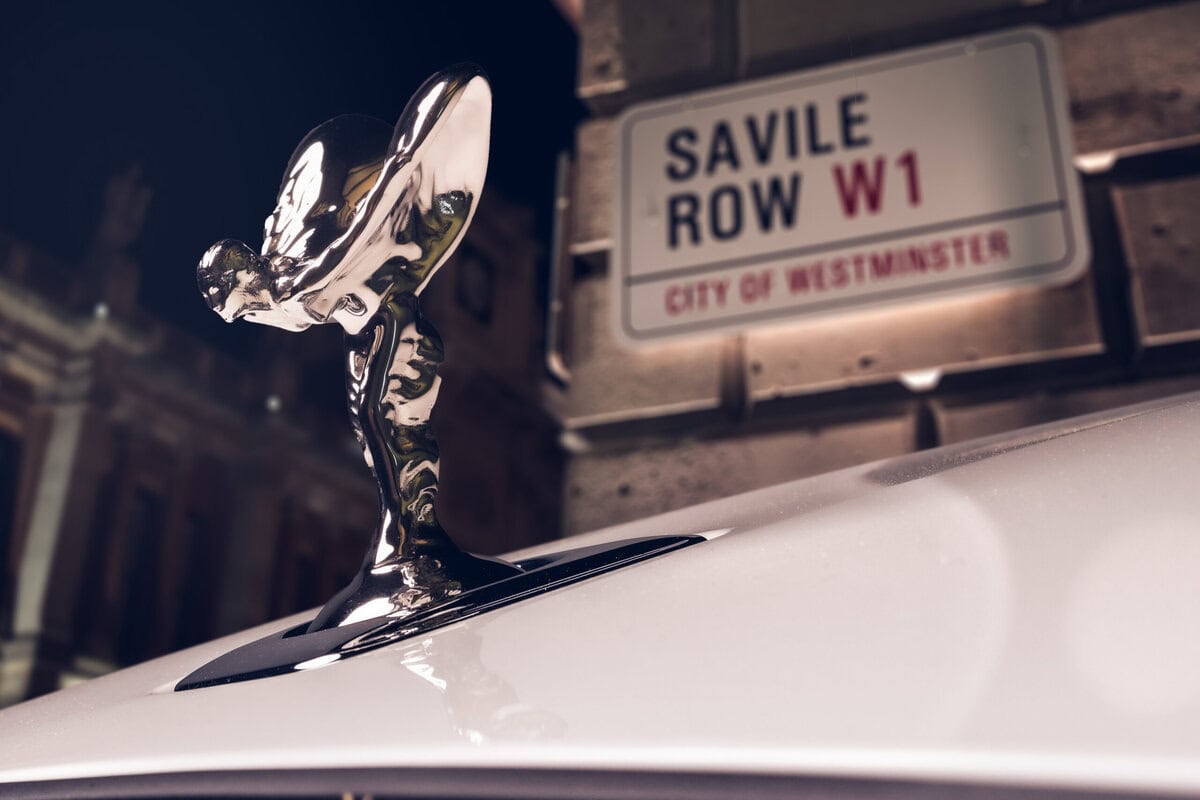
Rolls-Royce Ghost Savile Row hides 250,000 stitches inside a one-of-one Ghost inspired by Savile Row tailoring.
The Rolls-Royce Ghost Savile Row is the rare luxury car story that does not need a horsepower number to get attention. Its strongest detail is hidden beneath the rear center armrest: a private embroidery made from 250,000 stitches and more than 6,000 feet of thread.
That turns this one-of-one Ghost Extended commission into something easy to understand outside the car world. Rolls-Royce has not simply built another expensive sedan. It has created a car dressed like a bespoke Savile Row suit, complete with a navy-and-white exterior, pinstripe-inspired stitching, and a hidden flourish that echoes the colorful lining inside a tailored jacket.
That is why this story has traction. It blends luxury, fashion, British craftsmanship, and the modern hunger for personalization. In a market where plenty of expensive cars are fast, the Rolls-Royce Ghost Savile Row asks a better question: what happens when a car becomes personal style?
Why Rolls-Royce Project Nightingale Is Bigger Than a Car
Why the Rolls-Royce Ghost Savile Row Looks Like a Suit
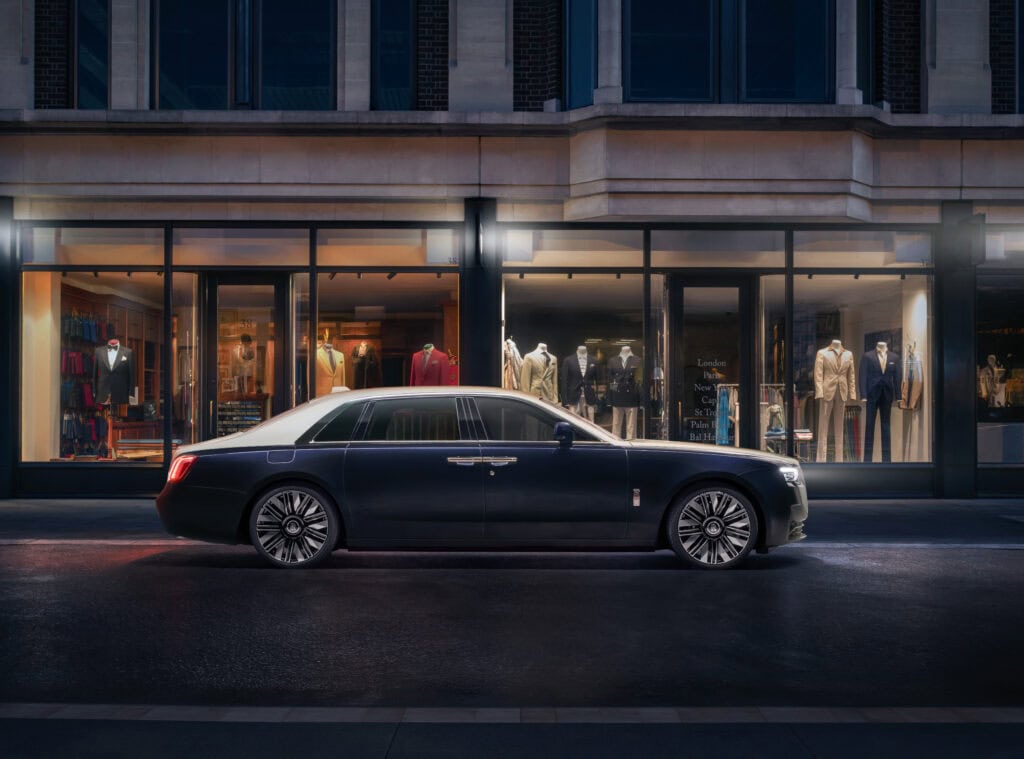
The exterior is the first clue. Rolls-Royce finished the car in Midnight Sapphire over English White, a two-tone combination meant to recall a navy suit with a crisp white dress shirt. It is not loud, and that is the point.
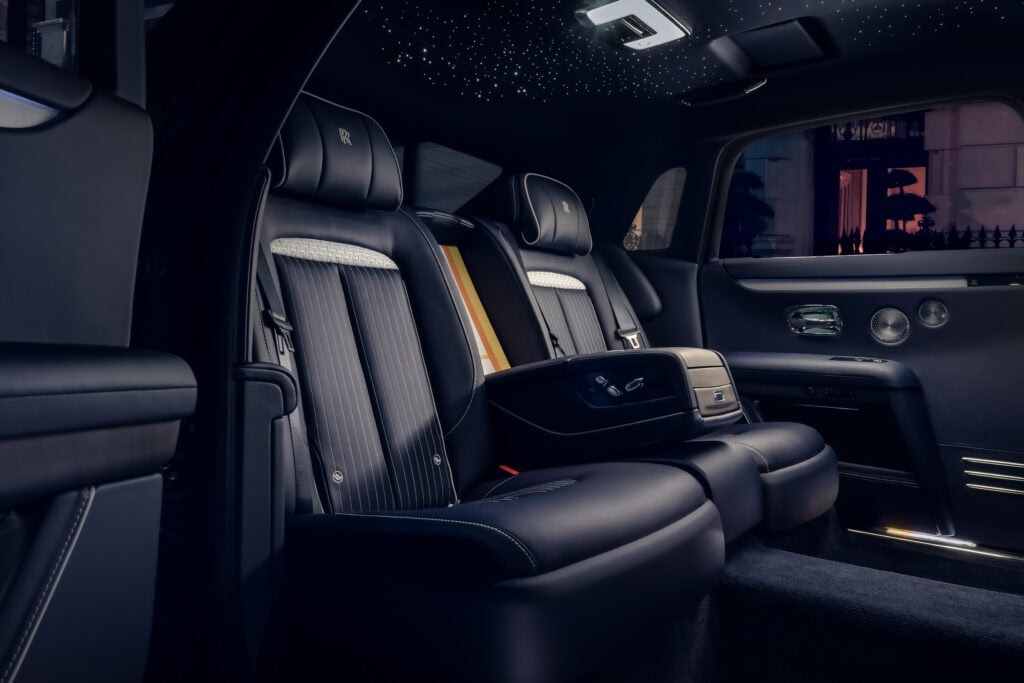
A unique Silver Featureline replaces the traditional coachline, giving the body a jewelry-like accent similar to cuff links or a dress watch. Inside, Navy Blue and Arctic White leather are paired with Open Pore White Wood and Black Wood veneers. Selby Gray stitching, piping, and embroidered RR monograms add definition. The seats use a Bespoke vertical run-stitch inspired by pinstriped suits, with more than 16,600 stitches on each Arctic White seat insert.
According to the official press release, the commission was informed by Savile Row tailoring traditions and brought to life by the Rolls-Royce Bespoke Collective.
This Rolls-Royce Blends Haute Couture with Bespoke Luxury
The Secret Detail Made From 250,000 Stitches
The best part of the Ghost Savile Row is the part most people will never see unless the owner chooses to reveal it. Lower the rear center armrest and a hidden embroidery appears, designed to recall the surprise of a colorful jacket lining.
The artwork shows the square trees in the courtyard at the Home of Rolls-Royce at Goodwood and the shadows they cast. Rolls-Royce says the stitch pattern was developed specifically for this car to make the design look and feel like woven fabric set into leather.
The numbers make the story travel. The embroidery uses seven colors, 250,000 stitches, and more than 6,000 feet of thread. It takes nine hours to complete and is described by Rolls-Royce as the most intricate single-frame embroidery the marque has ever produced.
This is luxury meant to reward the person inside, not the crowd outside. It is also exactly why the Rolls-Royce Ghost Savile Row works as more than a car story. You do not need to understand torque curves or trim strategy to understand hidden craftsmanship. Everyone understands the quiet thrill of a detail made just for one person.
Rolls-Royce Bespoke boom: $380M Goodwood expansion
Why Bespoke Luxury Is Becoming the Product
The Savile Row connection is more than a design theme. The word bespoke is closely tied to tailoring, where cloth was traditionally spoken for by an individual client. Rolls-Royce Bespoke uses the same idea for cars: the client’s vision comes first, then craftspeople turn it into something physical.
There is history here, too. Rolls-Royce opened its first London showroom in 1905 on Conduit Street, only steps from Savile Row. Co-founder Charles Rolls was known for his personal style, making the connection between the marque and the tailoring district feel like shared culture rather than a marketing costume.
That matters because ultra-luxury is moving beyond option lists. At normal dealerships, personalization might mean choosing paint, trim, or touchscreen wallpaper. At Rolls-Royce, it can mean turning taste into wood, leather, embroidery, metal, and memory.
Most readers will never commission a one-of-one Ghost Extended, and that is fine. The appeal of the Ghost Savile Row is cultural, not practical. It shows where the top of the luxury market is going when speed, screens, and status alone are no longer enough.
The lesson for the wider car world is simple. The more expensive cars become, the more buyers expect them to feel personal. Mainstream brands will keep looking for ways to make ordinary vehicles feel more specific to the people who buy them.
The Ghost Savile Row is not important because it solves a transportation problem. It is important because it turns transportation into identity. In a world full of cars trying to shout, this one whispers in Navy Blue leather, English White paint, and 250,000 hidden stitches.