Why the Lamborghini Miura SV Still Feels Out of This World
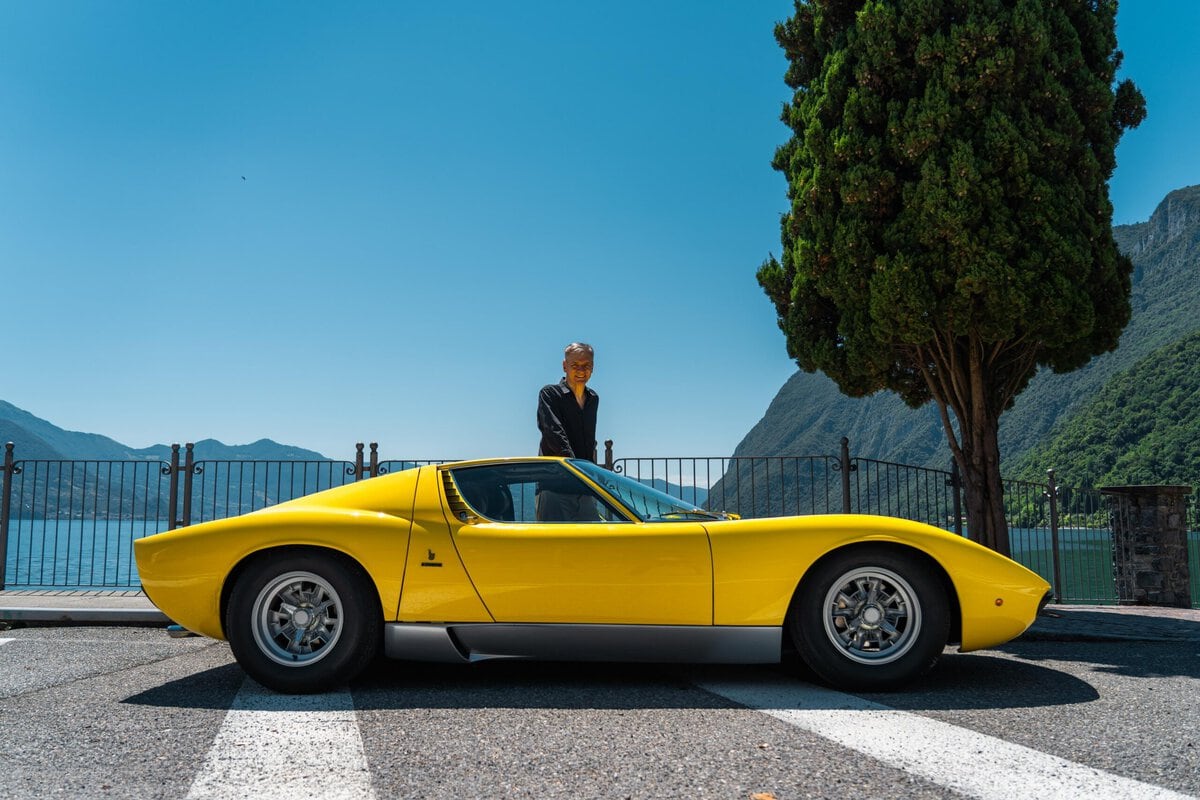
The Lamborghini Miura SV still feels out of this world at 55, as astronaut Paolo Nespoli celebrates the pioneering V12 supercar.
Why the Lamborghini Miura SV Still Matters at 55
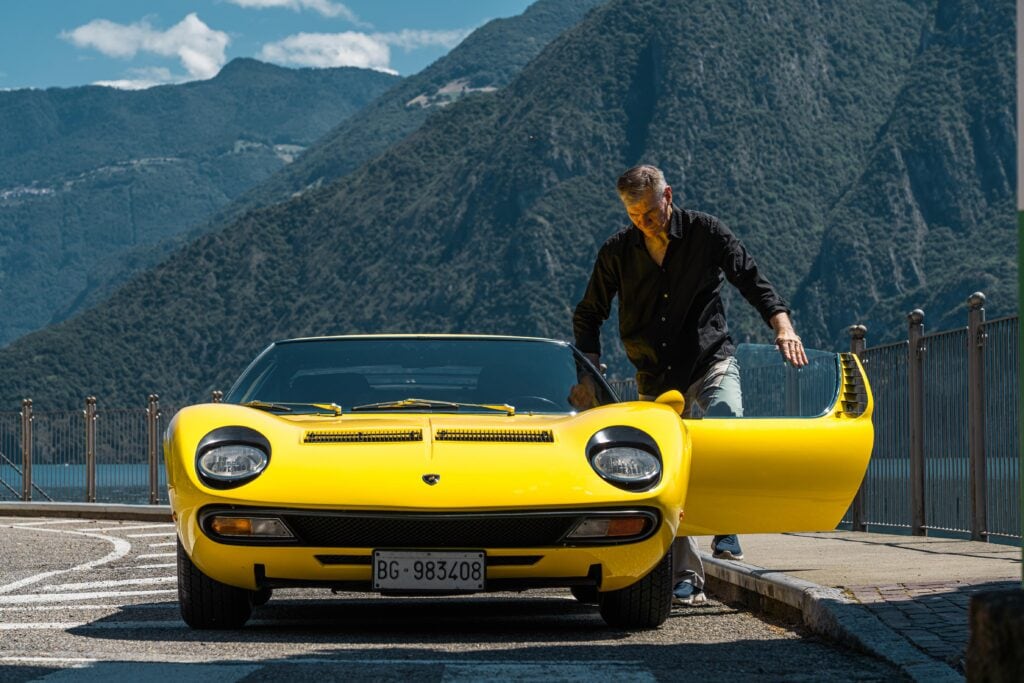
On Aug. 5, 2026, Lamborghini chose an astronaut, not a racing driver, to mark the Miura SV’s 55th anniversary. In the new short film “Beyond the Edge,” Italian astronaut Paolo Nespoli drives the final and most developed version of the car that helped establish the modern supercar. The pairing works because Nespoli understands machinery that asks humans to trust engineering at the edge of reason.
Nespoli was 12 when Apollo 11 put the first people on the moon in 1969. He says the moment convinced him to become an astronaut. Two years later, Lamborghini introduced the Miura SV, the last major evolution of a model revealed when the young automaker was still finding out how far it could push established ideas.
The timelines matter. The Miura debuted at the 1966 Geneva Motor Show, only three years after Automobili Lamborghini was founded. Its transverse V12 sat behind the occupants, its body was barely 43 inches tall, and its shape turned serious engineering into theater.
You may also enjoy: Lamborghini Miura Tribute: Only 99 Will Ever Exist
You may also enjoy this video:
An Astronaut Meets an Analog Supercar
The film places Nespoli and the Miura SV together under the theme “Beyond the Edge.” The European Space Agency records 313 days across his three missions, while Lamborghini rounds his career total to 300 days. He has traveled at more than 27,500 kilometers per hour and endured acceleration above 4 g. Those numbers belong to a different universe from a 1971 road car, but the connection is understandable. Both spacecraft and a Miura require faith in the people who designed, built and tested them. A Miura driver receives a steering wheel, three pedals and a gated shifter ready to cross-examine every input.
Nespoli says that even after 55 years, the engine, clutch, gearshift and steering make the car feel immediate. His most revealing observation is not about speed. “I always look to the future but driving the Miura SV I feel young again,” he says. That is exactly what a historic performance car should do: compress time without pretending time has stopped.
You may also enjoy: Lamborghini Temerario vs. Ducati Panigale V4
The Engineering Behind the Lamborghini Miura SV
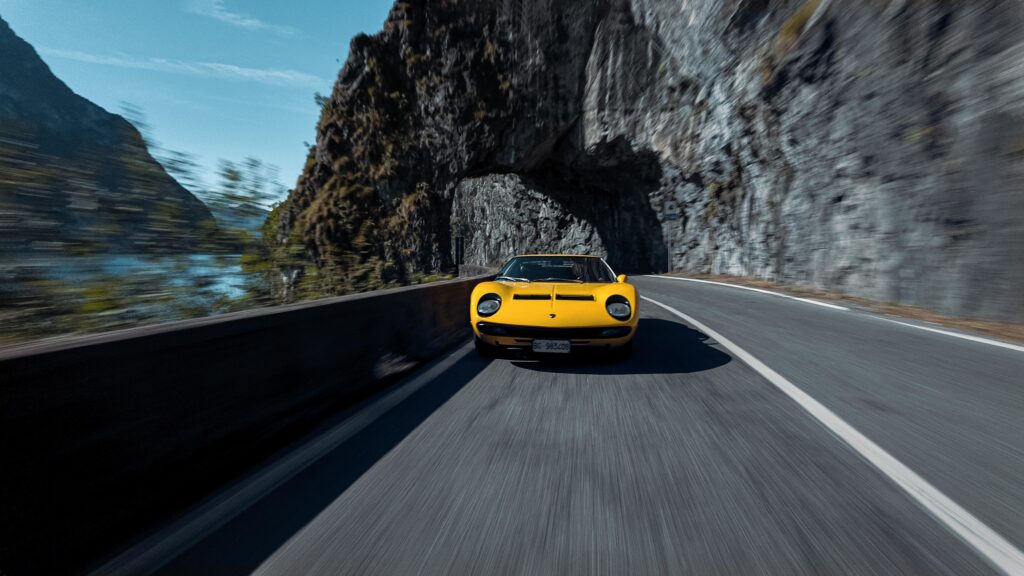
SV stands for Super Veloce, or “super fast,” but the important changes went beyond adding power. The 3.9-liter V12 produced 385 horsepower at 7,850 rpm, according to Lamborghini. The company claims a top speed above 290 kilometers per hour, or about 180 mph, and acceleration from zero to 100 km/h in less than 5.5 seconds. Those were extraordinary figures in 1971.
Engineers gave the car separate lubrication systems for the engine and transmission, replacing the shared oil circuit used before. They widened the rear track by nearly 130 millimeters, revised the rear suspension, strengthened the chassis and fitted wider rear wheels and tires. Ventilated disc brakes improved repeatability under hard use. Together, those changes made the SV more stable, controllable and durable, rather than merely faster.
The body told the same story with restraint. The famous “eyelashes” around the headlights disappeared, while wider rear fenders covered the enlarged footprint. The familiar silhouette remained, but the stance became more purposeful. The Miura had already appeared in a 1966 Museum of Modern Art exhibition examining function and automotive design. Lamborghini built 150 Miura SVs before regular production ended in 1973.
You may also enjoy: Aston Martin Valhalla Review: 1,064 HP Hybrid Supercar

Why Paolo Nespoli Is More Than a Cameo
Celebrity partnerships often ask the audience to admire two famous things occupying the same frame. Nespoli offers a stronger connection because his professional life was built around preparation, mechanical understanding and controlled risk. NASA explains g-force as acceleration measured against Earth’s gravity; more than 4 g means the body effectively experiences over four times its normal weight. That is not a metaphor for commitment. It is a physical load that equipment and human physiology must withstand together.
The International Space Station travels around Earth at roughly 17,500 mph, or about 28,000 km/h. At that speed, engineering is not decorative and confidence cannot be improvised. The Miura operates on a vastly smaller scale, yet Nespoli recognizes the same clarity of purpose in its mechanical controls. There is no touchscreen interpreting the clutch engagement, no algorithm disguising a clumsy shift and no electronic guardian quietly editing the driver’s ambition.
That does not make the SV safer or objectively better than a modern Lamborghini. It makes the feedback unusually honest. Nespoli’s presence helps explain why collectors value this car as more than a beautiful object: its sensations are inseparable from the solutions engineers chose 55 years ago.
You may also enjoy: Monterey Car Week 2025 Brings Bold Reveals
What the Film Says About Lamborghini Today
Lamborghini’s current range is fully hybrid, built around the Revuelto, Urus SE and Temerario. The technology has moved from carburetors and a gated five-speed manual to batteries, electric motors and software-managed performance. Yet the company still needs the Miura because new machinery gains meaning when buyers can trace where the ideas began.
“Beyond the Edge” is therefore less a history lesson than a statement of intent. It argues that progress depends on conviction, and that advanced engineering should change the driver’s perspective rather than simply improve a spreadsheet. The comparison with spaceflight is grand, but Lamborghini has rarely suffered from a shortage of altitude.
At 55, the Lamborghini Miura SV remains beautiful enough to stop a room and demanding enough to hold a driver’s full attention. Nespoli has viewed Earth from orbit at almost unimaginable speed. If a car can still alter his perspective after that, perhaps “out of this world” is not entirely marketing after all.
You may also enjoy: Lamborghini Summer Pop-Ups Follow Buyers on Vacation