Toyota and Mazda Just Built Their Millionth Car Together. I Went Inside Their American Factories.
By Sue Mead | TestMiles.com
From the world’s best-selling car to a million-vehicle milestone in Alabama, a journey through three American factories reveals how Toyota and Mazda are combining Japanese manufacturing traditions with American ingenuity.
A million vehicles. Two Japanese automakers. One American factory. And a celebration that tells a much bigger story about the future of building cars in the United States.
When Toyota invited me to visit three of its American manufacturing facilities, I expected to see the familiar choreography of modern automobile production: robots, assembly lines, sophisticated machinery and thousands of workers turning components into finished vehicles.
What I discovered was something more interesting.
There were two major celebrations, a remarkable manufacturing partnership between Toyota and Mazda, and a reminder that American automotive manufacturing is as much about people and communities as it is about steel, engines and production numbers.
Our itinerary included Toyota Motor Manufacturing Mississippi, the Mazda Toyota Manufacturing joint venture in Alabama, and Toyota’s massive engine manufacturing operation in Huntsville.
Each facility had its own story to tell. Together, they offered a fascinating look at Toyota’s American manufacturing footprint and the Japanese philosophy that helps drive it.
You may also enjoy:
Toyota Corolla Turns 60: An American Factory Celebrates a Global Icon
Our first stop was Toyota Motor Manufacturing Mississippi (TMMMS), in Blue Springs, where the company was celebrating the 60th anniversary of the Toyota Corolla.
Few cars can claim the Corolla’s extraordinary success.
More than 57 million Corollas have been sold worldwide since the nameplate was introduced. Now in its 12th generation, this compact car has become a benchmark for dependable, affordable transportation across generations of drivers.
Over the decades, the Corolla has been produced in numerous countries, but Blue Springs holds a particularly important position in Toyota’s American manufacturing network.
The Mississippi facility is the only Toyota plant in the United States assembling the Corolla sedan.
For American buyers, that provides an interesting distinction. A vehicle with a Japanese heritage and a worldwide reputation is also an important American-made product.
You may also Enjoy: 2026 Toyota Corolla Hybrid Review: The Sensible Choice
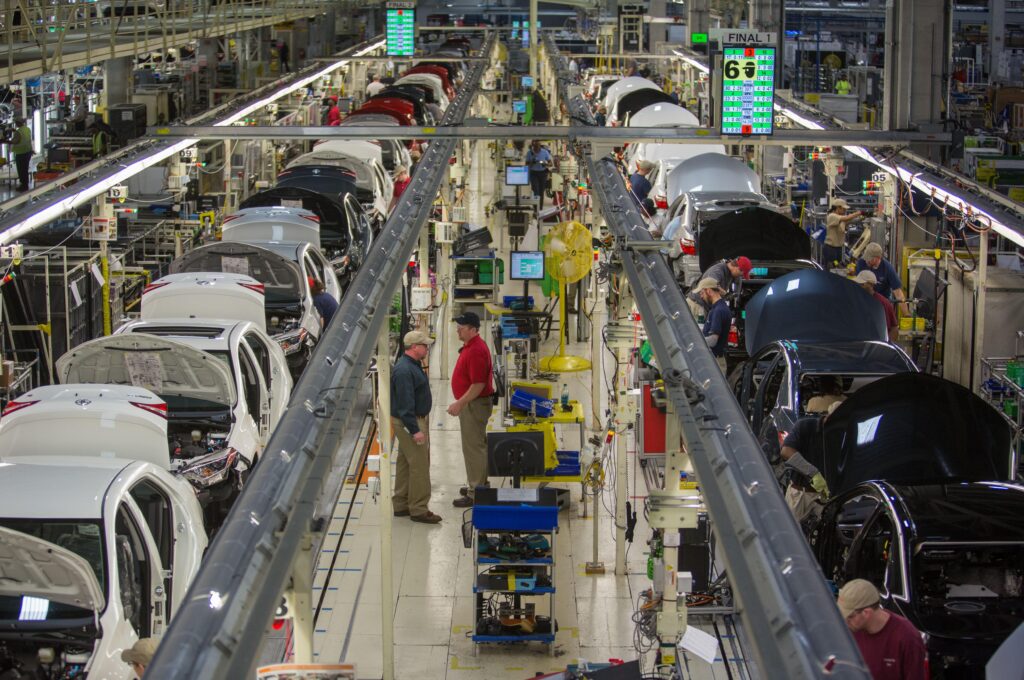
Inside the Mississippi Assembly Plant
Before touring the production operation, our group visited Toyota’s public Experience Center, where displays celebrate the Corolla’s long history and its evolution from a simple family vehicle into one of the automotive industry’s most successful nameplates.
The Mississippi manufacturing complex broke ground in 2007 and has developed into a significant employer for the region.
During our visit, executives emphasized the importance of employees, production quality and the responsibilities that come with producing such a high-volume vehicle.
Aaron Foster, president of Toyota Motor Manufacturing Mississippi, described the company’s mission in remarkably straightforward terms.
“Our job is to build a high-volume, low cost automobile that is high-quality.”
That sounds simple. In practice, building thousands of vehicles while maintaining consistent quality is an enormously complicated undertaking.
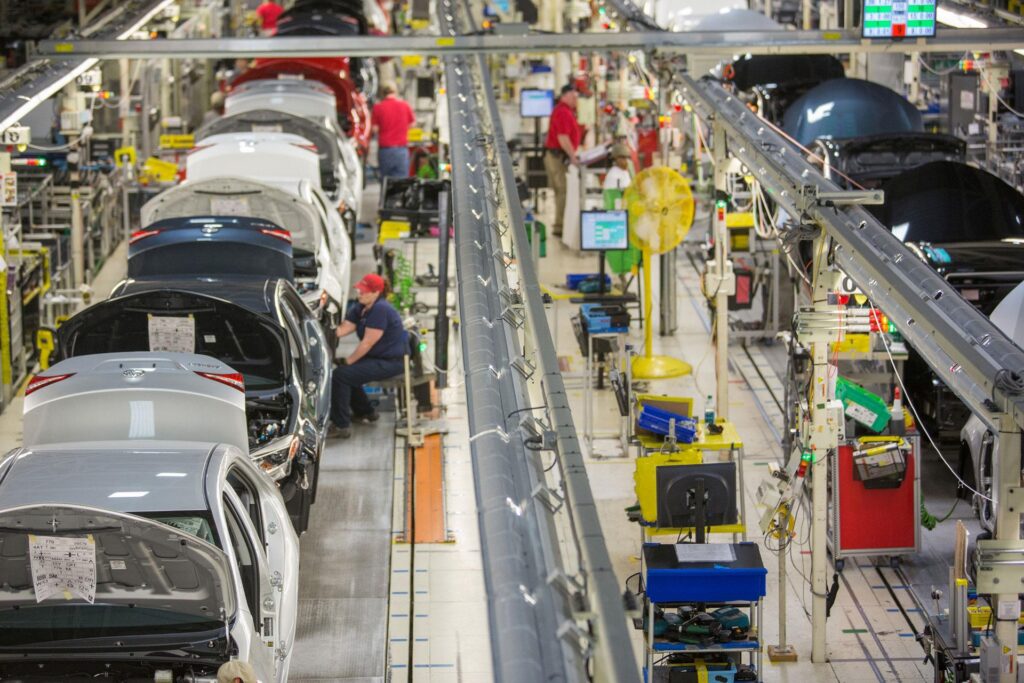
The factory must coordinate people, machines, suppliers and components while ensuring that each vehicle meets demanding manufacturing standards.
Foster also emphasized the company’s relationship with the surrounding communities and the importance of developing its workforce.
The message was clear: Toyota wants its employees to see the facility as a place to build long-term careers, not merely somewhere to collect a paycheck.
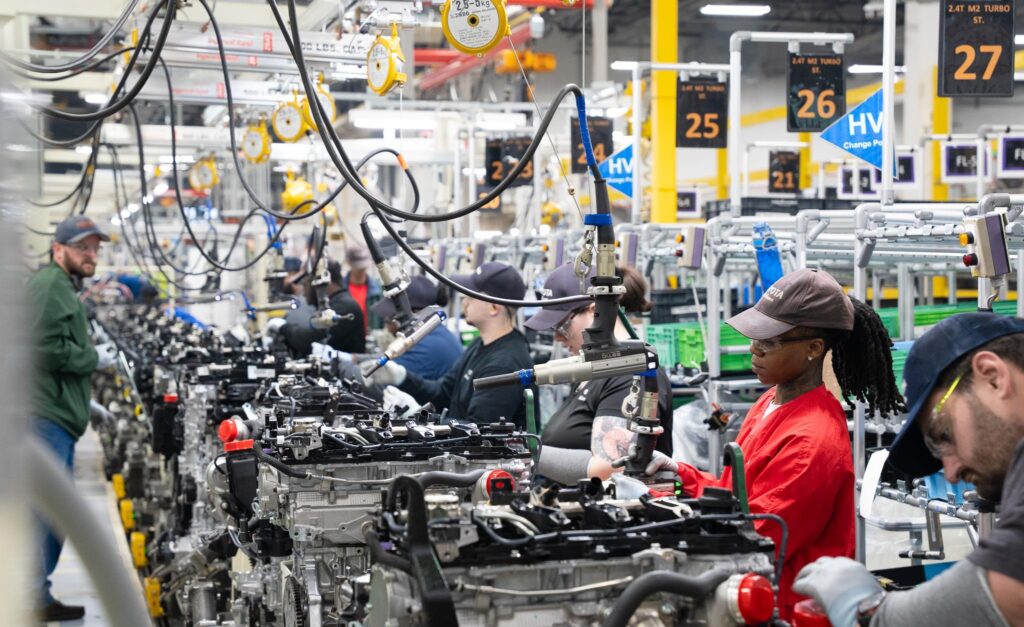
What Japanese Manufacturing Culture Means on an American Factory Floor
I’ve visited many automotive manufacturing plants during nearly four decades as an automotive journalist.
What stood out to me during these Toyota visits was not simply the advanced equipment or the efficiency of the manufacturing process.
It was the way Japanese and American working cultures have been woven together.
Throughout Toyota’s operations, Japanese manufacturing principles are incorporated into the daily routines of American workers.
Three concepts are especially important.
Kaizen refers to continuous improvement. Rather than waiting for a major problem or an expensive technological breakthrough, employees are encouraged to find small ways to improve production processes every day.
Poka-yoke means mistake-proofing, the practice of designing processes and equipment to prevent errors before they become defects.
Dojo refers to a place of practice and learning, a concept Toyota uses in its approach to training and developing workers.
These ideas have become important elements of the company’s manufacturing philosophy.
For consumers, the objective is straightforward: build vehicles more consistently, reduce manufacturing mistakes and improve the quality of the finished product.
Japanese executive Tomo Sato, a production project vice president at the Mississippi plant, spoke about the company’s responsibilities to both its employees and its customers.
He emphasized respect for the people building the vehicles, comprehensive training, long-term employee development and the importance of safety and quality.
It was a reminder that the most sophisticated manufacturing equipment in the world still depends on the people operating it.
There is also a broader economic story behind these investments. With American automobile production increasingly in the spotlight and import tariffs shaping the industry’s conversations, automakers have strong reasons to demonstrate their commitment to manufacturing in the United States.
You may also Enjoy: 2027 Toyota Corolla Cross Gets Simpler Where It Counts
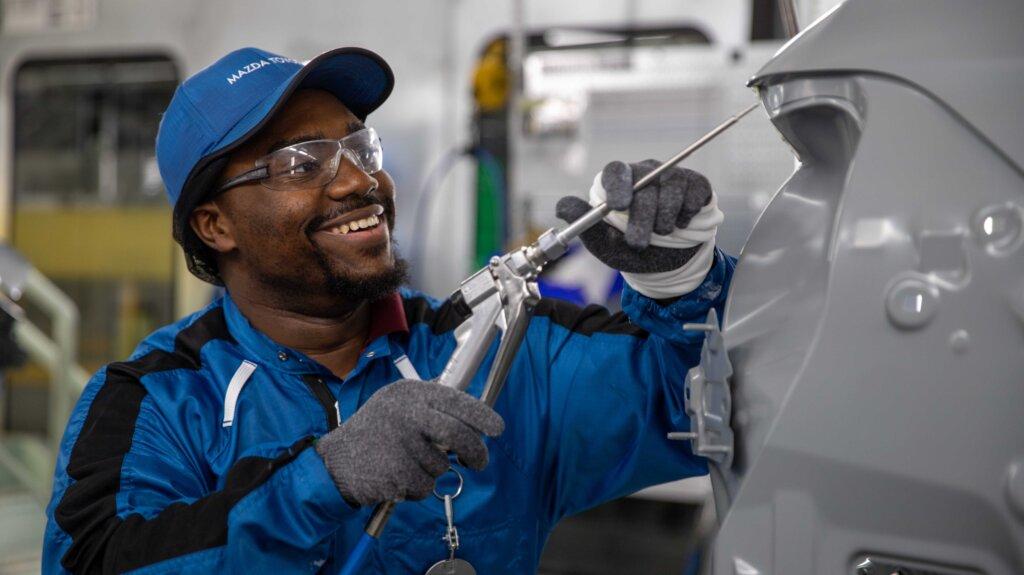
Mazda and Toyota Celebrate Their Millionth American-Built Vehicle
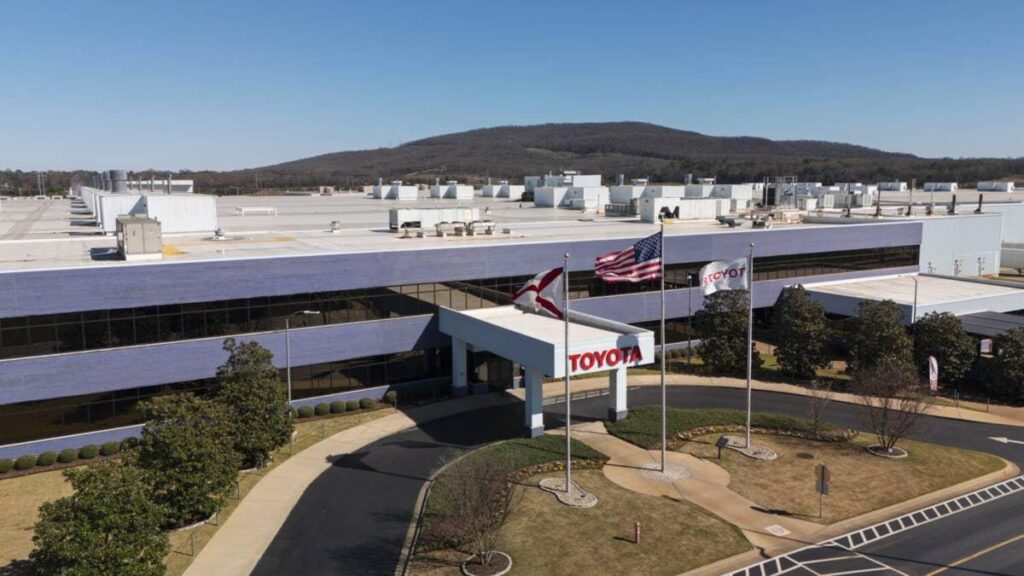
Our next stop brought us to Huntsville, Alabama, where Mazda Toyota Manufacturing (MTM) was preparing to celebrate a particularly impressive achievement.
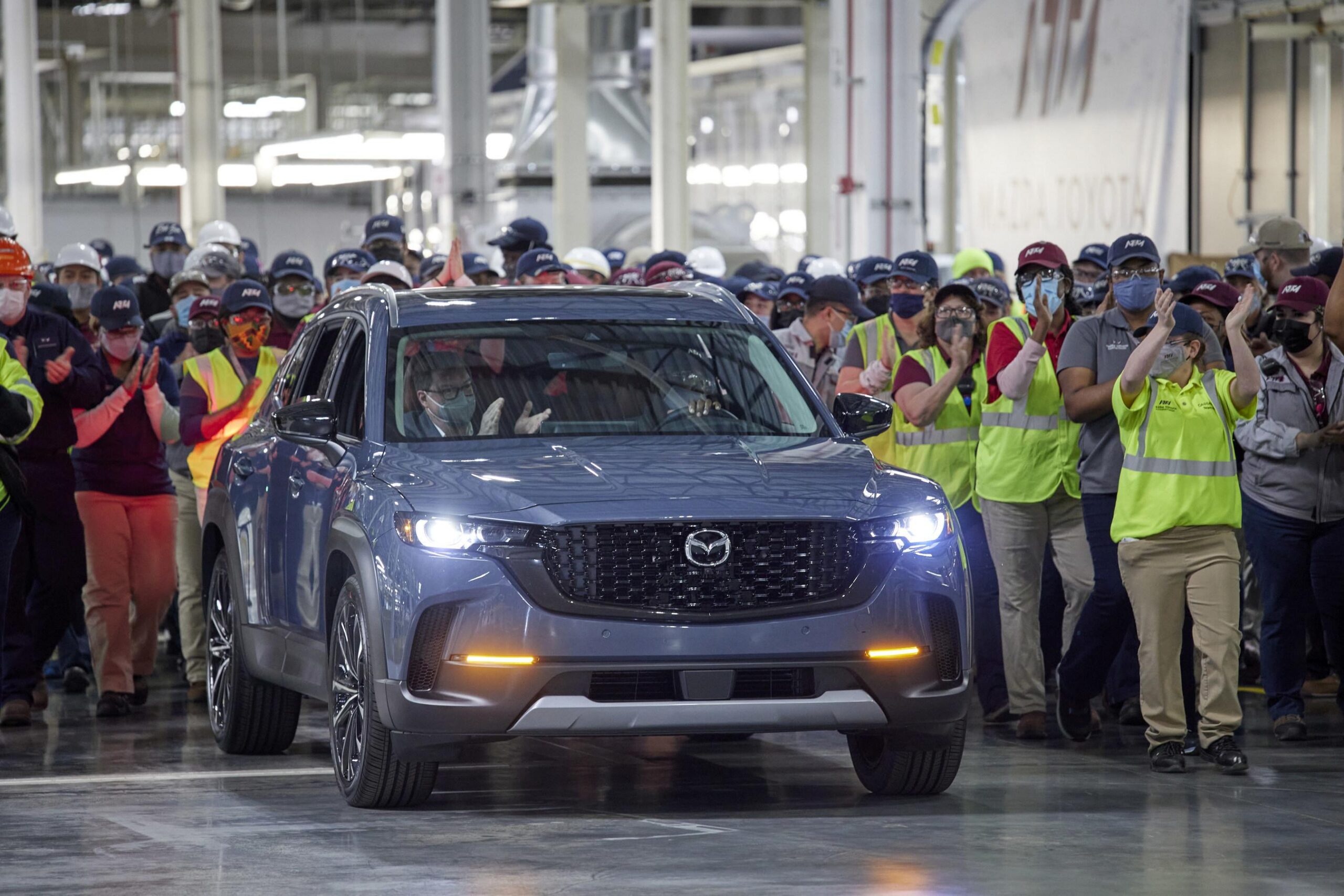
On October 28, 2026, the joint-venture factory marked production of its one-millionth vehicle.
The milestone is significant for both manufacturers.
Mazda Toyota Manufacturing is a 50/50 joint venture between Mazda Motor Corporation and Toyota Motor Corporation.
The $2.3 billion facility assembles the Toyota Corolla Cross and Corolla Cross Hybrid, alongside the Mazda CX-50 and CX-50 Hybrid.
For Mazda, the factory represents its first and only current U.S. vehicle manufacturing operation.
For Toyota, it adds important production capacity for the popular Corolla Cross family of compact crossovers.
And for Alabama, the partnership represents thousands of manufacturing jobs and an expanding automotive supply network.
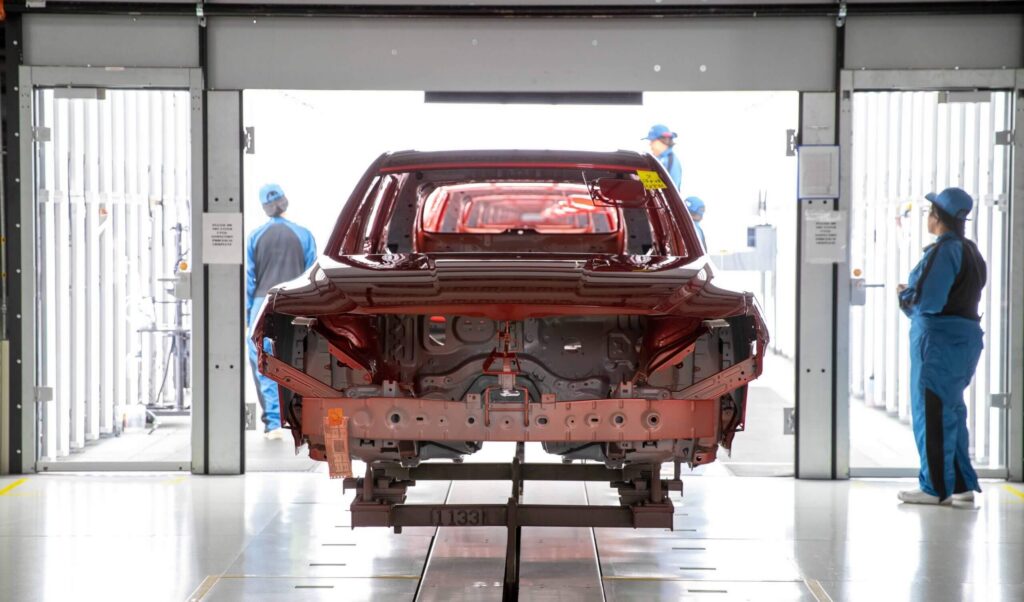
Two Automakers, Two Production Lines, One Factory
One of the most interesting things about this operation is that Mazda and Toyota manufacture distinctly different vehicles at the same facility.
The Corolla Cross and Mazda CX-50 are produced on separate assembly lines, each reflecting the design and engineering priorities of its respective brand.
The Toyota emphasizes practical transportation and everyday usability.
The Mazda offers a different personality, with styling and driving characteristics designed to support the brand’s more premium ambitions.
Although the companies share elements of the facility’s manufacturing infrastructure and supplier network, the finished vehicles remain unmistakably different.
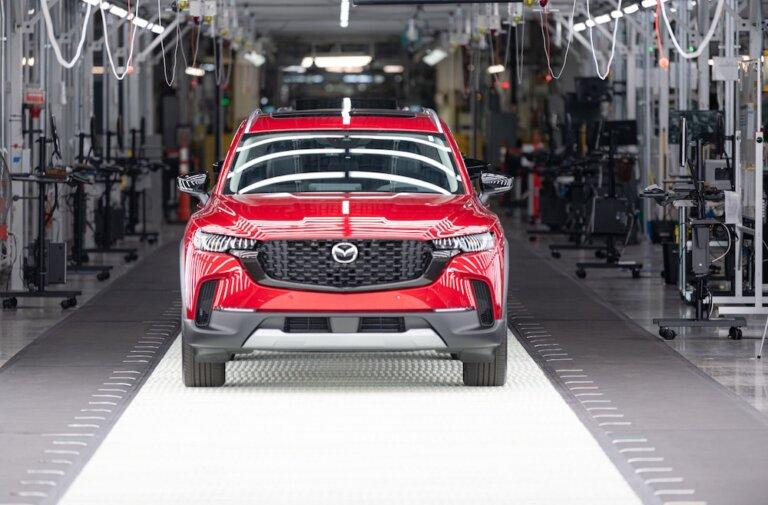
For the million-vehicle celebration, examples of both crossovers were presented in Mazda’s striking Soul Red finish.
It was a fitting visual demonstration of the partnership.
Two brands that ordinarily compete for customers were celebrating their manufacturing success together.
You may also Enjoy: The 2026 Mazda CX-50 Delivers Luxury for Family Money
A Partnership Built on Shared Knowledge
The factory’s history has not been without challenges.
Construction began following the joint venture’s announcement in 2018, but the COVID-19 pandemic complicated the effort to bring such an ambitious operation into production.
Toyota Corolla Cross production started on September 30, 2021, followed by Mazda CX-50 production on January 26, 2022.
By October 2026, the factory had manufactured its first million vehicles.
Mark Brazeal explained during our visit that the partnership was designed to achieve more than simply sharing the cost of constructing a factory.
Both companies wanted to learn from one another.
Toyota brought considerable North American manufacturing experience, while Mazda had the opportunity to establish a major American production operation with an experienced partner.
Each automaker also brought its own manufacturing methods, processes and corporate culture.
Combining them required cooperation, flexibility and a willingness to examine different approaches.
Tom Donnelly, president and CEO of Mazda Toyota Manufacturing, emphasized the idea of operating as one team while strengthening the companies’ North American manufacturing operations.
The factory has annual production capacity of approximately 300,000 vehicles and employs more than 4,500 team members.
Those numbers are impressive, but the broader influence extends well beyond the assembly lines.
Why the Millionth Vehicle Matters to Alabama
Automobile factories have an enormous economic impact on the regions surrounding them.
Workers support local businesses, manufacturers purchase components from suppliers, and families establish roots in nearby communities.
Mazda Toyota Manufacturing has also made community investment a central part of its operations.
The company reports providing more than $1.3 million in support to local organizations, with an emphasis on education, workforce development and improving quality of life.
As part of its million-vehicle celebration, the company announced an additional $120,000 in grant funding for organizations involved in training and workforce development.
Those organizations included Calhoun Community College, Kids to Love, Morgan County Schools and the Alabama Automotive Manufacturer’s Association.
The millionth vehicle was the headline achievement, but the celebration also recognized the people and organizations that helped make it possible.
Manufacturer source: Mazda Toyota Manufacturing Celebrates One Millionth Vehicle.
Toyota Alabama: The Engine Powerhouse Behind America’s Toyotas
Our final stop was Toyota Motor Manufacturing Alabama, another major operation in Huntsville.
While the Mississippi factory builds finished vehicles and Mazda Toyota Manufacturing assembles crossovers, Toyota Alabama specializes in something equally important.
It builds the engines that power many of Toyota’s most familiar vehicles.
The facility began production in 2003 after Toyota established its Alabama manufacturing operation in 2001.
Over the past 25 years, it has grown into one of the company’s most important engine manufacturing centers in North America.
Today, the complex represents approximately $1.7 billion in investment and employs more than 2,400 people.
It manufactures nearly one million engines and approximately 500,000 differentials annually.
Since opening, Toyota Alabama has produced more than 11 million engines.
That is an extraordinary amount of machinery, particularly when considering the precision required to manufacture a modern automobile engine.
Four-Cylinder, V6 and Hybrid Powertrains
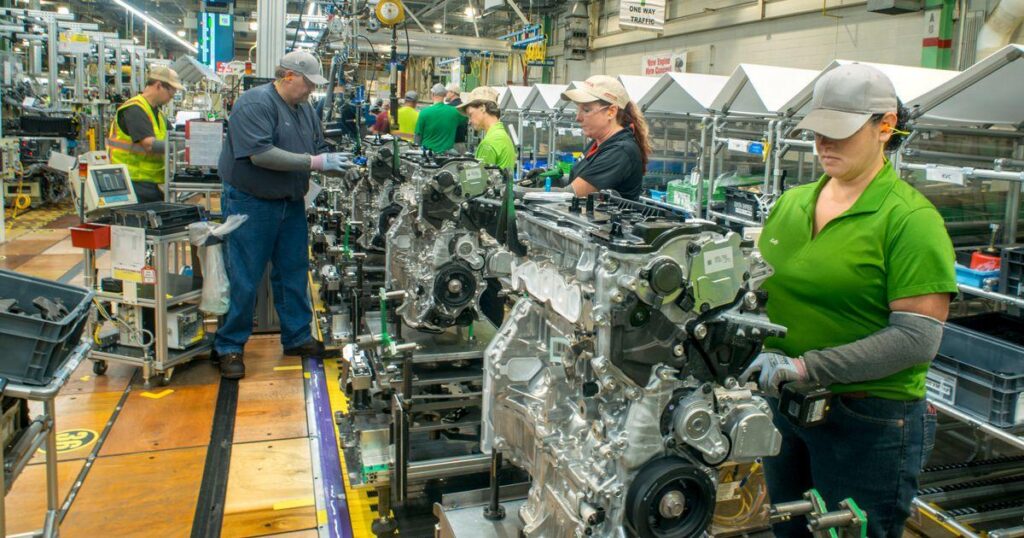
The Huntsville facility produces several different engine configurations under one roof.
Its operations include internal-combustion engines, four-cylinder units, turbocharged engines, V6 engines and powertrains designed for hybrid-electric vehicles.
A hybrid combines an internal-combustion engine with one or more electric motors, using the strengths of both systems to improve efficiency and performance.
Toyota Alabama also produces differentials, mechanical components that distribute power to the drive wheels while allowing them to rotate at different speeds when turning.
These components are especially important in trucks and sport utility vehicles.
The factory supports production of vehicles including the Corolla, Corolla Cross, Highlander, Sienna, Tacoma, Tundra and Sequoia.
In other words, even when a Toyota vehicle is assembled at another American factory, an important part of its mechanical system may have originated in Huntsville.
You may also Enjoy: 2026 Toyota Tacoma Review: Which Trim Is Right for You?
Twenty-Five Years of Manufacturing in Alabama
During our visit, Marc Perry, president of Toyota Alabama, reinforced many of the themes I had heard at the company’s other facilities.
Worker development, manufacturing quality and community involvement were recurring priorities.
While advanced technology is essential to modern automobile production, Toyota’s executives repeatedly returned to the human element.
The company also places considerable importance on its relationship with local schools, training programs and nonprofit organizations.
According to Toyota, its contributions to Alabama nonprofit and community organizations have exceeded $24 million over the past 25 years.
That includes nearly $11 million invested in Huntsville City Schools through the Toyota USA Foundation’s Driving Possibilities initiative.
For a company best known for building cars and trucks, those investments demonstrate a broader commitment to the communities that support its manufacturing operations.
Manufacturer source: Toyota Alabama Celebrates 25 Years.
What These American Factories Mean for Car Buyers
Most people shopping for a new vehicle are understandably focused on price, comfort, safety, fuel economy and reliability.
Where the vehicle was manufactured may not be the first thing on their minds.
But these factory visits offered a reminder of how interconnected the modern automotive industry has become.
A Japanese-designed car may be built by American workers, using components supplied by companies operating throughout North America.
A hybrid engine manufactured in Alabama may help power a Toyota assembled hundreds of miles away.
And two competing Japanese manufacturers can cooperate on production while continuing to compete in dealership showrooms.
There are also important distinctions between where a vehicle is assembled and where its parts originate.
Consumers interested in understanding those differences can explore the American Automobile Labeling Act reports published by the National Highway Traffic Safety Administration.
Those reports provide information about vehicle assembly locations and North American parts content.
For buyers comparing modern vehicles, the U.S. Department of Energy’s fuel economy resources also provide useful information about efficiency and operating costs.
Sue Mead’s Verdict: More Than a Manufacturing Milestone
After nearly four decades covering automobiles and visiting manufacturing facilities, I am still fascinated by the process of turning thousands of individual components into a finished vehicle.
Modern automobile production combines engineering, logistics, robotics, precision manufacturing and human skill in ways that most consumers rarely have an opportunity to observe.
But my strongest impression from these Toyota factory visits wasn’t simply the scale of the operations.
It was the people.
From the Corolla’s 60-year history to the Mazda Toyota factory’s millionth vehicle, the celebrations reflected decades of effort, considerable investment and the work of thousands of employees.
They also demonstrated how Toyota has incorporated Japanese manufacturing traditions into American workplaces while allowing each facility to develop its own identity.
The Mazda partnership adds another dimension, showing how two manufacturers can cooperate behind the scenes while maintaining their individual brands.
For Toyota and Mazda, the millionth vehicle is an achievement worth celebrating.
For American manufacturing, it is another chapter in a much larger story.
And after visiting these three facilities, I was reminded that the people who build our vehicles deserve as much attention as the vehicles themselves.
You may also Enjoy: 2026 Toyota Sienna Review: My Six Dogs Approve
Reporting and factory visits by Sue Mead for TestMiles.com. Additional manufacturing figures sourced from official Toyota and Mazda announcements.