Pleos Connect: What Hyundai’s New Software Gets Right
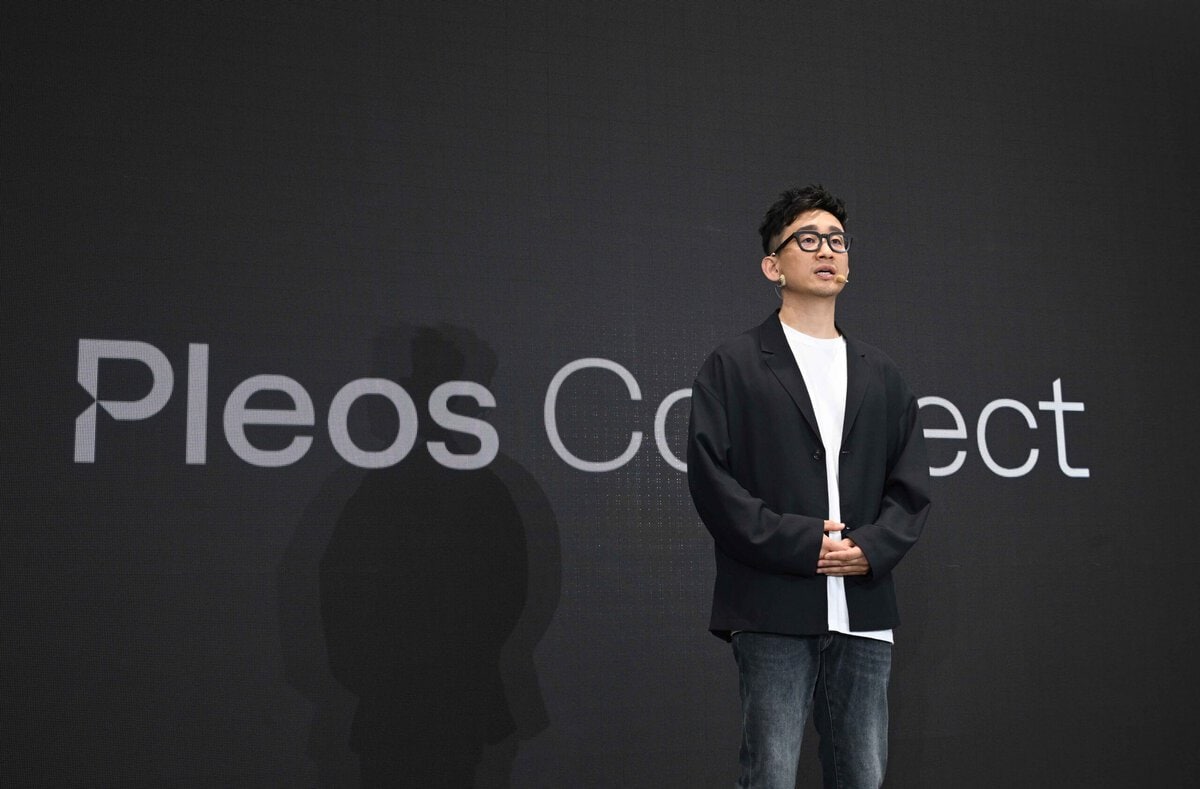
Pleos Connect brings Hyundai’s AI, apps, and updates into one platform, but its physical controls may be the smartest part of the system.
Pleos Connect Makes the Best Case When It Does Less
I have used Pleos Connect, and the feature I kept coming back to was not the artificial intelligence, the app store, or the fact that Hyundai Motor Group wants the platform in about 20 million vehicles by 2030. It was the buttons.
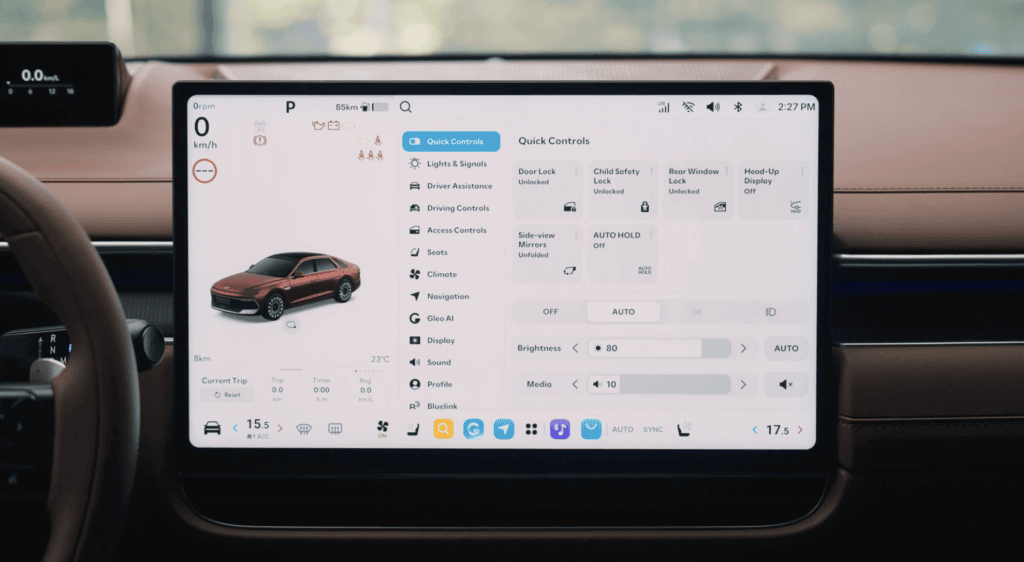
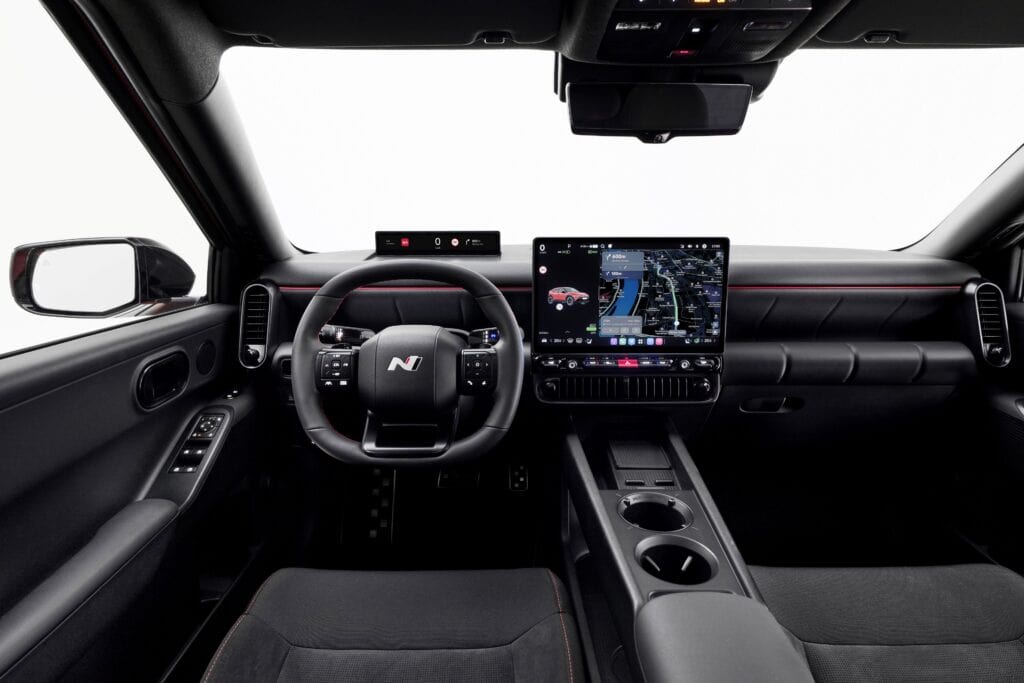
Actual physical controls remain for functions people reach for repeatedly, including temperature and volume. That may sound like a very modest achievement for a new software platform, but it tells me Hyundai has understood one of the central problems with modern car interiors: capability and usability are not the same thing. A touchscreen can technically control almost everything. That does not mean it should.
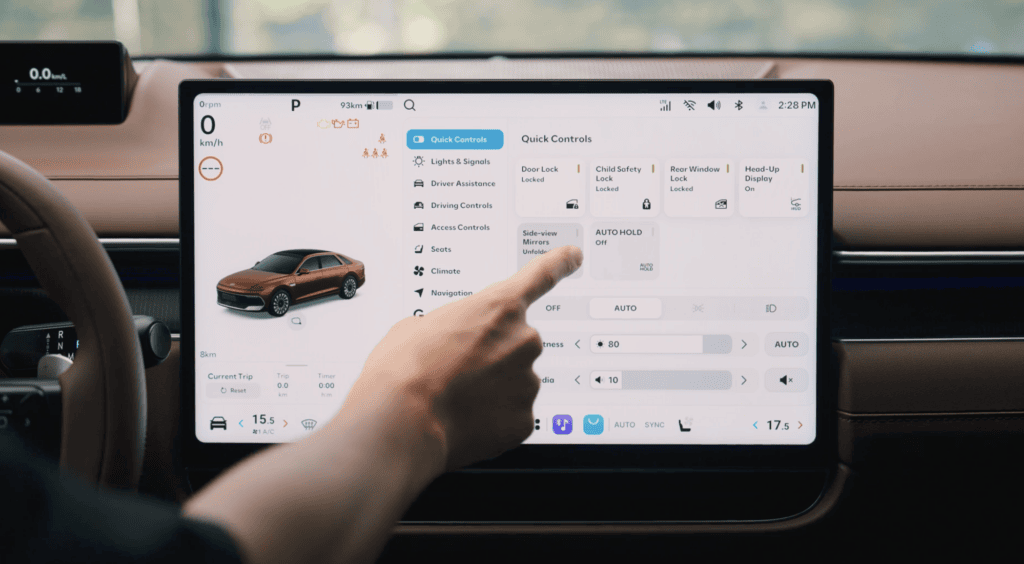
During my hands-on demonstration, the display separated information the driver needs from the applications occupying the larger screen area. Speed, range, and warnings have a defined home. Apps can run across the main display or share it in a split view, and a three-finger gesture can be used to move or close windows. Hyundai is borrowing familiar behavior from phones without pretending that a moving car is simply another mobile device.
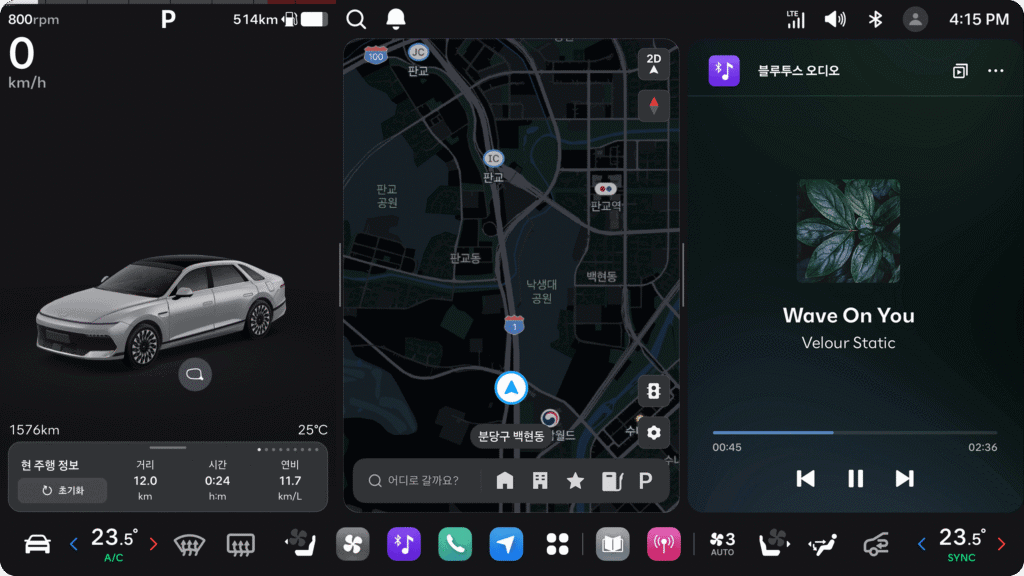
That distinction matters because the design guidance for Android-based automotive systems puts driving first and calls for interfaces that minimize distraction. Hyundai’s own approach also restricts what appears while the vehicle is moving. In the version I used, the complete AI conversation was not left on-screen during driving, while navigation remained available. The point should be to remove unnecessary glances, not give the driver a more sophisticated reason to stare at glass.
There is a useful comparison with Hyundai’s current U.S. technology. The 2026 Palisade already moved toward embedded navigation and connected services, but Pleos is a broader operating environment designed around apps, profiles, AI, and continuing software development rather than a single generation of infotainment features.
You may also enjoy: 2026 Hyundai Palisade Adds Google Maps to Beat GM and Ford
The physical controls are therefore more than nostalgia. They are a boundary. Hyundai is saying that software can become richer without forcing every ordinary task into it. If Pleos succeeds, the driver should notice fewer steps, not more features.
Gleo AI Is Useful When You Stop Talking Like a Robot
Automotive voice recognition has spent years teaching us the wrong lesson. Drivers learned to memorize exact commands because the software could not reliably infer what they meant. Gleo AI reverses that relationship. Hyundai says its large-language-model-based assistant is designed to understand context, handle multiple requests, and interact with vehicle functions in ordinary language.
The difference became obvious in use. I could ask it to find somewhere to eat and then follow with “take me there.” The second request makes sense only if the system remembers what the first conversation was about. That kind of context is common in contemporary generative AI, but applying it well inside a car is potentially more useful than making the assistant sound charming.
The better demonstration was even simpler. Ask for “my heated seat” and Gleo can identify the cabin zone from which the request came, then activate the correct seat. There is no need to announce that you are the front passenger or reach across the screen to choose a position. Small pieces of context can remove small pieces of friction, and a car contains hundreds of opportunities for exactly that.
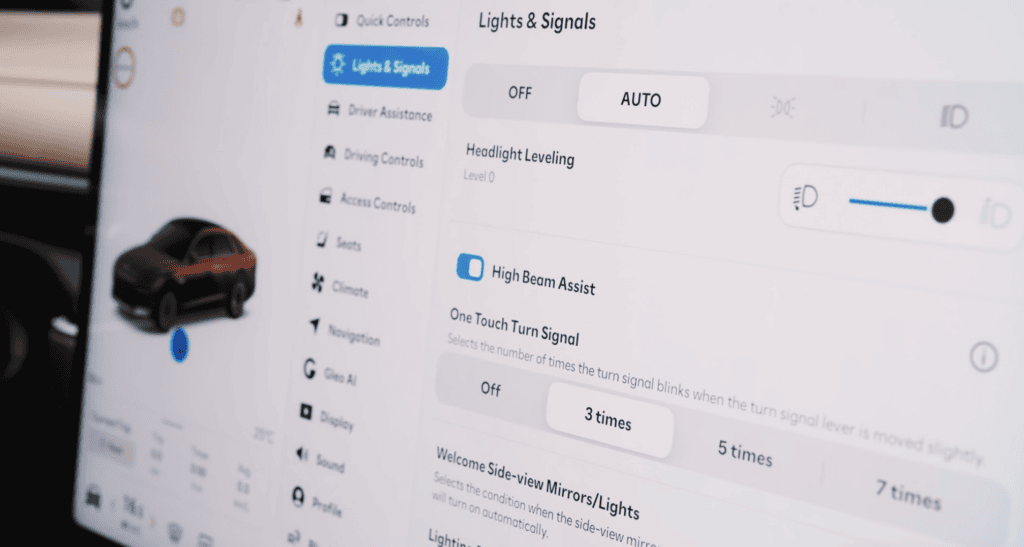
Hyundai says Gleo can also answer questions about weather and vehicle information, work with navigation and climate functions, and support conversational web searches. The company has described deeper app integration as part of the roadmap. In Korea, email functions are already available through Pleos, while future AI integration could make it possible to ask the system to work with information held inside supported apps.
That is where enthusiasm needs discipline. Generative AI can misunderstand a request, retrieve poor information, or make an incorrect inference. The National Institute of Standards and Technology’s AI Risk Management Framework exists because useful AI still requires attention to reliability, transparency, and risk. A wrong restaurant recommendation is irritating. A wrong interpretation of a vehicle-related instruction could be more consequential, so the scope of what an assistant can control matters as much as how naturally it speaks.
You may also enjoy: New AI Voice Assistants Actually Listen to Tired Parents
I would judge Gleo on three things once U.S. production cars arrive: how often I have to repeat myself, whether the system understands follow-up requests without confusion, and whether it can complete common cabin tasks with less attention than a good physical control. Artificial intelligence earns its place in a car by reducing cognitive load. Everything else is a demonstration.
The App Market Is Where Ownership Gets Complicated
Pleos becomes more ambitious when the car starts running its own applications. Hyundai has shown services including YouTube, Spotify and NAVER, and its European Pleos material lists additional launch applications such as Netflix and Microsoft Teams. Availability will vary by market, and nobody should read a European app list as a promise for a U.S. Hyundai, Kia or Genesis.
The underlying architecture helps explain the strategy. Pleos Connect is based on Android Automotive OS, which runs on the vehicle’s own hardware. That is different from Android Auto, where a phone projects an experience into the dashboard. Android Automotive can host automaker software along with compatible first- and third-party applications, giving Hyundai a foundation that developers already understand.
Hyundai’s developer layer is called Pleos Playground. The company says it provides software-development kits, APIs, design guidance, emulators, and tools that allow outside developers to build services for the car and distribute them through the Pleos App Market. That could become one of the most important pieces of the system because Hyundai cannot possibly invent every useful application itself.
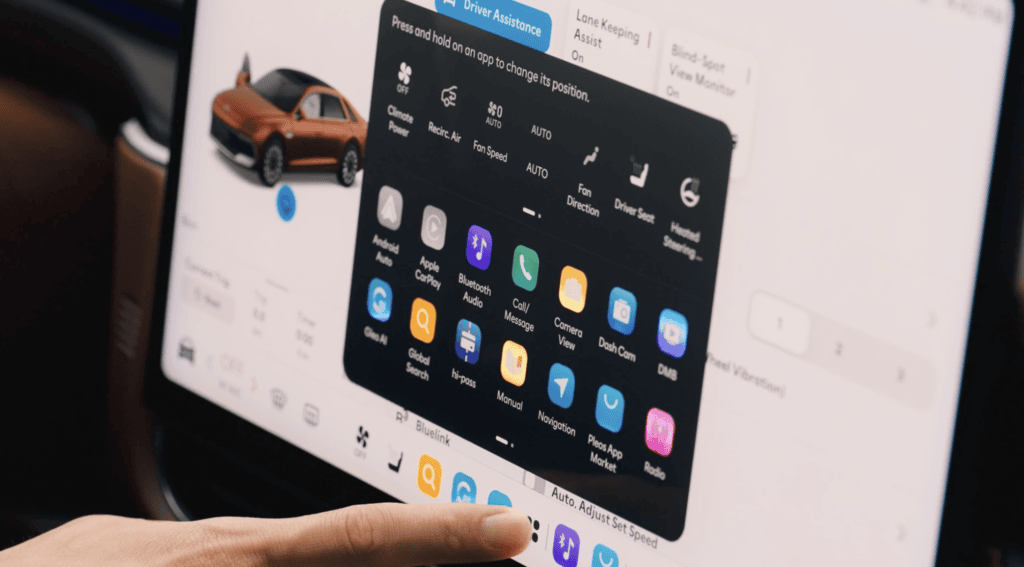
The difficult part is that an app ecosystem changes the economics of ownership. Which apps will be free? Which will require an existing subscription? Will some vehicle functions eventually be sold after purchase? How long will an app remain compatible with a 10-year-old car? What happens if its developer disappears? Hyundai has not provided one universal answer because pricing and services will differ by market and product.
Those are not theoretical concerns. Automakers already sell connected services and downloadable features, and Hyundai Motor America expanded its Digital Features and Services program in 2026. Software can create genuine value after purchase, but it can also turn a feature list into a recurring bill if the boundaries are not clear before the customer signs.
You may also enjoy: Surprising car subscriptions you’ll pay for in your new vehicle
The safety rules matter too. Android Automotive supports restrictions for apps while a vehicle is moving; its driver-distraction framework distinguishes activities intended to operate under restricted driving conditions from experiences better left for a parked vehicle. That is exactly where video, gaming, conferencing, and productivity software belong: useful in the right context, unwelcome if they compete with driving.
Connected Cars Need a Privacy and Security Conversation
The more capable Pleos becomes, the more information has to move through the system. Navigation needs location. A personalized profile needs preferences. A voice assistant processes requests. An email app may expose communications. A software platform that learns from connected vehicles can improve quickly, but the owner deserves to know what is collected, where it goes, and how much control remains with the person who bought the car.
The Federal Trade Commission has warned that modern connected vehicles can collect sensitive consumer information and has emphasized that automakers are responsible for lawful collection and use of that data. Its connected-car data guidance is worth reading before treating personalization as an unqualified benefit.
Hyundai’s 2026 Investor Day adds another reason to pay attention. The company described a “data flywheel” in which information from Pleos-equipped vehicles is analyzed to improve Gleo AI and develop new functions, with updates then returned to customers over the air. That can create a genuinely better product. It also makes clear that connectivity is not incidental to the business model; it is part of how Hyundai intends to develop the vehicle after sale.
Cybersecurity therefore becomes an ownership issue, not an IT department footnote. The National Highway Traffic Safety Administration’s vehicle cybersecurity resources and the NIST Cybersecurity Framework both reinforce the broader principle that connected systems need continuing risk management. Over-the-air updates are useful partly because software vulnerabilities do not stop appearing when the warranty paperwork is signed.
Hyundai has a potentially strong advantage here: the same OTA mechanism that delivers features can distribute fixes. The obligation is longevity. Cars routinely remain in service far longer than consumer electronics, so buyers should eventually be told how long critical software support, security updates, and connected services are expected to continue.
You may also enjoy: Can Hyundai’s Cloud Make EV Batteries Last 20% Longer?
That cloud-battery story is a useful parallel. Software can improve the ownership experience in ways a traditional mechanical upgrade cannot, but a manufacturer target is not the same as a customer result. Pleos deserves the same standard. Judge what arrives in production, what remains supported, and what the owner can control.
What I’d Ask Before Buying a Pleos Connect Car
There is one update to the “which U.S. car gets it first?” question. Genesis has confirmed that the 2028 GV90 uses Pleos Connect, and Genesis USA says that electric flagship is scheduled to arrive in early 2027. We still do not have a definitive announcement naming the first Hyundai-brand U.S. model with Pleos, and Genesis’ confirmation does not by itself establish that the GV90 will be the first Hyundai Motor Group vehicle sold here with the system.
You may also enjoy: Genesis GV90: Separate Luxury From Theater
That distinction is worth preserving because regional software packages are rarely identical. Licensing can change the app catalog. Connected services can have different trial periods. Data rules vary. Voice functions can launch at different levels of capability. The Pleos experience I used and Hyundai’s Korean feature set give us a clear view of the architecture, but American buyers need the U.S. terms before treating every demonstrated feature as standard equipment.
I would ask five questions at the dealership once Pleos reaches mainstream U.S. models. Which connected functions are included for the life of the vehicle? Which require a paid plan after a trial? What personal and voice data can the owner delete or opt out of sharing? How long will Hyundai provide security and platform updates? And which vehicle functions still work normally if a cellular connection or remote service is unavailable?
For EV buyers, I would add a sixth: how good is the route planner with real charging conditions? Pleos can consider battery state, destination, and journey information when planning a charging stop. That is the right idea because a usable EV navigation system needs to turn energy management into part of the route instead of making the driver conduct a separate charger hunt.
Hyundai’s broader software strategy reaches beyond infotainment. Its cloud work, autonomous-vehicle partnerships, and OTA development all point toward a company trying to make software part of the product cycle rather than an accessory added at the end.
You may also enjoy: Hyundai Waymo Robotaxi: The Factory Is the Advantage
What impressed me about Pleos was not that Hyundai found a way to put more digital things in a cabin. Everybody can add another screen. The encouraging parts were the moments when the technology removed an instruction: the system understood what “there” meant, knew which seat I was referring to, kept essential driving information separate, and still gave me a physical control when a physical control was the better answer.
The 20-million-vehicle target makes Pleos too important to dismiss as an infotainment experiment. It also raises the standard. At that scale, reliability, privacy, security, support and pricing become part of the product just as surely as horsepower or seat comfort.
Hyundai calls the next stage an AI-defined vehicle. I am less interested in the label than the behavior. If my car becomes easier to use in year three than it was on delivery day, software has added value. If I need another account, another subscription and another menu to do what a knob once accomplished, it has not.
Pleos Connect gets the philosophy right in several important places. Now Hyundai has to prove that the production experience, particularly in the United States, keeps the useful parts and resists the temptation to turn every new capability into a distraction or a fee.