Lucid Gravity Review: Brilliant SUV, Unfinished Software

The Luxury SUV With an Asterisk
Lucid Gravity review: This brilliant SUV delivers 450-mile range, seven-seat luxury, and huge performance, but unfinished software remains its weakness.
Up to 828 horsepower and enough cargo room for a family, its luggage, and several poorly planned purchases. It has also been named the 2026 World Luxury Car, beating vehicles from far more established luxury brands.
On paper, the Gravity appears to have solved nearly every problem facing a large electric SUV. It is remarkably fast, exceptionally quiet and spacious without becoming ridiculous to park. Under ideal conditions, it can also add approximately 200 miles of driving range during a charging stop that may be shorter than the line for coffee.
So, what is the catch? The Gravity’s physical engineering feels finished, refined and genuinely luxurious. Its software does not always feel equally mature, creating an unusual gap between one of the best electric vehicle platforms on the road and the digital systems controlling many of its features.
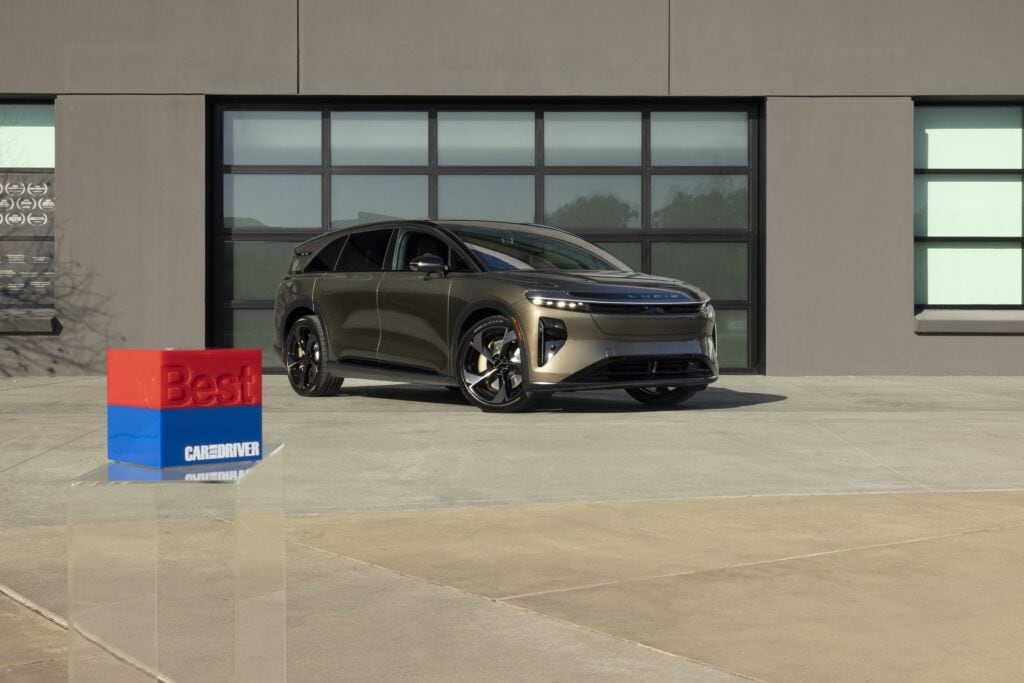
Why the World Luxury Car Award Matters
The World Car Awards named the Lucid Gravity the 2026 World Luxury Car after it was evaluated by an international jury of automotive journalists. That matters because the Gravity was not protected inside a narrow category created only for new electric SUVs. It was judged as a luxury vehicle against competitors using electric, hybrid and internal-combustion powertrains.
Awards do not automatically make a vehicle good, but this one helps explain the Gravity’s appeal. It combines qualities that are often spread across several different vehicles: sports-car acceleration, three-row practicality, long-distance efficiency, rapid charging and the quiet road manners expected from an expensive luxury SUV.
More importantly, the Gravity feels like a luxury vehicle rather than a technology demonstration with leather seats. Buyers approaching six figures are not merely paying for acceleration. They are paying for comfort, materials, quietness, confidence and the feeling that the vehicle is reducing stress rather than creating another digital task to manage.
You may also enjoy: Lucid to Launch Two New Luxury Crossovers Under $50,000

Performance That Is More Than a Party Trick
The Gravity Grand Touring delivers up to 828 horsepower and can reach 60 mph in approximately 3.4 seconds. Those numbers are absurd for a family SUV with three available rows, although the practical benefit is not winning an argument at a stoplight. Instant power makes it easier to join fast-moving traffic, pass a slower vehicle and place a large SUV confidently into an opening.
There is no conventional transmission pausing to select a gear and no gasoline engine waiting to reach its strongest operating range. Press the accelerator and the response is immediate, smooth and controlled. Merging is no longer a group decision, although passengers in the second and third rows may still offer their opinions.
The more impressive detail is how manageable that power feels. The Gravity does not constantly behave like it is auditioning for a drag race. Its accelerator response can be calm and progressive during normal driving, allowing the vehicle to feel appropriately expensive rather than needlessly aggressive.
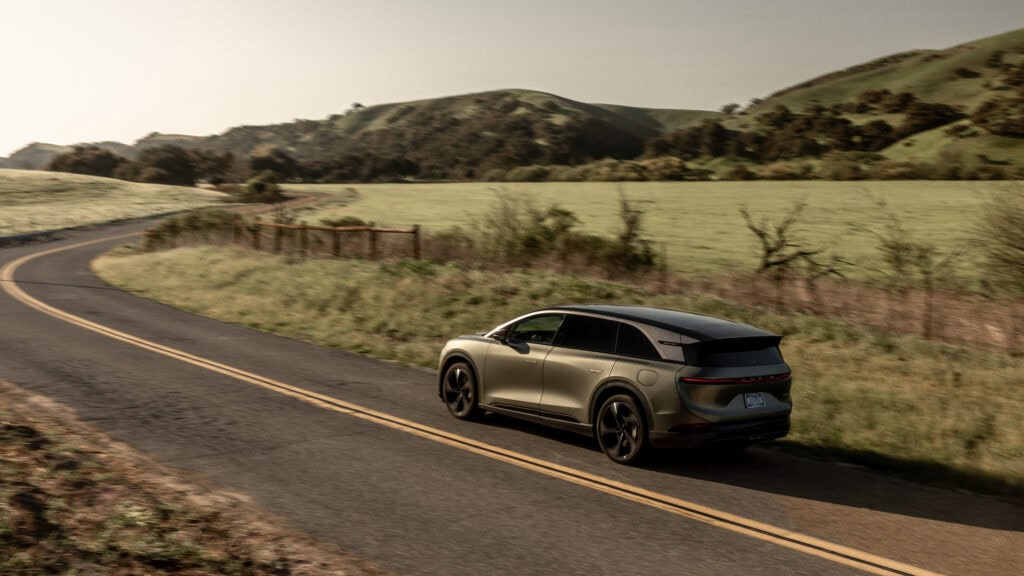
Electric Power Helps Create a Very Fast Library
The absence of a gasoline engine gives every battery-electric vehicle a useful starting point for quietness. It does not guarantee a peaceful cabin, however, because removing engine noise can expose wind turbulence, tire roar, suspension impacts and vibrations that would otherwise be hidden.
Lucid has worked carefully on insulation, aerodynamics and suspension control, producing a cabin that remains impressively calm at highway speeds. The standard air suspension keeps the body composed, while available rear-wheel steering helps the Gravity feel smaller and more maneuverable than its passenger capacity might suggest.
This matters more than dramatic acceleration during everyday ownership. A quiet cabin reduces fatigue on long journeys, makes conversations easier and allows the audio system to work without competing against mechanical noise. The Gravity is properly quiet, like a very fast library with better seats and considerably more horsepower.
You may also enjoy: Audi Q8 E-Tron: Balanced Luxury in the EV SUV Race
Seven Seats Without Full-Size SUV Bulk
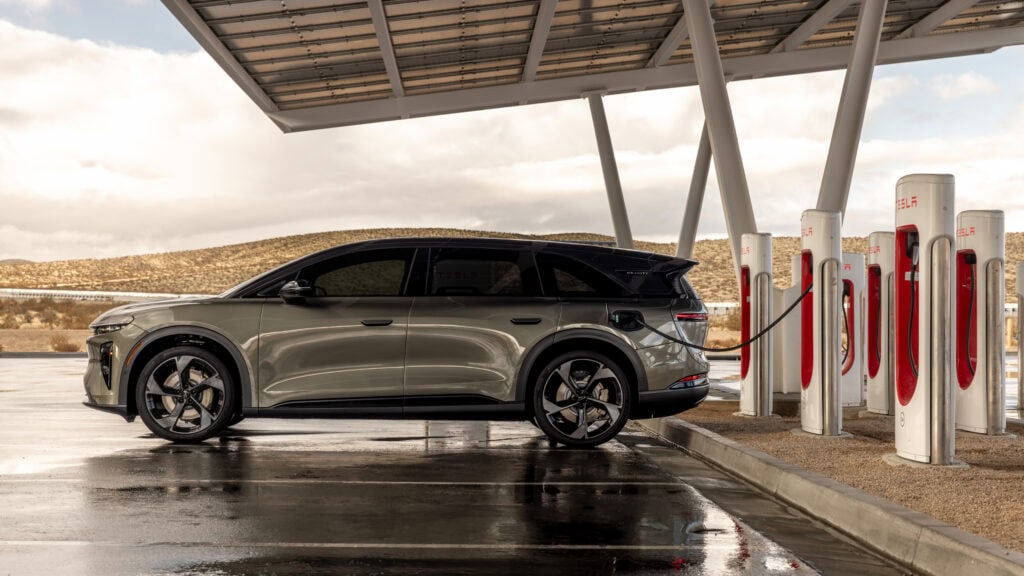
The Gravity’s packaging may be its strongest argument. It is available with seating for five or seven people, and Lucid uses compact electric motors and a low-mounted battery to create a cabin that feels much larger than the exterior suggests. The second and third rows can fold to produce a long, useful cargo floor, while a front trunk provides additional storage away from the main passenger compartment.
Lucid advertises as much as 120 cubic feet of total cargo capacity, depending on the vehicle’s configuration. That creates room for family luggage, sports equipment, airport runs and dog owners who believe bringing several animals along is entirely reasonable. The front trunk also gives owners a convenient place for charging cables, muddy equipment or items that should not be rolling around behind the third row.
Unlike some large electric SUVs, the Gravity does not feel unnecessarily enormous from the driver’s seat. Good visibility, a relatively compact drivetrain and available rear-wheel steering make parking and low-speed maneuvering less intimidating. It offers the interior usefulness of a much larger vehicle without demanding the same amount of road at every corner.
You may also enjoy: Cadillac Vistiq: The Electric Three-Row That Actually Works
The 450-Mile Range Comes With Important Fine Print
The Gravity Grand Touring offers an EPA-estimated range of up to 450 miles, placing it among the longest-range electric SUVs currently available. That number can transform the ownership experience by reducing the amount of planning required for long journeys. It also provides a larger buffer when cold weather, high speeds, elevation changes, cabin heating or heavy loads reduce real-world efficiency.
However, shoppers need to understand the configuration behind the headline. Lucid says the 450-mile estimate applies to a five-seat Grand Touring equipped with its smaller 20-inch front and 21-inch rear wheel combination. Adding a third row, choosing larger wheels or driving in difficult conditions may reduce the distance available from a full battery.
The EPA’s electric-vehicle range testing process gives shoppers a standardized method for comparing different vehicles. It is not a promise that every owner will travel exactly that distance on every charge. Buyers should therefore compare the range of the specific Gravity configuration they intend to purchase rather than treating 450 miles as universal across the lineup.
Charging Can Be Remarkably Fast
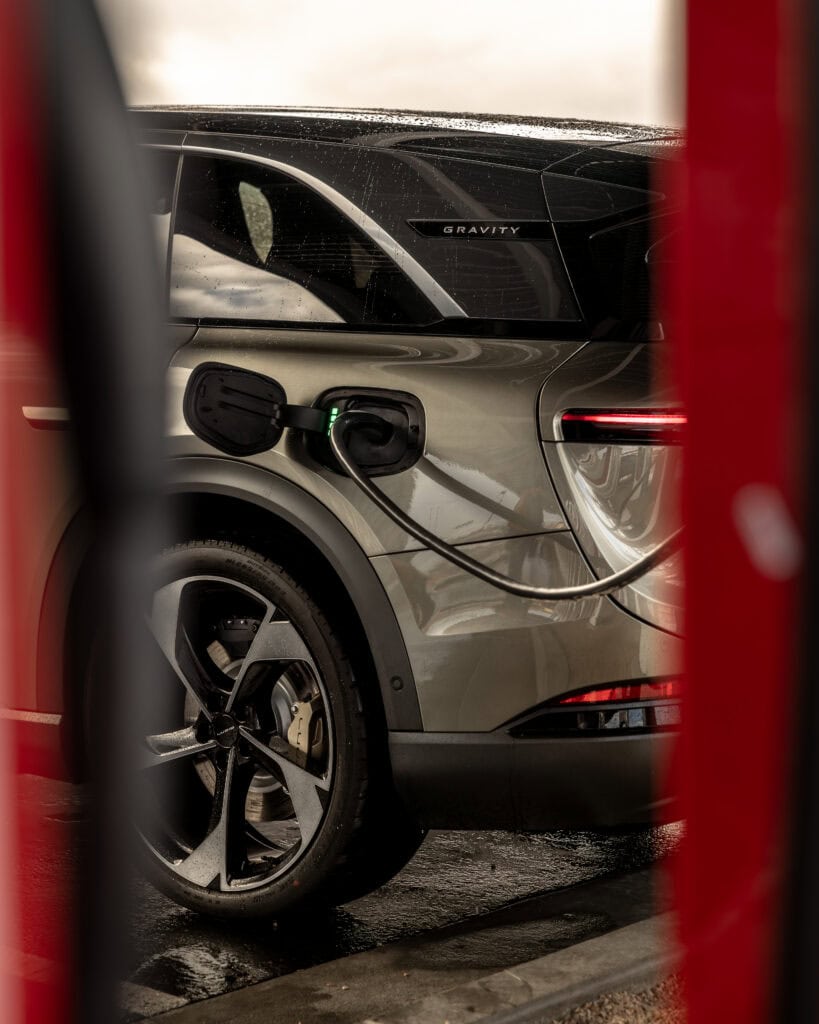
Lucid says the Gravity Grand Touring can add up to 200 miles of range in approximately 10.5 minutes under ideal conditions. Achieving that result requires the correct wheel configuration, a battery prepared to accept maximum power and a compatible 400-kilowatt DC fast charger. When those conditions align, the Gravity’s charging performance is among the strongest available in a family electric vehicle.
The Gravity also has a native North American Charging Standard port, providing access to compatible Tesla Superchargers without requiring an external charging adapter. That significantly improves road-trip flexibility, especially in regions where Tesla’s charging network is more dependable or more conveniently located than competing systems.
Not every charger will deliver the headline rate. Older or lower-output stations may provide substantially less power, and a battery that is too cold, too hot or already nearly full will usually charge more slowly. The Department of Energy’s guide to electric-vehicle charging stations explains how connector type, charging equipment, battery temperature and vehicle capability all influence the speed of a stop.
The result is still impressive even when real-world conditions prevent the maximum rate. Fast charging combined with long range means fewer stops and more freedom to choose where those stops happen. For families, that can be the difference between a road trip built around the vehicle and a vehicle that fits around the road trip.
You may also enjoy: The Real Key to EV Adoption Is Home Charging
The Cabin Is Clever, Beautiful and Screen Heavy
Inside, the Gravity combines a sweeping digital cockpit with a lower central touchscreen, a clean dashboard and materials that generally feel appropriate for the price. Navigation, entertainment, energy information and vehicle settings are presented through bright, sharply rendered displays. Important driving information is positioned high in the driver’s field of view, reducing the need to look dramatically away from the road.
The interface is modern and visually impressive, but the cabin’s dependence on software creates its largest vulnerability. When every display wakes promptly and every control responds correctly, the Gravity feels advanced without becoming theatrical. When a warning appears, an assistance feature becomes unavailable or a screen hesitates, the calm luxury experience begins to unravel.
Over-the-air updates allow Lucid to improve the vehicle after delivery, adding features and correcting problems without requiring every owner to visit a service center. That is one of the genuine advantages of a software-defined vehicle. It also means some buyers may feel as though they have purchased brilliant hardware while parts of the digital experience are still being developed around them.
The Rearview-Camera Recall Cannot Be Ignored
A federal safety recall covered certain 2025 and 2026 Gravity SUVs operating on software versions earlier than 3.3.20. According to the recall documentation, the rearview image could fail to appear when the vehicle was shifted into reverse. In some cases, drivers could instead see a blank display or a warning indicating that the camera was unavailable.
A failed rearview-camera display is a legitimate safety concern because it reduces the driver’s view of the area immediately behind the vehicle. Owners can use the federal NHTSA recall lookup tool to check a specific vehicle identification number and confirm that every available remedy has been completed.
Lucid addressed the problem through an over-the-air software update rather than requiring the replacement of a major physical component. That illustrates both sides of modern vehicle software. A coding problem can affect a federally required safety feature, but a connected vehicle can sometimes receive a remedy without spending a day inside a dealership service department.
Driver Assistance Still Requires a Driver
Lucid’s DreamDrive 2 system offers features such as adaptive cruise control, lane assistance and automated parking. Properly equipped Gravity models can also use hands-free driving assistance on compatible roads following a 2026 software update. These technologies can reduce workload on long highway journeys, but they do not transform the Gravity into an autonomous vehicle.
Cameras and sensors can be affected by dirt, glare, poor lane markings, weather, unsuitable roads or other environmental conditions. When assistance becomes unavailable, the vehicle alerts the driver to take control. That may be frustrating when a system is expected to help, but requesting human control is the appropriate response when the technology is no longer confident about what it can see.
NHTSA’s explanation of advanced driver-assistance technologies makes the central responsibility clear: these systems assist an attentive driver rather than replace one. The person behind the wheel remains responsible for steering, braking and watching the road, regardless of whether hands are temporarily permitted to leave the steering wheel.
You may also enjoy: 2027 Lexus TZ Revealed: Lexus’ Quietest Electric SUV Yet
The Tesla Model X Comparison Has Changed
For years, every premium electric SUV was inevitably compared with the Tesla Model X. The Tesla helped normalize long-range electric vehicles, over-the-air updates, minimalist cabins and access to a large proprietary charging network. It set the template that almost every electric luxury vehicle has been required to acknowledge.
The Gravity takes a different approach. It offers a more conventionally luxurious interior, a smoother and quieter ride, flexible three-row packaging and a higher maximum EPA range than the Model X achieved. Lucid concentrates heavily on materials, efficiency and driving refinement rather than making technological minimalism the central part of the experience.
Tesla’s software ecosystem still benefits from years of development and enormous amounts of customer use. Lucid’s interface can look just as advanced, but visual sophistication and long-term consistency are not the same thing. Tesla made electric vehicles feel normal, while Lucid is attempting to make them feel expensive in the traditional luxury sense.
The Real Catch Is Price and Patience
The more affordable Gravity Touring starts near $80,000, but it does not deliver the 450-mile range or 828-horsepower output associated with the Grand Touring. The Grand Touring begins near $100,000 before destination charges and major options. A customer attracted by the Gravity’s maximum specifications should configure the exact vehicle carefully because the final price can rise quickly.
That money buys an unusual collection of abilities. The Gravity offers genuine family space, exceptional range, rapid charging, immense power and ride quality that makes long journeys less tiring. Few electric SUVs manage to combine all of those qualities without becoming excessively large, inefficient or visually theatrical.
It also means buying an early-generation product from a relatively young manufacturer. Service availability, software refinement, long-term resale value and access to replacement parts deserve consideration alongside horsepower and range. The Gravity makes a compelling emotional case, but a luxury purchase this large should still survive a sober ownership calculation.
Who Should Buy the Lucid Gravity?
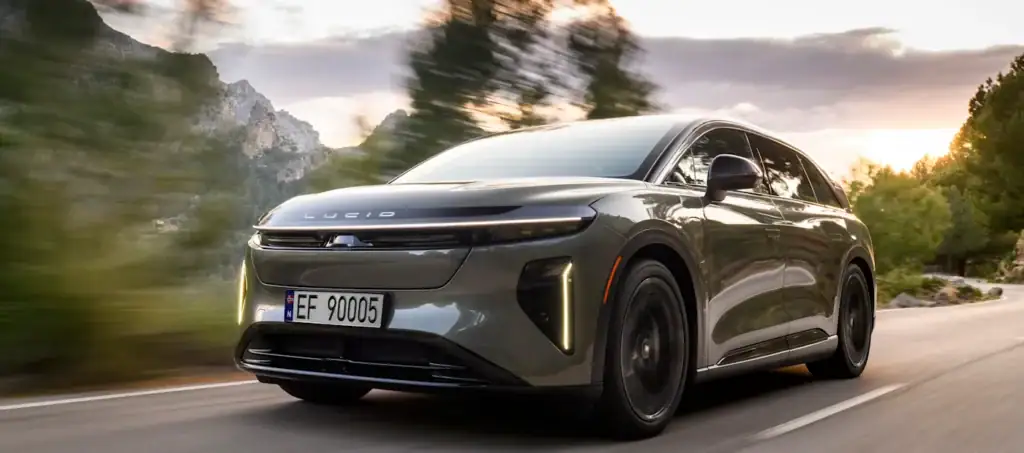
The strongest Gravity customer is a family or frequent long-distance driver who wants an electric SUV without treating every journey as an energy-management exercise. Its combination of range and charging speed reduces much of the planning anxiety that can surround electric road trips. Owners with dependable charging at home will find the vehicle especially easy to integrate into everyday life.
The Department of Energy’s information on charging an electric vehicle at home explains why overnight charging remains central to the ownership experience. Most drivers do not need to replenish an entire 450-mile battery every night. They generally need to replace only the miles driven that day, allowing the Gravity to begin most mornings with more than enough energy for normal routines.
Drivers who dislike screen-based controls, live far from Lucid service support or expect flawless software from the first day may prefer a more established alternative. Buyers who place greater value on space, quietness, efficiency and ride quality may decide that occasional digital irritation is an acceptable compromise. That is not a minor concern, but it is easier to tolerate when the underlying vehicle is this good.
Lucid Gravity Review Verdict
The Lucid Gravity deserved serious attention before it won the World Luxury Car award, and the recognition makes sense after examining what the SUV delivers. It is fast without feeling frantic, spacious without becoming absurdly difficult to park and efficient without turning every journey into a lecture about efficiency.
Few SUVs combine family practicality, long range, rapid charging and genuine luxury so convincingly. The Gravity feels stable, refined and surprisingly agile, while its compact electric drivetrain creates usable interior space that more conventionally engineered SUVs struggle to match.
Its weakness is equally clear. The physical vehicle feels like the finished product of an ambitious engineering program, while the software can still remind owners that ambition and maturity are not the same thing. Warning messages, temporarily unavailable systems and the rearview-camera recall reveal areas where the digital experience needs to become as dependable as the mechanical platform.
The Lucid Gravity is brilliant hardware that is still learning software. Continue improving the interface, eliminate the remaining glitches and strengthen the ownership network, and this electric luxury SUV becomes extraordinarily difficult to beat.