Longest-Lasting Car Brands: What Buyers Should Know
By Robert R Guio
Longest-Lasting Car Brands data puts Toyota far ahead, but buyers should use the ranking as a filter—not a substitute for a vehicle inspection.
If you are shopping for a car you intend to keep until the loan is a distant memory, a new iSeeCars study deserves attention. The research estimates the probability that vehicles from 33 brands will reach 250,000 miles, and Toyota is so far ahead that the margin matters more than the simple first-place finish.
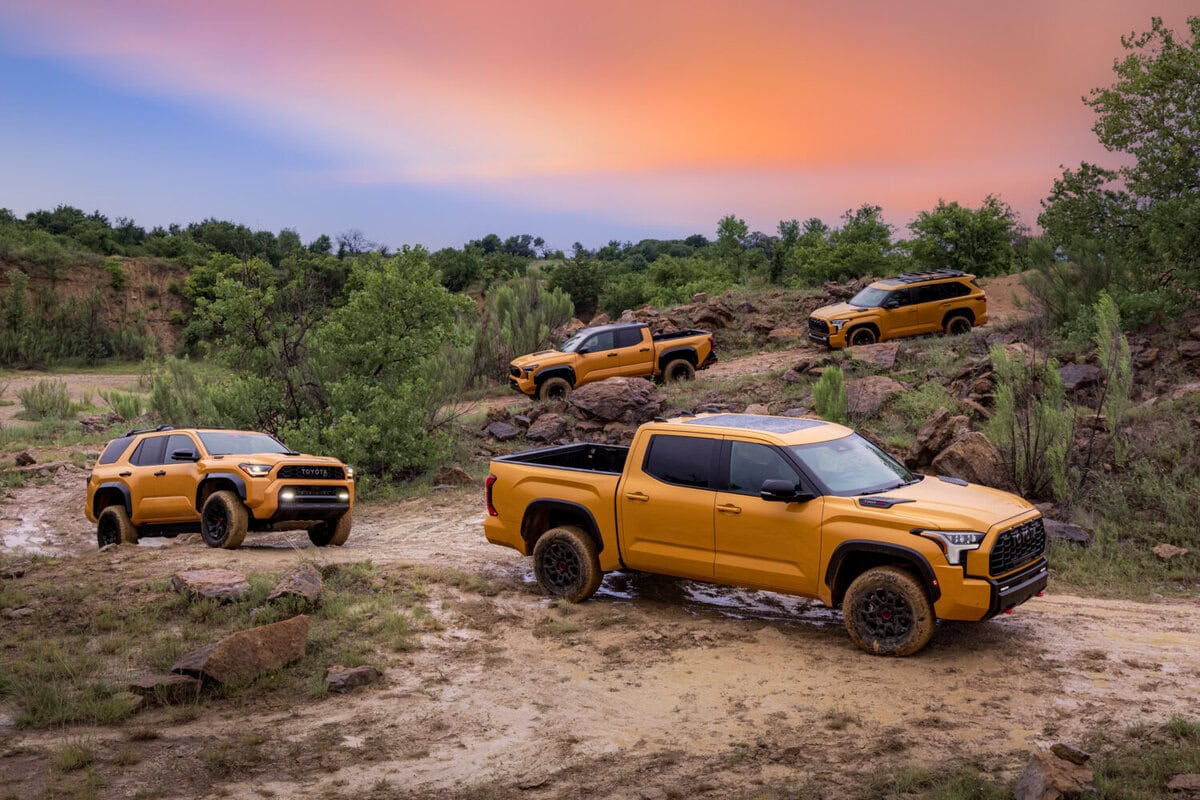
Toyota lands at 19.7%, compared with a 5.4% industry average. Lexus follows at 14.4%, Honda at 13.3% and Acura at 9.5%. GMC, in fifth place, falls to 5.8%. In other words, the top four are not clustered around the market. They form their own group.
That is valuable information. It is also exactly the kind of statistic that can be misused in a dealership conversation or social-media graphic. A brand ranking cannot tell you whether the specific car in front of you has been maintained, overheated, wrecked, flooded, abused, towed beyond its limits or treated like a beloved family member. My advice is to use this study to decide where to look harder, not to decide what to buy without further evidence.
You may also enjoy: Used cars under $20,000 are disappearing fast
Longest-Lasting Car Brands Are a Starting Point, Not a Verdict
The study is unusually large. iSeeCars says it examined more than 395 million vehicles and determined average odometer readings at each vehicle age. Its proprietary modeling then estimates the likelihood of reaching different mileage thresholds. Model and generation results are combined into a make-wide figure, with greater weight given to vehicles that represent a larger share of that brand’s real-world population.
That is a useful way to identify broad patterns. It is not the same thing as putting 395 million cars on dynamometers and driving them until something breaks. The result is a probability based on real-world mileage data, not a mechanical guarantee.
This distinction becomes important when you translate 250,000 miles into real life. The Federal Highway Administration reports that the average registered vehicle traveled 11,071 miles in 2024. At that pace, 250,000 miles represents roughly 22.6 years of driving. Plenty of households drive much more than average, of course, but the calculation shows just how extreme the threshold is.
That is why I would not read a 3% or 4% result as “bad” in the way you might interpret a failing test score. Reaching a quarter-million miles is difficult. The study is separating brands at the far end of vehicle life, where usage patterns and owner behavior can matter almost as much as engineering.
The practical takeaway is simple: the ranking can improve your odds before you start shopping, but once you have a VIN, the VIN matters more than the badge. The Federal Trade Commission’s used-car guidance recommends a vehicle-history report and an independent inspection before purchase. That advice becomes more important, not less, when a car already has six figures on the odometer.
You may also enjoy: 2026 Toyota RAV4 Woodland Review: Vehicle Analysis
Toyota’s Margin Is the Number I Would Remember
There is a tendency in rankings to obsess over position. First, second, third, fourth. Here the percentages tell a more useful story. Toyota’s estimated 19.7% chance is about 3.7 times the overall average. Lexus is at 14.4%, Honda at 13.3% and Acura at 9.5%. Then the field compresses toward the average.
GMC is fifth at 5.8%, barely above the 5.4% overall figure. Mazda is sixth at 5.3%. Lincoln comes next at 4.7%, followed by Ram at 4.2%, Ford at 4.1%, Cadillac at 3.9%, Chevrolet at 3.6%, Nissan at 3.4% and Tesla at 3.3%.
That should change how a buyer interprets the headline. The story is not “Toyota wins another reliability list.” The story is that Toyota, Lexus, Honda and Acura are statistically separated from most of the market at this particular mileage threshold.
There is also a useful lesson in how to think about new vehicles. I have reviewed current products such as the Honda Passport and Toyota Sequoia and can tell you whether they work well as family transportation, whether their controls make sense, whether their packaging is thoughtful and whether the driving experience is convincing. None of that allows me to promise what a 2026 vehicle will be doing in 2046. Long-term durability has to be earned over time.

That is why a large historical data set is useful. It adds a dimension that a week-long press loan cannot provide. A new-car review tells you how a vehicle behaves now. A longevity study asks what happened to huge populations of older vehicles after years of real ownership. The two forms of evidence answer different questions.
You may also enjoy: 2026 Honda Passport Review: The Best SUV for Dogs, Dirt, and Discerning Drivers
Luxury Longevity Is Where the Study Gets Complicated
The luxury results are a good warning against lazy conclusions. Lexus has a 14.4% estimated probability of reaching 250,000 miles, which iSeeCars calculates at 4.2 times the luxury-brand average of 3.4%. Acura follows at 9.5%. Lincoln is at 4.7%, Cadillac at 3.9% and Tesla at 3.3%.
After that, the percentages become small: Mercedes-Benz and Volvo are tied at 2.6%, INFINITI is at 2.5%, BMW and Audi are at 0.5%, Land Rover and Buick at 0.4%, Porsche at 0.3%, and Jaguar and Maserati at 0.0% in the model.
That last group is where context is essential. Karl Brauer of iSeeCars put it well: “Luxury status doesn’t translate into extreme longevity, though it’s important to remember how much the average luxury car is actually driven compared to mainstream models.” He added, “For instance, Porsche’s low probability is more a reflection of lower use by Porsche owners than a lack of quality or durability.”
A garage-kept sports car can be mechanically healthy for 20 years and still never come close to 250,000 miles. A three-row family SUV used for commuting, school, holidays and cross-country travel can rack up mileage at several times the rate. The study measures the likelihood of crossing an odometer threshold, so exposure matters.
This is also why I would resist using the bottom of the list as a “never buy” table. If you are choosing a used luxury vehicle, repair complexity, parts prices, service history and prior ownership matter enormously. A brand’s low probability of reaching 250,000 miles might reflect how its vehicles are used as well as how they age.
Buyers should also remember that longevity is only one piece of ownership cost. A car can reach 250,000 miles and still become financially unattractive if it needs repeated expensive repairs. Conversely, a vehicle that is sold at 150,000 miles may have delivered an excellent, economical life for its owner.
You may also enjoy: How Toyota Builds The Perfect Car For Real Life
Maintenance Can Matter More Than the Logo on the Hood
The study is about brand probabilities. Your driveway contains an individual machine.
For a used-car buyer, I would put maintenance history near the top of the decision. Oil changes, cooling-system care, transmission service where specified, brake fluid, tires, suspension wear, battery condition and evidence of repeated warning lights tell you far more about the exact vehicle than a reputation score alone.
The Environmental Protection Agency advises drivers to follow the manufacturer’s maintenance schedule, keep tires properly inflated and use the recommended motor oil. Those recommendations are presented in a fuel-economy context, but they also reinforce a broader ownership truth: neglect shows up in the way a vehicle operates.
Recall history matters too. The National Highway Traffic Safety Administration lets owners and shoppers search a VIN for unrepaired safety recalls. A durable vehicle with an unresolved safety campaign is still a vehicle that needs attention.
For a high-mileage candidate, I would also insist on an independent pre-purchase inspection. A technician can look for fluid leaks, corrosion, worn suspension components, brake condition, tire age, cooling-system problems, evidence of accident repairs and signs that a dashboard warning light has been cleared rather than fixed.
If you are comparing two examples of the same model, the “worse” color with complete service history can be a much smarter purchase than the shiny one with no paperwork. Cars do not read brand rankings. They respond to heat, friction, load, fluids, corrosion and maintenance.
Fuel economy is worth checking because deterioration can reveal other issues. The EPA’s fuel-economy resources explain how official estimates are developed, while owner records can show whether a specific car’s consumption has changed materially over time. A sudden unexplained drop can be a clue that maintenance or diagnosis is overdue.
You may also enjoy: 2026 Toyota Sequoia TRD Pro Review: Big SUV, Easy Life
How I Would Shop the Longest-Lasting Car Brands List
If I were buying a new vehicle with the specific goal of keeping it for 15 years or more, Toyota, Lexus, Honda and Acura would move higher on my research list because this study gives them a meaningful statistical advantage at the extreme-mileage end of the market. GMC would deserve a look too, particularly if the vehicle type matched the job I needed it to do.

I would not stop there. First, I would research the exact model and powertrain. Brand averages can hide weak and strong products. Then I would look at recall history, service intervals, insurance costs, tire replacement costs and whether the vehicle’s complexity matches my tolerance for long-term repair expense.
For a used vehicle, I would reverse the order. I would start with condition and documentation, then use the brand ranking as supporting evidence. A 120,000-mile Honda with meticulous records may be far more attractive than a lower-mileage Toyota with a suspicious history. Mileage is evidence, but maintenance explains much of what that mileage means.
I would also be cautious about paying too much for a reputation. Durable brands often carry strong resale values, which means the used-car buyer can be asked to pay a premium for the very trait they are trying to obtain. The question is whether the expected remaining life and lower ownership risk justify the extra money.

Finally, I would separate “can last” from “should keep.” A vehicle can remain mechanically viable while no longer fitting the owner’s needs, safety expectations, fuel budget or repair tolerance. The goal is not to win an odometer contest. The goal is to buy transportation that remains useful and financially sensible for as long as you need it.
The iSeeCars numbers make Toyota’s position hard to ignore. A 19.7% estimated chance of reaching 250,000 miles is a remarkable result against a 5.4% industry average. Lexus, Honda and Acura strengthen the same broader pattern. But the smartest way to use the ranking is disciplined rather than devotional: let the data shape your shortlist, then make the individual car prove it deserves your money.