Cars With Rear Occupant Detection: What Actually Works
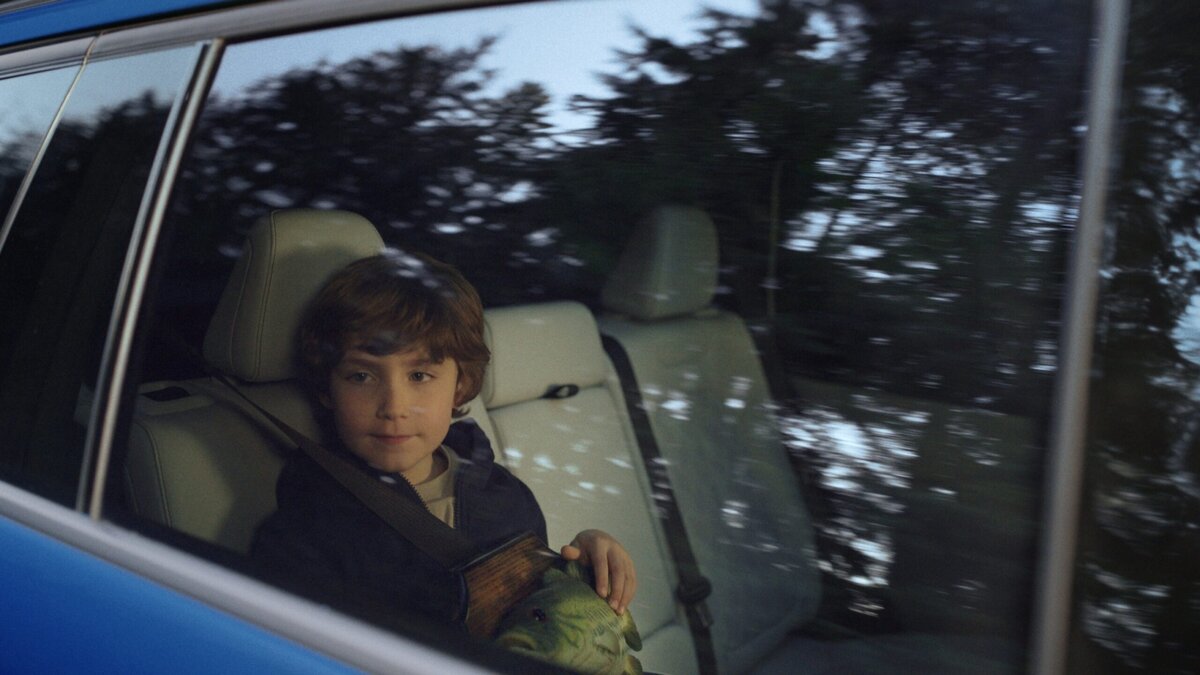
Cars with rear occupant detection range from basic dashboard reminders to radar systems that can protect a dangerously hot cabin.
For years, I have asked automakers to make vehicles call for help when a child is left inside. Modern cars can report a collision, transmit their location and determine whether the driver is watching the road. Recognizing a trapped passenger should not be beyond them.
Protecting children is the urgent public-safety priority. For me, the risk to animals is personal as well. I have six dogs, and I want the vehicle carrying them to do more than display a polite message after I close the door.
You may also like this video:
Cars With Rear Occupant Detection Are Not Equal
“Rear-seat reminder” describes several very different technologies. The simplest version records that a rear door was opened. When the trip ends, it tells the driver to check the back seat. General Motors, Ford, Honda, Subaru and Toyota offer versions of this logic on numerous models.
Nissan’s Rear Door Alert adds an exterior horn warning when the driver leaves without reopening a rear door. That can attract attention, but the vehicle still infers that somebody may be inside. It has not necessarily detected a child or animal.
This distinction matters when shopping. A door-logic reminder can be useful, but it cannot reliably find a child who climbed into a parked vehicle, a dog placed through a tailgate or an occupant who remained inside without the expected door sequence.
You may also enjoy: 5 Must-Know Car Seat Safety Tips Every Parent Needs
Seat sensors and buckle information provide additional clues, although they can miss small occupants, unbelted passengers and animals. Direct detection is the more ambitious approach because it searches the cabin itself.
Hyundai and Kia Move Beyond the Courtesy Chime
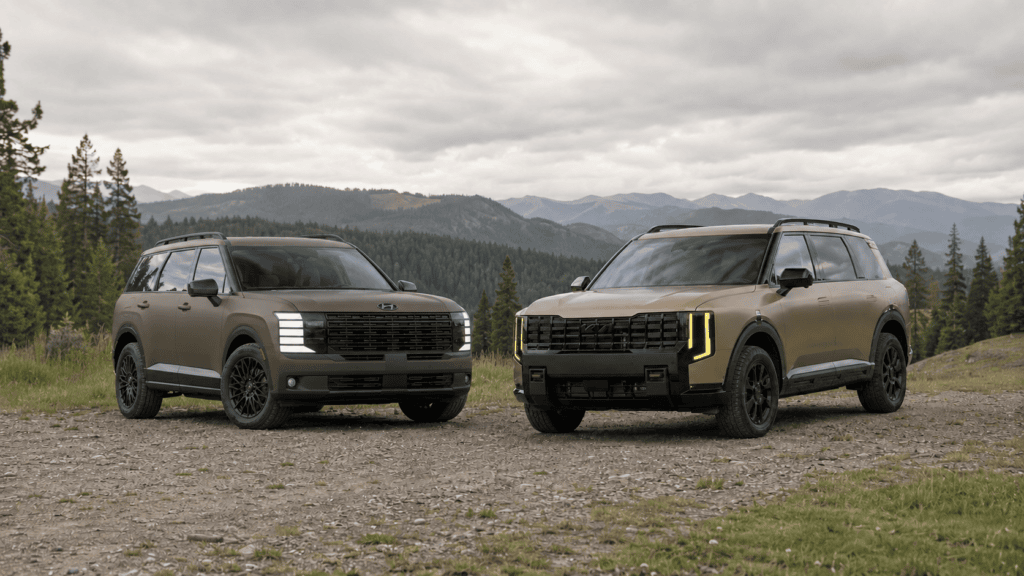
Hyundai deserves credit for advancing this feature beyond a dashboard note. Its enhanced Rear Occupant Alert technology can use ultrasonic or radar sensing, depending on the vehicle, to search for movement after the doors are locked. When the system detects movement, it may flash the lights, sound the horn and send a connected-app alert.
The technology has appeared across selected versions of the Hyundai Santa Fe, Palisade, Tucson and Ioniq models. Related systems are used by Kia in family-focused vehicles including the Telluride, Sorento, Carnival and EV9. Genesis offers advanced occupant alerts on vehicles including the GV70 and GV80. Availability and app functionality still vary by model year, trim and market.
You may also enjoy: 2027 Kia Telluride X-Pro Review: Real Ruggedness
That is a serious improvement over door logic because the vehicle is trying to determine whether the cabin remains occupied. Radar can identify tiny movements associated with breathing, which may help locate a sleeping infant or a quiet animal that produces little visible motion.
Volvo’s EX90 uses cabin radar intended to cover the passenger compartment and cargo area. Newer European vehicles from BMW, BYD, Mercedes-Benz, Tesla and Zeekr employ different combinations of radar, seat data, door information and app alerts.
You may also enjoy: 2027 Hyundai Ioniq 9 Calligraphy Black Ink
Buyers should still treat every system as a backup. Testing by Germany’s ADAC in 2026 found that several radar-equipped vehicles failed to recognize a newborn-sized test device in certain infant-carrier scenarios. A sophisticated sensor that occasionally misses its most vulnerable subject cannot be considered a complete solution.
The Survey Shows Why Technology Is Needed
A Harris Poll conducted for PETA found that 17% of dog guardians admitted leaving a dog alone in a closed, parked vehicle without air conditioning when temperatures were above 70 degrees. Among guardians ages 18 to 34, the figure was 26%. For respondents 65 and older, it was 1%.
The July 2026 survey covered 2,001 U.S. adults, including 1,373 dog guardians. It also found that 39% of Americans did not know that a closed vehicle’s interior could climb 25 to 35 degrees above the outside temperature in about 20 minutes.
You may also enjoy: Best SUVs for Three Car Seats and Two Big Dogs
The danger is not theoretical. The United States loses roughly 37 children to vehicular heatstroke in an average year, and more than 1,000 children have died since 1998. The National Weather Service warns that vehicle temperatures can become deadly quickly, even when outdoor conditions do not feel extreme.
No authoritative national system counts every pet killed or rescued from a vehicle. PETA reported at least 85 dog deaths from heat-related causes during summer 2026, while cautioning that many cases never become public. The absence of a complete count must not be confused with the absence of a problem.
Winter does not make unattended confinement acceptable. A vehicle cools toward the surrounding temperature, exposing children and animals to temperature stress, including hypothermia and frostbite in severe conditions.
Which Cars Can Actually Control the Temperature?
Most occupant alerts cannot rescue anybody by themselves. They depend on the driver or a passerby noticing the warning. That is the industry’s largest remaining weakness.
Tesla’s Child Left Alone Detection, initially introduced for newer European Model 3 vehicles with cabin radar, moves closer to intervention. Tesla says it escalates alarms and maintains cabin temperature until the detection is addressed. Its limited vehicle and regional availability prevents it from being a universal answer, but the operating principle is important.
Dog Mode is different. It keeps the climate system operating and tells passersby that the animal is safe, but an owner must remember to activate it. It does not solve the forgotten-occupant problem by itself.
You may also enjoy: Why the Best Cars for Dogs Start With a Minivan
Mercedes-Benz’s newer active occupant-presence detection can issue escalating warnings and, with the appropriate digital service, notify the owner through its app. It should not be described as automatically contacting emergency services on every Mercedes or V-Class. Its exact response depends on the vehicle, country, equipment and activated services.
You may also enjoy: How the IIHS Helped Shape the Cars We Drive Today
The system I want combines these capabilities. First, detect breathing or movement throughout the passenger and cargo areas. Next, warn the driver, sound the horn, flash the lights and send an app notification. If cabin conditions become dangerous, maintain heating or cooling. If the owner does not respond, call a staffed response center and provide emergency services with the vehicle’s precise location.
None of those emergency functions should require a continuing subscription. A family shopping for a vehicle should ask whether it detects a real occupant, works after locking, covers every row, sends a remote alert and intervenes when temperatures become dangerous. A chime is better than silence. A car capable of preserving life is the standard automakers should now be chasing.