Porsche Mission S: The Supercar That Moves Its Dashboard
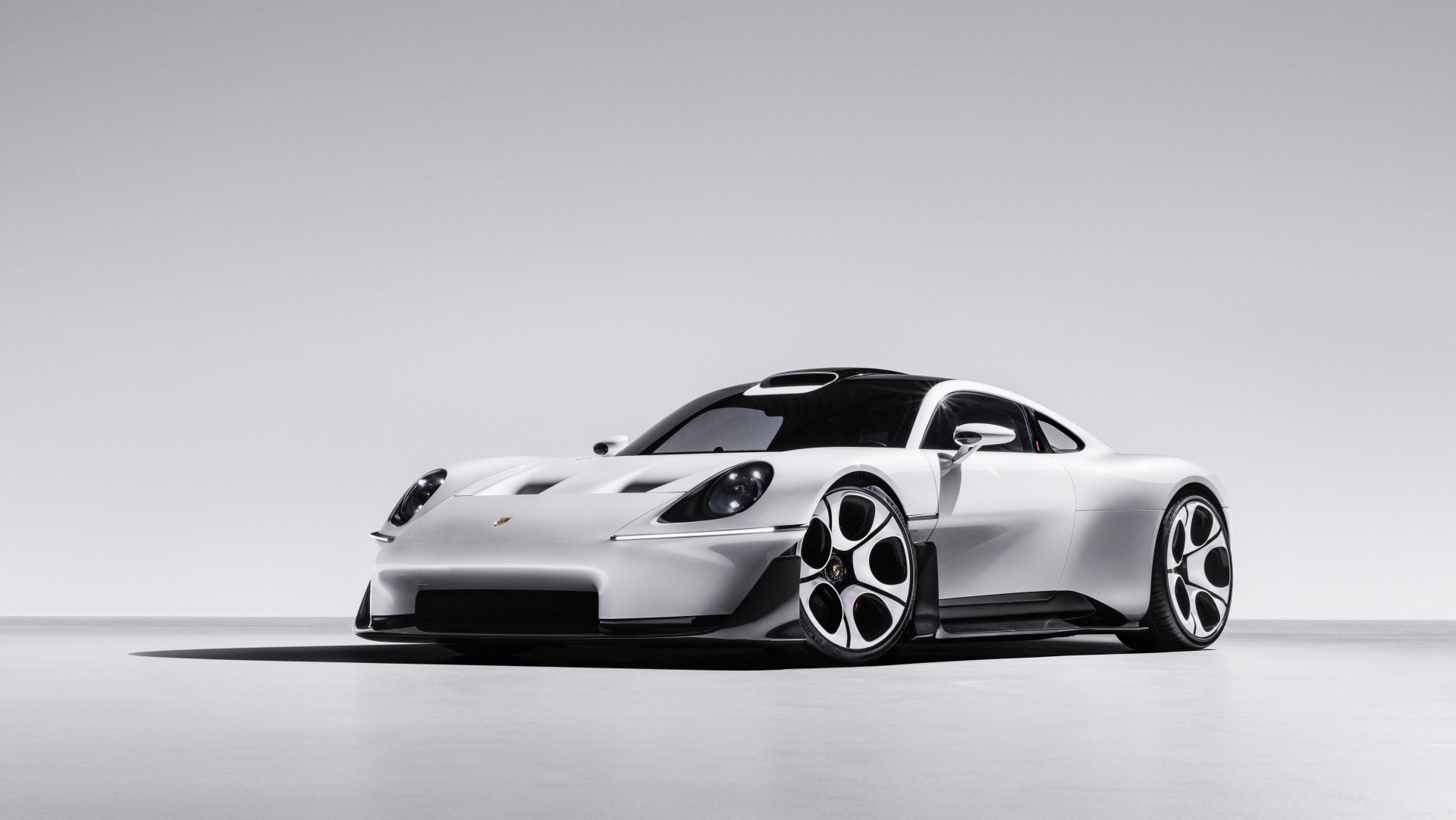
The Porsche Mission S previews a supercar above the 911, with a moving tachometer, no permanent center touchscreen and an entirely new design direction.
Somewhere in Germany, somebody at Porsche has apparently looked at the modern luxury car dashboard and asked a rather sensible question.
Do we really need another enormous television stuck in the middle of it?
The answer, according to the new Porsche Mission S, is no.
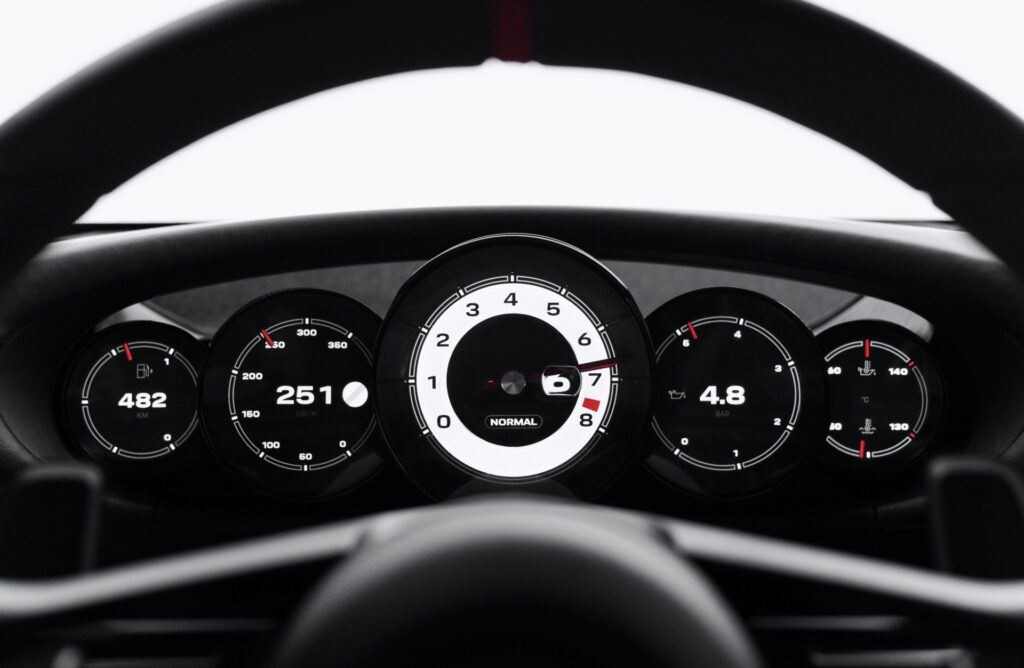
Instead, Porsche has created an extraordinary mid-engine supercar concept with a dashboard that physically moves, five circular gauges and a retractable mount for your smartphone.
Rather wonderfully, the tachometer moves closer to you when you select certain driving modes.
Apparently, Porsche believes the driver should be the most important thing in a sports car. What a peculiar idea.
But the bigger announcement is more significant. Porsche has confirmed plans for a permanently available supercar family positioned above its legendary 911.
Porsche Mission S: A New Supercar Above the 911
The Porsche Mission S made its debut in Queens, New York, on October 15, 2026.
The location was deliberately chosen. In 1953, Porsche photographed its 550 Spyder on the same waterfront, creating images that helped introduce its sporting identity to America.
Seventy-three years later, Porsche has returned to announce a new chapter.
Chairman Michael Leiters described the Mission S as a preview of a permanent mid-engine super sports car offering above the 911.
That’s an important distinction.
Porsche has built remarkable halo cars before. The 959, Carrera GT and 918 Spyder were engineering landmarks, but they weren’t the foundation of continuously available supercar families.
The Mission S points toward something different: an additional product line, sitting above the car that has defined Porsche for generations.
It’s a bold strategy. Porsche must preserve the 911’s reputation while persuading wealthy enthusiasts that another, presumably more expensive, Porsche deserves space in their garages.
Anyone interested in how Porsche continues to reinterpret its heritage should also consider the company’s recent mountain-road interpretation of the GT3.
You may also enjoy: Porsche 911 GT3 Bergsport Is Built for Mountain Roads
The Porsche Dashboard That Physically Moves
The Mission S interior may be more interesting than the exterior.
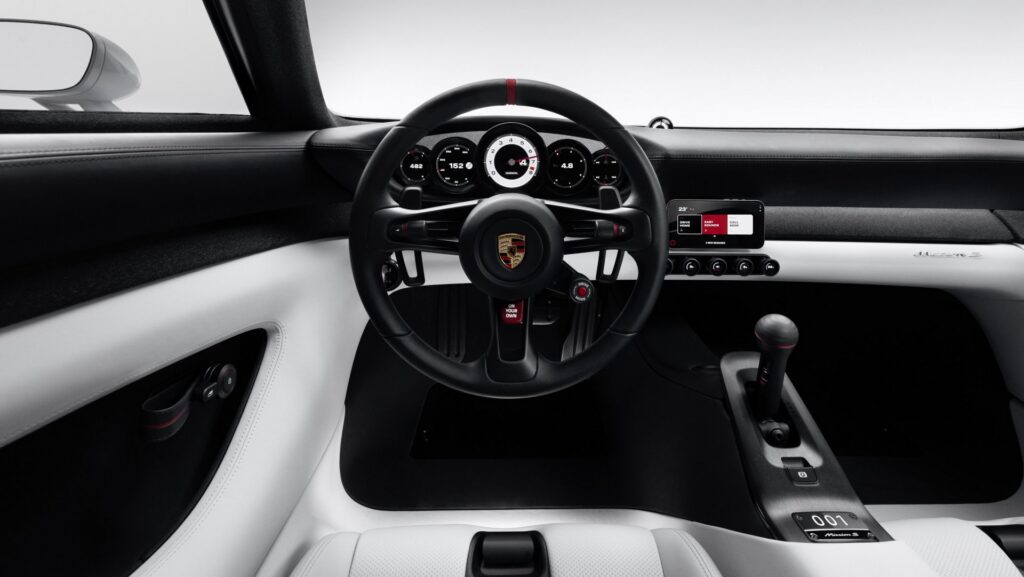
Its five circular instruments pay tribute to decades of Porsche engineering, but they’re not conventional fixed gauges.
The central tachometer features a physical needle with a digital display behind it. Depending on the driving mode, the entire instrument moves closer to the driver.
The surrounding instruments can also change their arrangement.
It’s a fascinating approach to displaying information, especially when most manufacturers are replacing distinctive instrument clusters with interchangeable rectangular screens.
The driver’s relationship with the instruments becomes part of the vehicle’s mechanical personality.
There are practical questions. Moving instruments require motors, control systems and components that must operate reliably through thousands of journeys.
Mechanical sophistication can be delightful until something stops moving.
Porsche hasn’t confirmed that this exact arrangement will reach production.
Still, the concept provides an interesting answer to a problem automakers have been discussing for years: how should drivers interact with increasingly sophisticated vehicle technology?
The NHTSA human factors research program examines the visual, cognitive and manual demands placed on drivers.
A clever interface should reduce unnecessary effort, not merely look spectacular in a showroom.
You may also enjoy: Porsche Built a $275K 911 You Can’t Drive Home
Porsche Has Removed the Permanent Center Touchscreen
This is where the Mission S gets particularly interesting.
There is no permanently installed center infotainment screen and no fixed display for the passenger.
Instead, a retractable smartphone holder supports compatible MagSafe devices. Drivers can use their phones for navigation and information when necessary.
Physical switches and push-pull controls handle selected vehicle functions.
The company hasn’t abandoned electronics. The instruments retain digital functionality, and the My Porsche application remains part of the experience.
What Porsche is changing is the hierarchy of information.
A conventional modern dashboard often asks drivers to interact with menus. The Mission S suggests frequently needed functions should be readily accessible, while less essential information can remain out of sight.
That approach deserves attention beyond the supercar market.
According to federal distracted-driving guidance, distraction can involve taking your eyes off the road, removing your hands from the controls or diverting your attention from driving.
A dashboard without a center screen isn’t automatically safer. Nor is a smartphone inherently a superior navigation solution.
Much depends on control placement, interface design and how frequently the driver must interact with the system.
NHTSA’s visual-manual distraction guidance provides useful principles for assessing those interactions.
For me, the attraction is straightforward. A sports car should make the driving experience memorable without making the basic controls unnecessarily complicated.
You may also enjoy: VW Showcases Audi’s Future and Scout’s U.S. Comeback
A Porsche Design Inspired by Five Legendary Cars
Outside, the Mission S borrows selectively from Porsche’s extraordinary design history.
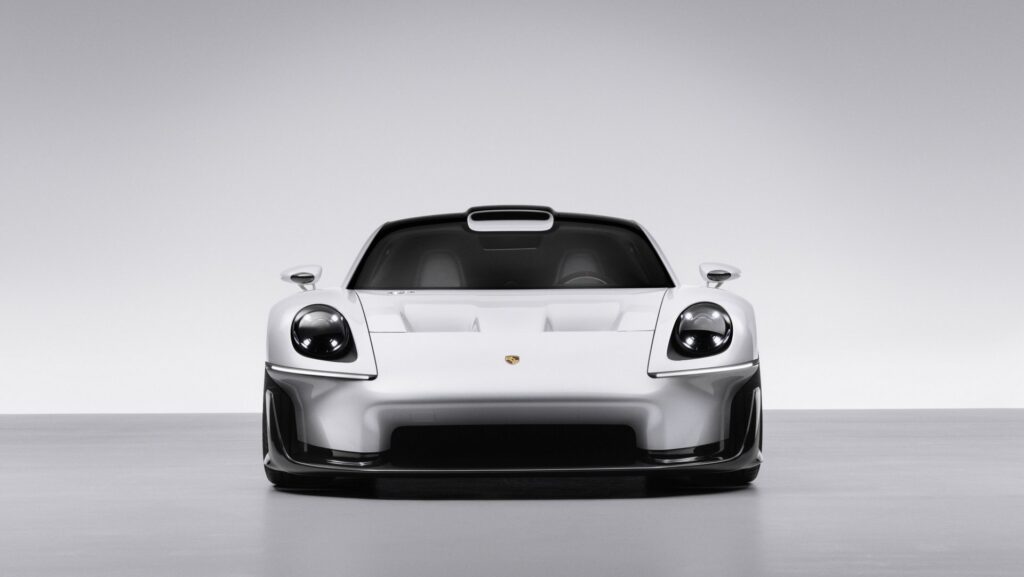
There are obvious visual connections to the 911, particularly the rounded headlights and pronounced fenders.
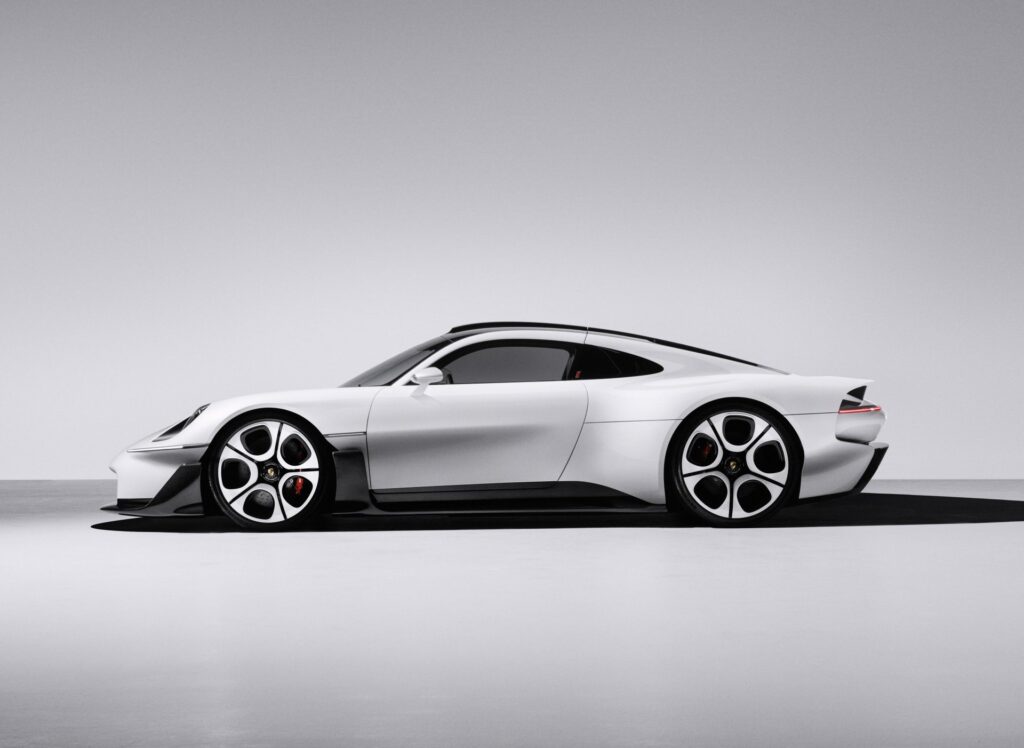
The flat front references the 911 GT1, while the roofline draws inspiration from the 959.
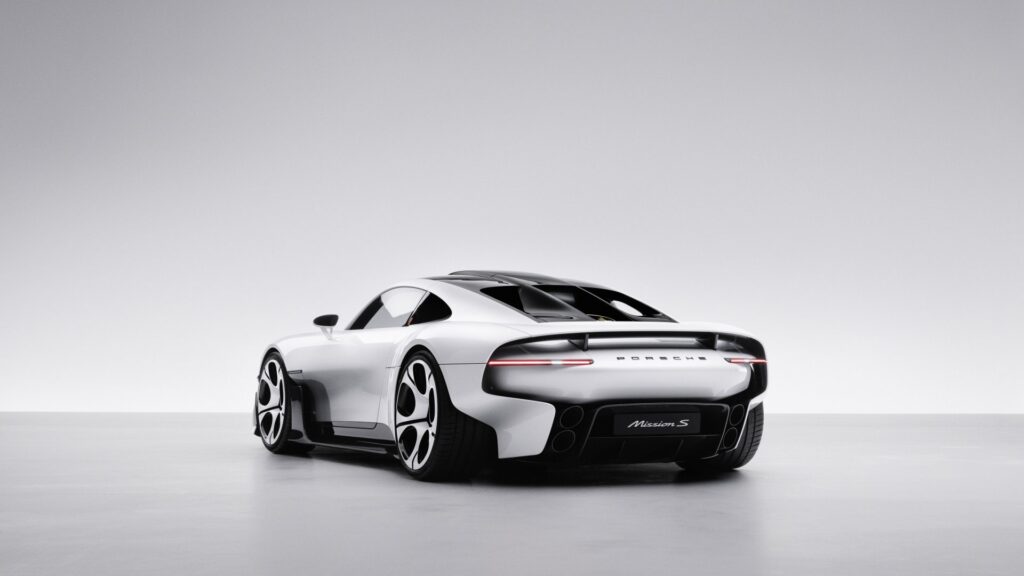
Its rear design incorporates an integrated active wing, and the wheels reinterpret the distinctive dial styling of the Porsche 928.
Even the cooling details reference Porsche’s 917 racing heritage.
What’s impressive is how Porsche has assembled those references without simply creating a modern replica of an old car.
The Mission S has its own proportions, including the compact cabin and broad stance made possible by its proposed mid-engine layout.
That layout can support a favorable distribution of mass, although the finished car’s handling will depend on considerably more than engine placement.
Vehicle dynamics also depend on suspension geometry, tire characteristics, overall weight and chassis calibration.
The Department of Energy’s propulsion research provides useful background on the materials and engineering challenges associated with modern vehicle powertrains.
You may also enjoy: Porsche 550 J Brings a Racing Legend Down to Size
Will Porsche Use Gasoline, Hybrid Power or Electricity?
Here comes the enormous unanswered question.
What’s going to power it?
Porsche hasn’t announced a production powertrain for the Mission S platform.
There is no confirmed horsepower figure, acceleration time, battery specification or production top speed.
And no confirmed price.
Those omissions are significant because the company describes the future platform as flexible rather than detailing a specific mechanical configuration.
The eventual solution could influence how the car competes against other exotic performance machines.
An internal-combustion engine would appeal to enthusiasts who value sound and traditional mechanical character. Electrification could introduce different performance and packaging opportunities.
Hybrid technology offers another possibility, although Porsche hasn’t confirmed that approach for this particular platform.
The Department of Energy’s electric-drive roadmap details some of the technical challenges manufacturers face when developing sophisticated electric propulsion systems.
Until Porsche identifies the powertrain, comparisons with specific production supercars would be premature.
You may also enjoy: $240,000 Dreams Fuel America’s Luxury Car Obsession
My Take: Porsche Understands Something the Industry Forgot
What fascinates me about the Porsche Mission S isn’t its promise of greater performance. Porsche hasn’t even announced the numbers.
It’s the attention being paid to the driver’s experience.
Moving instruments, physical switches, a traditional key and a cabin without a permanent central screen are unusual choices in an industry fascinated by digital real estate.
That doesn’t make the concept perfect. Smartphone dependence creates complications, and a mechanically movable instrument panel could become an expensive service concern.
But Porsche is asking whether technology should be visible all the time or simply available when needed.
Affiliate shopping: If you are shopping for all-weather floor mats, Shop OEDRO directly or Shop OEDRO on Amazon. Use code NIKM20 at the OEDRO official store. Check current code terms and vehicle fitment before ordering. Test Miles may earn a commission from purchases made through these affiliate links.
The Mission S must ultimately prove itself as a real sports car. That means exceptional handling, useful ergonomics, durability and performance worthy of its position above the 911.
The styling is promising. The interior thinking is refreshing. The missing specifications remain a substantial question mark.
But one little detail has already captured my imagination.
The tachometer moves closer when you’re getting serious.
Now that’s the sort of technology I can get behind.