2027 Audi SQ9: 591 HP and Headlights That Think
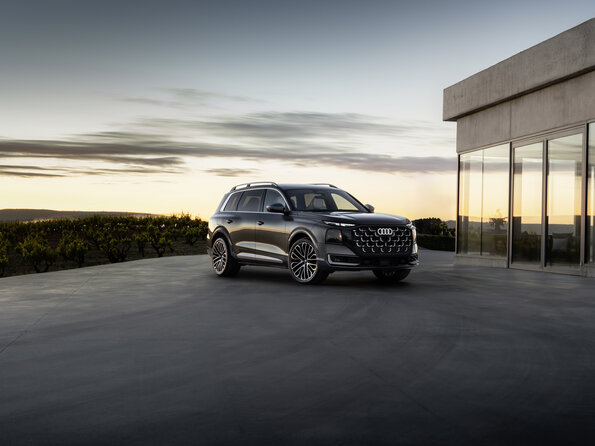
The 2027 Audi SQ9 pairs 591 horsepower with 25,600-LED headlights, clever family technology and an $118,000 price. Which features matter?
I’ve always thought the best automotive technology solves a problem that drivers actually have. Not another screen displaying the weather in a city nobody intends to visit. Not a complicated menu to adjust something that used to have a perfectly serviceable button.
And certainly not another subscription to something already installed in the vehicle.
That is why the headlights on the new 2027 Audi SQ9 interest me more than its rather substantial 591 horsepower.
Audi has developed a system that can illuminate the road ahead while selectively avoiding the eyes of approaching drivers. It is clever engineering with a genuine purpose, wrapped inside the company’s new flagship three-row SUV.
At $118,000 before options, however, cleverness needs to be accompanied by considerably more than an impressive demonstration.
Why the 2027 Audi SQ9 Headlights Matter
Picture a dark country road with no streetlights. You’ve selected high beams because you want to see as far ahead as possible. Then another vehicle approaches, forcing you to dip the lights and sacrifice much of that visibility.
Audi’s Digital Matrix LED headlights are intended to solve that familiar compromise.
Each chip contains 25,600 micro-LEDs, allowing the system to adjust light distribution with remarkable precision. Rather than extinguishing the entire high beam, it can reduce illumination around another vehicle while keeping other areas bright.
The adaptive driving beam regulations introduced in 2022 opened the door for this technology in America.
There is an important caveat. More sophisticated lighting hardware does not automatically guarantee better road illumination. The IIHS headlight testing procedure evaluates actual visibility and glare rather than rewarding impressive component specifications.
That is the standard by which I would judge this system during an independent nighttime evaluation.
You may also enjoy: Mercedes-Benz Opens World’s Most Advanced Light Center
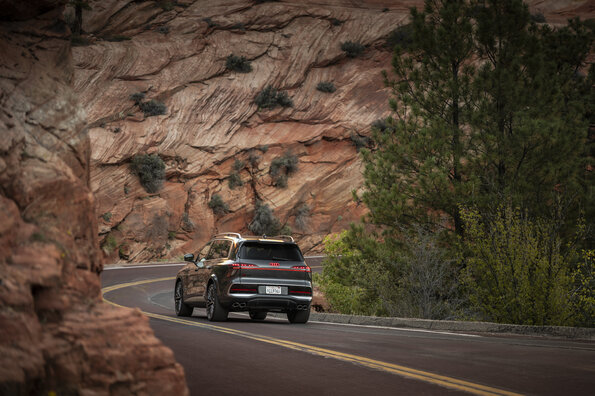
A Light Show With a Safety Argument
Audi has also given the SQ9 a rather extensive lighting wardrobe.
Owners can choose from eight digital lighting signatures, including coordinated welcome and departure displays. At the rear, six curved OLED panels contain 512 independently controlled segments.
These are more interesting when they communicate something useful. A warning triangle can appear when the hazard lights are operating. Other lighting functions can communicate during automated parking or indicate when another road user approaches too closely.
There are even projected turn-signal graphics designed to make intentions more visible to pedestrians and cyclists.
That is a promising direction for exterior lighting, although displaying additional information is not the same as proving that other road users understand it correctly.
The IIHS research into nighttime visibility offers a useful reminder: the objective is helping people identify hazards without creating excessive glare.
You may also enjoy: 2027 Mercedes S-Class: The Flagship Gets Smarter
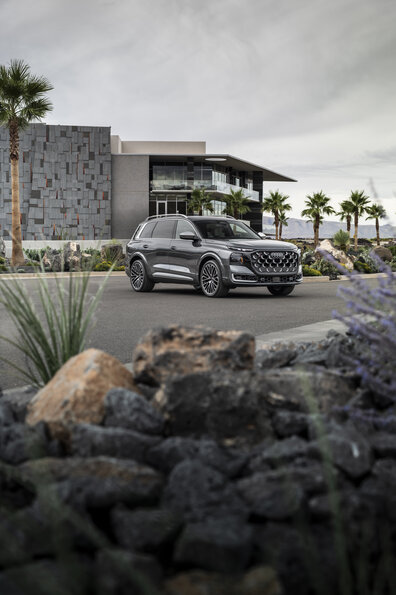
The Best Technology Might Be in the Second Row
Living with large dogs has taught me that vehicle practicality often matters more than the specifications on the showroom window.
The SQ9 offers 19.3 cubic feet of luggage space behind the third row and 87.7 cubic feet with the rear seating folded. The cargo area includes aluminum rails and adjustable hooks for securing belongings.
More importantly, the available air suspension can lower the rear of the vehicle to improve loading access.
That is welcome when your passenger happens to be a large Labrador who believes jumping into expensive vehicles is somebody else’s responsibility.
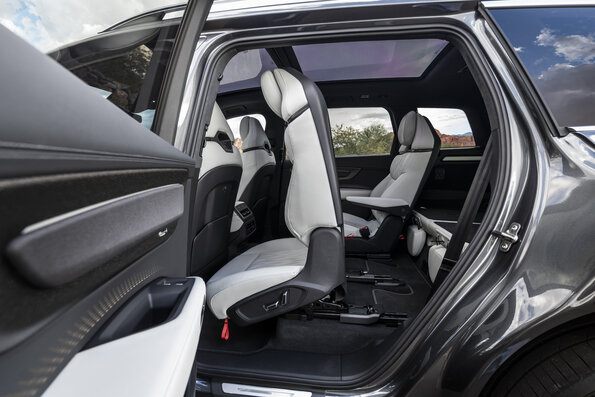
Families also get some useful second-row thinking. Available captain’s chairs move forward for third-row access, and the seven-seat arrangement provides three child-seat positions across the middle row.
Audi Assistant can respond to rear passengers. There are eight USB ports, electrically controlled sunshades and a hands-free tailgate with a projected foot-position indicator.
These details deserve attention because people buy three-row SUVs to transport other people, their belongings and occasionally a small traveling circus.
You may also enjoy: Range Rover Electric Off-Road: Scotland’s Ultimate Test
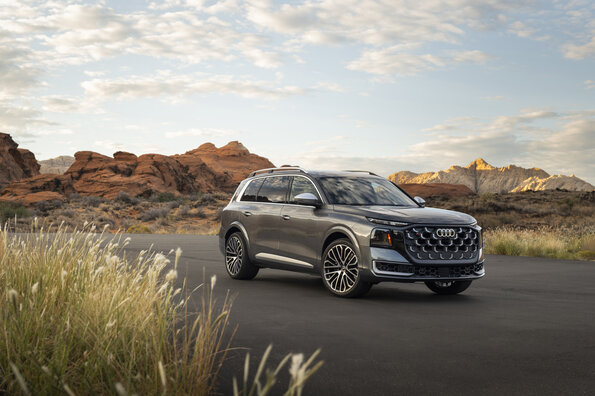
Hands-Free at 85 MPH Is Still Not Self-Driving
The SQ9’s highway assistance technology can manage steering, acceleration and braking on designated roads at speeds up to 85 mph.
Drivers can request lane changes through the indicator stalk, while a camera monitors head position and eye attention.
Green indicators tell the driver when hands-free assistance is active. They do not grant permission to start watching television.
This is Level 2 driver assistance. The driver remains responsible for supervising the system and responding immediately when necessary.
That distinction is particularly important as manufacturers introduce increasingly convincing hands-free technology. Convenience should never be confused with independent driving capability.
A separate exit-warning feature uses radar to identify approaching vehicles and cyclists. It can temporarily prevent a powered door from opening, helping protect occupants and other road users.
You may also enjoy: Why BMW’s New X5 May Be the Safest Bet in SUVs
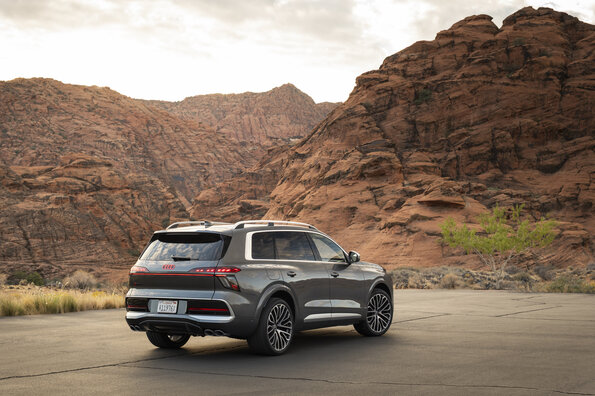
591 Horsepower Is Impressive. Is It Necessary?
Audi quotes 3.8 seconds from zero to 60 mph for the SQ9. That is astonishing acceleration for a large family SUV, although the figure remains a manufacturer estimate rather than a Test Miles instrumented result.
The more affordable Q9 starts at $87,700, giving buyers a substantial price difference to consider.
And I would not automatically recommend spending the extra money simply because the performance specifications look magnificent.
The optional Bang & Olufsen audio system delivers 1,360 watts through 22 speakers, with actuators that produce physical bass sensations in the seats. There are multiple displays, wireless phone chargers and extensive personalization options.
Some of that equipment will be wonderful. Some may become unnecessarily complicated during an ordinary school run.
There are also practical ownership concerns. Audi’s optional 23-inch summer tires require particular consideration in cold climates. NHTSA’s tire safety guidance explains why summer compounds are unsuitable for snow, ice and freezing conditions.
Connected-feature subscriptions and the availability of individual options deserve scrutiny before ordering.
You may also enjoy: Audi Georgia Factory: A $4 Billion Bet on Bigger SUVs
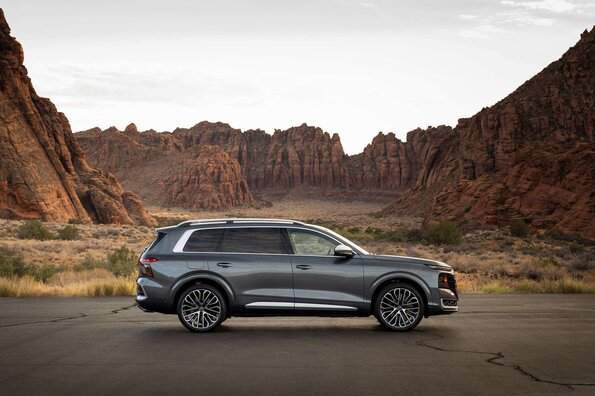
Is the Audi SQ9 Worth $118,000?
I can understand why a buyer would be attracted to the flagship model. The engine is powerful, the lighting technology is sophisticated and the cabin has been designed to make long-distance family travel more comfortable.
But I would approach the purchase in a particular order.
First, establish whether the regular Q9 offers the important safety and convenience equipment you actually want. Then compare the seating layouts, optional packages, tires and ongoing service costs.
The SQ9 should earn its premium through meaningful ownership benefits, not simply an acceleration figure that most families will rarely exploit.
Affiliate shopping: If you are shopping for all-weather floor mats, Shop OEDRO directly or Shop OEDRO on Amazon. Use code NIKM20 at the OEDRO official store. Check current code terms and vehicle fitment before ordering. Test Miles may earn a commission from purchases made through these affiliate links.
My Verdict: The Headlights Steal the Show
There is much to admire about the new Audi flagship, particularly the thoughtful cargo features, rear-seat technology and efforts to improve communication with other road users.
Yet the detail I keep returning to is the headlights.
Helping a driver see farther at night without dazzling somebody coming the other way is a genuinely worthwhile engineering ambition. It could improve the driving experience for people who will never own an SQ9.
Whether Audi’s implementation performs as impressively in independent tests as it does in demonstrations deserves careful examination.
And while I admire the extraordinary technology, I would still welcome a few more physical controls.
Sometimes even a $118,000 automobile needs a proper button.
By Nik J. Miles | Test Miles