Cadillac Eyes-Off Driving Is Coming in 2028
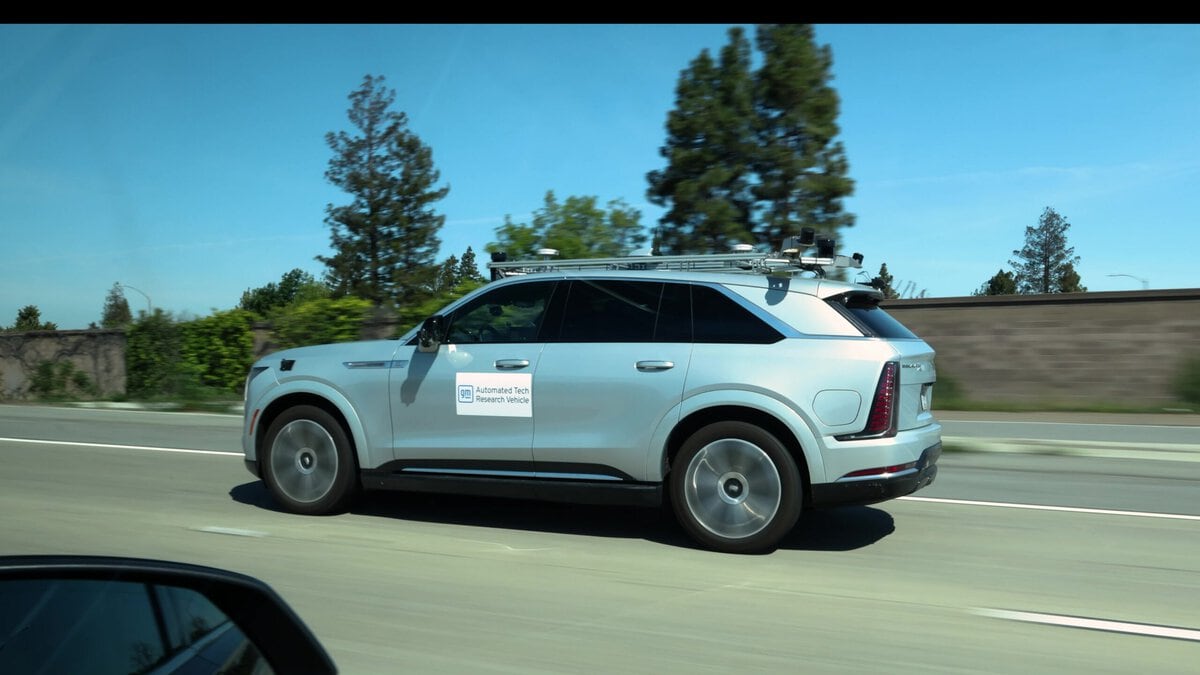
Cadillac Eyes-Off Driving is planned for the Escalade IQ in 2028, but today’s Super Cruise still requires drivers to watch the road.
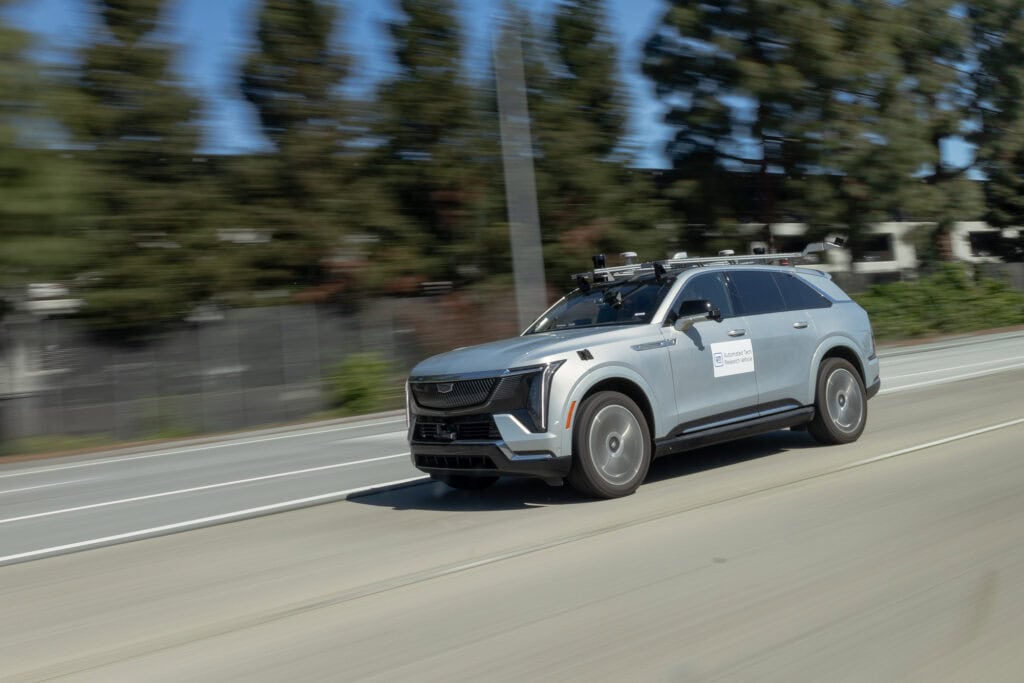
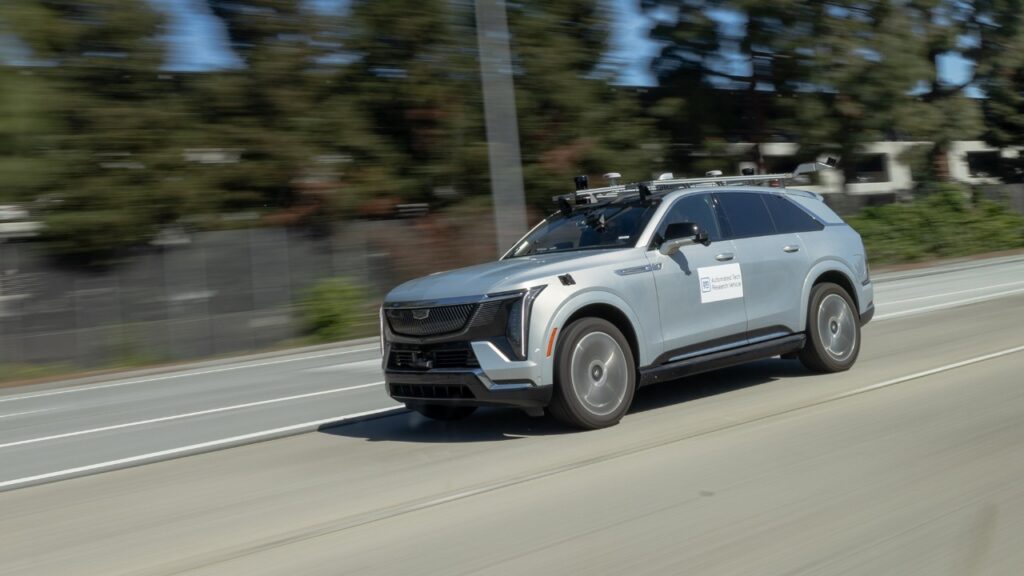
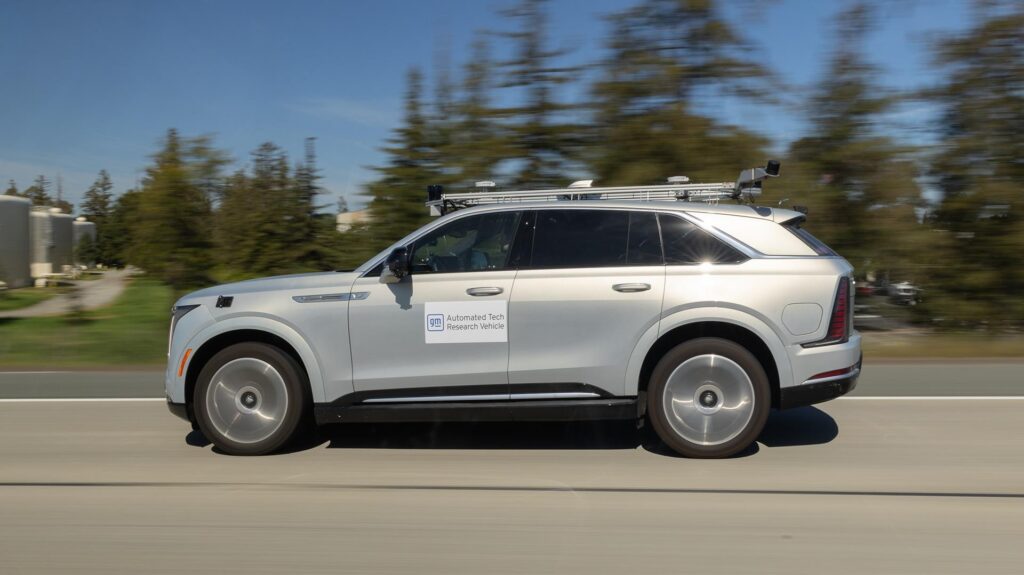
The sensor-covered Cadillac Escalades and GMC Yukons appearing on American roads look like autonomous vehicles because, in some cases, they are helping General Motors develop one. That does not mean every SUV wearing a roof rack full of cameras and computers is driving itself.
Some are manually driven data-collection vehicles recording roads, traffic, weather and the inventive behavior of human motorists. Others are development vehicles testing automated technology with a trained safety driver ready to intervene. Both groups are contributing to GM’s plan to move beyond today’s hands-free, eyes-on Super Cruise system.
The destination is more consequential than another lane-change feature. GM says it intends to introduce eyes-off highway driving in the Cadillac Escalade IQ in 2028. Under approved conditions, the vehicle would handle the driving task while its driver is permitted to look away. For anyone sitting in a current Escalade IQ, however, the rule is uncomplicated: eyes forward.
You may also enjoy: GM Says Eyes-Off Driving Is Coming Soon
What Super Cruise Does Today
Super Cruise is an advanced driver-assistance system, not a chauffeur. On compatible roads, it can manage speed, maintain a following distance and steer the Escalade IQ within its lane. It can also assist with lane changes when road and traffic conditions allow. The driver remains responsible throughout.
That distinction can be easy to blur because the system allows the driver to remove both hands from the steering wheel. Ryan Fowler, General Motors’ director of product for data in its AV organization, describes it as adaptive cruise control with the additional ability to steer. The convenience is real, but the division of labor has not changed as much as the driver’s relaxed hands might suggest.
A camera above the steering column monitors the driver’s head position and eyes. Look away for too long and Super Cruise begins escalating its response through the green steering-wheel light, instrument-panel messages and audible warnings. It is a polite but persistent attendance officer. Hands-free does not mean permission to read a text, watch a video or reorganize the week.
The system’s lane changes are an important part of building trust. When conditions permit, Super Cruise checks the neighboring lane, signals, moves across progressively and centers the vehicle again. Clear indications on the display help the driver understand what the vehicle intends to do. That predictability matters because an automated system that constantly surprises its user will struggle to earn confidence, regardless of its technical ability.
You may also enjoy: Cadillac Vistiq: The Electric Three-Row That Actually Works
Why Sensor-Covered GM Vehicles Look Autonomous
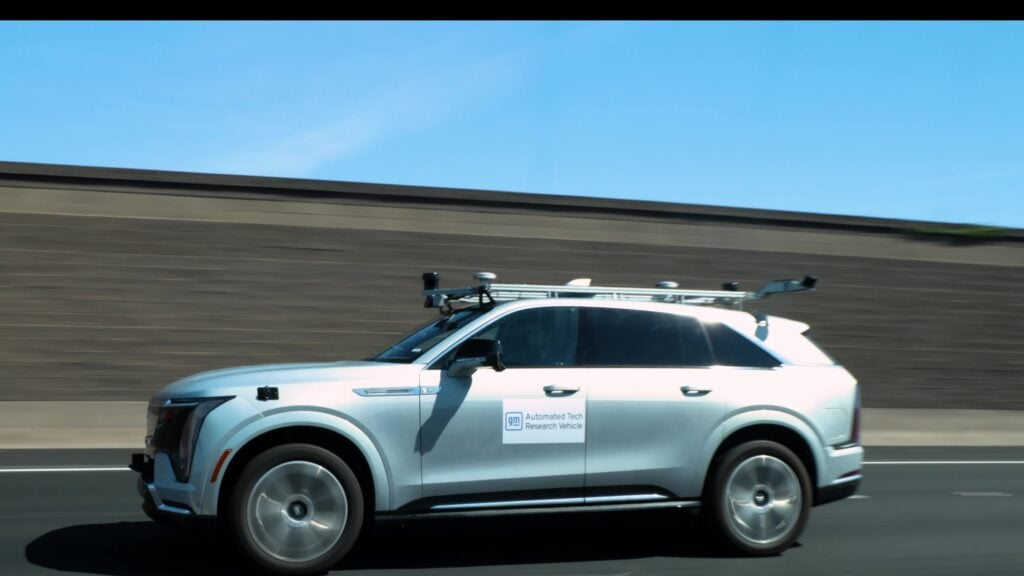
The unusual GM vehicles seen in multiple states generally fall into two related programs. Fowler says the vehicles appearing around the country are production Escalades and GMC Yukons fitted with additional sensors. Many are collecting information while a person drives normally. Their purpose is to observe the world, not to take the driver out of it.
GM says its manual data-collection fleet has covered more than one million miles across 34 states. Cameras, lidar, radar and inertial navigation equipment record lane markings, road geometry, moving vehicles and other environmental information. That broad sample gives engineers more than clean, sunny highways. It supplies worn pavement, confusing construction, hard rain, low sun and regional driving habits that rarely fit into a tidy demonstration.
Active automated testing is a narrower category. In March 2026, GM began supervised public-road testing of its next-generation technology on limited-access highways in California and Michigan. The company said more than 200 manual and supervised development vehicles would gradually operate in live traffic, each with a trained test driver capable of taking control immediately.
The SAE levels of driving automation help explain why visible hardware alone is a poor guide to capability. A Cadillac with sensors on its roof may be gathering data under full human control, or it may be testing an automated function under supervision. The rack alone does not reveal which job the vehicle is performing, and it certainly does not mean an empty robot car is wandering through the neighborhood.
You may also enjoy: Robotaxi Emergency Scenes Still Challenge Driverless Cars
Real Roads Train the Next System
GM can create enormous numbers of situations on closed courses and in simulation. The company says its simulation tools can reproduce roughly 100 years of human driving every day. That lets engineers repeat rare or dangerous events without asking a test driver to discover them the hard way.
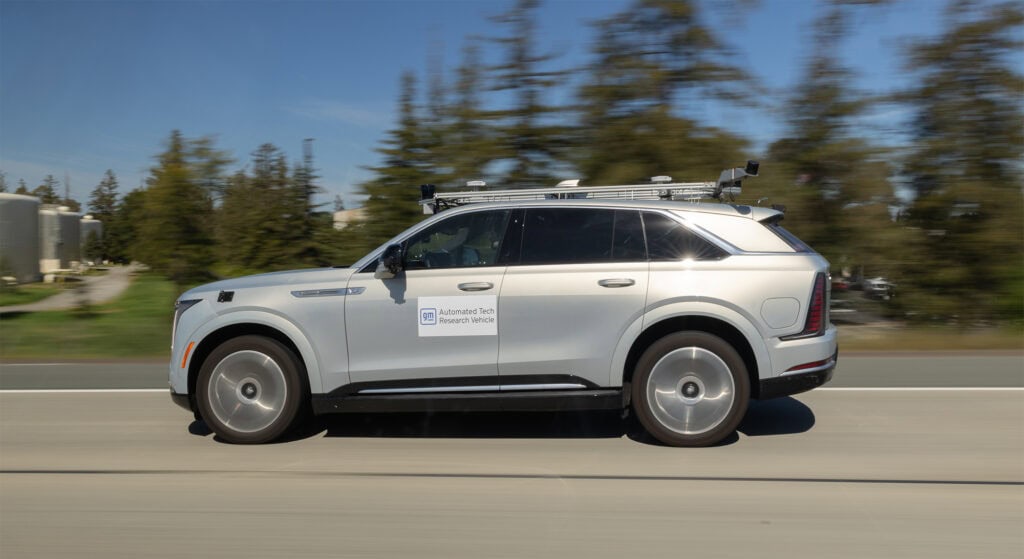
Simulation still depends on engineers knowing what to simulate. Real roads expose the development fleet to combinations that are difficult to anticipate: spray hiding lane lines as the sun strikes a camera, an abrupt construction merge, debris beside a disabled vehicle or a driver making a last-second exit from the wrong lane. As Fowler put it, there is “really no substitute for on-road driving in real-world environments.”
The vehicles use several sensing methods because none is perfect. Cameras can identify signs, markings and objects. Radar is valuable for measuring distance and relative motion. Lidar builds a three-dimensional representation of the surroundings, while inertial navigation helps track the vehicle’s position and movement. Research from the National Institute of Standards and Technology explains how sensor fusion combines these inputs to map surroundings and track objects. Comparing evidence helps when glare, spray or an obstruction limits one source.
GM also has a large base of customer experience. In April 2026, the company said nearly 750,000 Super Cruise-enabled vehicles across 23 models had collectively passed one billion hands-free miles. Those are Super Cruise miles with attentive drivers, not one billion miles of eyes-off automation. Even so, they provide useful information about where customers engage the system, how long they use it and the conditions encountered across a broad road network.
How Cadillac Eyes-Off Driving Changes the Contract
Cadillac Eyes-Off Driving would change the relationship between the person and the vehicle. Super Cruise currently says, in effect, that the Cadillac can help while the driver watches. The 2028 system is intended to take responsibility for the driving task within an approved operating domain, beginning on highways, so the person can direct attention elsewhere.
GM has said turquoise lighting across the dashboard and exterior mirrors will indicate when eyes-off operation is active and permissible. A distinct color is more than theater. The driver needs an unmistakable signal separating today’s supervised assistance from the future mode in which looking away is allowed. Confusion between those states could be dangerous.
GM has specifically suggested that a driver could read or catch up on messages while the system handles an approved portion of the trip. That is the value proposition: returning some of the time and attention consumed by long highway journeys. It could make a repetitive commute less tiring and give families a calmer way to cover distance.
This does not make the Escalade IQ a universal robotaxi. The National Highway Traffic Safety Administration’s automation guidance distinguishes limited automated operation from vehicles capable of handling every roadway and condition. GM says its rollout will begin with highways, and permissible use will depend on state rules. The company has not said the system will initially handle city streets, every road, every kind of weather or every situation.
You may also enjoy: Tesla Robotaxis Are Moving Far Slower Than Musk Promised
The Escalade IQ Needs a New Electronic Brain
The 2028 Escalade IQ is also scheduled to introduce GM’s centralized computing platform and next-generation electrical architecture. Modern vehicles can contain dozens of electronic control units assigned to different functions. GM’s new design consolidates much of that work into a unified computing core connected through a high-speed Ethernet backbone.
That matters for automated driving because perception, steering, braking and safety decisions must happen together and with very little delay. The vehicle cannot afford to have its electronic departments passing paper forms between one another while a truck enters the lane. GM says the new platform will offer up to 35 times more artificial-intelligence computing performance and 1,000 times more bandwidth than its previous systems.
The central computer will use next-generation processors such as NVIDIA Thor and connect to three regional aggregators. Those aggregators route sensor information and commands, while the core performs sensor fusion, control arbitration and machine-learning work. Separating vehicle-specific hardware from the main software layer could also allow GM to change components without rewriting the entire system.
The Escalade IQ is a logical launch vehicle. It is an all-electric vehicle, expensive and already positioned as Cadillac’s technology flagship. A battery-electric platform also supports the electrical demand and packaging needs of substantial computing and sensing hardware. More importantly, buyers at this end of the market may accept an emerging feature when it arrives within a carefully managed luxury experience.
GM says the computing architecture is propulsion-agnostic and will eventually support both electric and gasoline vehicles. That makes the Cadillac a starting point rather than a technological island. If the system works as promised, software and automated-driving capability could move into less expensive Chevrolet, GMC and Buick vehicles without creating a different electronic foundation for each one.
You may also enjoy: 2026 Cadillac OPTIQ-V: The Electric V-Series With Bite
What GM Still Has to Prove
The most difficult moment may not be when the Escalade IQ takes control. It may be when the vehicle reaches the edge of its operating conditions and needs the driver again. GM has not disclosed the complete warning sequence, the time a driver will receive to respond, or how the system will confirm that the person is ready before returning control.
Fowler says an unresponsive driver would trigger what engineers call a minimum-risk maneuver. Depending on the road and circumstances, that could mean slowing and pulling to a safe location rather than simply handing back a problem. The system must identify its limit early enough to make that maneuver orderly. Sudden electronic panic is not generally considered luxury.
Weather restrictions, approved highways, subscription pricing and state-by-state availability also remain unanswered. GM has announced a 2028 target, not a complete consumer product specification. Regulators, insurers and drivers will want evidence that the system behaves consistently, clearly explains when it can be used and fails safely when conditions move beyond its ability.
The billion Super Cruise miles are useful, but they do not by themselves prove an eyes-off system. Super Cruise has an attentive human as a continuous fallback. The next technology must be capable enough for the human to disengage from monitoring, then disciplined enough to request help before it encounters a situation it cannot manage. That is a much higher bar.
For now, those sensor-covered vehicles are the visible part of a much larger development program. They are gathering the messy road experience that cannot be manufactured entirely in a laboratory. In 2028, Cadillac plans to turn that work into something owners can use. Until then, Super Cruise remains an excellent assistant, and the person in the driver’s seat remains firmly employed.