Ford Custom Garage Could Make Your Ford Feel New Again
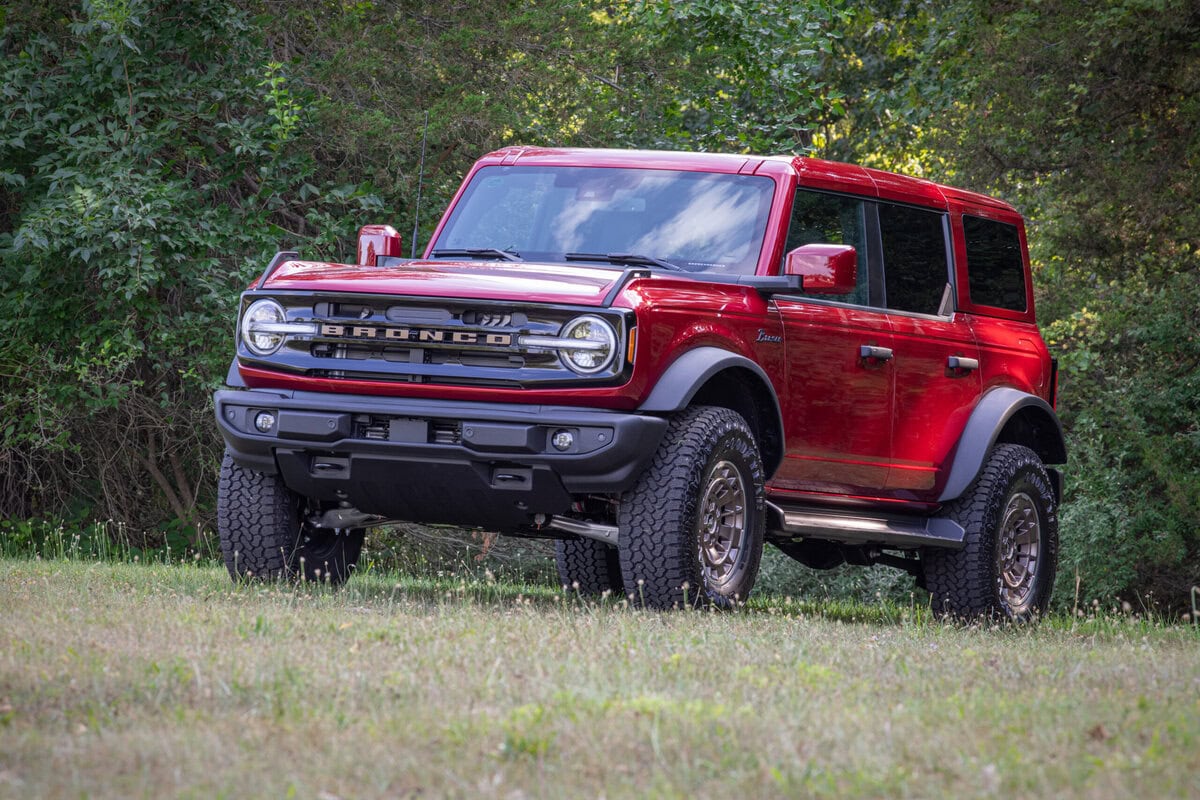
Ford Custom Garage offers factory-backed upgrades that can refresh an existing Ford truck, SUV or Mustang with coordinated style and performance.
New vehicles are expensive, monthly payments have become increasingly difficult to ignore, and many Americans are keeping the vehicles they already own for longer. Ford has looked at that reality and arrived at a surprisingly simple idea: instead of asking every owner to replace a perfectly useful truck or SUV, give them a factory-supported way to reinvent it.
Ford Custom Garage is the company’s complete vehicle-upfit program for selected Ford models. It combines compatible appearance, off-road and performance upgrades into packages designed to work together, rather than leaving owners to assemble wheels, suspension components, graphics, calibrations and engine hardware from several unrelated companies. Think of it as the factory becoming the custom shop, only without the owner having to become a parts manager, warranty detective and unpaid mechanical engineer.
That distinction matters because Americans spend almost $53 billion a year on specialty automotive accessories and performance parts. Ford already sells the original vehicle, but much of the money spent changing that vehicle traditionally goes to independent aftermarket companies. Custom Garage is Ford’s attempt to keep more of that relationship inside the Ford family while giving customers a more organized route to a personalized vehicle.
What Ford Custom Garage Actually Does
Custom Garage is not a traditional bespoke workshop where a designer creates a completely unique vehicle for one wealthy customer. Ford develops a set of coordinated packages for eligible vehicles, and the customer chooses the transformation that best matches the way the vehicle will be used.
Some packages are mainly visual, adding wheels, exterior graphics, badges, grille details and matching trim. Others add practical off-road equipment such as a suspension lift, wider fender flares, a stronger spare-tire carrier or hardware intended to support larger tires. The most ambitious packages can add superchargers, lowering kits, handling improvements and substantial increases in horsepower.
The important word is “package.” A customer is not simply buying a pile of attractive components and hoping the finished vehicle behaves properly. Ford determines which parts are intended to fit together, identifies the vehicles that qualify and provides installation requirements for the complete upfit.
That does not make every Custom Garage vehicle identical to a model built that way on the assembly line. Many of these packages are installed after the underlying vehicle has been produced, either before delivery or later through an approved installer. The result sits somewhere between a factory trim and a conventional aftermarket build.
Why Updating an Existing Ford Makes Sense
The strongest argument for Ford Custom Garage has little to do with horsepower. Many owners already have a truck or SUV that fits their lives. The seats are familiar, the payments may be manageable or finished, and everyone knows where the dogs, groceries and emergency collection of reusable bags are supposed to live.
Replacing that vehicle means taking on depreciation, taxes, registration fees and another round of financing. An upgrade package can instead refresh the appearance or capability of a Ford that is already serving its owner well. It may not be inexpensive, but it gives buyers another option between doing nothing and purchasing an entirely new vehicle.
This is particularly relevant for trucks and SUVs because owners often keep them for practical reasons. A pickup may already have the right bed configuration, towing equipment and cabin layout. A Bronco may already carry the family’s camping gear and accumulated trail scars. Customization can make those vehicles feel more personal without forcing the owner to start again.
You may also enjoy: Why Small Trucks Are America’s Smartest Pickup Choice
Ford also allows some upgrades to be ordered with a new vehicle. That gives a buyer the chance to finance an eligible package as part of the purchase and receive a completed vehicle through the dealer process. Existing owners can explore compatible packages later, although eligibility depends on model year, trim, engine, drivetrain and equipment.
Why a Complete Package Can Be Better
Traditional customization rewards people who enjoy research. They compare wheel offsets, tire sizes, suspension geometry, electronic calibrations and warranty language, then locate an installer willing to take responsibility for the complete job. Enthusiasts may enjoy that process, but many ordinary owners would rather spend Saturday doing almost anything else.
Ford Custom Garage reduces the number of decisions. The company has already selected the major components and designed the finished appearance. The customer still needs to check fitment and total cost, but there is less risk of creating a vehicle from parts that were never intended to share the same driveway.
Electronic calibration is a good example. Installing larger tires changes the distance the vehicle travels with each wheel rotation. If the vehicle’s computer is not updated, the speedometer and other calculations may no longer be accurate. Ford’s ProCal tool can update compatible vehicles after certain changes, which is considerably better than letting the speedometer make an educated guess.
Calibration also demonstrates why modern customization is more complicated than bolting metal onto metal. Current vehicles depend on interconnected computers that monitor engine operation, transmission behavior, tire size and numerous driver-assistance functions. A coordinated package has value because the mechanical and electronic parts of the change can be considered together.
Performance upgrades must also preserve legal emissions equipment and calibrations. The Environmental Protection Agency’s vehicle-tampering guidance explains why owners should avoid parts or software that disable required emissions controls.

The Maverick 300T Shows the Performance Potential
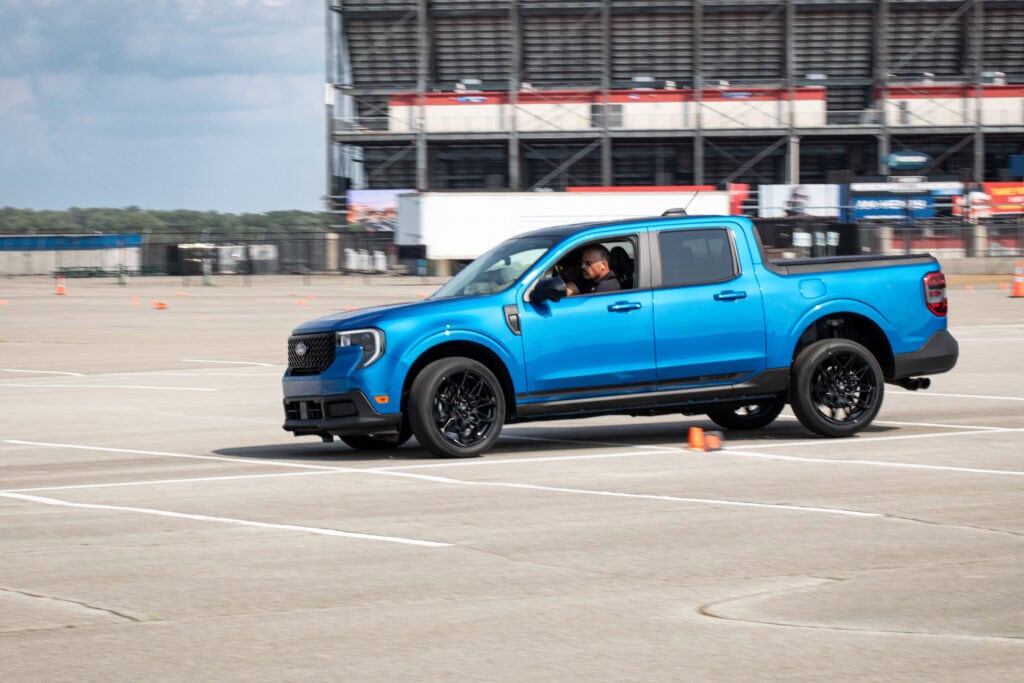
On the autocross course, the most revealing vehicle was the Ford Maverick 300T project vehicle. Ford developed it as a preview of a performance package for all-wheel-drive Mavericks equipped with the 2.0-liter EcoBoost engine. The package uses a larger turbocharger derived from the Mustang EcoBoost, supporting hardware and Ford calibration to raise estimated output from 250 to 300 horsepower.
A 50-horsepower increase may not sound transformational when the industry now produces absurd four-figure power claims with alarming regularity. In a compact pickup, however, that extra output is immediately noticeable. The Maverick feels more urgent when accelerating out of a corner, and the power arrives in a vehicle small enough to place accurately on a tight course.
The 300T concept also shows that Custom Garage is not limited to expensive full-size trucks. The Maverick has built its reputation around usefulness, manageable dimensions and value. Giving that platform more performance without turning it into an oversized showpiece makes the customization idea feel accessible rather than ceremonial.
Ford has treated the 300T as a complete performance project rather than only an engine tune. Its development vehicle combined the turbo upgrade with cooling, exhaust, suspension, wheel and appearance changes. That broader approach is the entire point of Custom Garage: the vehicle should feel like one finished idea, not an online shopping cart with license plates.
The F-150 Can Become a 700-Horsepower Street Truck
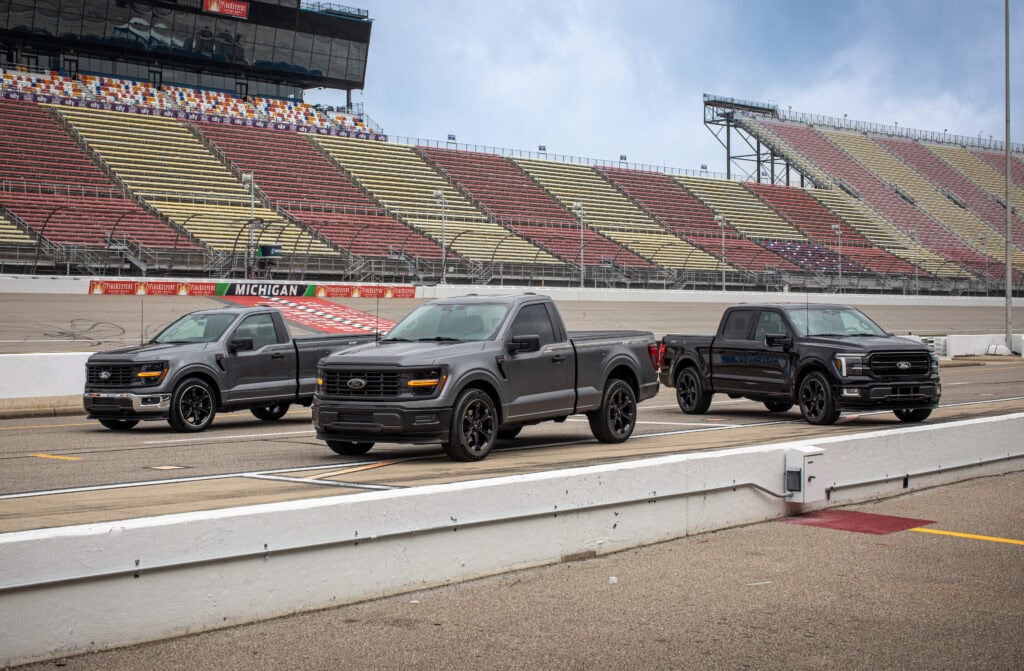
The F-150 demonstrates how far the program can go. Ford’s FP700S package takes a compatible F-150 with the 5.0-liter V8 and adds a 3.0-liter Whipple supercharger to produce 700 horsepower. It then gives the truck the visual hardware to support the performance, including 22-inch wheels, black lug nuts, a lowering kit, fender vents, a front splitter, body graphics and dark exterior details.
This is not the same thing as simply ordering the F-150 Lobo street-truck trim, although a supercharger can also be fitted to eligible 2026 F-150 models, including the Lobo. The Lobo provides the factory street-truck foundation. The FP700S represents the broader Custom Garage idea of packaging power, stance and appearance into a more complete transformation.
Driving a supercharged F-150 is an exercise in recalibrating expectations. The truck remains recognizably an F-150, with the seating position, cabin and usefulness that made it America’s familiar full-size pickup. Press the accelerator, however, and the experience becomes considerably less sensible.
The attraction is not only speed. A coordinated Ford package means the lowered stance, wheel selection, body treatment and engine upgrade are intended to tell the same story. Owners may be able to create more power through independent shops, but Custom Garage is selling the convenience of a finished recipe.
You may also enjoy: Best Full-Size Trucks in America for 2026
Bronco Packages Add Capability and Personality
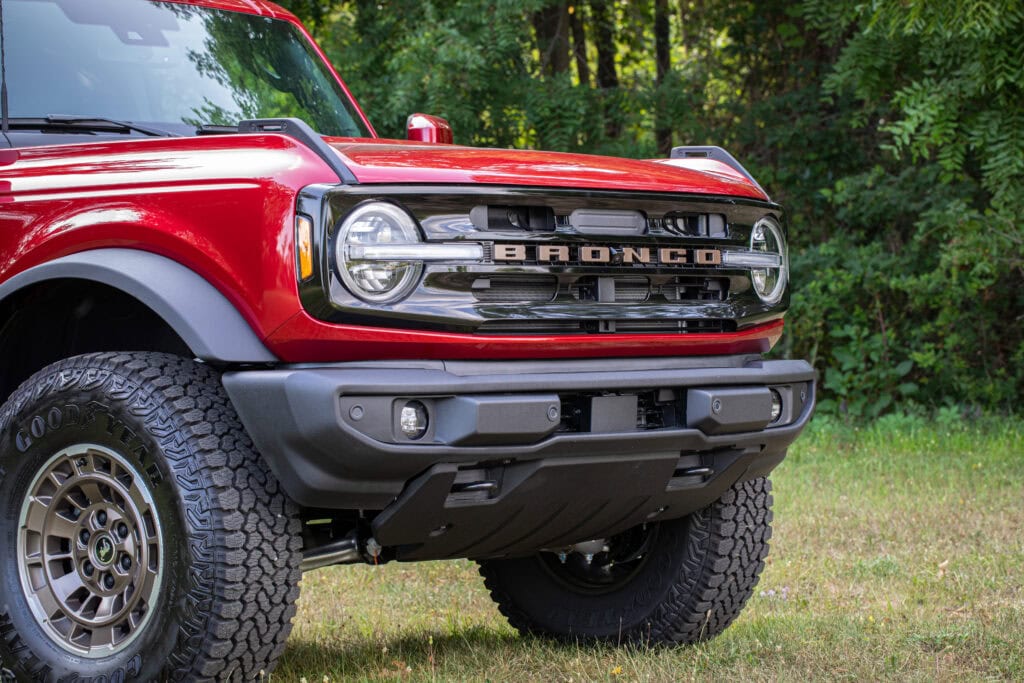
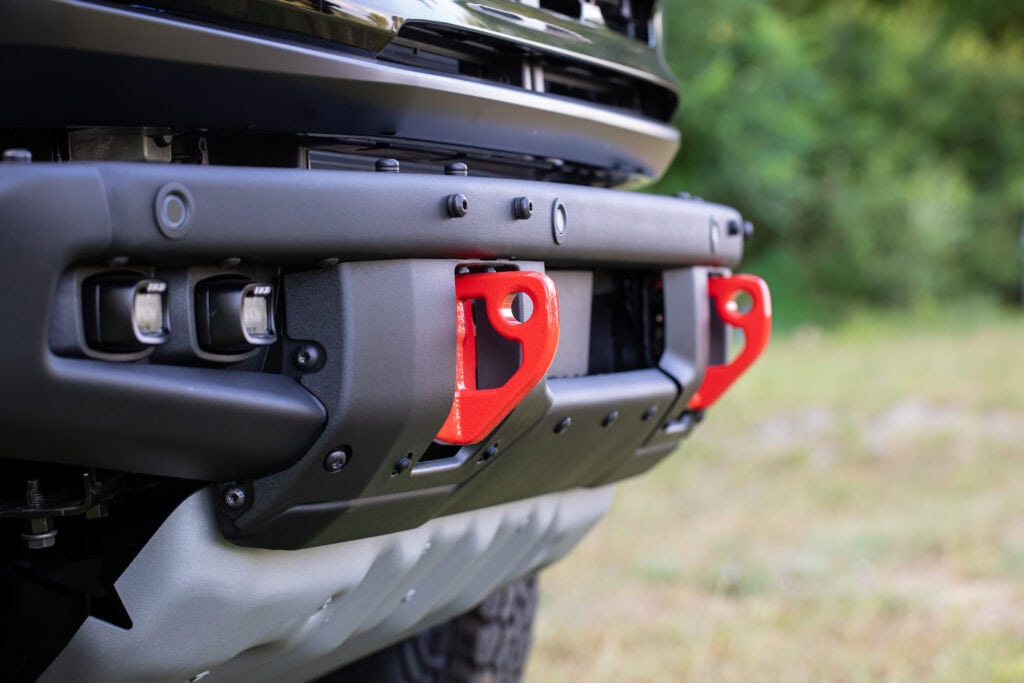
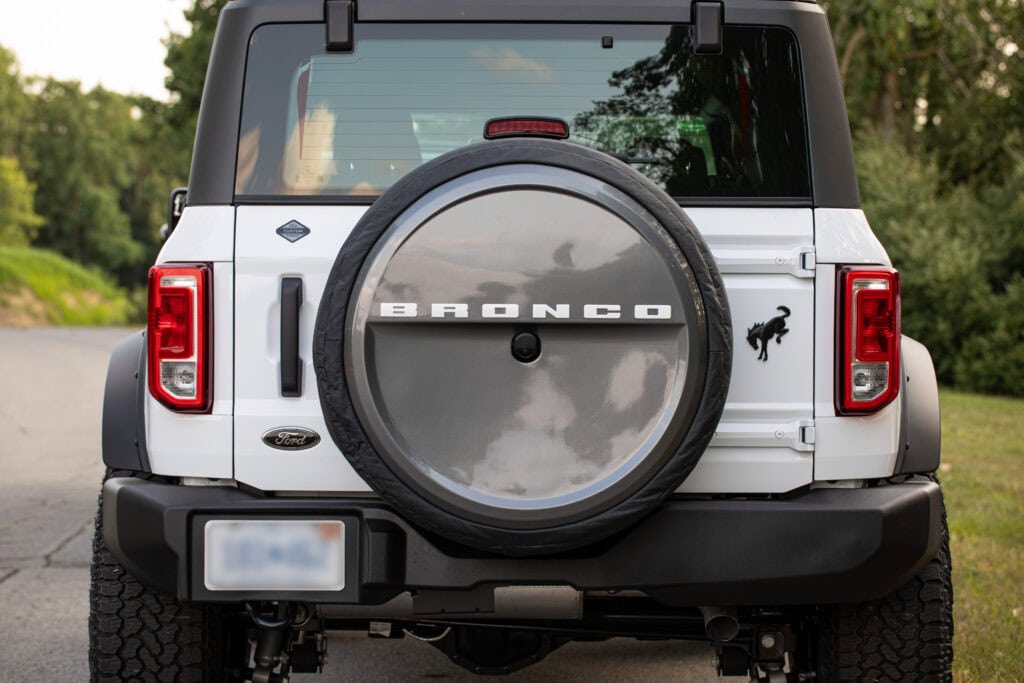
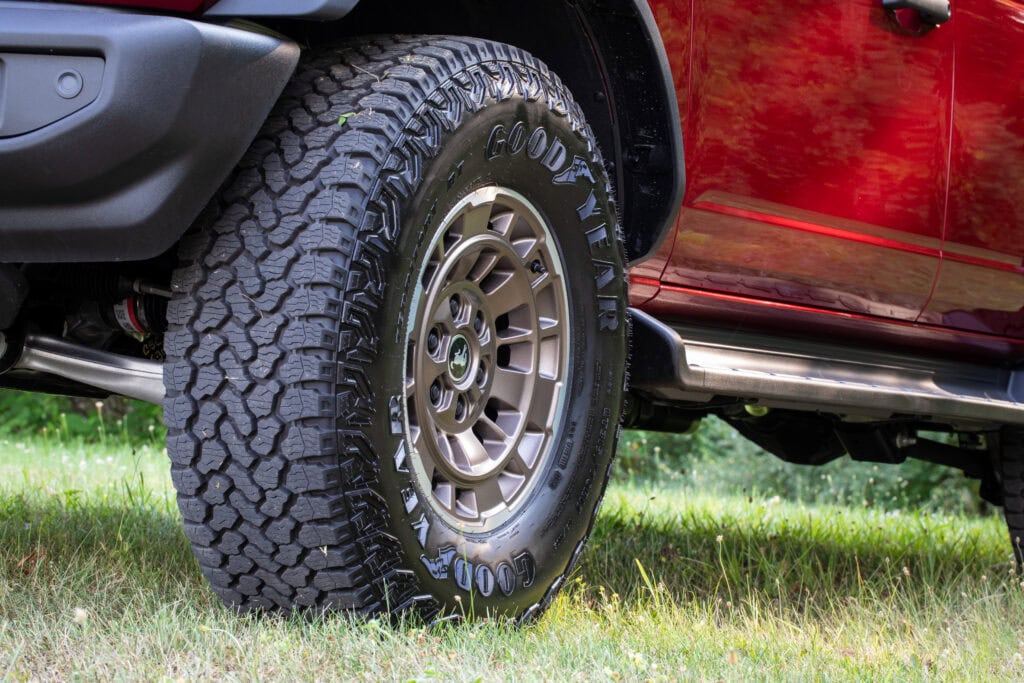
Bronco is a natural candidate for the program because owners have customized it from the moment the modern model arrived. Ford’s packages can combine a two-inch suspension lift, special wheels, wider fender flares, an upgraded spare-tire carrier, badges and the ProCal tool. Those changes can make the vehicle look more serious while supporting the larger tires many Bronco owners want.
The advantage is clarity. Buyers can see the complete package, determine whether it fits their Bronco and ask for an installed price. They do not have to source the lift from one brand, wheels from another, a tire carrier from a third and electronic calibration from somewhere that also sells novelty floor mats.
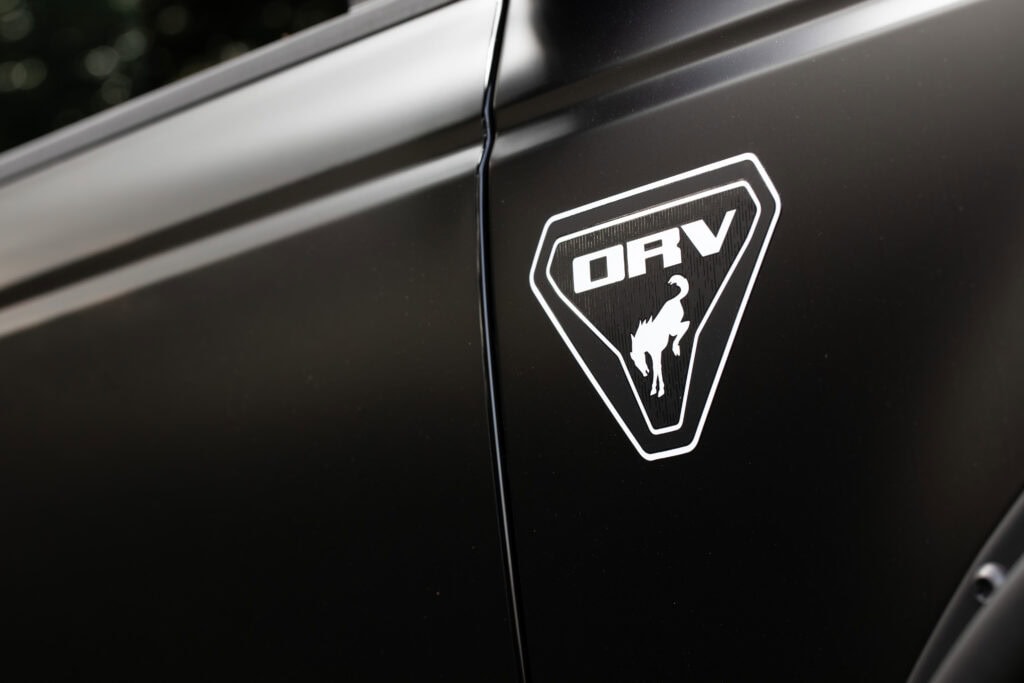
Ford’s new Bronco Desert Rising package shows that customization can also begin with a place rather than a horsepower number. Its pink, berry and magenta details were inspired by Utah’s Great Salt Lake, the Coral Pink Sand Dunes and the colors that appear across the desert around dawn and dusk.
Those shades appear on exterior details, optional side graphics and inside the cabin. It is deliberately bold, and it will not appeal to every Bronco buyer. That is precisely why it works as a customization package: it gives one group of customers something expressive without forcing every Bronco in the showroom to dress the same way.
You may also enjoy: Ford Explorer Tremor Is Built for Bad Weather
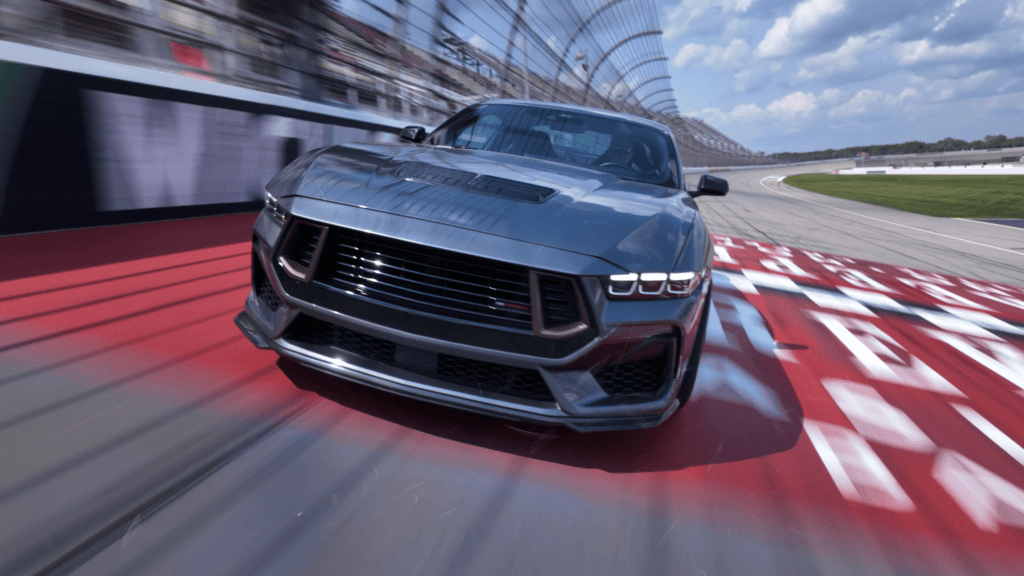
The Mustang FP800S Turns the Dial Considerably Higher
The Mustang FP800S takes the same philosophy into sports-car territory. Ford combines a 3.0-liter Whipple supercharger with more than 20 performance and appearance changes, creating an 800-horsepower package that looks and feels substantially different from the standard Mustang GT beneath it.
On track, the most impressive quality was not simply acceleration. The power was easy to access, the steering remained communicative, the brakes inspired confidence and the car felt composed through corners. An enormous horsepower number attracts attention, but a package only feels complete when the rest of the vehicle can support it.
That is where Ford’s involvement matters. The company is not pretending that every customer needs 800 horsepower to reach the supermarket. It is offering enthusiasts a turn-key route to a dramatic Mustang while coordinating the engine, chassis and appearance work.
There is still responsibility attached. More power demands better judgment, appropriate tires and respect for road conditions. Factory backing can make a modification easier to own, but it cannot repeal physics or improve the driver through paperwork.
You may also enjoy: Ford Ranchero Could Return as a $30,000 EV in 2027
The Real Product Is Peace of Mind
Ford has sold accessories for decades, so parts alone are not the innovation. The more interesting product is confidence. Buyers are paying Ford to choose compatible components, provide installation guidance and stand behind qualifying packages with defined warranty coverage.
Ford says Custom Garage packages are designed and backed by the company. Its general warranty language describes three years or 36,000 miles of coverage from the new vehicle’s original in-service date. Accessories purchased after the original vehicle sale may instead receive 24 months of coverage from installation or the remaining applicable new-vehicle warranty, whichever provides greater coverage.
Those details matter because “factory-backed” does not mean every repair will be covered forever. Coverage can depend on the package, installation method, vehicle age and the cause of a failure. Customers should ask the dealer to put the exact parts, labor, warranty and installer information in writing before authorizing the work.
The Federal Trade Commission’s auto-warranty guidance also explains the distinction between manufacturer warranties, aftermarket parts and separate service contracts. The practical lesson is to read the written coverage rather than relying on a broad promise made at the parts counter.
Approved installation is equally important. Some Ford performance parts carry their strongest coverage when installed by a Ford dealer or an ASE-certified technician. That may cost more than using the cheapest available shop, but the documentation can become valuable if a problem appears later.
The Costs Require Careful Comparison
Custom Garage simplifies the build, but it does not always simplify the final bill. A package price may exclude tires, dealer labor, alignment, taxes or optional components. Large wheels are not especially useful without tires, yet some packages list the tires separately.
Buyers should request an out-the-door installed price rather than comparing only the advertised package figure. They should also ask whether the package can be financed, how much interest that adds over the loan term and whether the modifications need to be reported to the vehicle’s insurer.
Resale value deserves similar caution. A documented Ford-backed package may appeal to future buyers more than a collection of anonymous aftermarket parts. It is still unlikely that every dollar spent on customization will return when the vehicle is sold.
You may also enjoy: Ford Wins Quality Study, Recalls Still Loom
The sensible calculation compares three numbers: the current vehicle’s value, the complete installed cost of the upgrade and the cost of replacing the vehicle with something that already delivers the desired capability. Custom Garage can be the smart answer, but only when the owner likes the underlying Ford enough to keep it.
Could Custom Garage Beat Buying New?
For the right owner, absolutely. A well-chosen package can change the look, capability and character of a vehicle without replacing the cabin, cargo space and daily usefulness that already work. It can also make an older Ford feel exciting again, which is not a trivial benefit when new vehicles require increasingly serious financial commitments.
The program is less compelling for someone whose current vehicle no longer fits the family, has significant mechanical problems or lacks the technology and safety features they now need. No set of wheels, graphics or superchargers can correct the wrong basic vehicle.
That leaves Ford Custom Garage with a refreshingly practical purpose. It is not trying to convince every owner to build an 800-horsepower Mustang or a 700-horsepower pickup. It is creating a factory-supported path for people who want something fresher, more capable and more personal without discarding what already works.
The vehicle remains familiar, but the experience changes. For an owner who still loves the Ford in the driveway, that may be a much more attractive proposition than signing another purchase agreement and starting from zero.