Michael Jordan Ferrari: Why It Sold for $2.7 Million
Michael Jordan Ferrari: Why It Sold for $2.7 Million
The Michael Jordan Ferrari sale shows why a 1997 Ferrari 550 Maranello can command $2.7 million when its history reaches beyond cars.
The price needs its own explanation
An ordinary Ferrari 550 Maranello and Michael Jordan’s Ferrari 550 Maranello are two very different buying propositions. The engine does not know who owned it. The people bidding certainly do. That distinction explains the reported $2.7 million result for the basketball legend’s 1997 grand tourer at JOOPITER’s auction, which closed September 30.
You may also enjoy: Ferrari Luce: What Buyers See That Critics May Miss
The auction house’s published estimate was $700,000 to $1.3 million. At $2.7 million, the reported result is about 2.08 times the upper estimate, or roughly 108 percent above it. That is a useful comparison because both numbers concern this particular car. Treating the result as a new price guide for every 550 would be rather less useful.
Public reports describe a model auction record, but the accessible lot page does not display a final invoice. The reported sale figure should not be expanded into an assumed buyer’s total after fees, taxes and transport. The car’s story supports a premium; it does not tell us every line on the bill.
You may also like this video:
What the Michael Jordan Ferrari buyer actually bought
JOOPITER identifies the car as chassis 108712 and documents its original delivery to Jordan in May 1997. A surviving factory warranty card carries his signature. Those details matter more to this transaction than a celebrity name casually attached to an advertisement. They connect a specific physical object to a specific owner.
You may also enjoy: Rolls-Royce Beverly Hills Makes Commissioning the Draw
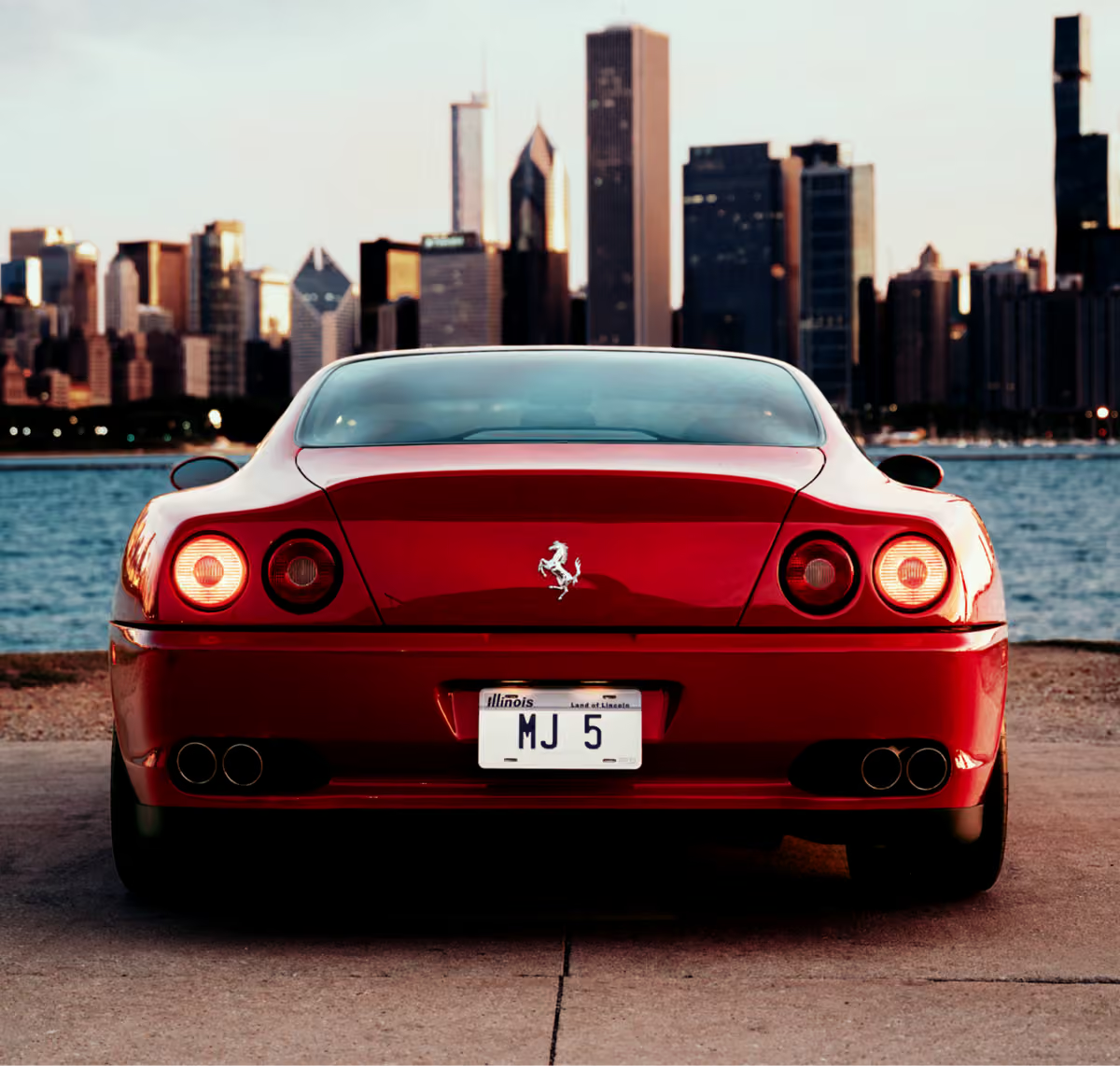
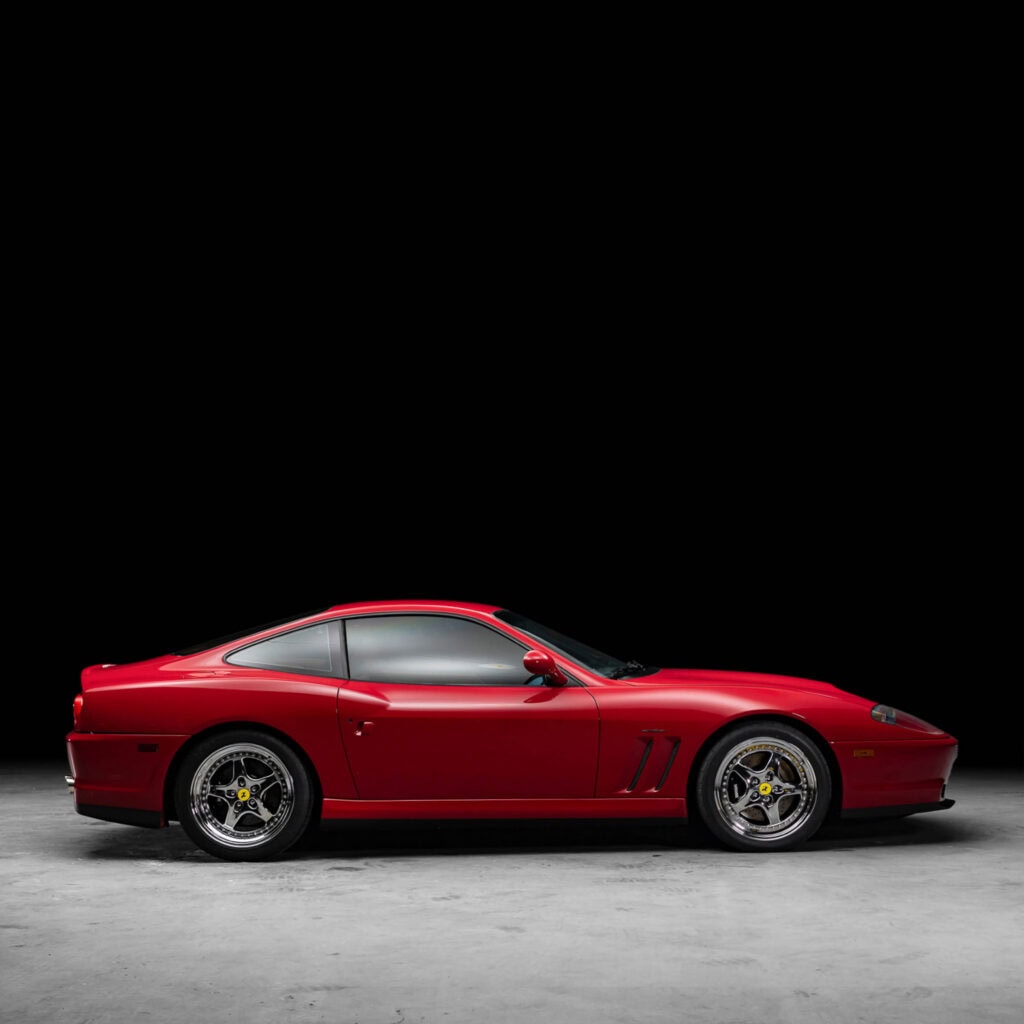
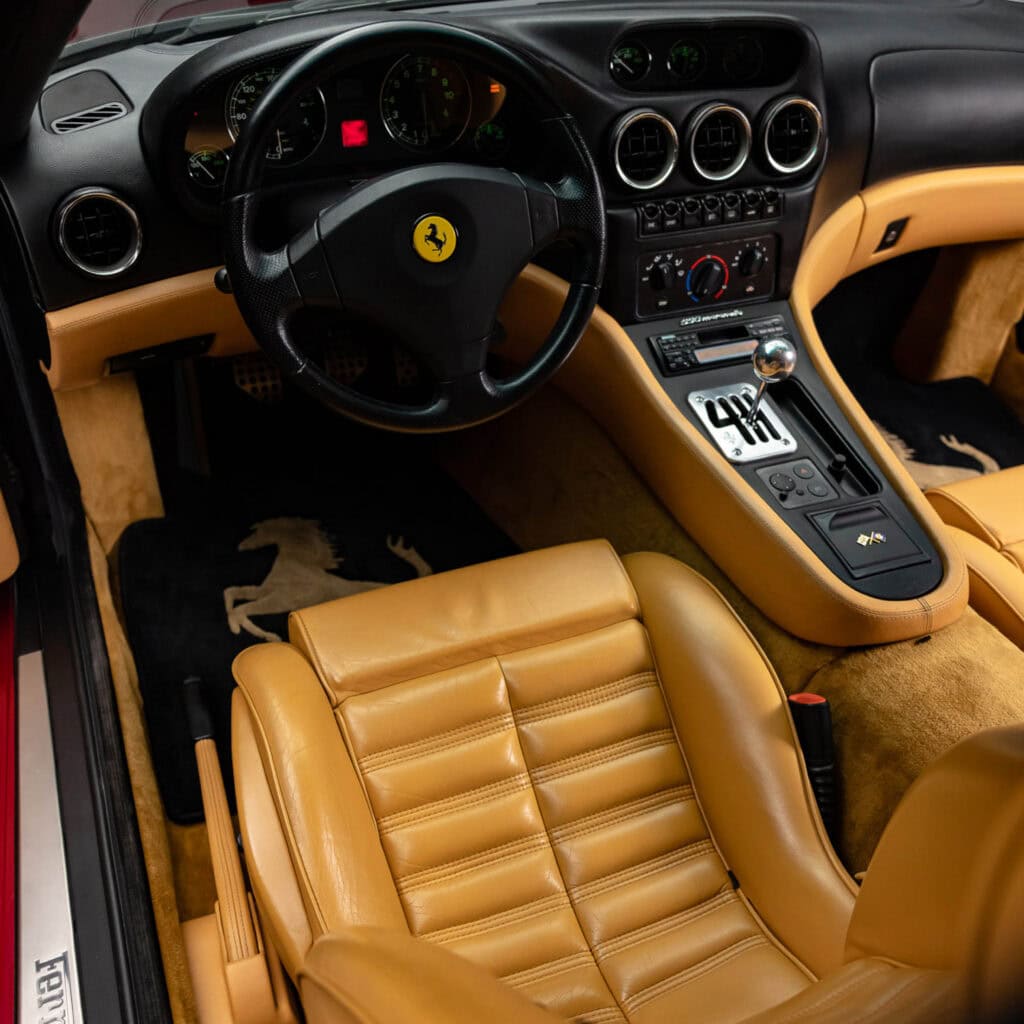
The presentation is memorable: Rosso Barchetta paint, tan leather, chrome Speedline wheels and the Illinois plate MJ 5. The auction account also describes changes to the driver’s seating position to accommodate Jordan’s height. It qualifies the factory modification history, so those adjustments should not be treated as an independently inspected finding.
Provenance is the chain of evidence behind an object’s history. Buyers of less glamorous vehicles also benefit from checking title history. The federal vehicle-history system can help identify title and salvage information, although it cannot authenticate a famous owner’s relationship with a car.

The sneaker connection widens the audience
The strongest cultural detail is the Ferrari’s connection to the Air Jordan XIV. JOOPITER links Tinker Hatfield’s design to the car’s cabin, vents and shield-shaped emblem. Nike’s own archive places the shoe in Jordan’s final championship appearance in 1998. Together, those accounts connect the Ferrari to an object recognized far beyond an auction paddock.
You may also enjoy: Jaguar Type 01 First Look: Can the Drama Deliver Luxury?
That gives the car a second audience. A buyer may understand it through basketball, footwear or the visual language of the 1990s before considering its mechanical appeal. My reading of the result is that this overlap helps explain the premium. There is no published bidder breakdown establishing which motivation carried the auction.
Modern luxury brands spend considerable effort creating an identity that survives beyond a specification sheet. Here the association accumulated through a real owner and a recognizable period in his career. It is difficult to reproduce that history with a special paint color and a numbered plaque.
A proper Ferrari underneath the memorabilia
The 550’s front-mounted, naturally aspirated V12 and gated six-speed manual give it a credible automotive identity even without the famous name. It is a grand tourer from a period when driving involvement included selecting your own gear. The cultural premium sits on top of a car collectors already have reasons to want.
You may also enjoy: Genesis Magma GT Concept Has a Bigger Job to Do
That still leaves an important distinction between significance and condition. A signature does not establish the health of cooling hoses, suspension components or a clutch. The Federal Trade Commission’s advice about an independent inspection is sensible buying discipline, even though auction terms differ from a conventional dealer sale.
Older performance cars also need attention to tire aging. Attractive tread and a low odometer reading do not automatically establish that tires are suitable for the next drive. Neither does a prominent auction photograph.
Why the missing years make documentation valuable
According to JOOPITER, Jordan sold the Ferrari in December 2002, and CURATED later traced it to a long-term California owner before bringing it back to public attention in 2026. That account makes the rediscovery part of the lot’s appeal. It should be understood as the seller’s documented narrative, rather than a claim that nobody knew where the car was.
You may also enjoy: Could Protecting Your Car’s Carpet Save Thousands at Trade-In?
The roughly 6,400 miles associated with Jordan describe his use, not necessarily the car’s current mileage. Confusing those figures changes the story. The same principle applies to everyday purchases: check maintenance records and mileage consistency, using NHTSA’s odometer guidance where appropriate.
A collector should also investigate applicable safety recalls and consult the manufacturer for historical coverage. A valuable ownership history does not remove the practical responsibilities that come with an aging road vehicle.

What the result means for the rest of us
The defensible lesson is narrower than a general boom in collectible Ferraris. This sale shows how one car can attract a substantial premium when automotive appeal, cultural importance and ownership evidence meet. One exceptional auction does not establish the direction of the whole market.
For anyone considering a less famous classic, buy the condition and paperwork you can verify, then decide what personal meaning is worth paying for. Jordan’s Ferrari carries a story another 550 cannot acquire. That is the explanation for the number, and the reason ordinary owners should resist using it as their own valuation. For everyday vehicles, fitted all-weather floor mats can help protect carpet from dirt and moisture. Test Miles readers can shop the OEDRO Official Store or OEDRO on Amazon; enter code NIKM20 at the official store. Test Miles may earn a commission from purchases through these links.