BMW 3 Series Keeps Gas Power and Adds Drift Moment
By Robert R Guio
The BMW 3 Series keeps four- and six-cylinder power, gains Neue Klasse tech, and gives the M350 xDrive a rear-drive Drift Moment.
BMW has finally answered one of the more interesting questions surrounding the Neue Klasse era: what happens to the 3 Series buyer who still wants an engine?
The answer is not exile. The next-generation BMW 3 Series will continue with four- and six-cylinder internal-combustion engines, both using 48-volt mild-hybrid technology, while the fully electric BMW i3 sits beside it as the other branch of the family. That makes this new sedan more interesting than a routine model change because BMW is trying to preserve a familiar driving formula while moving the design, cabin technology and software architecture into the same era as its newest EVs.
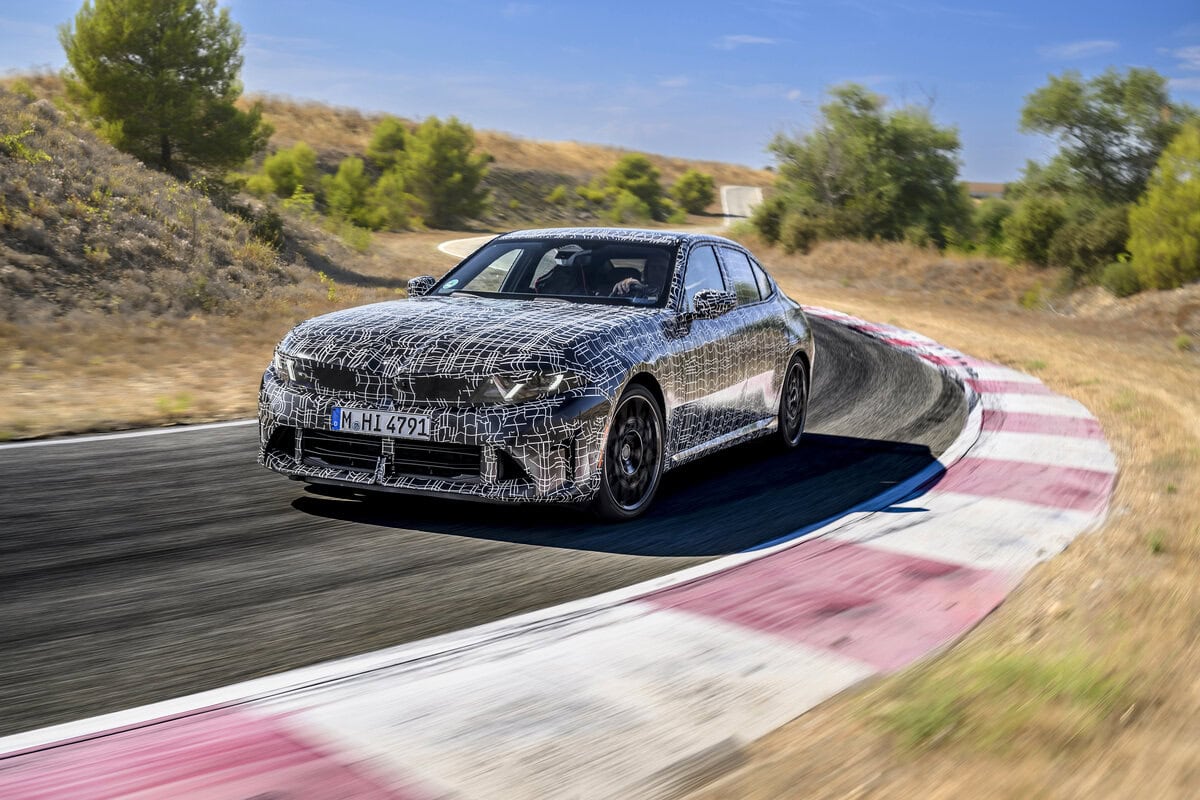
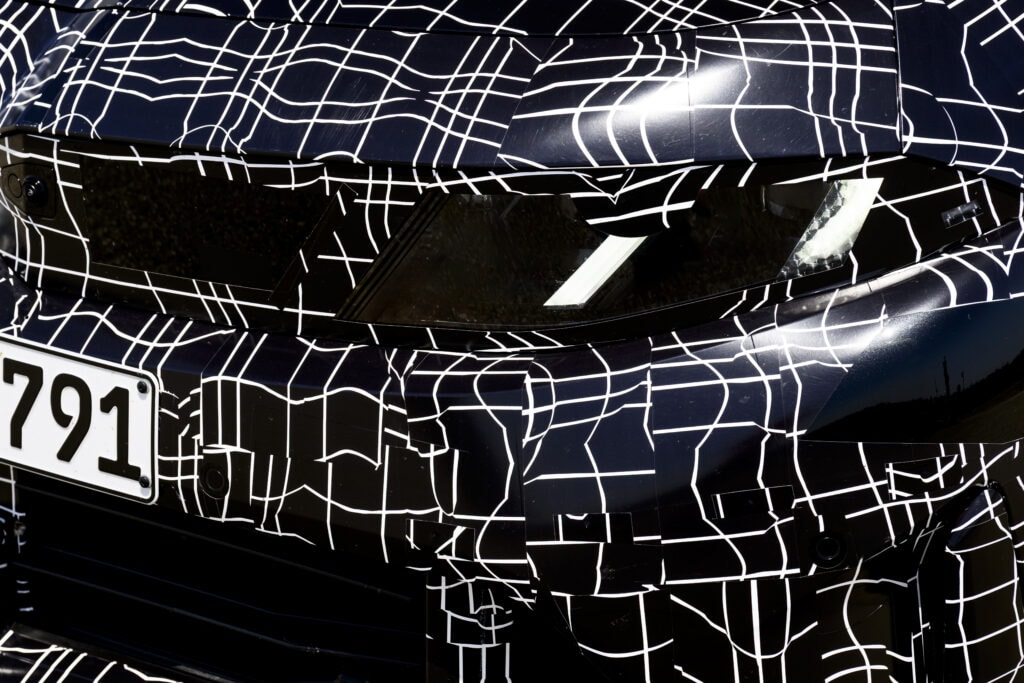
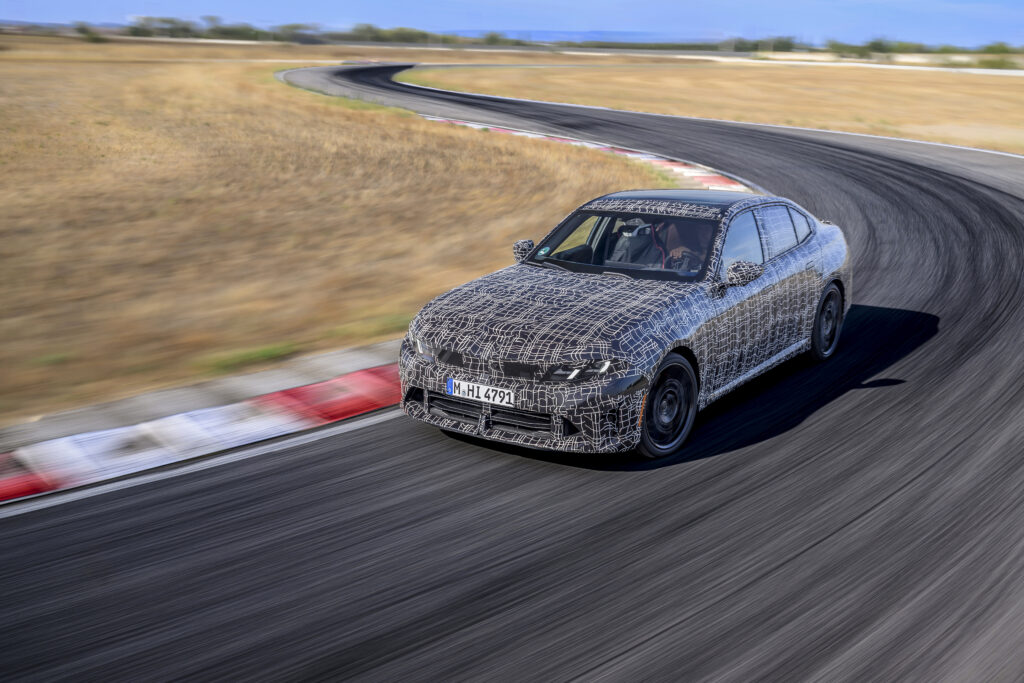
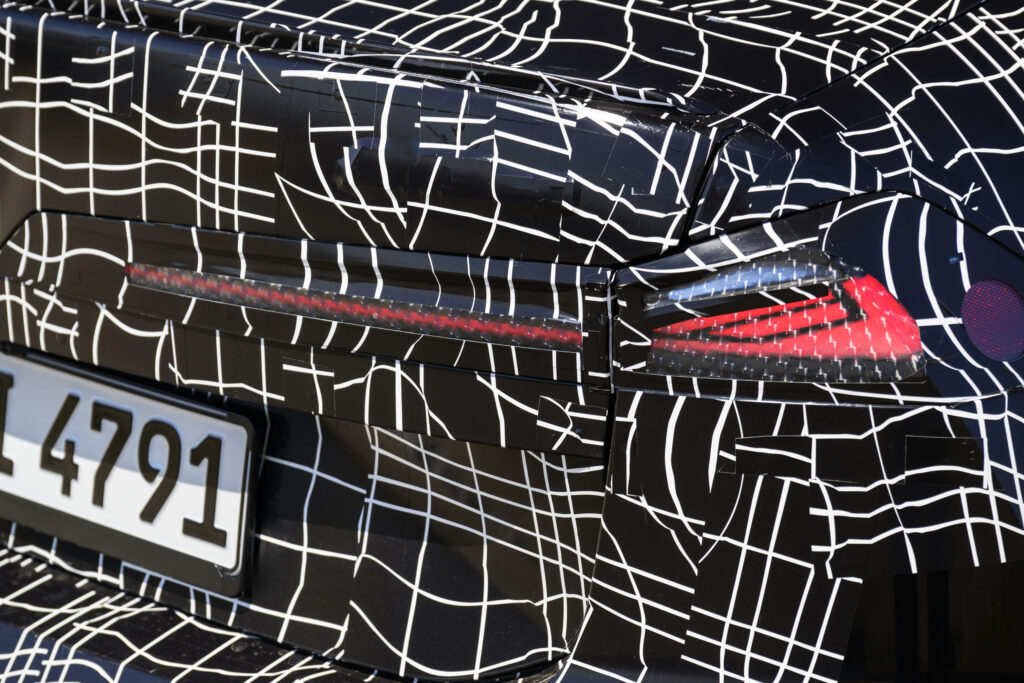
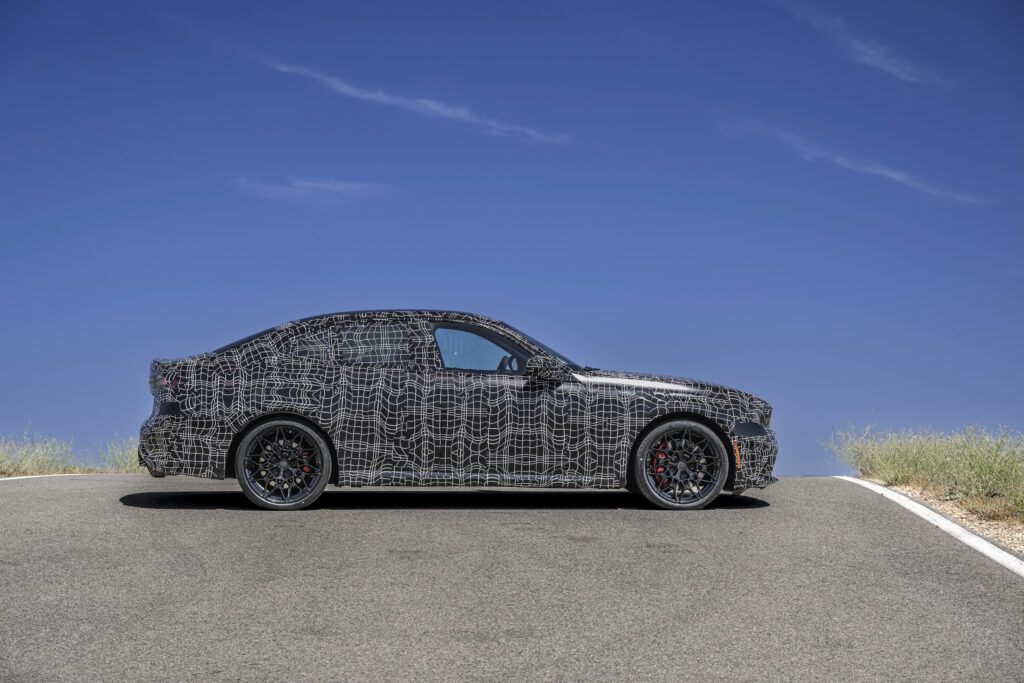
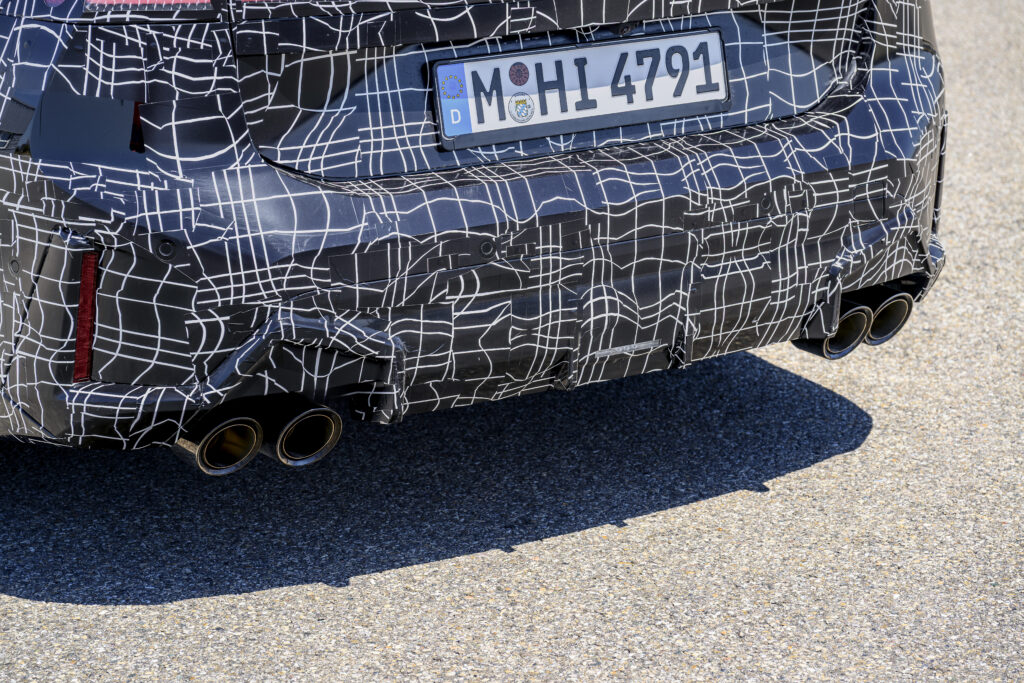
BMW is still running camouflaged prototypes through final driving-dynamics calibration at Miramas in southern France. What we have right now is a fairly detailed engineering preview, and it contains several clues that matter more than the camouflage.
BMW 3 Series buyers are getting a real choice
The most important fact in BMW’s announcement is not the horsepower. It is that the company is refusing to make the combustion 3 Series look or feel like a leftover product while the electric i3 gets all the new toys.
Both sides of the family use BMW’s Neue Klasse design language. BMW describes a long wheelbase, short overhangs, a 2.5-box sedan profile, and a new interpretation of the familiar four-eyed front end. Inside, the combustion car also gets BMW Panoramic iDrive and Operating System X. In other words, choosing gasoline does not automatically mean choosing the old dashboard and the old visual language.

That is a smart piece of product planning. Test Miles has already looked at how the new electric i3 changes the traditional 3 Series formula, and the combustion car now gives shoppers a useful counterpoint. One is built around sixth-generation electric hardware and the Heart of Joy central computer. The other keeps an engine, transmission and a more conventional network of control units, but it is being engineered to land at the same basic destination: a compact BMW sedan that feels precise and driver-focused.
The 48-volt system deserves some perspective. The U.S. Department of Energy explains that a mild hybrid can assist the engine and recover energy but cannot drive on electricity alone. That means buyers should not read “mild hybrid” and expect plug-in-hybrid behavior or meaningful electric-only commuting. The electrical assistance is there to improve efficiency and response around the gasoline engine, not replace it.
You may also enjoy: BMW Finally Fixed the Electric Car, The New i3 Proves It
The bigger strategic point is choice. BMW has already used multiple-powertrain strategies elsewhere in the lineup, and the next 3 Series makes that philosophy especially visible because the sedan has been one of the company’s defining products for five decades. BMW says more than 18 million 3 Series vehicles have been built since 1975. If there is one model where forcing every buyer down a single propulsion path could create unnecessary friction, this is probably it.
The M350 xDrive is where the old formula gets weird
If you are looking for the version that tells us what BMW still thinks an engine-powered performance sedan should be, start with the M350 xDrive.
BMW’s U.S. material lists a 3.0-liter TwinPower Turbo inline-six, an eight-speed Steptronic automatic and xDrive all-wheel drive. The six-cylinder engine is paired with 48-volt mild-hybrid assistance for a combined 437 horsepower and 428 pound-feet of torque. BMW says zero to 62 mph takes 4.1 seconds and top speed is 155 mph.
Those figures are impressive, but they are not the reason I would keep reading. The more revealing hardware is the standard Adaptive M Suspension, M Sport differential and variable sport steering. This is BMW acknowledging that power is easy to advertise and much harder to turn into a car that feels coherent on a bad road, a fast on-ramp or a sequence of corners.
That matters because the 3 Series has a reputation problem every new generation has to solve: it is judged against its own history before it is judged against a Mercedes-Benz C-Class, Audi sedan or Lexus IS. Buyers remember older cars that were lighter, simpler and less digitally mediated. BMW cannot recreate those cars, but it can decide whether new layers of software are allowed to blur the steering, brake response and chassis balance that made the badge meaningful in the first place.
You may also enjoy: BMW’s Electric M3 Has to Prove It Has a Soul
The new car has a longer wheelbase and wider tracks than its predecessor, with BMW again emphasizing near-even weight distribution. None of that guarantees a better driver’s car. A longer wheelbase can help stability and ride, while wider tracks can help cornering stance, but the calibration determines whether the combination feels agile or merely planted.
BMW is doing that calibration at Miramas, where it can use a high-speed oval, handling circuits and varied surfaces. The global version of BMW’s development release also says prototypes have already been tested at the Nürburgring. That does not give us a lap time, and BMW has not published one. What it tells us is that this car is still in the stage where steering, braking, damping and electronic intervention are being tuned together rather than treated as separate brochure features.
Drift Moment is fun, but read the fine print
The feature everyone will turn into a social clip is called Drift Moment. In the M350 xDrive, BMW says the system can send engine drive entirely to the rear wheels when the driver activates the function and switches DSC off. That effectively gives an all-wheel-drive M Performance sedan a rear-drive personality on demand.
There are two ways to read that. The childish and entirely understandable interpretation is that BMW has built a button for going sideways. The more useful interpretation is that the driveline is becoming software-configurable in a way that changes the fundamental character of the car.
Electronic stability control normally works in the opposite direction. The National Highway Traffic Safety Administration explains that stability-control systems use computer-controlled braking to help a driver maintain directional control. BMW’s Drift Moment specifically requires DSC Off, so this is a closed-course-style performance feature for a driver who understands what happens when that safety net is deliberately removed.
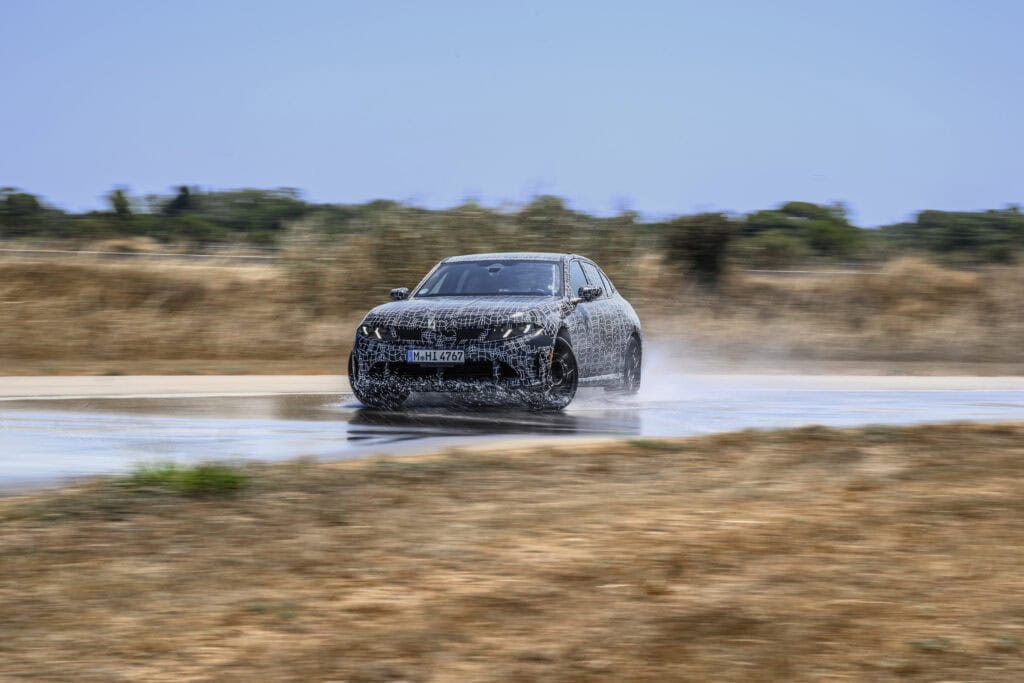
The timing also matters. BMW says Drift Moment will become available during 2027 and can then be activated by Remote Software Upgrade on cars already delivered. That means an early M350 buyer may physically own a car capable of the feature before the software function is active.
Over-the-air updating is now normal enough that federal safety regulators discuss it as part of the modern vehicle ecosystem. NHTSA has described over-the-air updates as an increasingly common way to push vehicle software and remedy some recalls. In this BMW application, the interesting ownership question is simpler: exactly what will be enabled at delivery, what arrives later, and whether there are market-specific limits on the function.
You may also enjoy: New 2027 BMW X5 Features That Actually Matter
I would also keep an eye on how BMW communicates the feature to buyers. Drift Moment sounds dramatic, but BMW is presenting the M350 as an M Performance model, not as an M3. The function changes how the driveline behaves; it does not, by itself, establish equivalence with a full M car. The fun button is the headline. The engineering underneath it is the part that will determine whether the car is actually satisfying.
The chassis details matter more than the camouflage
Under the body, BMW is sticking with a double-joint spring-strut front axle and a five-link rear setup. The company says high-preload anti-roll-bar mounts improve roll control, while newly developed lift-related dampers are standard. Adaptive Suspension and Adaptive M Suspension sit above that, depending on configuration.
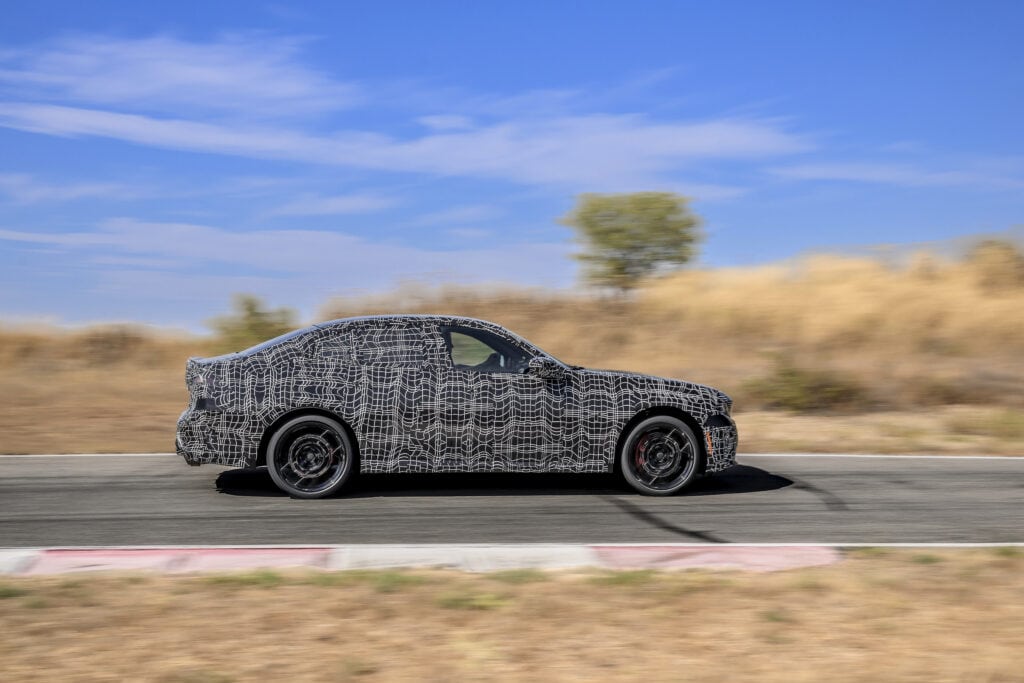
BMW also says it has upgraded the integrated braking system and adjusted the steering ratio. Those changes are exactly the sort of items I would want to evaluate before making any strong claim about the new car. A sport sedan lives or dies by the relationship between steering input, brake modulation, body movement and power delivery. You can ruin an excellent suspension with artificial steering or a brake pedal that changes character unexpectedly.
The most intriguing part is what BMW calls the Driving Stack. The source material supplied to Test Miles contains several instances of “Diving Stack,” but BMW’s current global PressClub page uses “Driving Stack,” which is clearly the intended term. The combustion car uses an optimized version tailored to its engine-based architecture, while the electric i3 uses the Heart of Joy computer with BMW Dynamic Performance Control.
That separation is encouraging. BMW is not pretending that a gasoline car and an EV should be controlled exactly the same way just because they share a shape and software generation. The mass distribution, power delivery, braking behavior and driveline responses are different, so model-specific control logic makes sense.
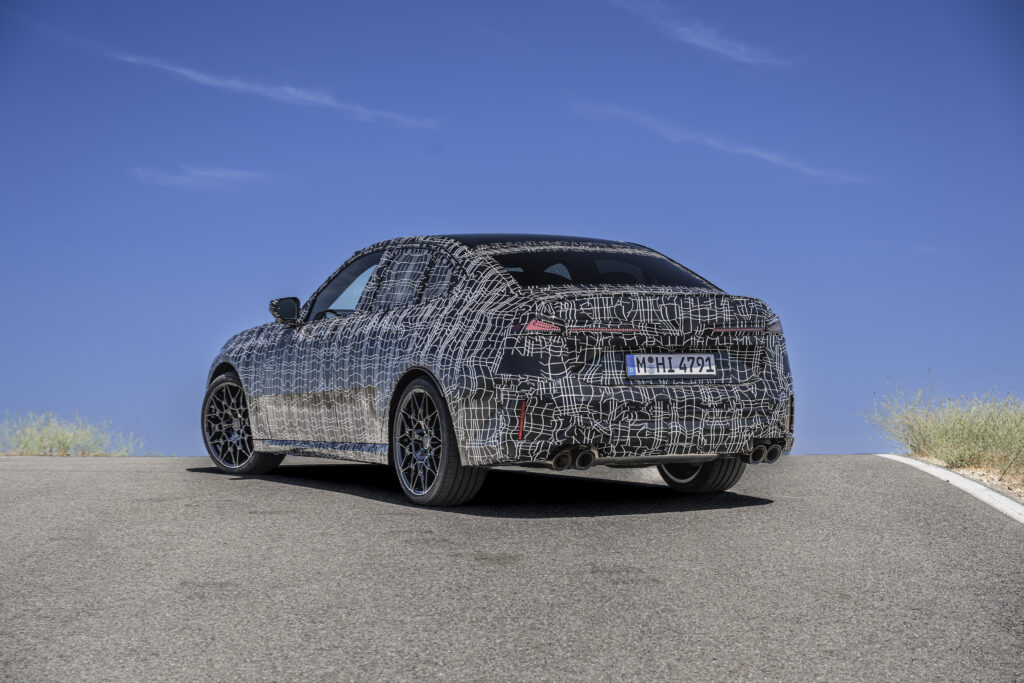
The optional tire package is another detail shoppers should not ignore. BMW says 245/35 R20 front and 275/30 R20 rear sports tires will be available. Wider, lower-profile rubber can sharpen response and increase grip, but it can also make potholes, replacement bills and ride quality more noticeable. NHTSA’s TireWise guidance is a good reminder that correct size, inflation and condition directly affect safety, durability and fuel consumption.
You may also enjoy: 2026 BMW 7 Series: Which Model Is Right for You?
This is also why I would resist ordering the biggest wheel simply because it photographs well. If BMW offers a smaller wheel-and-tire package with more sidewall and the same adaptive damping hardware, that could be the better real-world configuration for drivers who actually use the car on broken city pavement and long interstate trips.
What I would wait to learn before ordering
The new BMW 3 Series is far enough along that we can see the engineering priorities, but it is not far enough along to answer the ownership questions that determine whether it is a smart purchase.
First, BMW has not supplied final U.S. EPA fuel-economy numbers in this release. That matters because the presence of 48-volt mild-hybrid hardware tells us what kind of system is being used, not how efficient the finished car will be. EPA explains that new vehicles are evaluated through standardized fuel-economy test procedures covering city, highway, aggressive, hot and cold conditions. Until the U.S. numbers are published, any MPG prediction would be guesswork.
Second, BMW has not announced U.S. pricing in the material provided for this story. That is a major missing piece because the M350’s value will depend on how far it sits below the next M3 and how much equipment is standard versus optional. The same applies lower in the range: a four-cylinder 3 Series can be a compelling daily driver if BMW keeps the price and option structure disciplined.
Third, BMW of North America gives the M350 a 437-hp rating. BMW’s global release expresses the output as 326 kW/443 hp. That is consistent with the familiar difference between mechanical and metric horsepower presentation, but U.S. shoppers should use the 437-hp number supplied in the U.S. material unless BMW updates it.
Fourth, Drift Moment does not arrive until sometime in 2027. If that function is part of the reason you want the car, I would not assume it is available the day the first M350s reach customers. BMW specifically says earlier cars will receive activation later through a software update.
You may also enjoy: BMW Hydrogen Vehicles: History and What Comes Next
Finally, I want to know how much separation BMW creates between the combustion 3 Series and the electric i3 when both are driven on the same road. The shared design language is sensible. The shared digital interface is inevitable. The real question is whether BMW allows each powertrain to keep the traits that make it satisfying instead of sanding them down until both cars feel like software themes applied to the same appliance.
That is why this 3 Series development story is more consequential than another horsepower announcement. BMW is trying to modernize its most important sport sedan without telling traditional buyers that their preferred powertrain is an embarrassment waiting to be discontinued. At the same time, it has already built an electric i3 that represents a much more centralized, high-voltage future.
If BMW gets the balance right, the clever part will not be that one version burns gasoline and the other does not. It will be that both are recognizably 3 Series models for different buyers. The camouflage will come off soon enough. The real test is whether the personality survives underneath it.