2026 Chevrolet Corvette Review: Which One Should You Buy?
By Nik J. Miles
There is something wonderfully American about building a sports car that can embarrass machinery costing twice as much, then offering an even faster version for people who apparently regard 500 horsepower as a modest starting point.
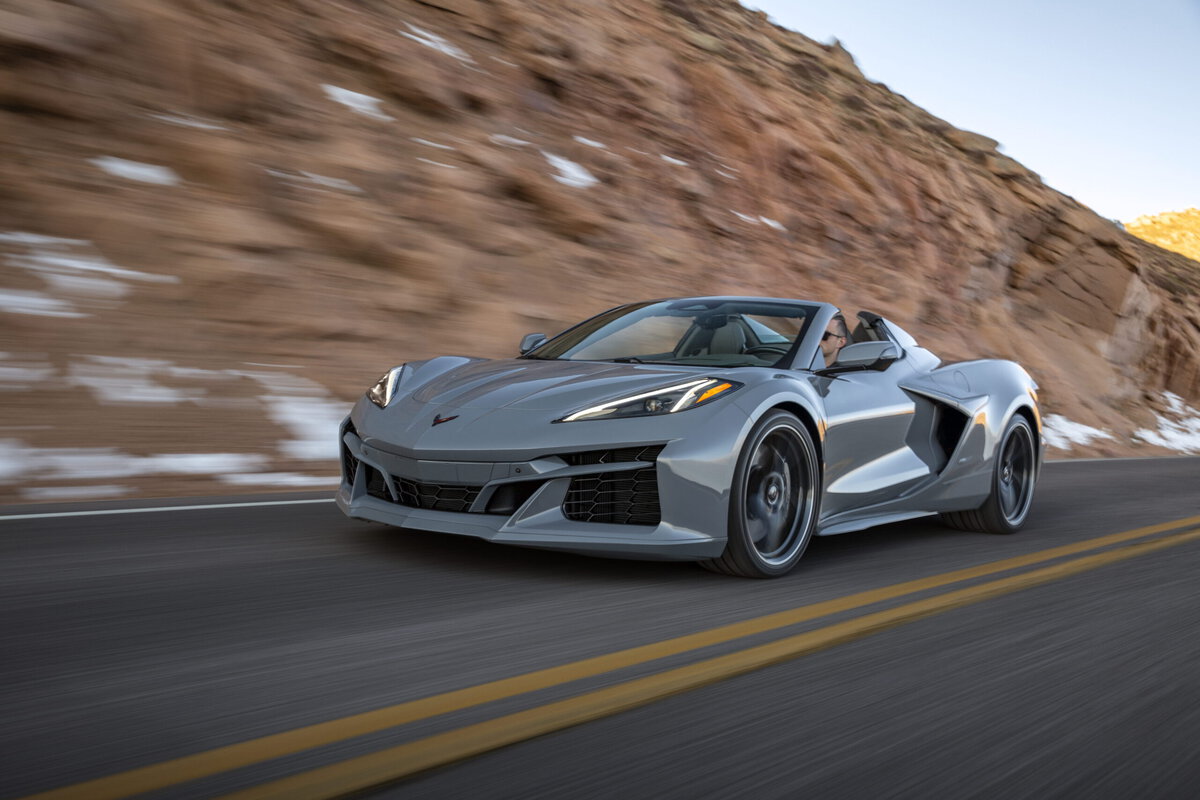
The 2026 Chevrolet Corvette has become an entire family of performance cars. There’s the Stingray, E-Ray, Z06, ZR1 and the extraordinary ZR1X. Each offers a different answer to the question of how much speed anybody actually needs.
For most buyers, my recommendation is remarkably simple: buy the Stingray, preferably with the 2LT equipment package. Consider the Z51 Performance Package if you will genuinely use its additional handling capability.
The other Corvettes are impressive engineering achievements. But the Stingray is where the performance, everyday usability and purchase price come together most convincingly.
You may also like this video:
The Stingray Is Already a Very Serious Sports Car
The current Corvette’s mid-engine layout places its V8 behind the passenger compartment, improving weight distribution and giving the car proportions associated with much more expensive exotic machinery.
For 2026, the Stingray uses a naturally aspirated 6.2-liter V8 producing 490 horsepower, increasing to 495 with the performance exhaust. Power reaches the rear wheels through an eight-speed dual-clutch transmission.
There is no conventional manual gearbox.
That absence continues to disappoint enthusiasts who enjoy changing gears themselves. On the other hand, the dual-clutch transmission delivers rapid shifts and allows the engine to remain in its useful power range.
Independent testing has consistently demonstrated the Stingray’s considerable performance. With the Z51 package, Chevrolet advertises acceleration to 60 mph in as little as 2.9 seconds under its specified testing conditions.
Those are numbers that would have seemed extraordinary in a road car not very long ago.
What impresses me more is the engineering balance. The Corvette isn’t merely designed to accelerate quickly in a straight line. Its mid-engine architecture, broad tires and well-developed suspension create a serious performance platform.

The Most Important Corvette Option Isn’t More Horsepower
One of the mistakes buyers make with performance cars is concentrating on engine output while overlooking the equipment that changes how the car behaves.
Chevrolet’s Z51 Performance Package adds an electronic limited-slip differential, upgraded brakes, performance tires, additional cooling and revised gearing.
Those changes matter because they help the car respond more consistently when driven enthusiastically, particularly on a circuit.
Independent road testers have praised the Stingray’s combination of cornering ability and surprisingly manageable ride comfort. The available Magnetic Ride Control suspension is particularly valuable because it can adapt damping characteristics to changing road conditions.
My preference for a road-focused car would be to prioritize the suspension and comfort equipment before chasing an enormous horsepower figure.
The standard Stingray is already faster than most drivers will ever exploit on public roads. Additional capability is useful only if you have somewhere appropriate to enjoy it.

Why the 2LT Is My Choice
The 2026 Stingray Coupe starts at a published MSRP of $70,000 before destination charges.
The 2LT Coupe starts at approximately $77,100, making it a meaningful but potentially worthwhile upgrade for somebody who intends to use the Corvette regularly.
The 2LT provides additional comfort, visibility and convenience features, including useful camera and driver-assistance technology.
That is particularly relevant in a low sports car with wide rear bodywork and restricted visibility.
A front-lift system, where fitted, is also worth considering. It can raise the front of the vehicle to help negotiate steep driveways and other low-speed obstacles.
None of these features makes the car quicker around a racetrack. They make it considerably easier to live with during the other 99 percent of its life.

The E-Ray Changes the Corvette Formula
The E-Ray uses the 6.2-liter V8 together with an electric motor driving the front wheels, creating an all-wheel-drive hybrid Corvette with a combined 655 horsepower.
This is not a plug-in hybrid. Owners do not recharge it from an electrical outlet.
Instead, the system uses a relatively small battery and electric assistance to improve traction and deliver immediate front-axle response.
The result is a different type of Corvette.
Its all-wheel-drive capability provides an advantage when putting power onto the road in less favorable conditions, although tires and available grip remain crucial.
The E-Ray’s electric assistance is also an interesting demonstration of how electrification can improve performance without eliminating the combustion engine.
But with a starting MSRP of $108,600 before destination, it asks buyers to spend substantially more than the Stingray.
For someone who wants all-wheel drive and unusually rapid acceleration, that premium may be justified. For a sunny weekend sports car, the Stingray offers the stronger financial argument.
The Z06 Is for Drivers Who Want the Engine to Be an Event
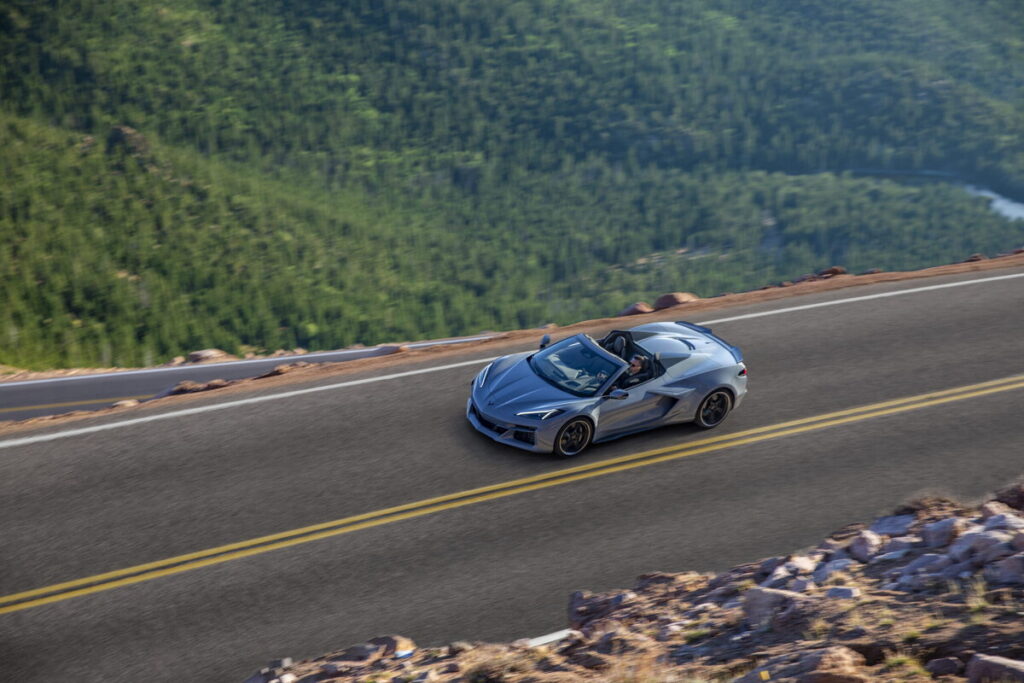
The Z06 exchanges the Stingray’s 6.2-liter V8 for a 5.5-liter flat-plane-crank engine producing 670 horsepower.
Its defining characteristic isn’t simply the horsepower. It’s the way the engine develops its power, combined with its distinctive high-revving soundtrack.
The Z06 is more specialized than the Stingray, with additional cooling, wider bodywork and performance equipment intended for sustained enthusiastic driving.
Independent reviews generally praise its remarkable engine and track performance, while acknowledging the greater noise and compromises associated with its more aggressive character.
Starting above $117,000 before destination, the Z06 is a serious financial commitment.
If you intend to visit circuits regularly and enjoy a high-revving naturally aspirated engine, it may be the most emotionally satisfying Corvette.
If you simply want a fast road car, the Stingray already does a great deal of the same work for considerably less money.
And Then There’s the ZR1 and ZR1X
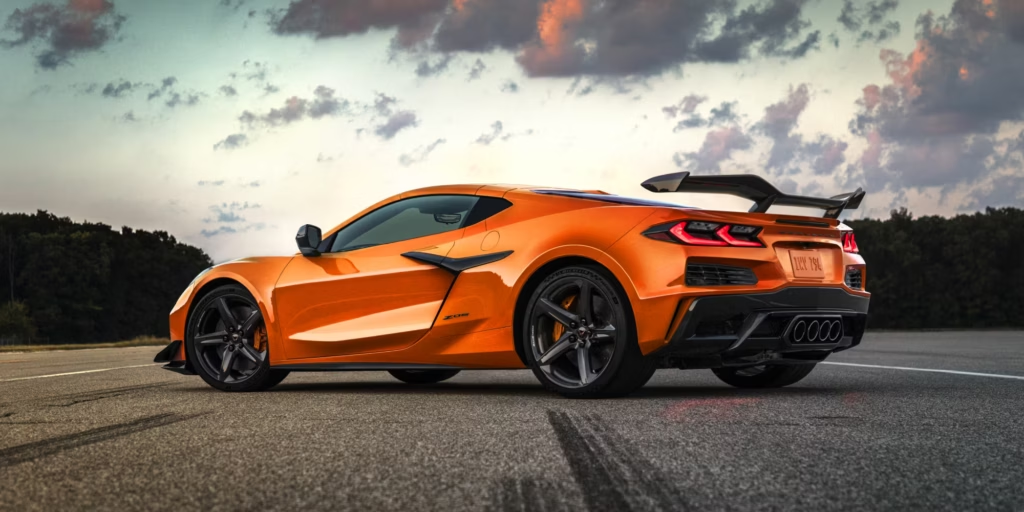
The 2026 ZR1 produces 1,064 horsepower from a twin-turbocharged 5.5-liter V8.
The ZR1X adds front-axle electric propulsion for a combined 1,250 horsepower and all-wheel drive.
These are extraordinary figures for production sports cars, with both versions aimed at buyers seeking extreme performance.
The ZR1 starts at approximately $182,000 before destination, while the ZR1X begins above $207,000.
For that money, you are buying considerably more than everyday transportation. You’re buying specialized engineering, enormous performance reserves and a car whose capabilities are largely inappropriate for public-road exploration.
There is nothing wrong with that. The world would be a less interesting place without ambitious engineering.
But horsepower is not a substitute for enjoyment, and the most powerful Corvette isn’t automatically the best one to own.
Living With a Mid-Engine Corvette
The Corvette is a two-seat sports car. There is no rear seating area, and access requires a certain amount of flexibility.
The available luggage space is divided between compartments at the front and rear, which gives it more everyday usefulness than its appearance suggests.
The low driving position and wide body demand additional care in parking lots, narrow streets and steep driveways.
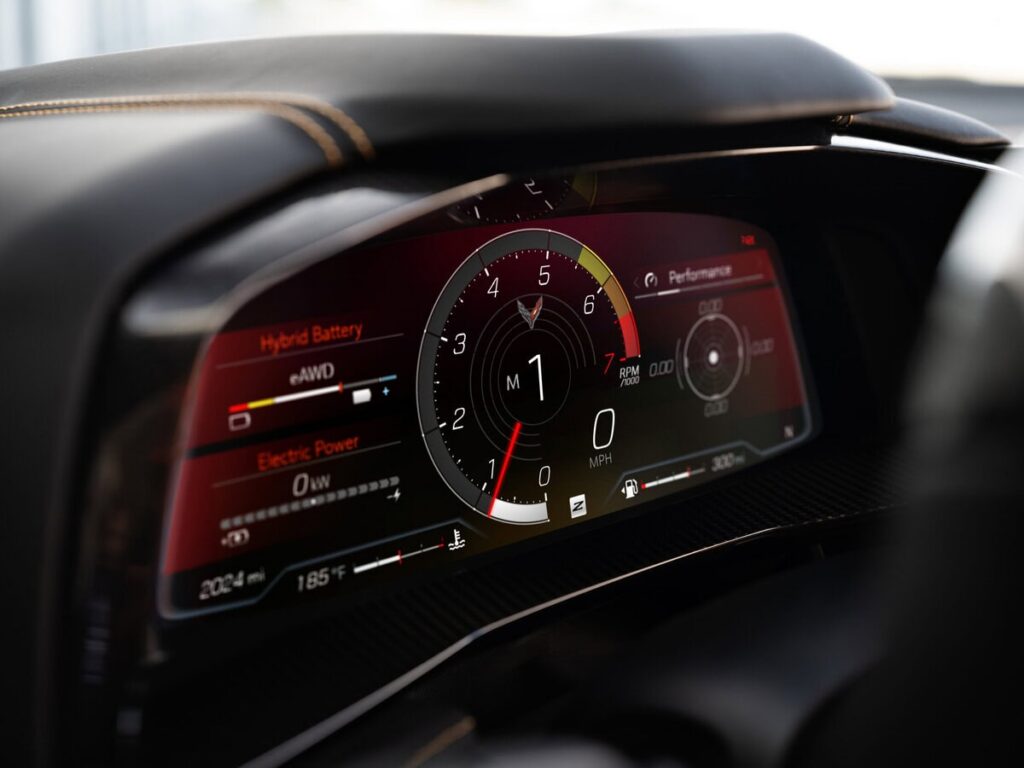
The cabin has been updated for the 2026 model year, with a redesigned three-screen arrangement and a revised center console that removes the previous long row of climate-control buttons.
Whether that is an improvement depends partly on how easily the new controls can be operated while driving.
For me, physical controls for commonly used functions remain preferable to burying them in software.
Fuel consumption and tire costs are additional considerations. This is a powerful sports car using expensive performance components, not an inexpensive economy vehicle wearing an interesting body.
What Chevrolet Should Improve Next
I’d like Chevrolet to continue making the Corvette easier to use without making it larger or heavier.
Better outward visibility and more intuitive controls would make a genuine difference during everyday driving.
The next generation should also address cabin materials, especially in expensive versions where buyers quite reasonably expect the interior quality to reflect the purchase price.
A lighter, simpler Corvette would be an interesting engineering direction, particularly when some performance models are becoming enormously powerful and increasingly specialized.
And while a manual transmission may be difficult to reconcile with the current powertrain architecture, I would welcome a greater sense of driver involvement wherever Chevrolet can realistically provide it.
My Verdict: Buy the Stingray 2LT
There is an argument for every Corvette in the current lineup.
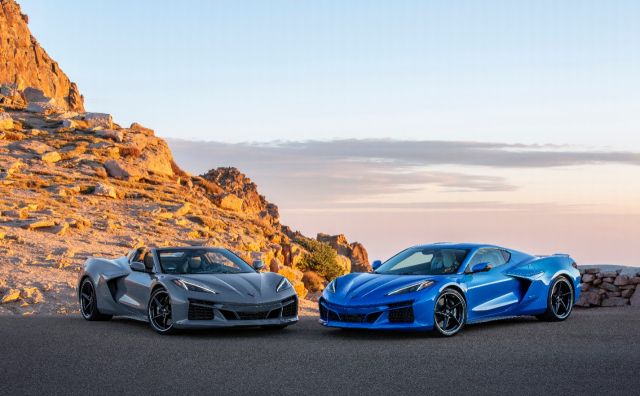
The E-Ray adds hybrid all-wheel-drive traction. The Z06 offers one of the most distinctive naturally aspirated V8 engines available. The ZR1 and ZR1X demonstrate just how far Chevrolet’s performance engineers can push the platform.
But the Stingray remains the best Corvette for most people.
It delivers remarkable acceleration, serious handling ability, an unmistakable V8 engine and a driving experience that would cost considerably more in many other sports cars.
I’d choose the 2LT for its additional everyday equipment, then consider the Z51 package according to how the car will actually be used.
The most expensive Corvette might be the fastest.
The most enjoyable purchase is the one that allows you to use the car regularly without constantly wondering whether you’ve bought far more machinery than you need.

Frequently Asked Questions
What is the best 2026 Chevrolet Corvette to buy?
The Stingray 2LT is my recommendation for most buyers. It combines the standard car’s strong V8 performance with additional comfort and convenience features. Buyers primarily interested in track use should examine the Z51 package or Z06.
Does the 2026 Corvette have a manual transmission?
No. The 2026 Corvette lineup uses an eight-speed dual-clutch automatic transmission. Drivers can select gears using steering-wheel paddles, but a traditional manual gearbox with a clutch pedal is not offered.
Is the Corvette E-Ray a plug-in hybrid?
No. The E-Ray uses a gasoline V8 and an electric motor powering the front wheels, but its battery is charged through vehicle operation. Owners do not plug the E-Ray into an external charger.
Is the Z06 worth the extra money?
It can be for enthusiasts who particularly value its flat-plane-crank V8, high-revving character and additional circuit-oriented equipment. Buyers seeking an enjoyable road car may find the substantially less expensive Stingray more than sufficient.