Range Rover Sport Electric Puts Handling Before Hype
By Robert R Guio
Range Rover Sport Electric targets drivers first, combining 542 hp, 800-volt charging and a lower center of gravity with real off-road hardware.
Range Rover Sport Electric Starts With the Chassis
There is an easy way to launch an expensive electric SUV: give it enormous horsepower, quote an impressive acceleration number and photograph it somewhere dramatic. Range Rover has all three available, yet the most important number attached to the new electric Sport may be 73 mm.
That is how much lower its center of gravity sits compared with the Range Rover Sport plug-in hybrids. The electric version also has a body structure Range Rover says is 61 percent stiffer. Those changes tell us more about what the engineers were chasing than the headline 4.3-second 0-to-60 mph claim.
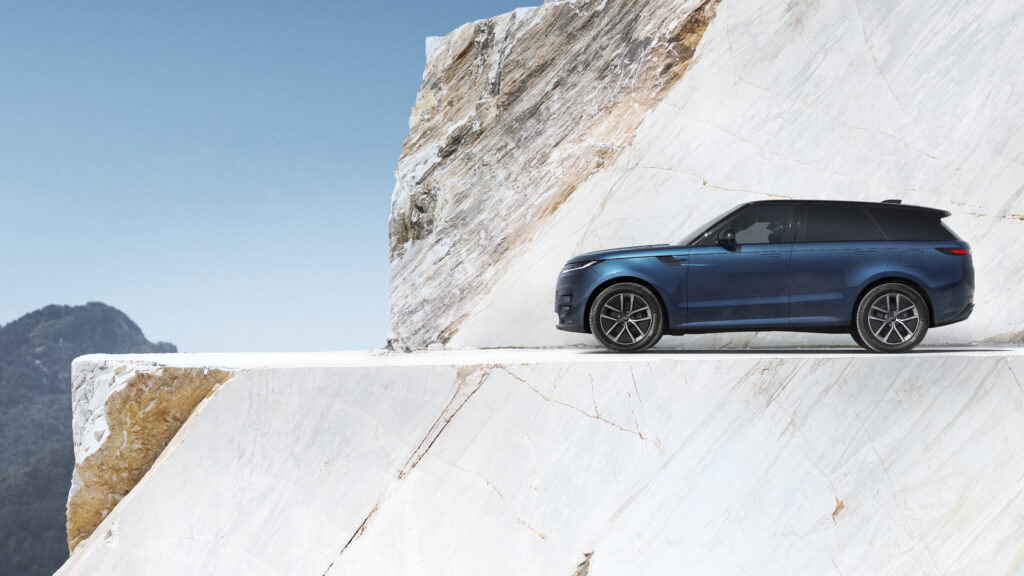
A heavy luxury EV can be extremely fast in a straight line and still feel cumbersome. Range Rover is trying to prevent that. Vehicle Engineering Director Matt Becker says the combination makes the Sport Electric feel “smaller, more planted and more responsive than you would imagine.” That is a company claim, not an independent Test Miles road-test conclusion, but it is the right problem to be solving.
You may also enjoy: 2025 Range Rover Sport PHEV Is the Longest-Range Luxury Plug-In
542 HP Is Almost the Least Interesting Specification
Two 260-kW motors produce as much as 550PS, about 542 horsepower, and 850 Nm, roughly 627 pound-feet, of torque. Range Rover says that is the highest torque figure yet for a Sport. Dynamic Launch Mode produces a claimed 0-to-60 mph time of 4.3 seconds.
Plenty of modern EVs can deliver an alarming shove from a traffic light. What separates this one on paper is the amount of hardware devoted to controlling the body after the acceleration ends. Adaptive Dynamics works with Twin Valve Dampers, Dynamic Air Suspension and electronic Active Roll Control. Range Rover says Adaptive Dynamics watches 100 parameters 500 times per second.
The active roll system can apply up to 1,400 Nm of force across each axle, while All-Wheel Steering helps a large SUV maneuver more like something smaller. That is particularly relevant when a vehicle must be both a highway luxury car and an off-roader.
You may also enjoy: Land Rover Defender OCTA Blends Power With Capability
The Electric Hardware Has an Off-Road Job
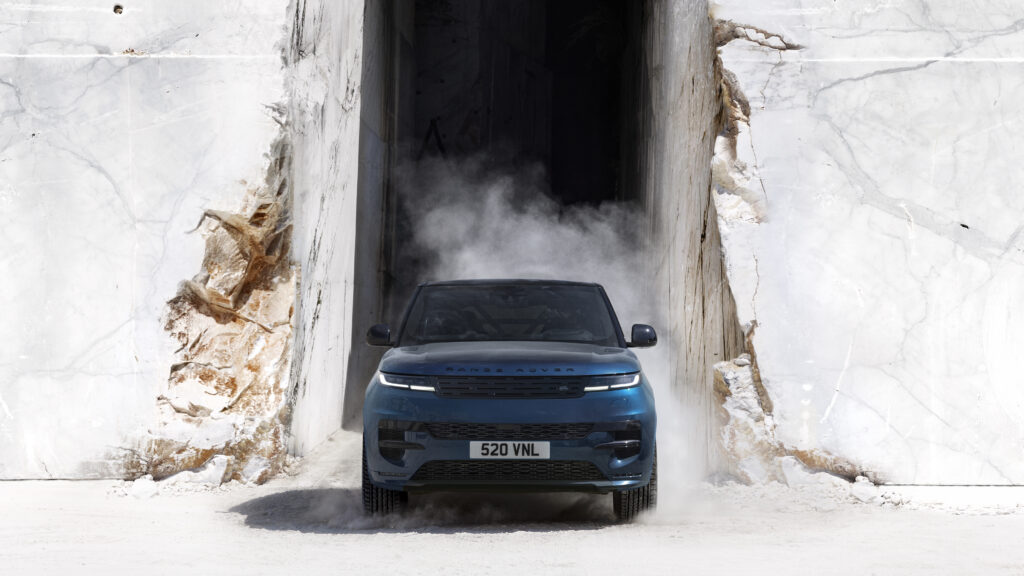
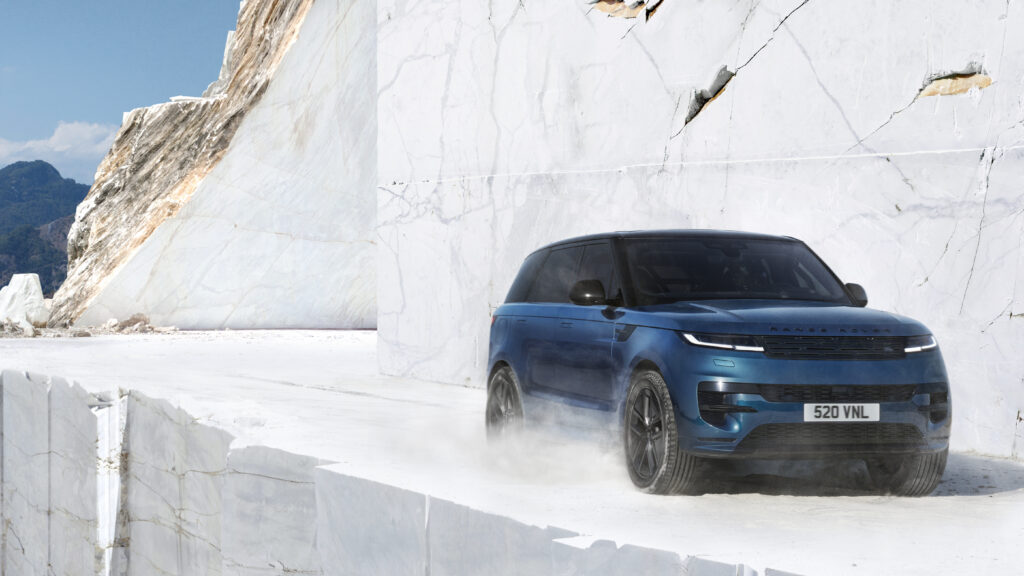
Range Rover completed development testing in Italy’s Carrara marble quarries. The company used slopes of up to 45 degrees, tight hairpins and surfaces ranging from polished marble to fine dust to demonstrate its traction systems.
The Sport Electric uses what Range Rover calls virtual all-wheel drive, coordinating the front and rear motors electronically rather than depending on a traditional mechanical connection. It can wade through up to 900 mm, about 35 inches, of water, according to the manufacturer.
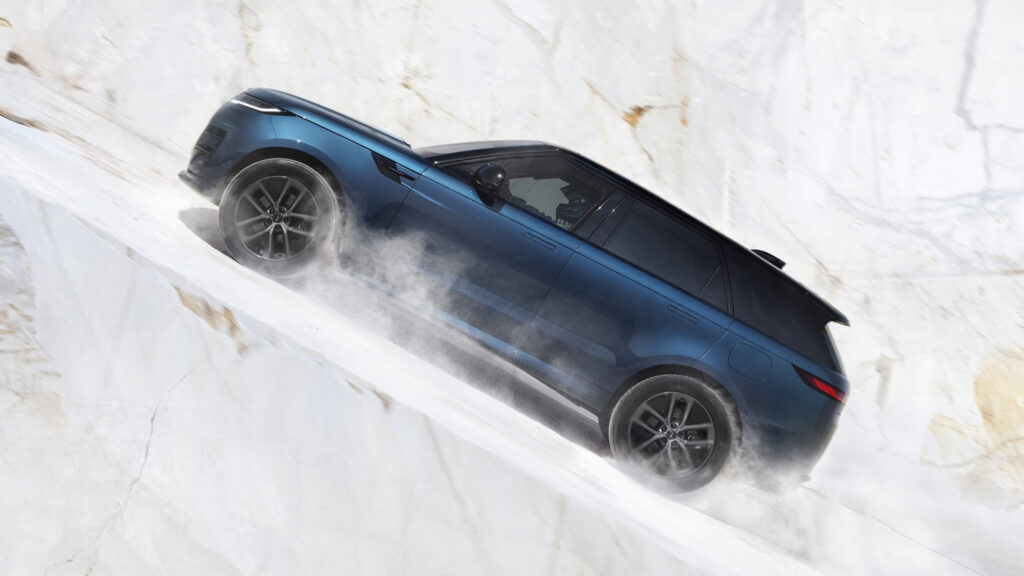
That capability matters because electrification should not quietly remove the thing that makes a Range Rover different from any other luxury crossover. The quarry run was completed under controlled conditions by professionals, so it proves what Range Rover demonstrated there, not what every owner will reproduce on a weekend trail.
You may also enjoy: Genesis GV90 Takes Aim at Rolls-Royce and Range Rover
Range Rover Sport Electric Range Needs Context
The battery has 118.5 kWh of capacity and uses lithium-ion battery technology. Range Rover quotes up to 378 miles under the WLTP test procedure, plus an estimated real-world figure of up to 333 miles.
For American shoppers, do not read “378 miles” as an EPA rating. WLTP and EPA testing are different, and the launch information does not supply an EPA-certified U.S. range. The EPA also notes that temperature, driving conditions and driving behavior can materially change electric-vehicle range.
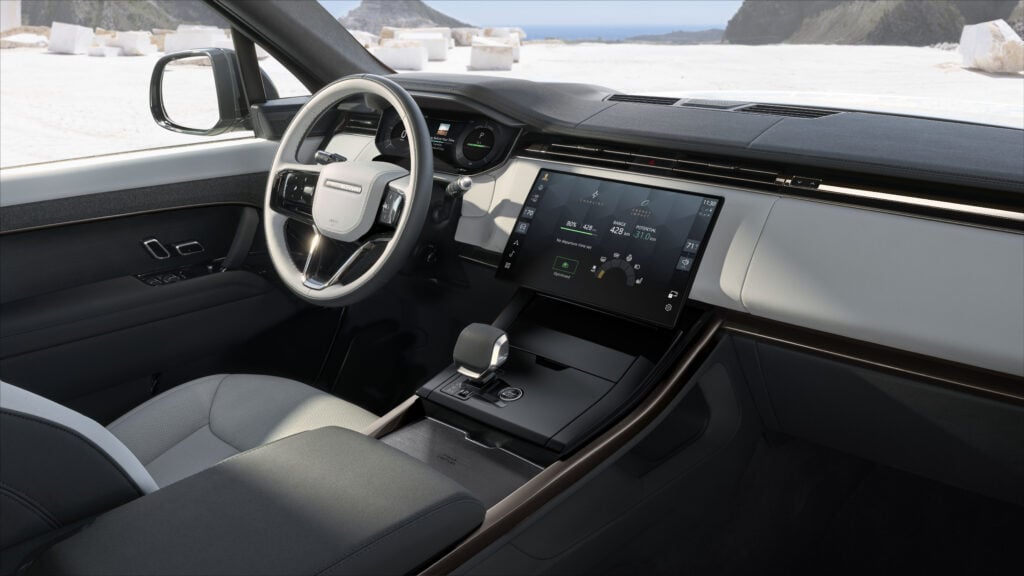
That distinction matters on a vehicle likely to be used for long-distance travel. A buyer should wait for the market-specific label rather than converting a European test number into an assumed U.S. result.
You may also enjoy: Rolls-Royce Spectre Series II Gets More Range
800 Volts Could Matter More Than 378 Miles
The more useful road-trip specification may be the 800-volt architecture. Range Rover says the Sport Electric can charge from 10 to 80 percent in around 22 minutes when connected to a suitable 350-kW charger. It also claims as much as 136 miles can be added in 10 minutes when the vehicle is charging at its maximum rate.
The U.S. Department of Energy explains that DC fast charging performance depends on the vehicle, charger and operating conditions. In other words, 350 kW printed on a charger does not guarantee the battery will accept 350 kW continuously.
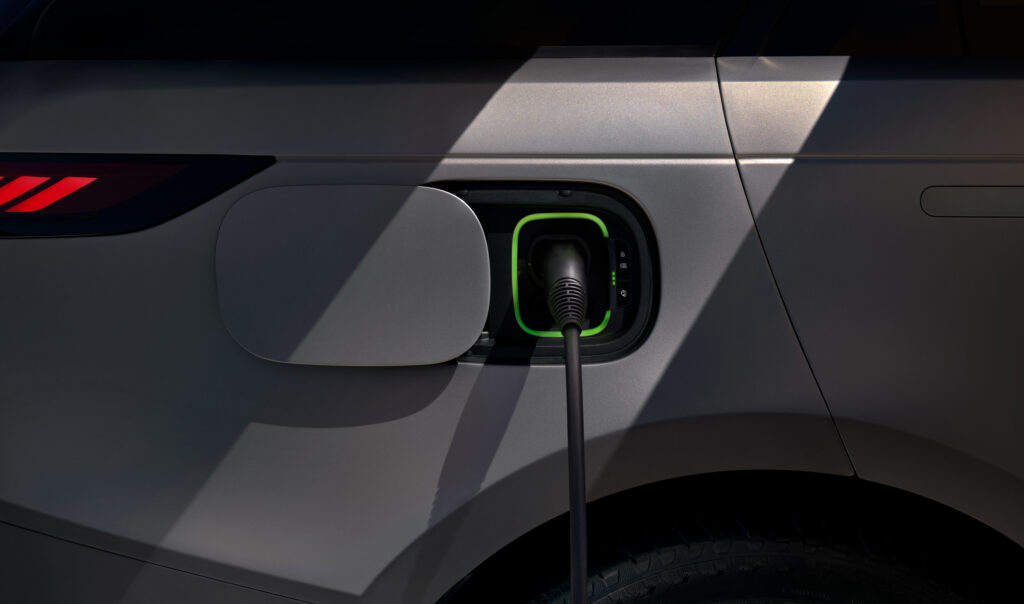
Range Rover’s ThermAssist heat-management system is therefore worth watching. Good thermal control can influence how consistently a battery performs in temperature extremes and during repeated charging stops.
JLR says its battery laboratory also subjects live packs to vibration, shock and temperatures from minus 40 C to 90 C. NHTSA’s battery-safety work similarly focuses on subjects including vibration resistance, water immersion, battery management and very high-power charging.
You may also enjoy: Why the Rivian R2 Could Be America’s Next Big EV SUV
Luxury Is Becoming Personal Again
The exterior has been left deliberately recognizable. An aerodynamically optimized grille and new wheel designs distinguish the EV, and Range Rover says the aero work can contribute as much as 10 additional miles of range at highway speeds.
Dynamic SE, Dynamic HSE, Autobiography and First Edition specifications are planned. Autobiography customers can use the Range Rover Bespoke program for expanded colors, materials, configuration combinations and details such as personalized embroidery.
That may sound peripheral to the engineering, but the ultra-luxury EV market is increasingly about more than battery size. Buyers at this level can find speed almost anywhere. Personalization, craftsmanship and the feeling that a vehicle was commissioned rather than selected from inventory are becoming part of the competitive battle.
You may also enjoy: Range Rover Pearl Luster Is a One-Off Pebble Beach Gem
What Buyers Should Watch
Each Range Rover Sport Electric gets what the company calls a Battery Digital Twin, designed to monitor battery condition and support proactive servicing through software. The battery warranty is eight years or 100,000 miles, with exact coverage varying by market. The Department of Energy notes that access to public charging stations remains an important part of making an EV practical beyond home charging.
The electric Sport will be manufactured at Solihull in the UK alongside the plug-in hybrid, gasoline and diesel models. Range Rover says orders are open in applicable markets, but the launch information reviewed here does not give American shoppers a U.S. price or EPA-certified range.
Those missing numbers are important enough that I would not make a buying recommendation yet. The other unresolved question is even simpler: how does it actually drive?
What makes the Range Rover Sport Electric promising is that Range Rover appears to understand the danger. Electrification can make a luxury SUV quieter and dramatically quicker while also making it heavy and emotionally remote. The company has responded with a stiffer structure, lower center of gravity, faster torque control, active suspension hardware and genuine off-road capability.
If those pieces work together on real roads as convincingly as they do on the specification sheet, the significant part of this Range Rover will not be that it is electric. It will be that the Sport survived becoming one.