2026 Toyota Land Cruiser Vehicle Analysis: $70K Test
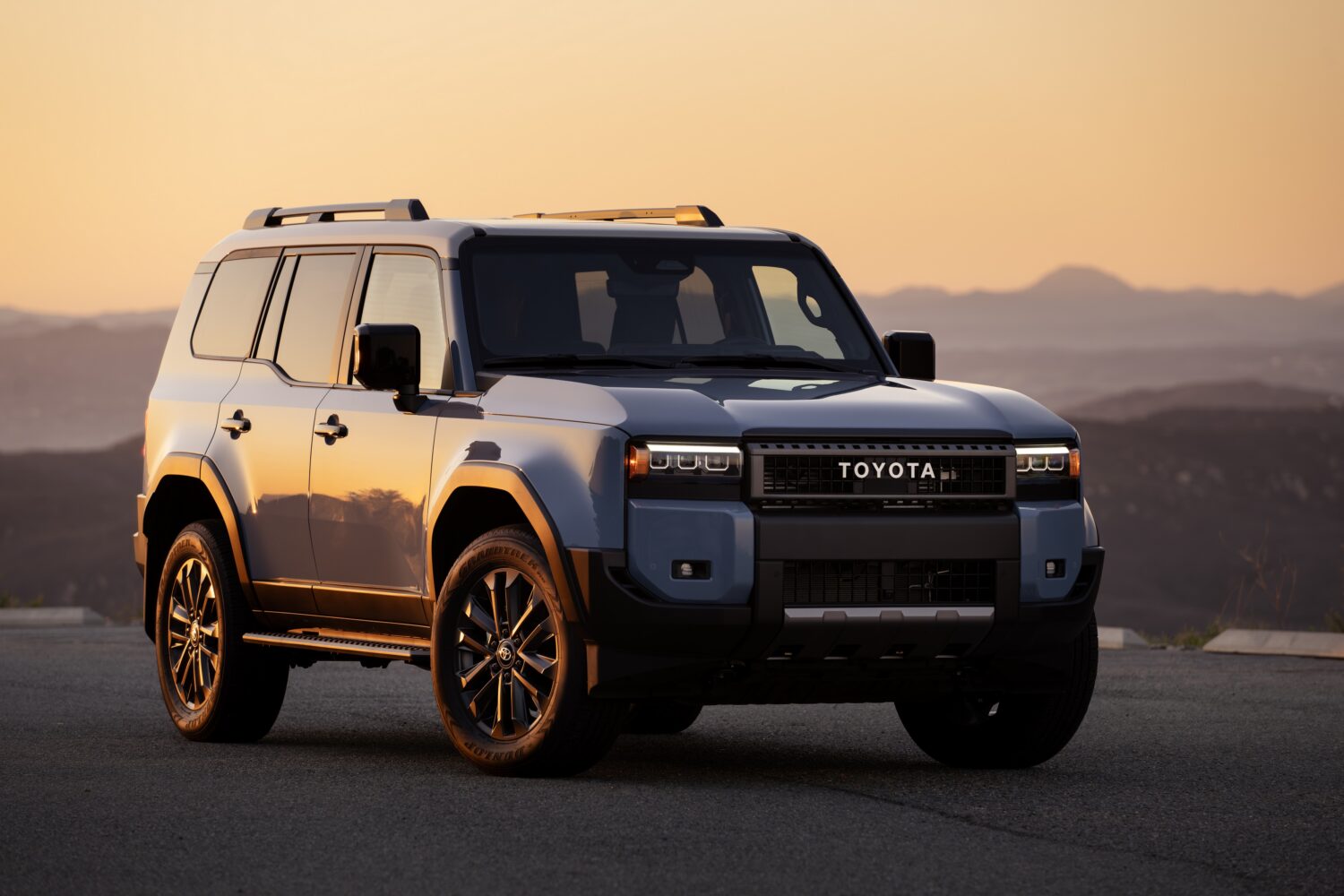
This 2026 Toyota Land Cruiser vehicle analysis examines whether hybrid capability, premium equipment and a $70,395 price make sense.
2026 Toyota Land Cruiser Vehicle Analysis: Quick Verdict
The 2026 Toyota Land Cruiser combines legitimate off-road hardware, a powerful hybrid system and useful everyday equipment in a package that remains more manageable than the previous American Land Cruiser. The central question is value. This particular vehicle rises from a $62,045 base MSRP to $70,395 delivered, putting it uncomfortably close to luxury-SUV territory.
Best for: Buyers who genuinely need four-wheel-drive capability but also want a comfortable, well-equipped two-row SUV.
Skip if: You need three-row seating, primarily drive in town or will never use locking differentials, Crawl Control or the disconnecting stabilizer bar.
Pros
- Standard full-time four-wheel drive
- Locking center and rear differentials
- Strong 326-horsepower hybrid system
- 6,000-pound maximum towing capacity
- Useful 2.4-kilowatt AC inverter
- Five-star equipment without a luxury-brand badge
Cons
- $70,395 price as configured
- Only two seating rows
- EPA-estimated 23 mpg combined is respectable rather than remarkable
- Several desirable comfort features are bundled into a $4,355 package
- Some connected features eventually require subscriptions
You may also enjoy this Video:
| Specification | 2026 Toyota Land Cruiser |
|---|---|
| Configuration | Five-passenger, four-wheel-drive hybrid SUV |
| Powertrain | Turbocharged 2.4-liter four-cylinder i-FORCE MAX hybrid |
| Output | 326 net combined horsepower; 465 lb-ft |
| Transmission | Eight-speed automatic |
| Drivetrain | Full-time 4WD with locking center and rear differentials |
| EPA fuel economy | 22 city/25 highway/23 combined mpg |
| Maximum towing | 6,000 pounds |
| Base MSRP | $62,045 |
| Options | $6,855 |
| Destination | $1,495 |
| Price as configured | $70,395 |
| Test status | Vehicle analysis; no driving notes or original measurements supplied |
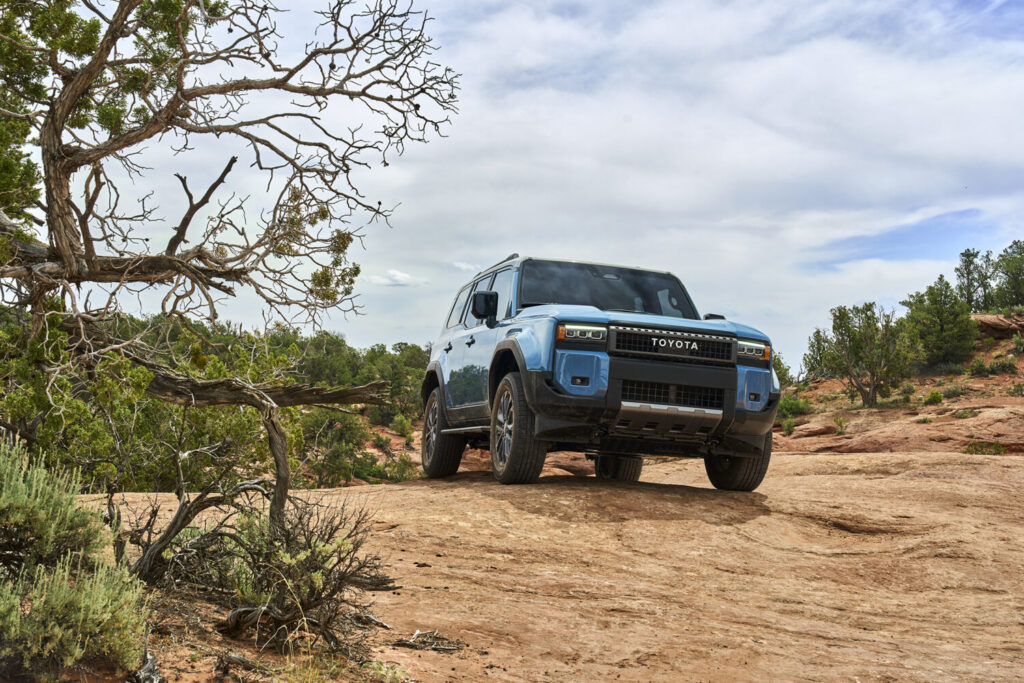
What the 2026 Toyota Land Cruiser Should Be Like to Drive
Without firsthand driving notes, it would be dishonest to pass judgment on ride comfort, steering, braking, acceleration or cabin noise. What can be established is that the Land Cruiser uses Toyota’s i-FORCE MAX hybrid system, pairing a turbocharged 2.4-liter engine with electric assistance for 326 horsepower and a substantial 465 pound-feet of torque.
That torque figure matters more than the presence of a hybrid badge. Toyota designed this system to support acceleration, towing and low-speed capability rather than maximize fuel economy at all costs. The vehicle does not plug in and offers no meaningful owner-selectable electric driving range.
Its body-on-frame construction and dedicated off-road hardware also separate it from ordinary family crossovers. Buyers should still drive it on broken pavement and at highway speeds before ordering. Serious off-road equipment frequently brings weight, tire and suspension compromises that cannot be evaluated from a specification sheet.
Real Off-Road Hardware, Not an Appearance Package
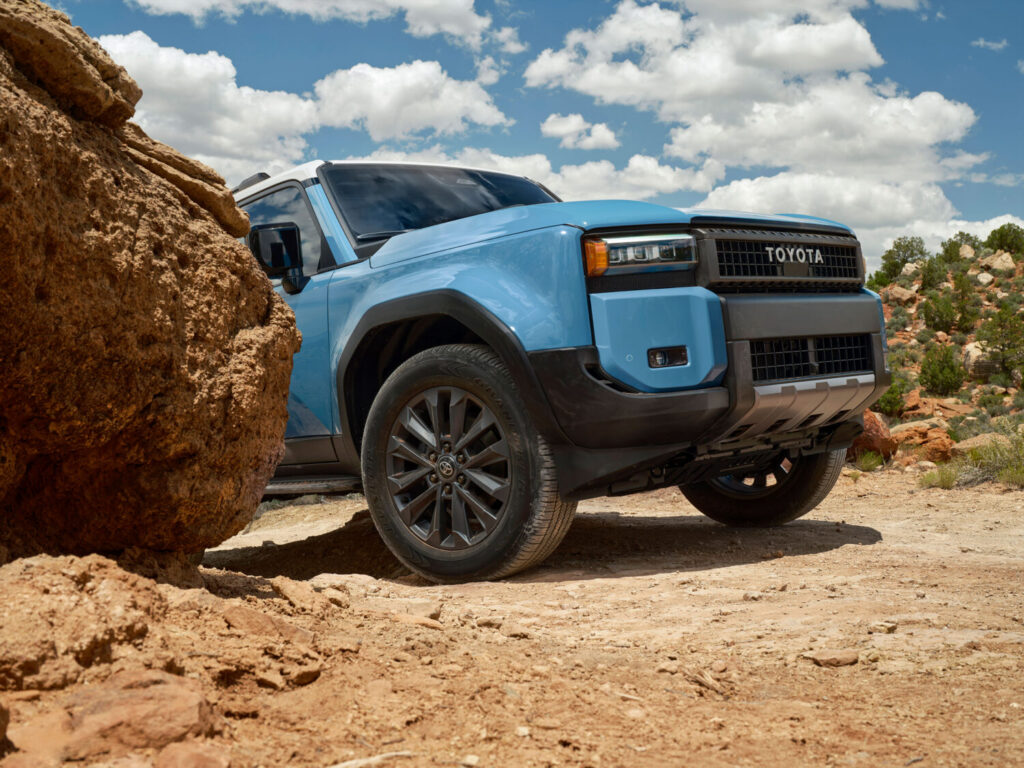
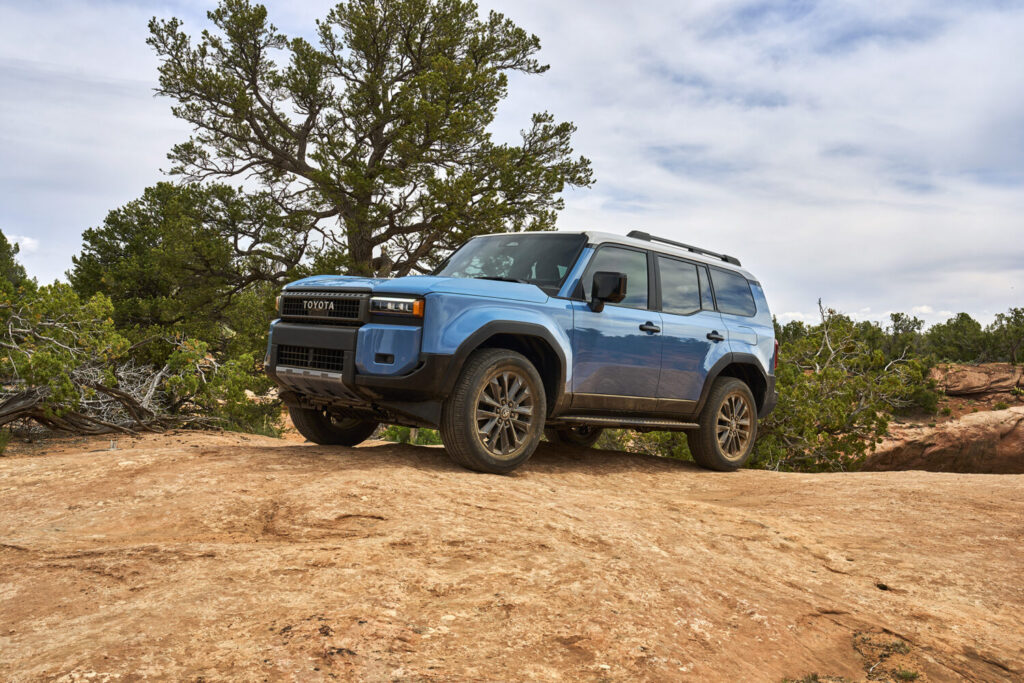
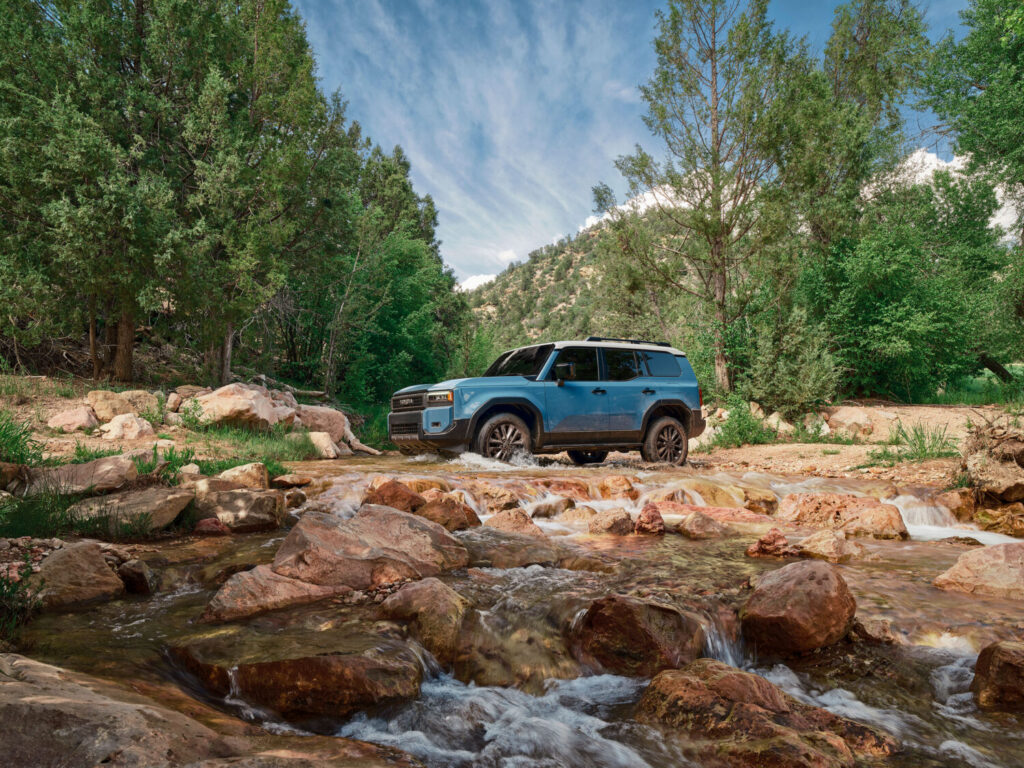
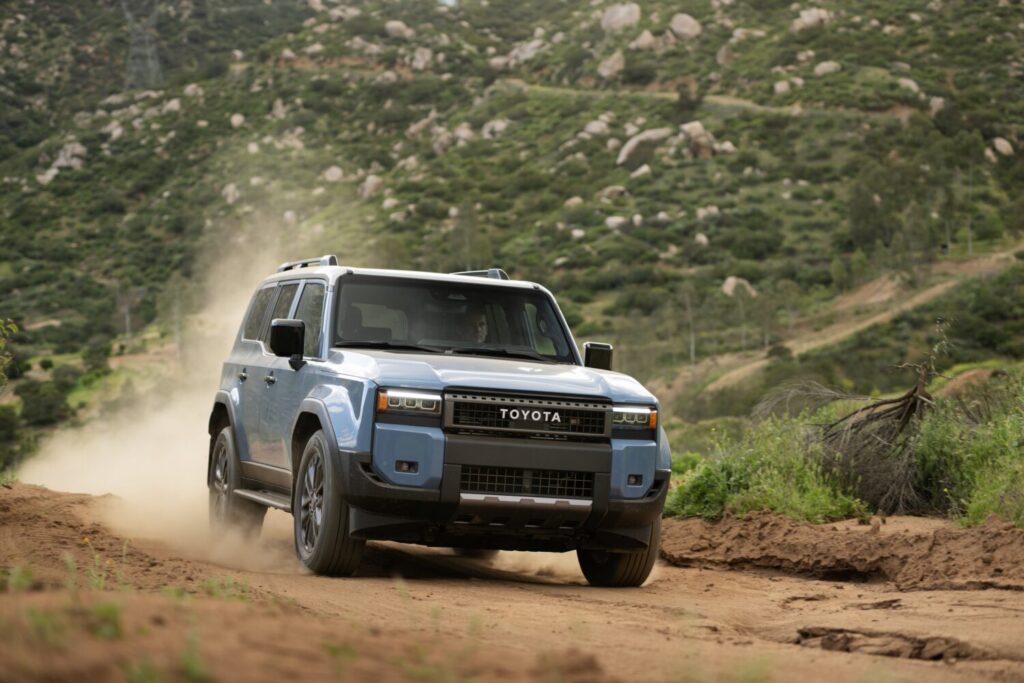
The strongest argument for the Land Cruiser is underneath the retro bodywork. Full-time four-wheel drive, electronically controlled locking center and rear differentials, Multi-Terrain Select, Crawl Control and Downhill Assist Control are standard equipment on this vehicle.
The tested configuration also carries the $1,230 Stabilizer Disconnect Mechanism. Disconnecting the front stabilizer bar allows greater wheel articulation on uneven terrain, helping the tires remain in contact with the ground. Unlike decorative skid-plate styling or an adventurous paint name, that can make a meaningful difference on a difficult trail.
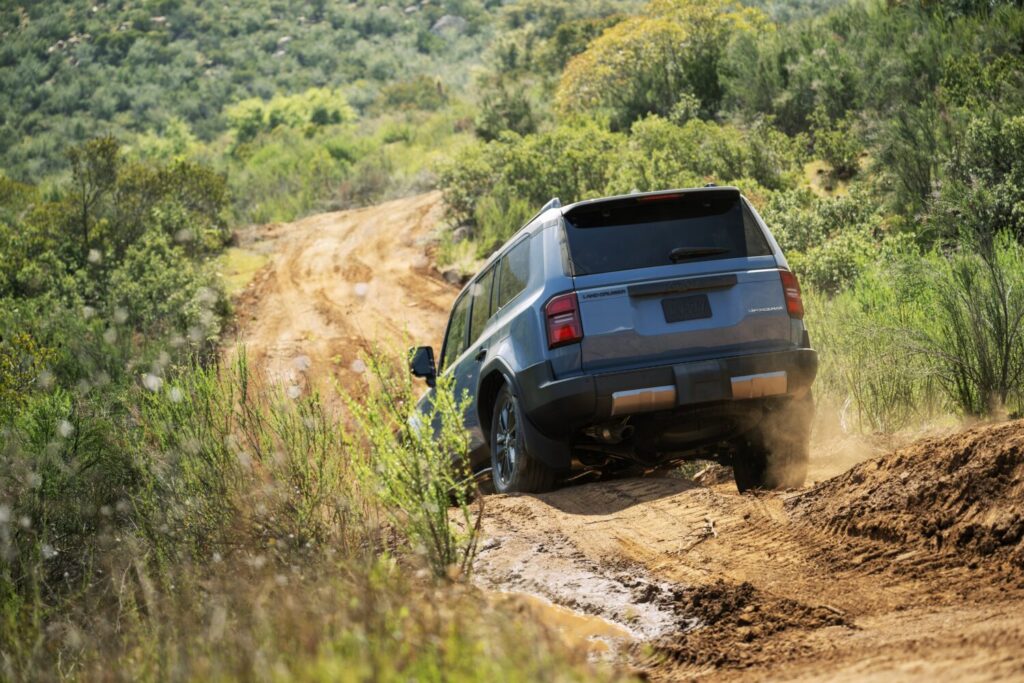
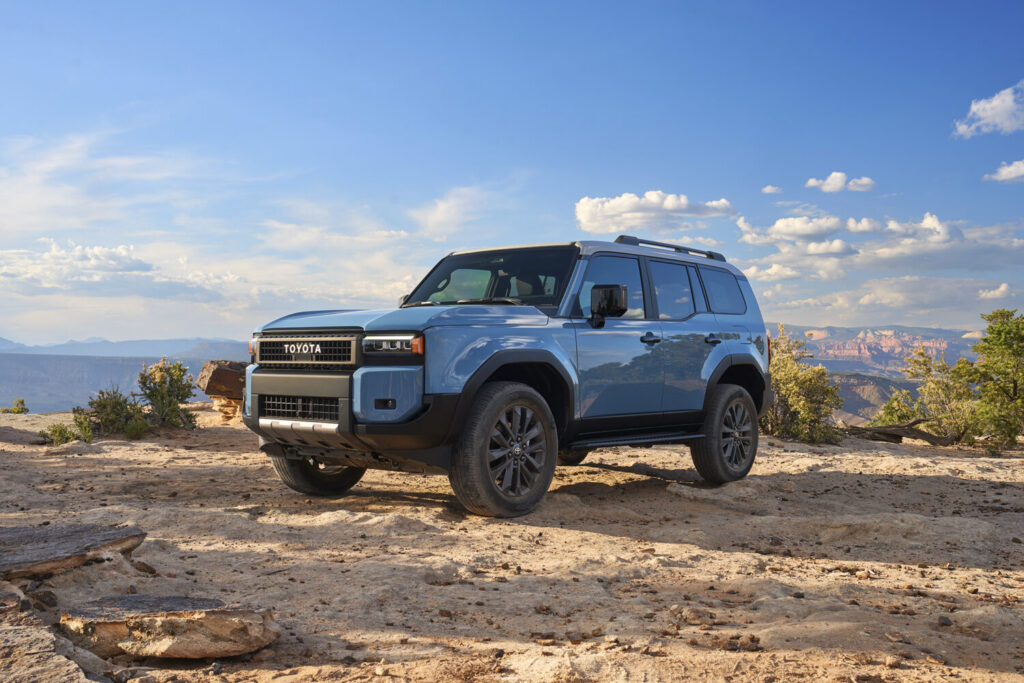
Running boards may make entry easier, but buyers planning serious off-road use should inspect how much they reduce usable ground clearance. The rear bumper guard offers additional protection for $230, while the roof rails provide a mounting point for cargo equipment.
Toyota rates the Land Cruiser to tow as much as 6,000 pounds when properly equipped. Owners must still account for passengers, cargo, hitch equipment and tongue weight rather than treating the maximum rating as a universal promise.
You may also enjoy: 2025 Toyota Land Cruiser vs. 4Runner: Which Wins?
What the $4,355 Premium Package Adds
The Land Cruiser Premium Package represents most of the jump from the vehicle’s base price. It adds a 14-speaker JBL audio system with a subwoofer and amplifier, illuminated entry, a power moonroof, a digital rearview mirror, leather-trimmed power front seats, driver-seat memory and a head-up display.
Those features make the vehicle easier to justify as daily transportation, but they do not increase its core mechanical capability. This creates a relatively clear buying decision. Anyone prioritizing trail equipment over cabin luxury should compare a less heavily optioned example before paying for the package.
The $170 console cool box is more interesting than it initially sounds. Keeping drinks or food chilled without filling the cargo area with a separate cooler could be useful during road trips, outdoor assignments and long days away from pavement.
Toyota also charges $350 for the two-tone roof, $195 for a liftgate light and $325 for the listed connected-services trial offering. These smaller charges collectively matter because this vehicle crosses the $70,000 line only after every option and the $1,495 destination fee are counted.
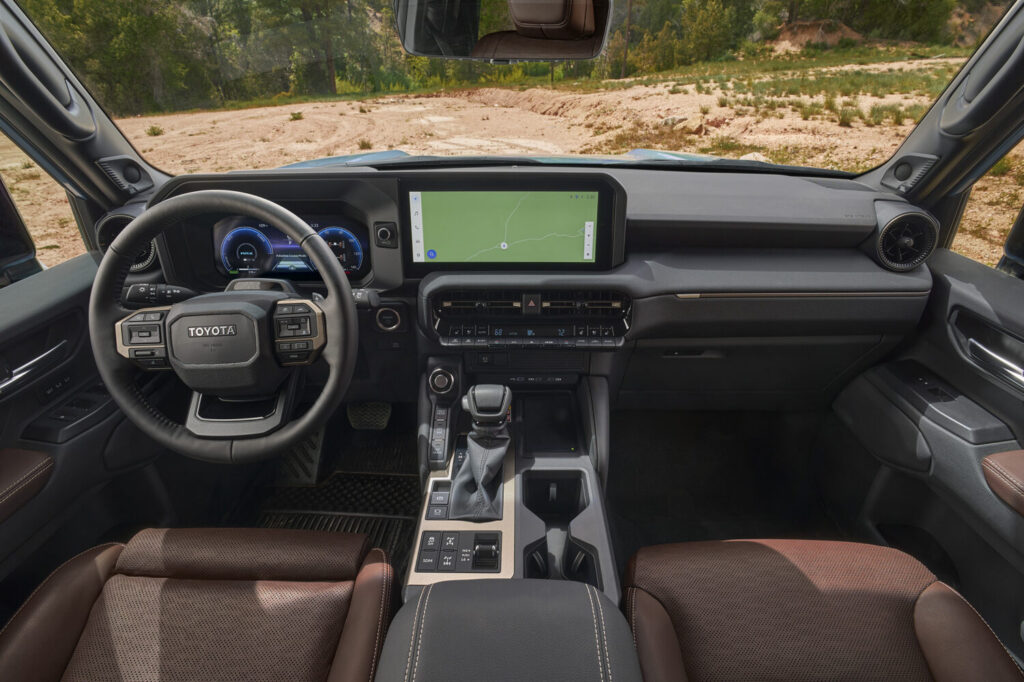
Interior Technology and Everyday Usefulness
The cabin includes heated and ventilated front seats, a leather-trimmed heated steering wheel, a wireless smartphone charger and wireless Apple CarPlay and Android Auto compatibility. The Premium Package upgrades the standard audio system to the 14-speaker JBL installation.
A panoramic-view monitor with a Multi-Terrain Monitor should be valuable in two very different situations: placing the tires near obstacles on a trail and fitting a substantial SUV into a crowded parking space.
The digital rearview mirror can preserve rearward visibility when people, dogs or luggage block the conventional mirror. The head-up display similarly keeps essential information closer to the driver’s normal sightline.
A 2.4-kilowatt AC inverter is among the most practical features. It can power camping equipment, tools and selected household devices, although owners must respect its output limits.
Digital Key, Traffic Jam Assist and certain connected functions depend on trials or subscriptions and a functioning 4G network. Buyers should ask the dealer which services remain available without payment after the included one-year trials expire.
Fuel Economy Is Sensible, Not Spectacular
The supplied EPA label lists 22 mpg city, 25 mpg highway and 23 mpg combined. It estimates annual fuel spending of $2,700 based on 15,000 miles per year and gasoline priced at $4.15 per gallon.
The same label says an owner could spend approximately $5,000 more on fuel over five years than the average new vehicle. That comparison includes far smaller and more efficient vehicles, but it remains useful context. A hybrid Land Cruiser is still a heavy, four-wheel-drive, body-on-frame SUV.
Its hybrid system should therefore be understood as a method of delivering torque with better efficiency than a traditional large-displacement engine, not as an economy-car substitute. No firsthand fuel-economy result was supplied, so the official 23-mpg combined rating must remain separate from any future Test Miles measurement.
Safety and Driver Assistance
The window sticker reports a four-star NHTSA Overall Vehicle Score. NHTSA explains that an overall four-star result represents an injury risk ranging from less than average to approximately average. Frontal ratings should only be compared with vehicles of similar weight.
Toyota Safety Sense 3.0 includes a pre-collision system and other driver-assistance functions, while this Land Cruiser also includes blind-spot monitoring and rear cross-traffic alert.
The listed equipment includes Lane Change Assist, Front Cross-Traffic Alert and Traffic Jam Assist. These are driver-assistance features, not autonomous-driving systems. The person behind the wheel remains responsible for supervising the vehicle and responding to traffic conditions.
The panoramic cameras, parking-related visibility aids and digital mirror may be especially valuable because preventing a low-speed collision is preferable to discovering how well the bodywork survives one.
Land Cruiser Versus 4Runner, Bronco and Defender
The Toyota 4Runner is the most obvious alternative. It offers a broader selection of trims and configurations, including more focused off-road versions. Buyers who want similar Toyota truck architecture with greater configuration freedom should compare the two carefully.
The Ford Bronco is the choice for drivers who prioritize removable body panels, open-air driving and a wide menu of off-road configurations. It delivers more theater, while the Land Cruiser’s fixed roof and restrained cabin may prove easier to live with throughout the year.
The Land Rover Defender offers a more overtly premium experience and several body lengths. It is the logical comparison once the Toyota reaches $70,395, particularly for buyers who care as much about cabin design and luxury-brand presentation as trail equipment.
The Land Cruiser makes the strongest case for itself when the buyer wants substantial capability, Toyota’s hybrid powertrain and premium amenities without moving completely into luxury-SUV territory.
You may also enjoy: 2025 Toyota Tacoma Trailhunter Review: Worth the Hype?
Is This $70,395 Land Cruiser Worth It?
This configuration is defensible, but it is not the obvious value choice in the lineup. Its essential capability comes from the hybrid powertrain, full-time four-wheel drive, locking differentials and terrain systems. The Premium Package improves comfort rather than capability.
A buyer who expects to keep the Land Cruiser for years, tow, travel in severe weather and venture beyond maintained roads may find the combination worthwhile. Someone choosing it primarily for its square shape and heritage grille is paying dearly for hardware that will spend most of its life waiting for an assignment.
The smartest approach is to compare this $70,395 vehicle with a less expensive Land Cruiser and identify which premium features would actually be missed. If the cool box, leather seats, JBL audio system, moonroof, digital mirror and head-up display all matter, this build makes sense. If several feel optional, the base price deserves another look.
You may also enjoy: 2026 Toyota Sequoia TRD Pro Review: Big SUV, Easy Life
Frequently Asked Questions
Is the 2026 Toyota Land Cruiser a hybrid?
Yes. Every specification supplied for this vehicle identifies a turbocharged 2.4-liter i-FORCE MAX hybrid system producing 326 net combined horsepower and 465 pound-feet of torque. It is a conventional, non-plug-in hybrid and does not require external charging.
What is the 2026 Toyota Land Cruiser’s fuel economy?
The EPA window label supplied with this vehicle lists 22 mpg city, 25 mpg highway and 23 mpg combined. Those are official government estimates, not original Test Miles results. Actual consumption will depend on speed, weather, cargo, tires, terrain and driving behavior.
How much can the 2026 Toyota Land Cruiser tow?
Toyota rates the 2026 Land Cruiser to tow as much as 6,000 pounds when properly equipped. Owners must consider the trailer’s tongue weight, the vehicle’s payload limit, passengers, cargo and hitch equipment before towing near the maximum rating.
Does the 2026 Toyota Land Cruiser have three rows?
No. The current Land Cruiser is a five-passenger, two-row SUV. Buyers needing a third row should consider alternatives such as the Toyota 4Runner in an appropriate configuration, the larger Toyota Sequoia or another three-row SUV.
Why does this 2026 Land Cruiser cost $70,395?
The vehicle begins at $62,045 and carries $6,855 in options, including a $4,355 Premium Package and a $1,230 Stabilizer Disconnect Mechanism. The final figure includes a $1,495 delivery, processing and handling charge.
Is the 2026 Toyota Land Cruiser good off-road?
Its verified equipment supports a strong capability case: full-time four-wheel drive, locking center and rear differentials, Multi-Terrain Select, Crawl Control, Downhill Assist Control and a disconnecting front stabilizer mechanism. This analysis cannot assess its real-world performance because no off-road test notes were supplied.