Waymo Gets the Green Light Across California
By Robert R Guio
California has given autonomous ride-hailing one of its biggest regulatory green lights yet, and the immediate winner may be consumers rather than the companies building the cars.
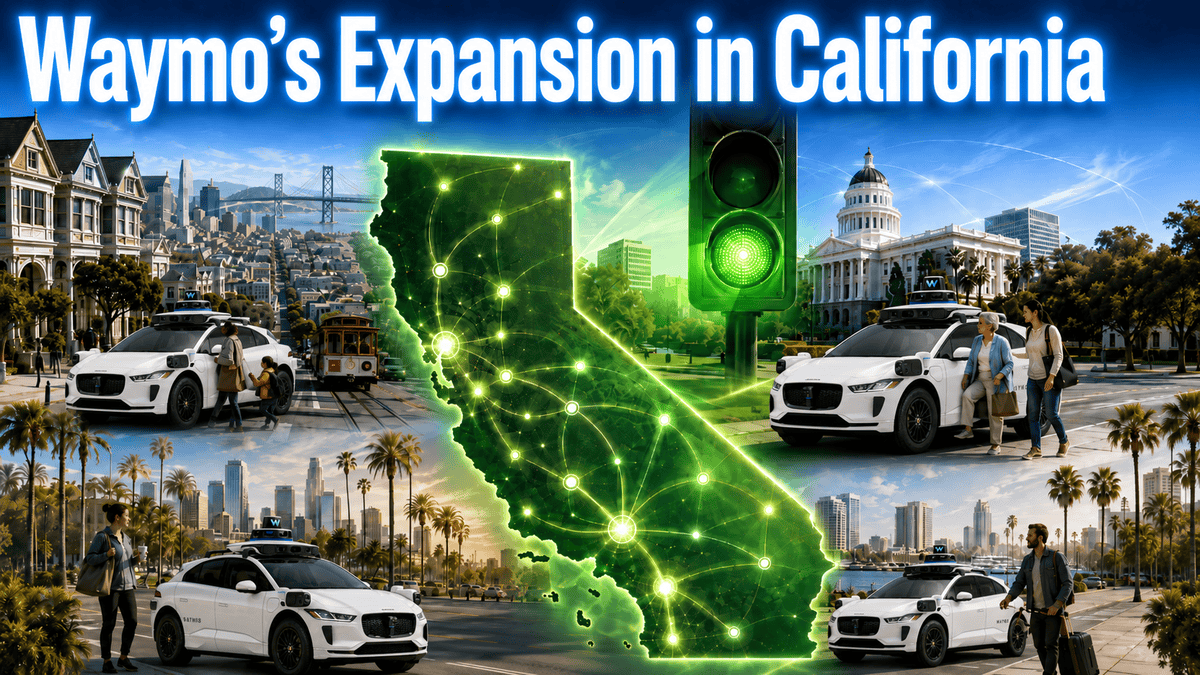
On August 14, the California Public Utilities Commission approved Waymo’s updated passenger safety plan, clearing the company to expand paid driverless service across a much larger area in Northern and Southern California. The footprint reaches 18 counties, including new markets around Sacramento and San Diego, while expanding territory around San Francisco and Los Angeles.
That does not mean a Waymo will appear on every approved street tomorrow. The company says expansion will be gradual. But the decision moves robotaxis from city-sized experiments toward a regional transportation network.
You may also like: Waymo’s 2026 Expansion Explained: Where Robotaxis Go Next
What California Actually Approved
The CPUC approval follows a November 2025 decision by California’s Department of Motor Vehicles to broaden Waymo’s operational design domain. The new maps stretch through much of the Bay Area toward Sacramento in the north, and from Los Angeles south toward San Diego.
The commission also approved Waymo’s updated passenger-safety procedures and newer Ojai vehicle platform. Regulators had requested more information about preventing unaccompanied minors from riding and protecting passengers during major service disruptions.
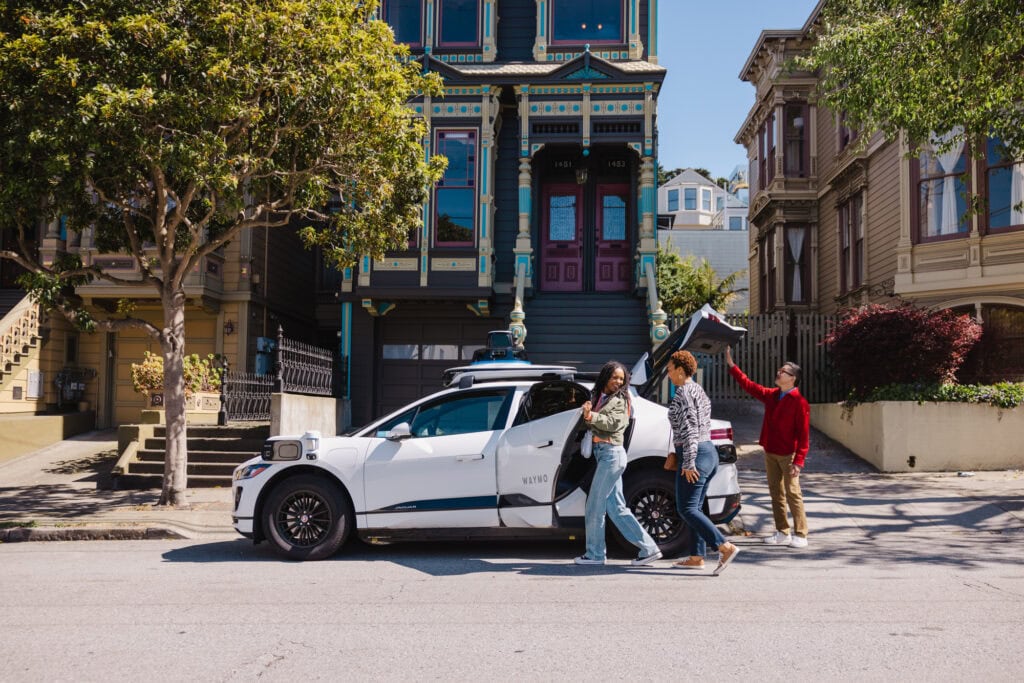
California expanded access after another round of regulatory review, while leaving Waymo responsible for deciding when individual areas are ready for commercial service.
You may also like: Robotaxis in 2026: Are We Ready for Driverless Cities?
The Safety Case Is Getting Harder to Ignore
The Consumer Choice Center argues that broader access lets more people experience autonomous vehicles while producing more real-world safety data. That point is increasingly supported by evidence, although claims that autonomous vehicles as a whole are safer than humans still go too far.
Waymo’s own data shows 94 percent fewer serious-injury-or-worse crashes and 82 percent fewer injury-causing crashes compared with human-driver benchmarks over equivalent distances in the cities it measures. It also reports large reductions in injury crashes involving vulnerable road users.

More importantly, an independent IIHS study published in July found Waymo’s driverless vehicles had 68 percent fewer police-reportable crashes per mile than human drivers across San Francisco, Phoenix, Los Angeles and Austin. IIHS also warned that national automated-vehicle safety tracking needs improvement as deployments grow.
That is the right level of skepticism: promising results, but continued measurement.
You may also like: Robotaxi Emergency Scenes Still Challenge Driverless Cars
California Still Has an AV Regulatory Tug-of-War
California’s policy is more complicated than simply being “pro-AV.” Governor Gavin Newsom vetoed AB 2286 in 2024, which would have required a human safety operator in autonomous vehicles weighing 10,000 pounds or more.
AB 33 followed in the 2025-2026 session. Its latest version targeted autonomous vehicles delivering commercial goods without a human safety operator. The bill passed the Assembly but moved to the Senate’s inactive file in September 2025.
Meanwhile, California adopted broader AV regulations in April 2026 allowing companies to apply to test and deploy heavy-duty autonomous vehicles while adding stronger safety, enforcement and first-responder requirements.
For consumers, that tension is healthy if it produces rules based on measurable risk rather than fear or political pressure.
You may also like: Rivian R2 Robotaxis in 2028 What It Means for EV Buyers
What Waymo’s Expansion Means for Consumers
The practical benefit is choice. A larger autonomous network gives people another option when they cannot drive, do not want to drive or want a predictable ride without a human driver. It may also improve mobility for some older adults and people with disabilities.

James Czerniawski of the Consumer Choice Center calls the California decision “excellent news” because it expands consumer access while generating additional safety evidence. That is a reasonable conclusion, provided regulators keep demanding transparent data.
California is conducting a huge real-world test of whether autonomous transportation can become ordinary transportation. The best outcome is a system where consumers have more useful choices, regulators can measure risks clearly, and safer technology earns the right to expand.