Brake Check: America’s Hardest-Braking Cities
By Robert R Guio
The hardest-braking cities ranking is really a brake-service map. Here’s what Pep Boys’ 2026 data can, and cannot, tell drivers.
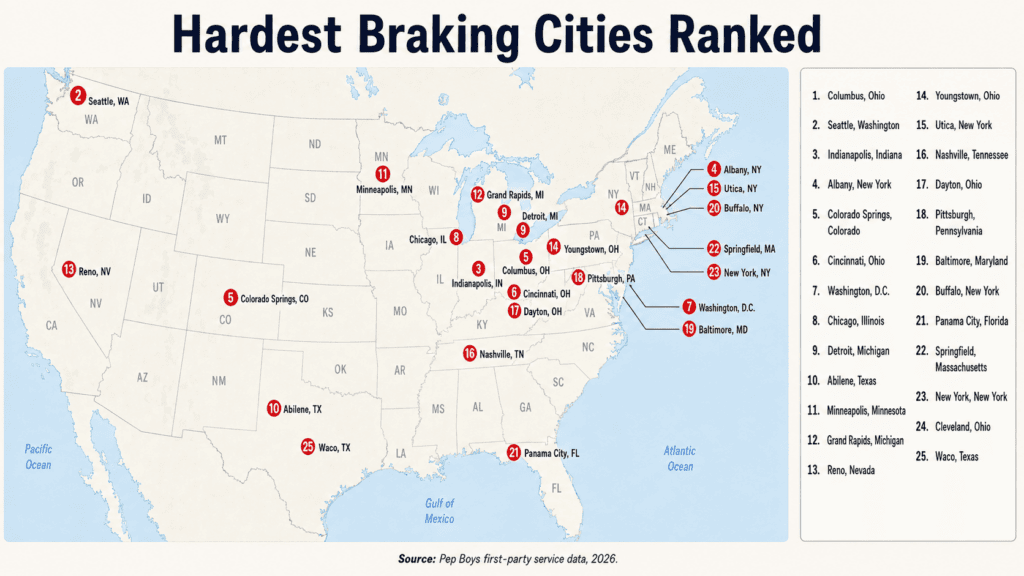
If you live in Columbus, Ohio, you have just acquired a distinction you probably never asked for. Pep Boys places the metro at the top of its 2026 ranking of U.S. markets with the highest rates of brake-related service. Seattle is second, and Indianapolis is third.
That makes a terrific headline, but drivers should understand what is actually being ranked before deciding their hometown is somehow eating brake pads for breakfast. Pep Boys did not install sensors in cars and record how sharply people stop. It analyzed the brake work showing up in its own service network.
That difference is more than a footnote. It changes the useful question from “Why are Columbus drivers braking so hard?” to “Why does brake work account for an unusually large share of Pep Boys service in Columbus and these other markets?” The company’s dataset cannot answer every part of that second question, but it can make owners think more intelligently about the conditions their own brakes face.
What the hardest-braking cities data really tells us
Pep Boys’ published methodology covers internal service records from January 1 through July 4, 2026. For each designated market area, the company calculated brake-related services as a share of total Pep Boys vehicle service volume and indexed the result against its network average. The included work spans brake jobs, caliper repairs, premium brake service and rotor replacement.
In other words, this is a relative service-frequency measure. It does not say the average Columbus driver uses a brake pedal with more force than the average New York driver. It does not establish a universal replacement interval for pads or rotors. Pep Boys also says its results should not be treated as representative of every vehicle or repair provider in a market.
With that guardrail in place, the list becomes much more interesting:
- Columbus, Ohio
- Seattle, Washington
- Indianapolis, Indiana
- Albany, New York
- Colorado Springs, Colorado
- Cincinnati, Ohio
- Washington, D.C.
- Chicago, Illinois
- Detroit, Michigan
- Abilene, Texas
- Minneapolis, Minnesota
- Grand Rapids, Michigan
- Reno, Nevada
- Youngstown, Ohio
- Utica, New York
- Nashville, Tennessee
- Dayton, Ohio
- Pittsburgh, Pennsylvania
- Baltimore, Maryland
- Buffalo, New York
- Panama City, Florida
- Springfield, Massachusetts
- New York, New York
- Cleveland, Ohio
- Waco, Texas
The surprise is not simply that Columbus wins. It is that New York sits at No. 23 while Abilene reaches No. 10. If this were merely a congestion chart, the order would make little sense. Five Ohio metros make the top 25, while the list also stretches from the Pacific Northwest to Florida and Texas.
That is a useful warning against inventing a single explanation. Pep Boys points to factors such as stop-and-go driving, hills, weather and commuting patterns as plausible contributors. The dataset does not isolate those variables or prove that any one of them caused a city’s position.
The distinction between a service trend and a safety defect matters, too. A high local rate of routine brake work is not the same thing as a manufacturer recall or federal defect investigation. Owners dealing with an actual brake-system warning can see how different that process is in our reporting on the GM eBoost brake investigation.
You may also enjoy: GM eBoost brake investigation: What owners need to know
Your commute may matter more than your ZIP code
For an individual driver, the rank beside a city name is less important than the route driven every day. Brakes convert a moving vehicle’s energy into heat, primarily by pressing friction material against rotating surfaces. Every stop asks the system to do that job again.
A 20-mile commute with long uninterrupted freeway stretches may involve surprisingly little friction-brake use. A shorter trip across urban arterials can involve traffic lights, queues, school zones, pedestrians, delivery vehicles and repeated low-speed stops. The odometer may advance more slowly while the brakes work far more often.
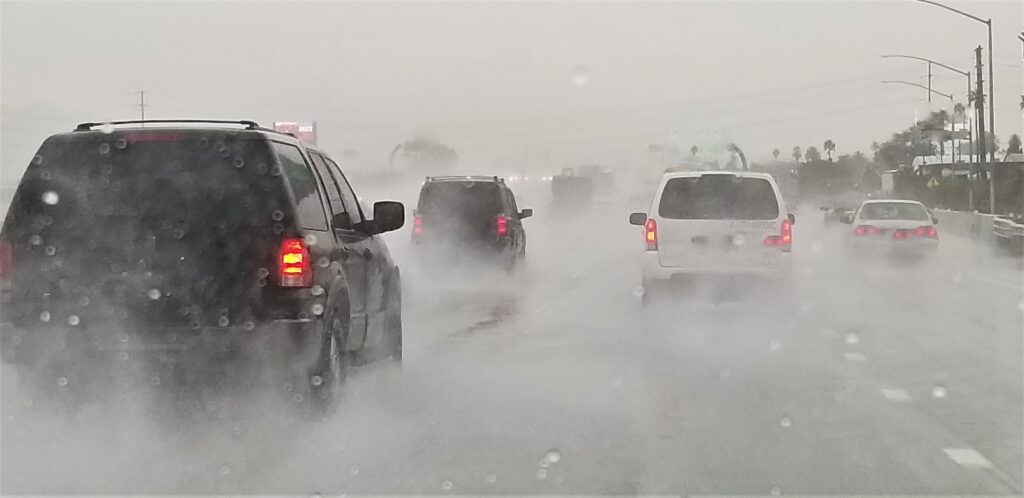
Hills change the calculation because gravity keeps adding speed on a descent. Drivers who ride the brake pedal downhill can create sustained heat, while those who use an appropriate lower gear, engine braking or a vehicle’s regenerative system can shift some of that work away from the friction brakes. The owner’s manual remains the right place to learn the manufacturer’s recommended technique for a particular vehicle.
Seattle’s No. 2 ranking makes the terrain-and-weather discussion easy to understand, but it should not be treated as proof of cause. Hills, frequent rain and congestion are all visible parts of the region’s driving environment. The Federal Highway Administration explains that stopping distance is influenced by factors including pavement condition, roadway grade, vehicle condition and tire-pavement friction.
Wet pavement is especially important because the tire, not the brake pad, is what must transmit braking force to the road. A perfectly functioning brake system cannot create grip that the tires do not have. NHTSA’s tire-safety guidance is a useful reminder that inflation, tread and tire condition are part of the stopping equation, while the National Weather Service’s driving-safety guidance reinforces the need to adapt speed and following distance to poor conditions.

There is another modern wrinkle: hybrids and electric vehicles. Regenerative braking can slow the vehicle by using the electric motor as a generator, sending energy back toward the battery and reducing the amount of routine work done by the friction brakes. That can extend pad life in some use cases, but it does not make conventional brakes optional. Emergency stops, low-speed situations, system limits and blended-braking strategies still rely on the physical braking hardware.
This is one reason a used vehicle’s service history can tell you more than a city ranking. Two cars of the same age in the same ZIP code may have led completely different lives. One may have spent years in freeway commuting, while another worked in dense delivery duty or regular mountain travel.
You may also enjoy: Buying a Car? 10 Things You Must Do Before You Sign
Brake wear is a system, not a pad problem
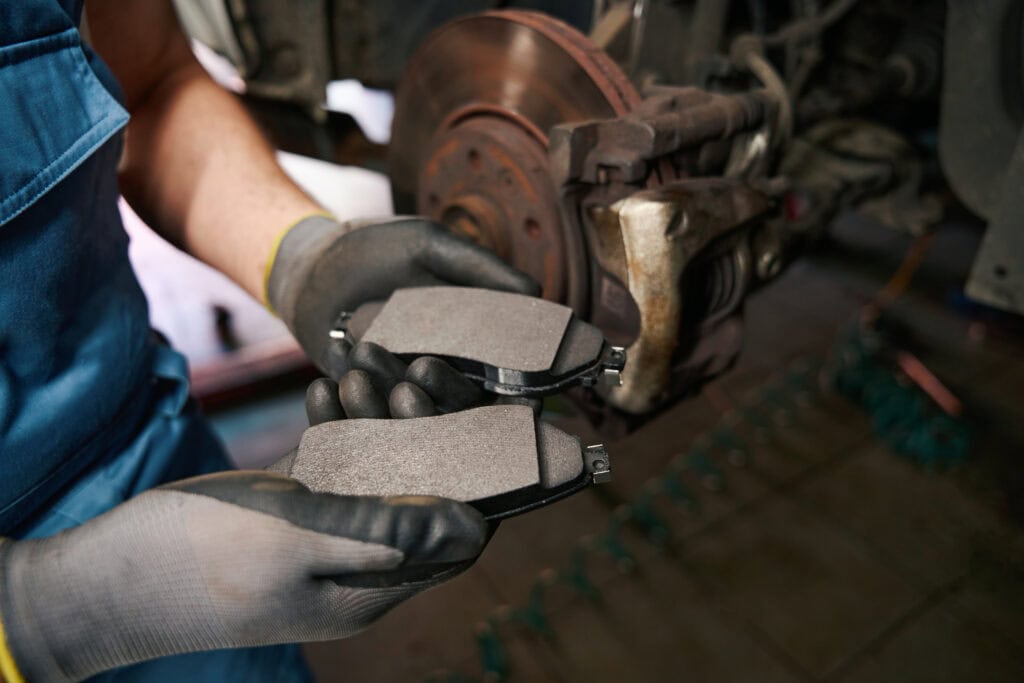
Drivers often reduce brake maintenance to one question: how much pad is left? That is useful information, but it is not the whole inspection.
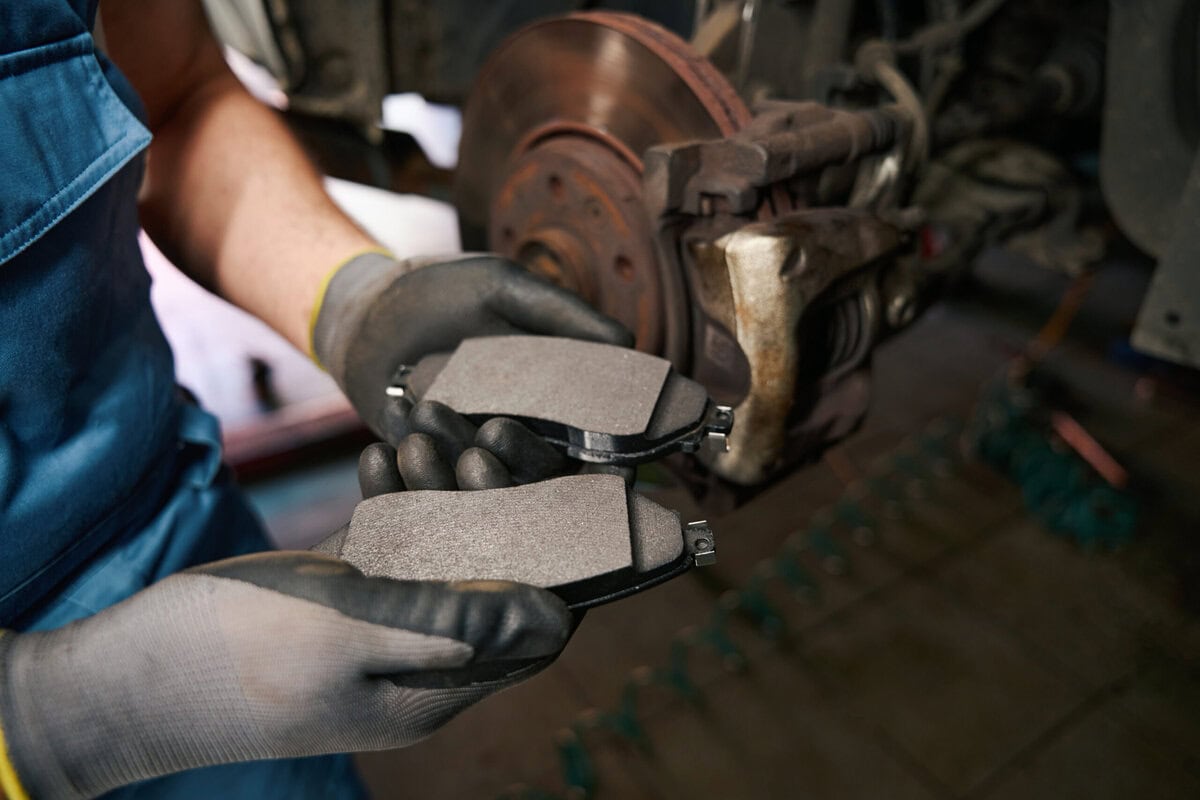
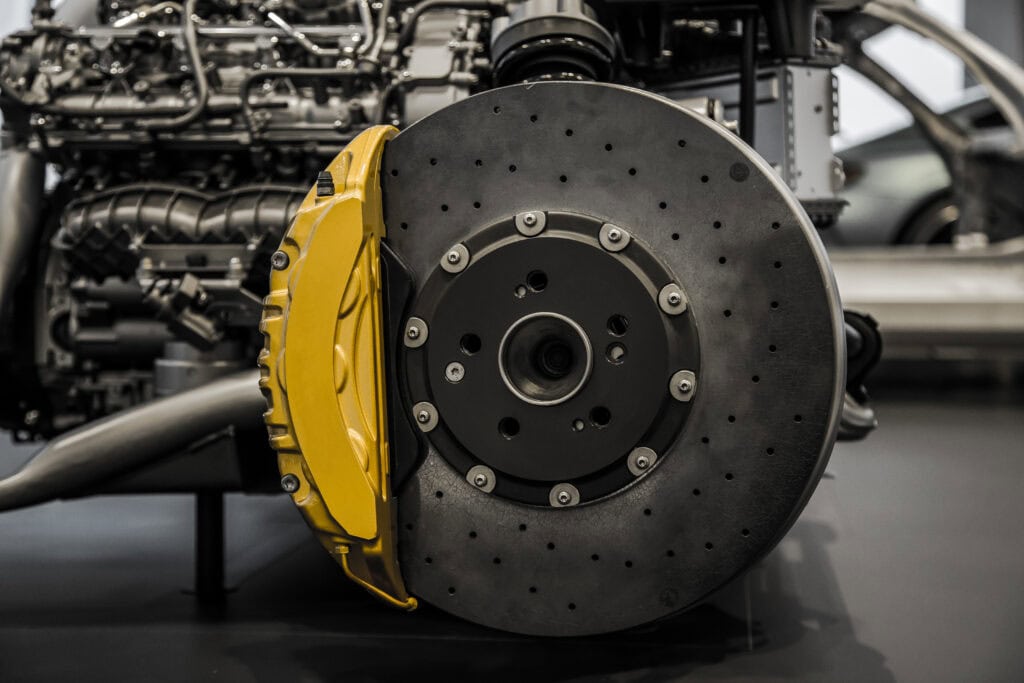
The pads provide friction material. Rotors give those pads a working surface. Calipers clamp the pads against the rotors. Brake fluid carries hydraulic pressure through the system. Hoses, lines, seals, wheel-speed sensors, electronic controls and other hardware all have roles in making the vehicle stop predictably.
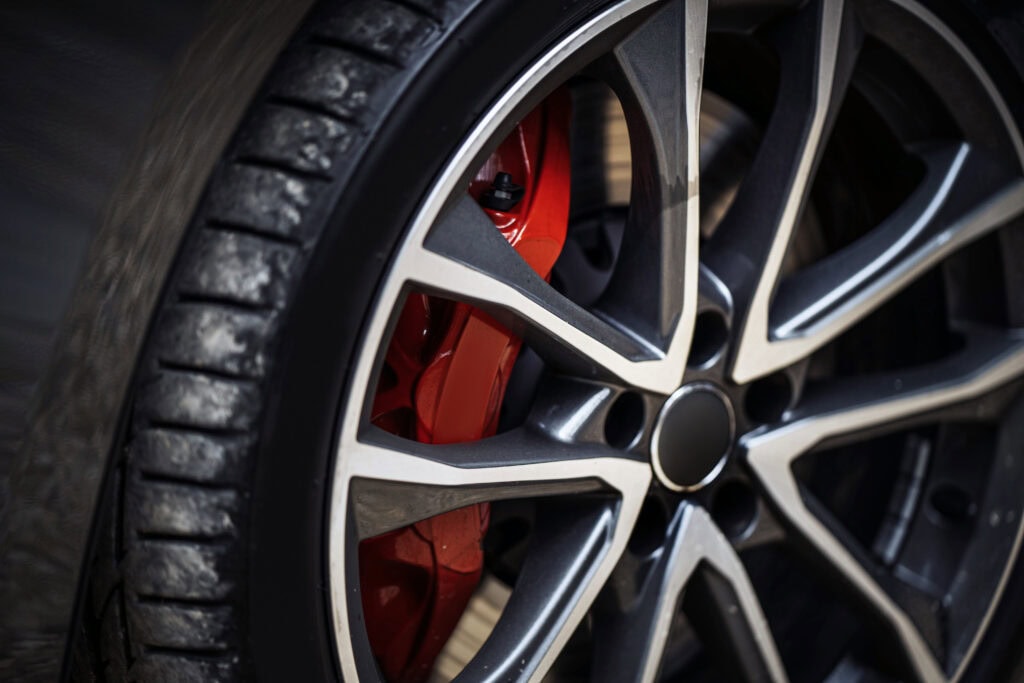
That system view is why a squeal should not automatically be translated as “buy pads,” and a vibration should not automatically be translated as “buy rotors.” Noise, pedal feel or pulling can have several causes. Diagnosis comes before parts replacement.
Federal rules treat braking as a performance system, not a collection of isolated wear items. Federal Motor Vehicle Safety Standard No. 135 sets braking-system requirements for light vehicles. That does not tell an owner when to service a particular car, but it helps explain why stopping performance involves far more than the thickness of one component.
There are several changes drivers should take seriously. Grinding during braking, a new vibration or pulsation, a vehicle that pulls under braking, a soft or spongy pedal, a brake warning light, or a hot or unusual odor around a wheel deserves attention. A change that feels sudden or severe is especially important because brake performance is a safety issue, not merely a comfort complaint.
If a brake warning appears, owners should also separate maintenance from recalls. A worn pad is an ownership item. A safety defect may be subject to a manufacturer campaign. The federal NHTSA recall lookup lets owners check a VIN for open safety recalls instead of relying on social-media posts or assumptions about a model.
Recent brake-related recall stories show why that distinction matters. Test Miles has covered a Ford Expedition and Lincoln Navigator brake-line recall, where the issue was not normal friction wear but a potential safety defect.
You may also enjoy: Braking News: Ford Recalls 274,000 SUVs in Latest Stop-and-Check Saga
When an inspection is needed, the shop matters as much as the checklist. Ask what was measured, what failed, what remains serviceable and why a replacement is being recommended. A useful estimate should distinguish immediate safety work from maintenance that can reasonably be planned.
You may also enjoy: Auto Repair Near Me: How to Spot a Shop You Can Trust
How to use the ranking without overreacting
The wrong response to the Pep Boys list is to schedule a brake overhaul because your city appears near the top. The right response is to use the list as a reminder that maintenance intervals are shaped by use.
Start with the owner’s manual and the vehicle’s actual service history. Then consider duty cycle. Do you spend most of your time on surface streets? Do you regularly crawl through rush-hour traffic? Are steep grades part of the commute? Do you tow, carry heavy loads or drive in winter conditions? Has the vehicle recently started requiring more pedal pressure or stopping distance?
Next, pay attention to consistency. Brakes should feel predictable. A gradual change can be easy to normalize when you drive the same car every day, so comparing present pedal feel, noise and stopping behavior with what was normal for the vehicle is useful. If something has changed, an inspection can establish whether it is ordinary wear or a fault.

Smoother driving can also reduce unnecessary brake use without turning every commute into a fuel-economy contest. Looking farther ahead lets you lift earlier rather than rushing toward a red light and braking late. More following distance provides room to decelerate progressively. On descents, following the manufacturer’s recommended method for controlling speed can reduce prolonged heat buildup.
None of that eliminates wear. Friction brakes are consumable systems by design. The goal is not to preserve pads forever. It is to avoid abusing the system, catch abnormal behavior early and replace components when condition and measurements justify it.
That is also a useful principle when shopping for another vehicle. A pre-purchase inspection should include the brakes, especially if the car’s prior duty cycle is unknown. A shiny exterior says nothing about rotor condition, caliper operation or the remaining life of friction material.
You may also enjoy: 11.6 Million Vehicles Recalled in 2026 What You Must Know
The most interesting lesson from the hardest-braking cities list is therefore not that Columbus drivers should expect a bigger repair bill. It is that geography can be a proxy for different kinds of vehicle use, and aggregate service data can expose patterns that a national mileage recommendation cannot.
Pep Boys’ ranking gives us a conversation starter, not a diagnosis. Columbus, Seattle and Indianapolis sit at the top of this dataset, but every driver still has a sample size of one parked in the driveway. The condition of that car’s brakes, the roads it travels, the way it is driven and the quality of its inspections matter more than the city printed on the registration.
Use the ranking to ask better questions, not to buy parts early. That is a much more practical way to turn a clever list into useful ownership information.