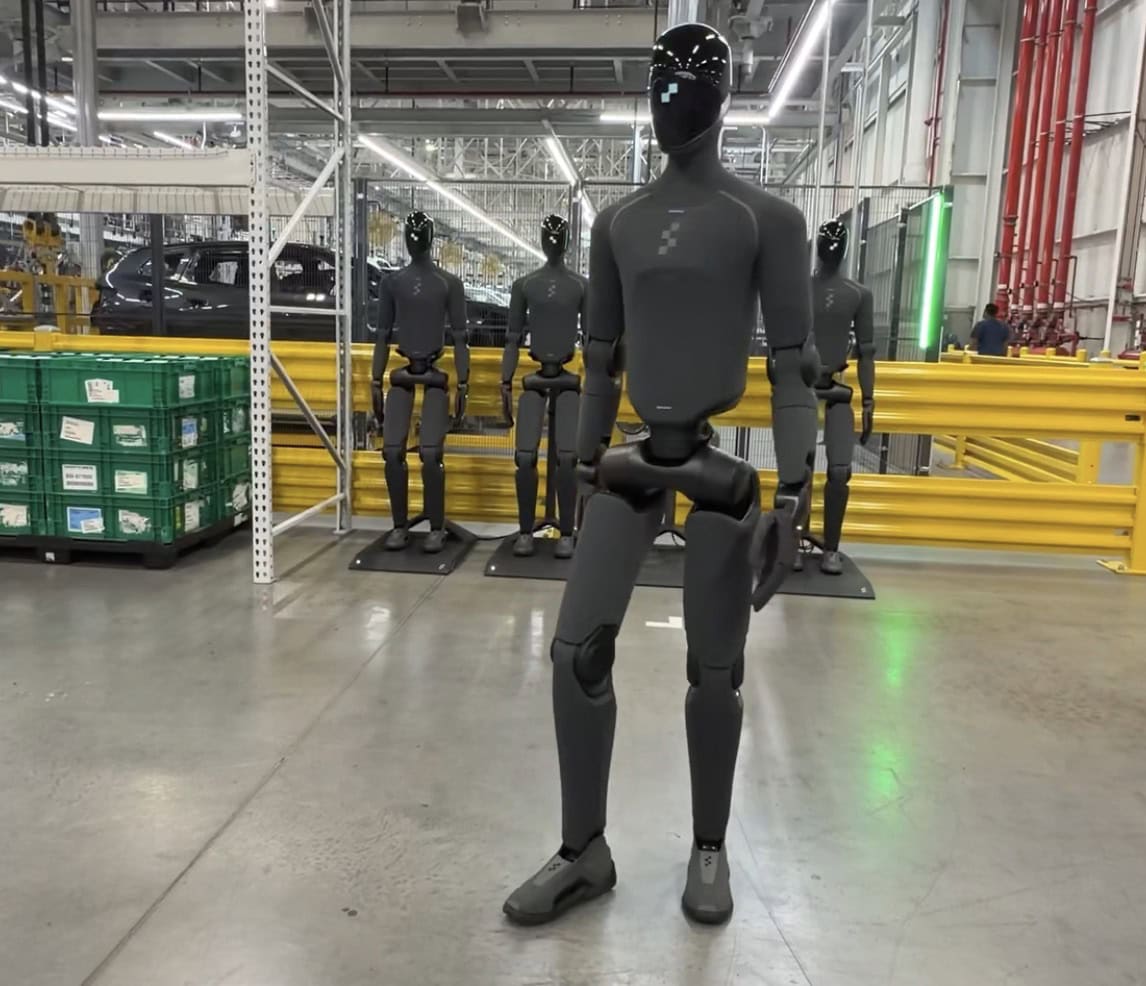
BMW’s humanoid robots are learning the night shift, helping factory workers with repetitive, awkward, and physically demanding jobs.
Imagine a factory worker who never gets tired. One who doesn’t mind the overnight shift, doesn’t get bored doing the same motion thousands of times, and doesn’t complain when the job is repetitive, awkward, or physically draining.
That is not what I watched at BMW’s factory in Spartanburg, South Carolina. Not yet.
What I saw was more interesting because it was less polished. BMW is still testing humanoid robots inside a real car factory. They were not building cars on their own. They were not taking over the line. They were learning how to work in an environment built for people, alongside the humans who already know how the job gets done.
And that is what made it unsettling.
The robots moved slowly. They were precise, but not perfect. They could hesitate, adjust, and occasionally make mistakes. But even with all that, your brain does something strange when you stand near one. For a moment, it feels like you are watching a person.
Then you remember you are watching the future of manufacturing learn how to walk before it learns how to run.
You may also like: Inside BMW’s Factory and What It Could Mean for America
Why BMW Is Testing Humanoid Robots
BMW is not new to robotics. The Spartanburg body shop already uses thousands of conventional industrial robots, the kind that are bolted in place and repeat programmed tasks with astonishing speed and accuracy.
Humanoid robots are different.
They are designed to move through spaces built for people. They can potentially use existing tools, reach into familiar work areas, and perform tasks that were previously hard to automate because every part, fixture, or motion was not perfectly predictable.
That is the promise of what BMW calls Physical AI. Instead of artificial intelligence living only on a screen, in a camera system, or inside a quality-control algorithm, it gets a body. It can observe, reason, move, correct itself, and learn from the factory around it.
The goal is not to make a robot that looks impressive in a video. The goal is to make a worker that can take on the jobs people find tiring, repetitive, frustrating, or ergonomically difficult.
You may also like: Hyundai’s Robot Future May Be Closer Than You Think
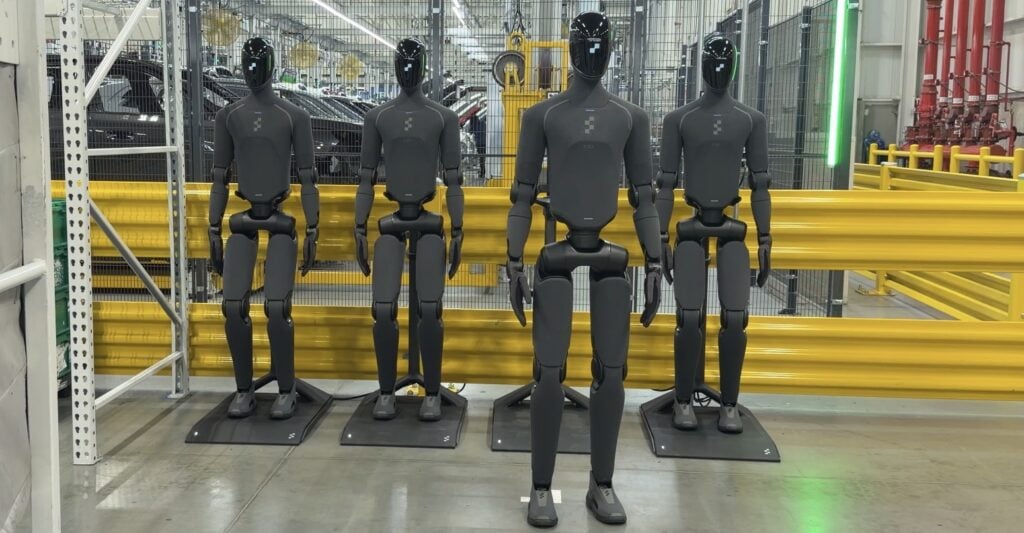
The Coworker That Never Gets Tired
The strongest argument for humanoid robots is not speed. At least not today.
The robots I saw are slower than experienced human workers. That matters. This is still a testing phase, and BMW is treating it that way. But speed is not the only measurement that matters in a factory.
A humanoid robot does not get physically tired after hours of repetitive lifting. It does not mind doing the same job over and over. It can work nights, weekends, and long shifts if the system is ready. It can also be trained and improved over time using data, simulation, and imitation learning.
That last part is important. BMW’s approach is not simply to hard-code every movement like a traditional robot. Human associates can demonstrate tasks, and the robot learns from observation. BMW can also use digital twins and production data to train factory-specific AI models.
In simple terms, the robot learns a task the way a new employee might: watch, try, correct, repeat.
You may also like: BMW’s Electric M3 Has to Prove It Has a Soul
Why This Feels Bigger Than BMW
BMW’s collaboration with Figure Robotics began in early 2024. The robots were trained in California before being deployed into BMW’s Spartanburg body shop for a pilot program. During that period, the robots worked on tasks involving rear-header components and handled about 90,000 parts.
That does not mean humanoid robots are ready to replace factory workers. It means they are now credible enough to be tested in real factory conditions.
That is the shift.
For years, humanoid robots felt like science fiction. They belonged in movies, not body shops. But standing inside BMW’s factory, watching one move carefully through a task, the idea suddenly seemed much less distant.
The next phase of American manufacturing may not be a lights-out factory with no people inside. It may be something more practical and more believable: human workers supported by machines that do the exhausting work no one loves.
You may also like: GM Says Eyes-Off Driving Is Coming Soon
The Android Future Is Starting Carefully
The good version of the android future is not a robot pretending to be human. It is a tool shaped like a human because factories were built around human bodies.
That is what BMW appears to be testing.
These machines are not perfect. They are not fast enough yet. They still need supervision, learning, and real-world refinement. But the direction is clear. The factory worker of the future may not ask whether the robot is coming. The better question may be which task the robot gets first.
The International Federation of Robotics says global demand for industrial robots has more than doubled over the past decade, which helps explain why this moment matters far beyond one automaker.
After seeing BMW’s humanoid robots in person, the most unsettling part was not that they looked human.
It was that they were still learning.
Because once they stop making beginner mistakes, once they become faster, safer, and more reliable, the factory floor changes. Not overnight, and not without people, but in a way that feels unavoidable.
The worker who never gets tired is no longer a movie idea. It is being tested in America, inside a BMW factory.