Best cars for people who don’t know cars
Best cars for people who don’t know cars include five hybrids that make commuting, family hauling and weekend jobs remarkably simple.
There is a peculiar assumption in the car business that shoppers should enjoy homework. Before buying a washing machine, nobody expects you to develop strong opinions about drum bearings. Cars, meanwhile, arrive with trim ladders, powertrain codes, wheel packages and enough acronyms to frighten a minor government agency.
This list takes the opposite approach. Begin with the recurring inconvenience in your life, then buy the least complicated vehicle that fixes it. The candidates are the 2026 Toyota Corolla Hybrid, 2026 Honda Civic Hybrid, 2026 Honda CR-V Hybrid, redesigned 2026 Toyota RAV4 and 2026 Ford Maverick Hybrid. Each reduces fuel use without requiring its owner to rely on public charging.
That does not make them interchangeable. One is cheap and deliberately uneventful. One makes the commute more enjoyable. Two are for households whose people, pets and possessions no longer fit happily in a sedan. The last has a cargo bed for everything you would prefer not to smell on the journey home.
you may also enjoy this video:
Best cars for people who don’t know cars start small
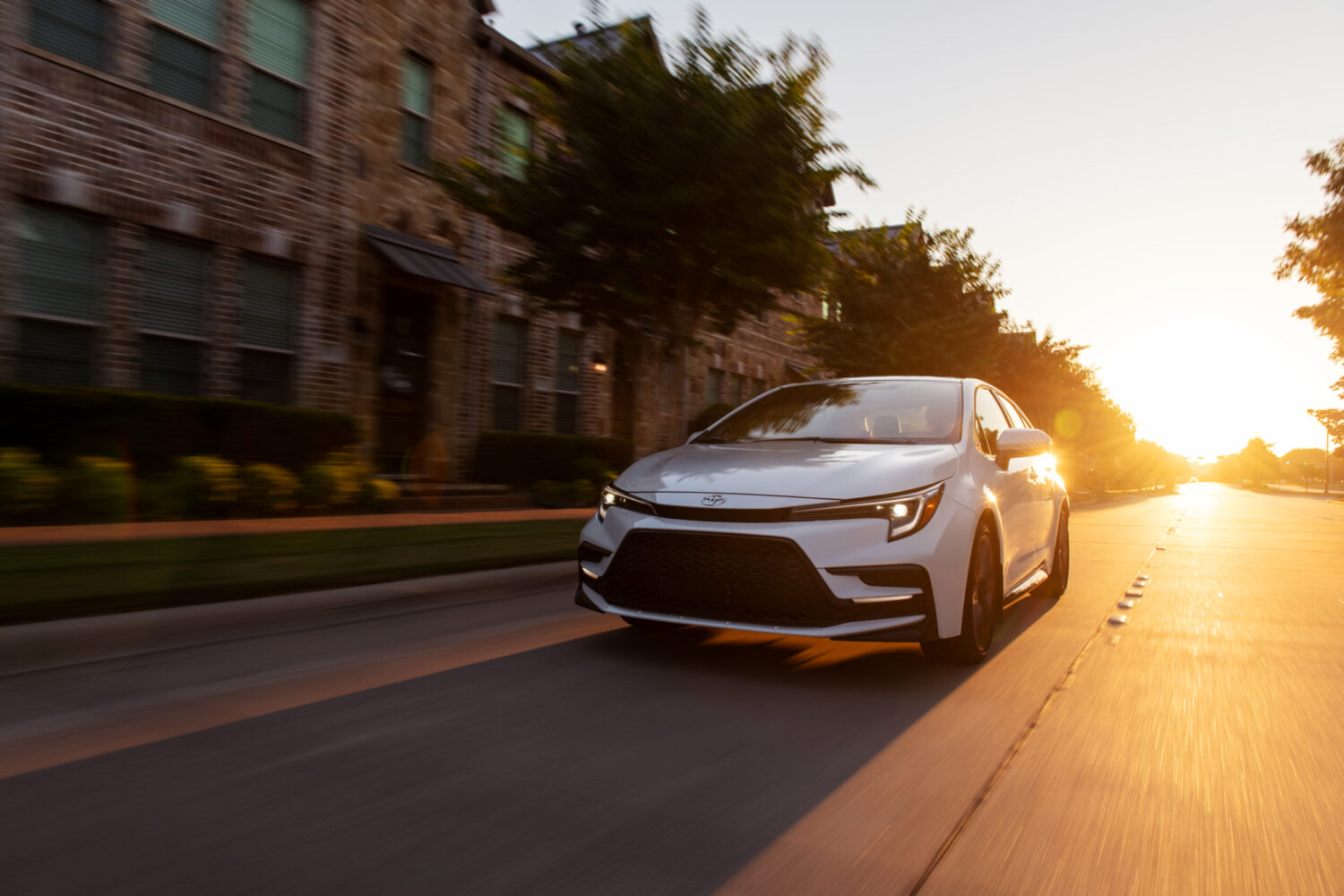
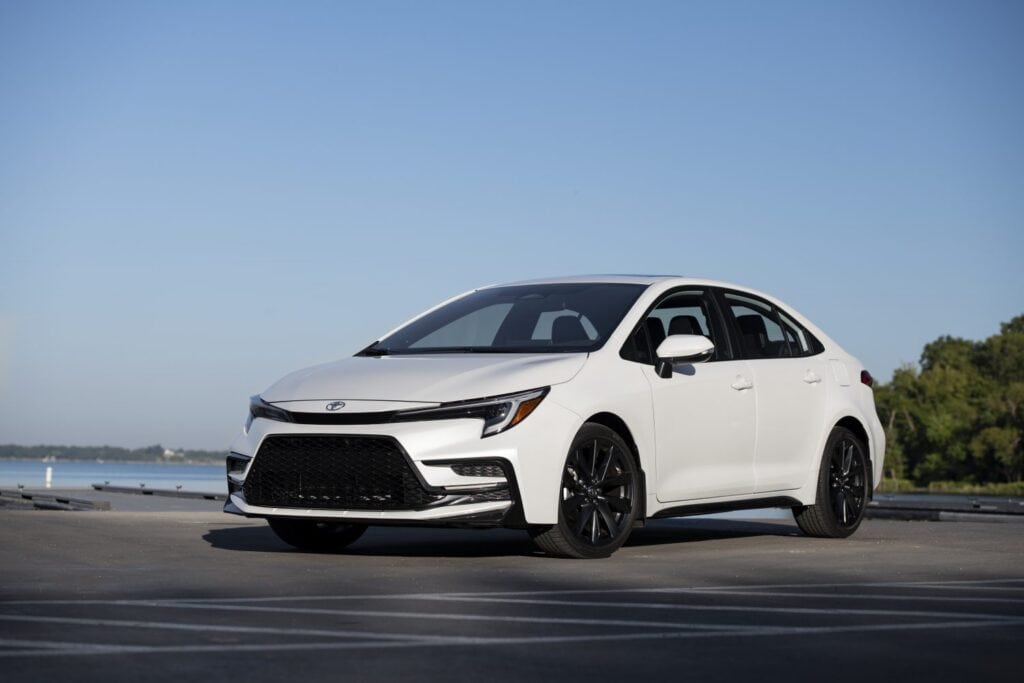
The Corolla Hybrid is the cleanest answer for a buyer who regards a car as an appliance but still wants a good appliance. Toyota lists the 2026 model from $24,575 before destination, and the front-drive version carries an EPA estimate of 50 mpg combined. It also offers all-wheel drive, which is unusual among inexpensive hybrid sedans.
Owners do not plug it in. A conventional hybrid carries a relatively small battery and recovers energy during braking, while its engine and electric motors manage propulsion automatically. The U.S. Department of Energy offers a useful explanation of hybrid-electric vehicles for shoppers who want the engineering without the brochure poetry.
Wireless Apple CarPlay and Android Auto, standard driver-assistance features and available larger displays keep the Corolla from feeling like punishment for being prudent. Its limitation is equally obvious: this remains a compact sedan. Tall rear passengers, big crates and bulky family equipment expose its packaging long before the hybrid system causes any concern.
Buy it for a commute, a small household and the lowest financial entry point on this list. Do not buy it because somebody once told you every Toyota lasts forever. Maintenance history, use and individual condition still matter, particularly once a car becomes a used vehicle.
You may also enjoy: 2026 Toyota Corolla Hatchback: Safety, Tech, and FX Edition
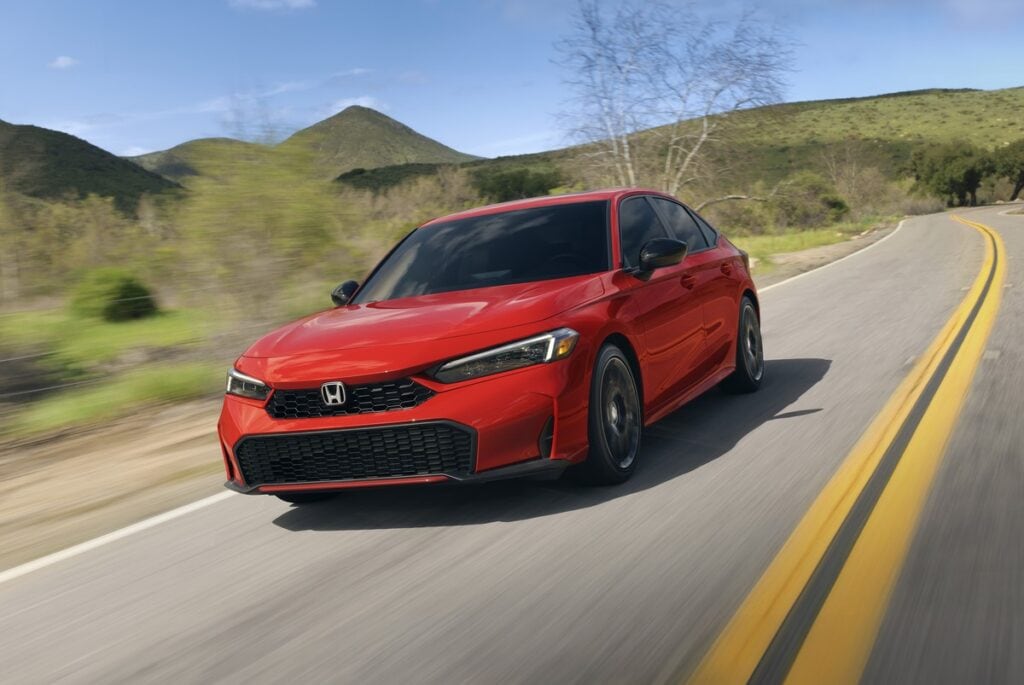
The Civic Hybrid is the answer for reluctant enthusiasts
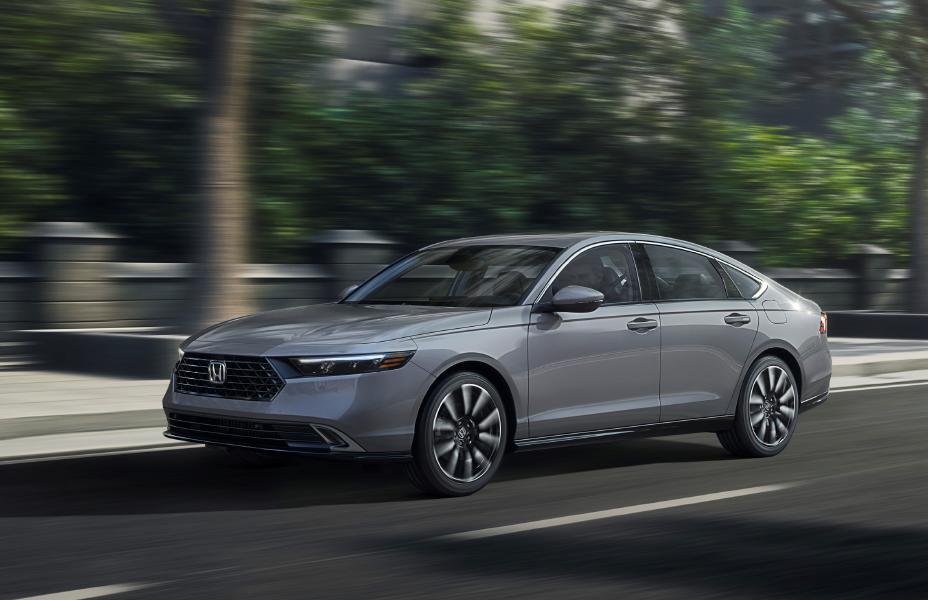
The 2026 Honda Civic Sport Hybrid is the car I would point toward when the buyer says sensible cars feel depressing. Its 200-horsepower hybrid system and official 50-mpg city and 47-mpg highway ratings prove efficiency does not require selecting the slowest version in the catalog.
Honda prices the Sport Hybrid sedan at $29,395 before a $1,295 destination charge. That distinction belongs in every buying discussion: the delivered base figure is $30,690 before paint, accessories, taxes, title and registration. Comparing one manufacturer’s advertised MSRP with another vehicle’s delivered price is how apparently small differences become expensive surprises.
The Sport Hybrid is the value sweet spot because it adds heated front seats, a moonroof and dual-zone climate control with the stronger powertrain. The Sport Touring Hybrid asks another $3,000 for a larger screen, wireless smartphone integration, leather, premium audio and Google built-in. If plugging in a phone cable feels like a human-rights violation, Honda has calculated the price of your distress.
The downside is not hidden: there is no all-wheel-drive Civic, and the sedan opening is less accommodating than an SUV hatch. Still, this is the strongest choice here for someone who wants low fuel consumption without giving up responsive road manners.
EPA estimates remain laboratory-based comparison figures. The federal government’s guide to factors affecting fuel economy explains how speed, weather, hills, cargo and driving behavior alter the result. That is why a 50-mpg label should be read as a consistent benchmark, not a personal guarantee.
You may also enjoy: 2026 Honda Civic Review: Hybrid Is the Smart Buy
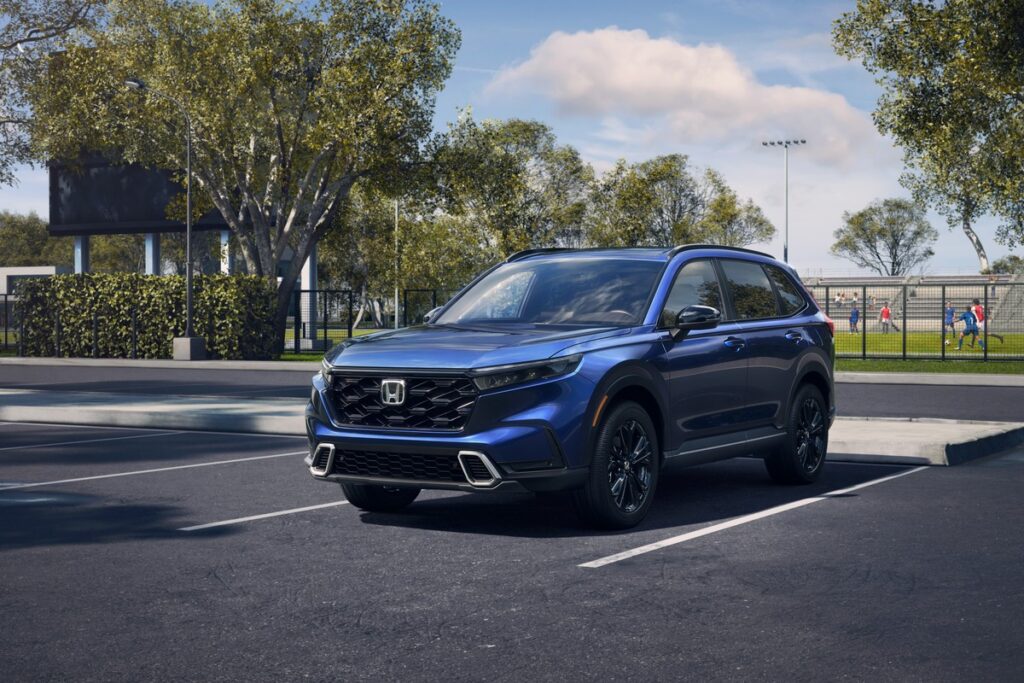
Choose the CR-V when space earns its keep
The Honda CR-V Hybrid is not automatically better because it is taller. It is better only if the additional room solves a problem you actually have. Honda lists the 2026 Sport Hybrid from $35,630 before destination. It develops 204 horsepower, while the front-drive version is rated at 43 mpg city and 36 mpg highway. All-wheel drive is available.
What the extra money buys is easier packaging. The rear seat has more useful room, the seatbacks fold and recline, rear USB ports serve passengers, and the liftgate opening is far friendlier to strollers, luggage and dog equipment than a sedan trunk. For a family, those details can repay their cost every morning.
The honest comparison is not simply CR-V versus RAV4. It is CR-V versus keeping roughly $11,000 of starting-price difference between it and the Corolla Hybrid. If a household rarely fills the rear seat and cargo area, the sedan wins. If loading children, parents, dogs or work gear is already a daily negotiation, the crossover begins to justify itself.
Driver-assistance equipment can reduce workload, but it does not make any of these vehicles self-driving. Shoppers can use the National Highway Traffic Safety Administration vehicle database to examine safety ratings and recall information, and NHTSA’s driver-assistance guide to understand what common systems can and cannot do.
You may also enjoy: 2026 Toyota Highlander Vehicle Analysis: Hybrid Wins
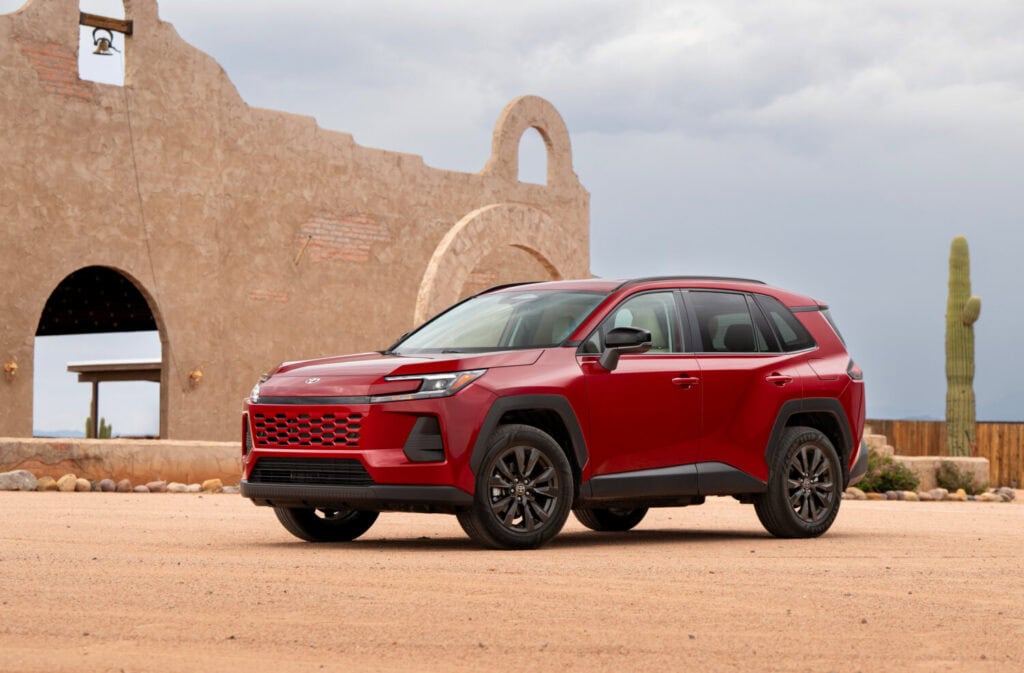
The RAV4 gives buyers two different kinds of hybrid
The redesigned 2026 Toyota RAV4 eliminates the conventional gasoline-only choice in the United States. Regular versions are hybrids, while plug-in hybrids add an estimated 52 miles of battery driving before they continue using gasoline and electricity together. Toyota estimates as much as 43 mpg combined for the regular hybrid, depending on configuration.
This is where buyers must understand one important distinction. A standard RAV4 Hybrid never needs external charging. The plug-in version delivers its best ownership case when it is charged regularly. If your home, apartment or workplace does not offer dependable access to a plug, paying extra for a large battery may deliver less value than choosing the ordinary hybrid.
Conversely, a driver with home charging and a daily journey within the electric estimate could complete much of the working week without starting the gasoline engine. Longer trips do not require charging stops because the vehicle continues as a hybrid. The Department of Energy’s plug-in hybrid overview explains that dual operating pattern.
The RAV4 also covers a broader range of utility than either sedan. Available all-wheel drive, a hatchback cargo area and towing capacity of up to 3,500 pounds on properly equipped versions make it adaptable. The phrase “properly equipped” is doing real work, however. Buyers must verify the precise trim, hitch equipment and rating rather than assuming every RAV4 can pull the advertised maximum.
The compromise is complexity at ordering time. Decide whether you will genuinely charge, how much towing you need and which comfort features matter. Once those answers are clear, Toyota’s enormous menu becomes manageable.
You may also enjoy: Toyota’s Most Overlooked Hybrid SUV Is Actually Brilliant
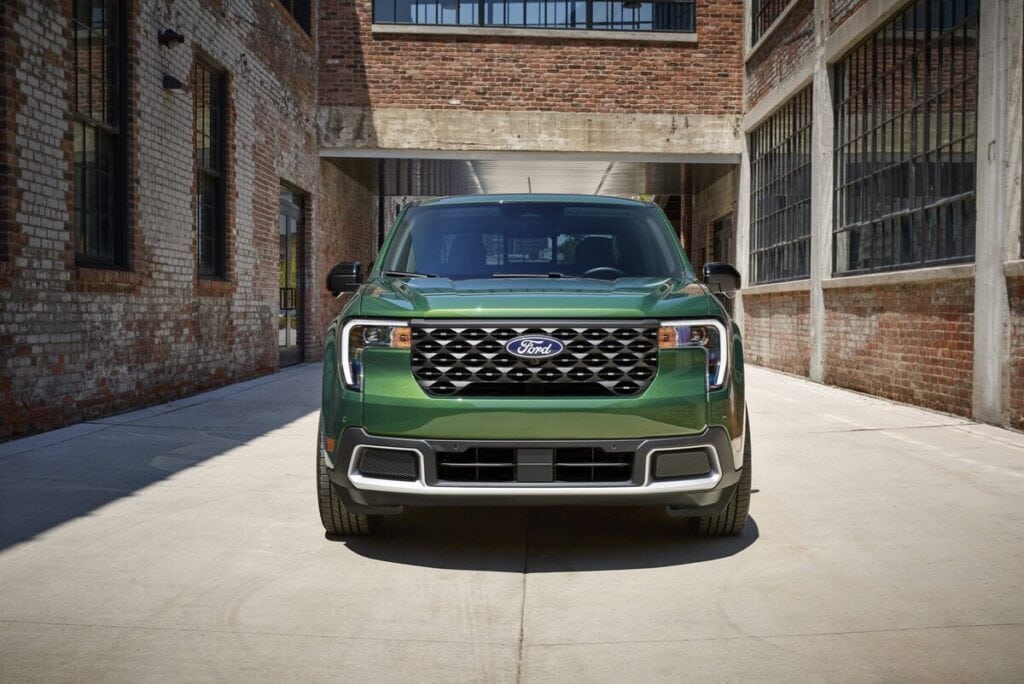
The Maverick is for people who need a bed, not a costume
The Ford Maverick Hybrid makes sense when the recurring problem is cargo that is tall, muddy, damp or awkward. Five people fit in the cabin, while a 4.5-foot bed accepts bicycles, bags of soil, camping equipment and furniture without asking the interior carpet to make a personal sacrifice.
Ford offers front-wheel-drive and all-wheel-drive hybrid configurations for 2026. The front-drive hybrid carries a 42-mpg city rating, and properly configured Mavericks can tow as much as 4,000 pounds. Again, capability depends on the selected equipment; a buyer planning to tow should have the dealer identify the exact factory configuration in writing.
The bed also creates the Maverick’s main weakness. Cargo is exposed to weather and theft unless the owner adds appropriate protection. The short box cannot replace a full-size pickup for every job, and a compact truck carrying near its limits every week is probably the wrong tool. For occasional household projects, hobbies and dump runs, however, it is wonderfully difficult to beat.
This is the only vehicle here whose body style can replace another piece of equipment. An SUV may require a trailer for dirty or oversized objects; a Maverick can often take them directly. That practical difference matters more than arguments about whether it is a “real truck.” The mulch will not ask.
You may also enjoy: 2026 Jeep Cherokee Hybrid Review: Practical Jeep SUV
The Test Miles verdict: buy the smallest honest solution
The Corolla Hybrid is the financial minimalist. The Civic Hybrid is the driver’s choice. The CR-V Hybrid earns its premium through family space. The RAV4 is the flexible answer for shoppers choosing between ordinary hybrid convenience and plug-in commuting. The Maverick is the specialist whose open bed solves jobs the other four cannot.
None should be purchased from a list alone. Load the dog crate. Install the child seat. Put the tallest regular passenger behind the driver. Connect the exact phone you own, and look over both shoulders. If you tow, bring the trailer’s loaded weight and tongue-weight figures. The Federal Trade Commission’s new-car buying guidance is also worth reading before discussing financing or add-ons.
Finally, ask for an out-the-door figure that includes destination, dealer-installed accessories, documentation charges, tax and registration. Fuel economy can save money slowly; a poor purchase agreement can remove it in an afternoon.
You do not need to love cars to choose well. You need an accurate description of your own life, a disciplined budget and enough time to test whether the vehicle performs its intended job. Buy the smallest honest solution and let the car fade into the background. Good transportation should make life easier, not require a new personality.