2027 Mercedes-Benz S-Class: Proving Less is More
By Robert R Guio
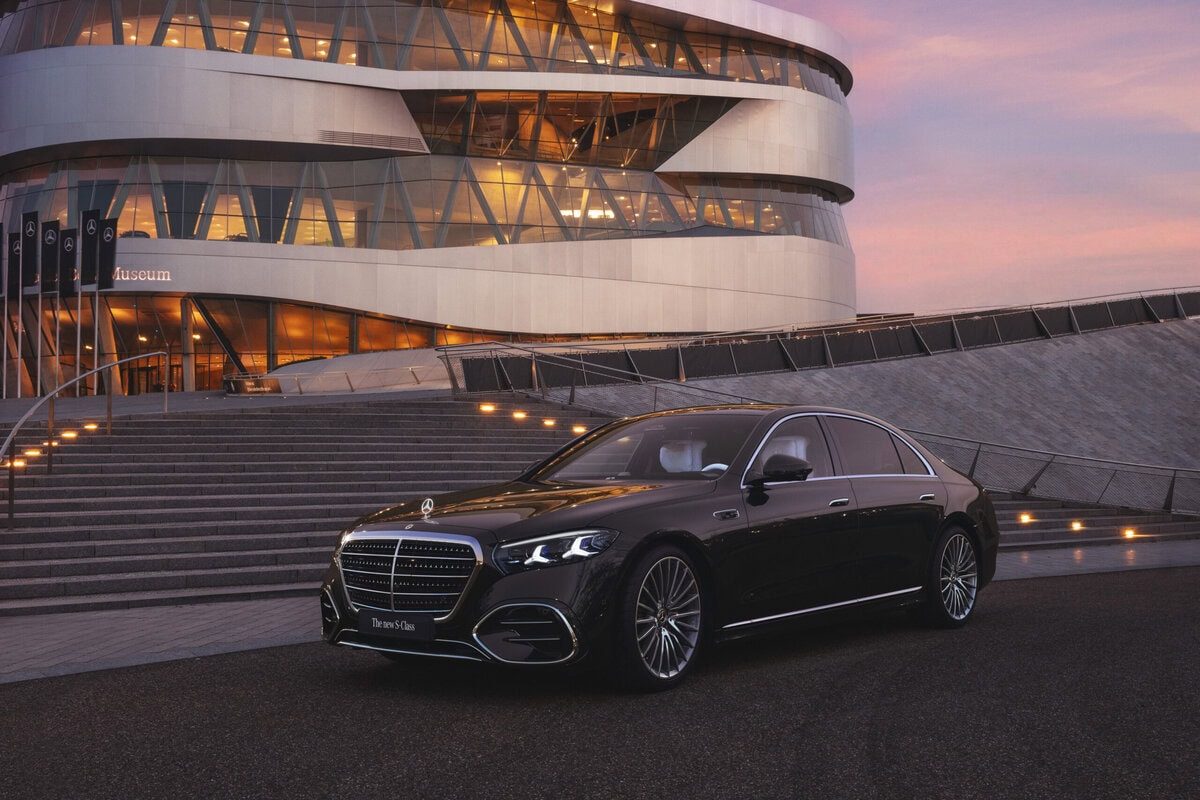
Mercedes updated the S-Class in the places that matter after the showroom glow fades: night visibility, software cohesion, air quality, and rear-seat livability.
I’m not convinced the world needs more “wow” in luxury cars. What it needs is less friction. Less sensory overload. Less tech that demands attention. That’s why the latest S-Class update is more interesting than it first looks. It isn’t built around one grand trick. It’s built around the idea that a flagship sedan should feel quietly right—at night, in traffic, during work calls, and on the kind of imperfect roads most of us drive every day.
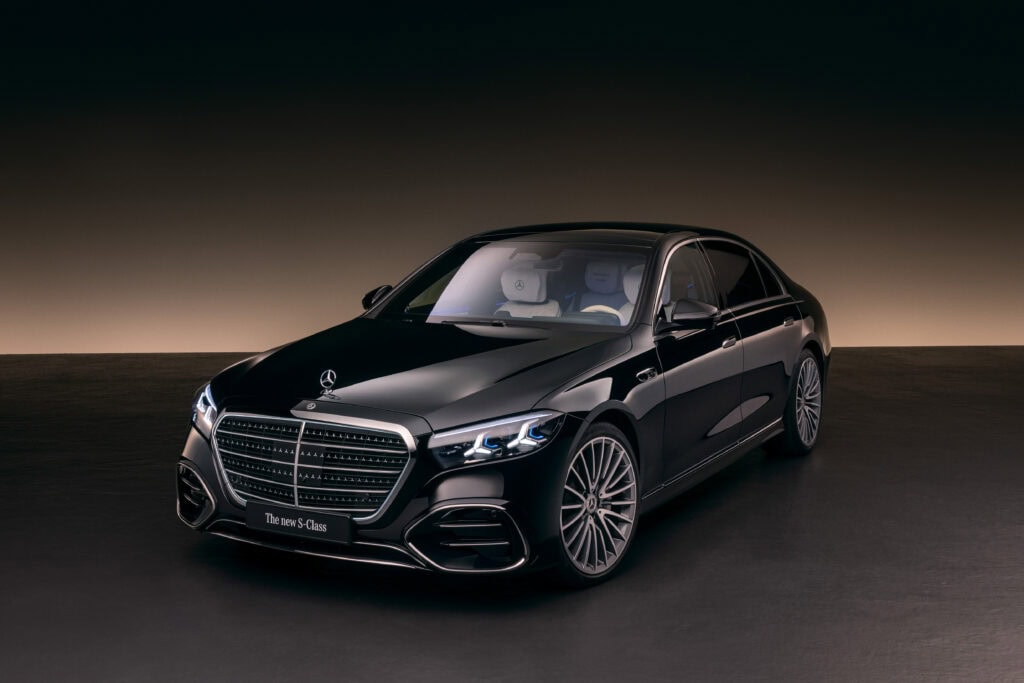
Mercedes describes this as the most comprehensive update within a single S-Class generation, with more than 50 percent of the vehicle newly developed, updated, or refined—roughly 2,700 components. It also ties the timing to 140 years since Carl Benz’s 1886 automobile milestone, which is a poetic way of saying: the S-Class is still where Mercedes wants to show its best work. The full feature framing appears in the official release, published by Mercedes-Benz USA media.
Ordering details in the source material matter because they anchor this update in production reality. Mercedes states that customers can configure and order the updated model online from 30 January 2026, with a starting list price of $143,849.57 for the S 350 d 4MATIC Saloon. That doesn’t tell you what your local deal looks like, but it does confirm that this is a real, near-term flagship refresh—not a concept car promise.
Why does this matter right now?
Luxury cars are increasingly judged on how they behave over time. Anyone can build a dramatic demo. The hard part is building something that still feels calm and current after months of daily use. That’s the thread tying together the update’s biggest themes: MB.OS, lighting, rear-seat productivity, and comfort tech.
Start with MB.OS. Mercedes positions the Mercedes-Benz Operating System as the “supercomputer” behind the car, connecting major domains into one ecosystem and linking the vehicle to the Mercedes-Benz Intelligent Cloud for over-the-air updates of numerous functions (as described in the release). Even if you’re skeptical of cars becoming software platforms, the practical upside is clear: a flagship should feel less dated mid-ownership. It should evolve, fix, and refine rather than freeze in time.
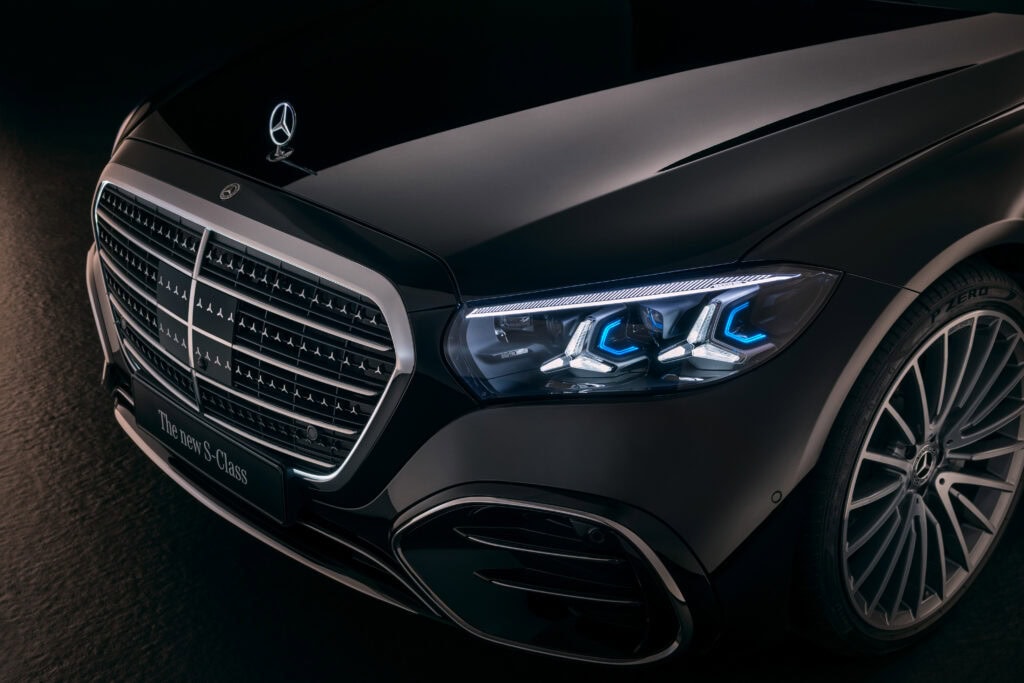
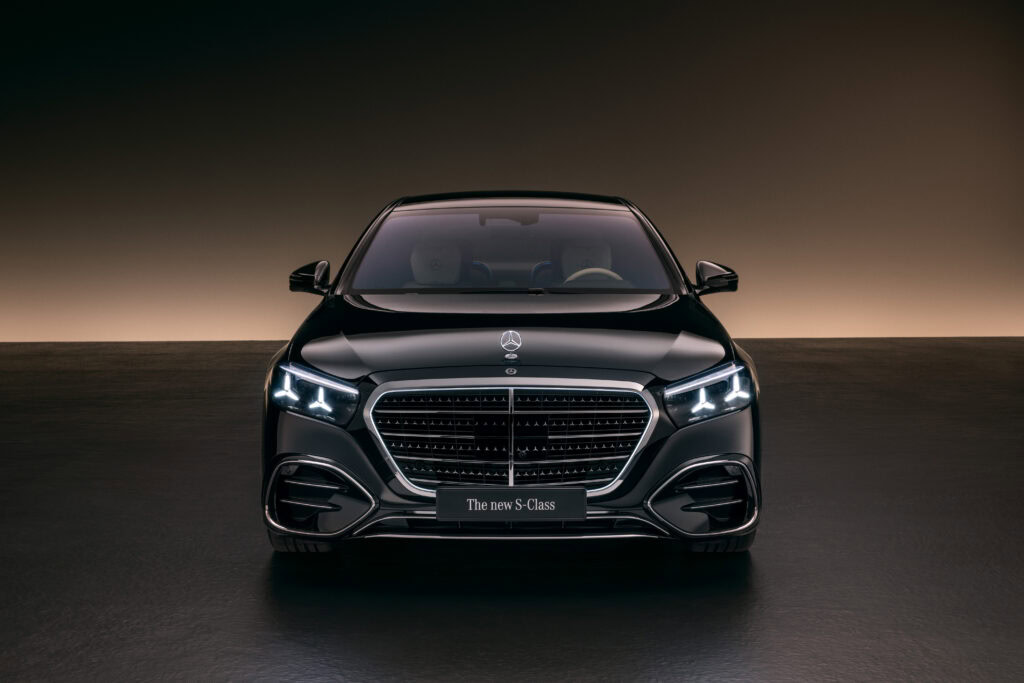
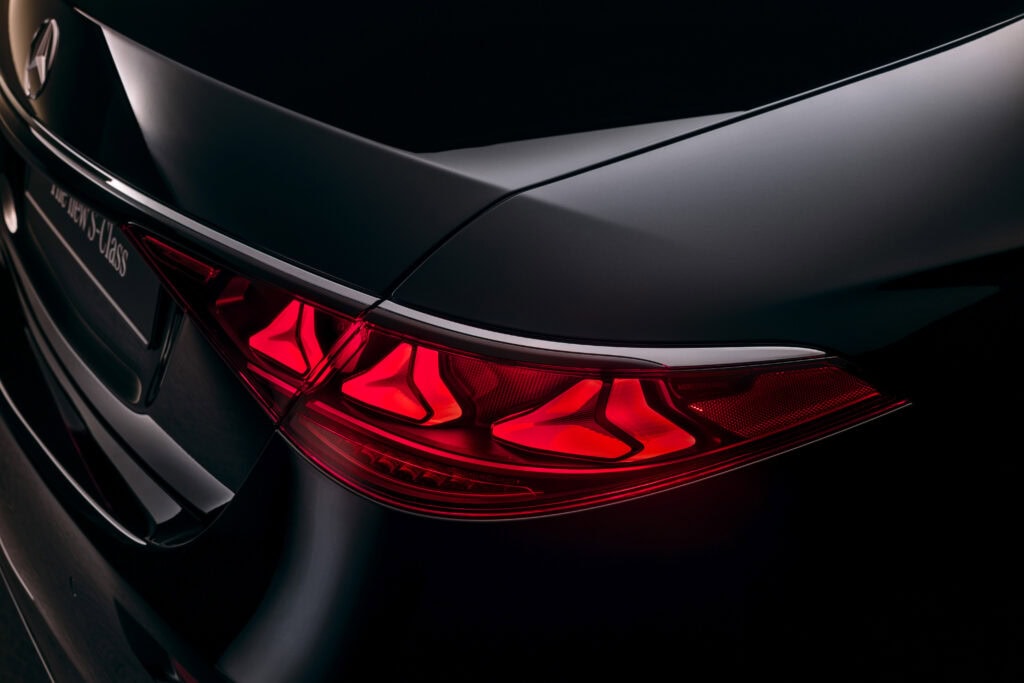
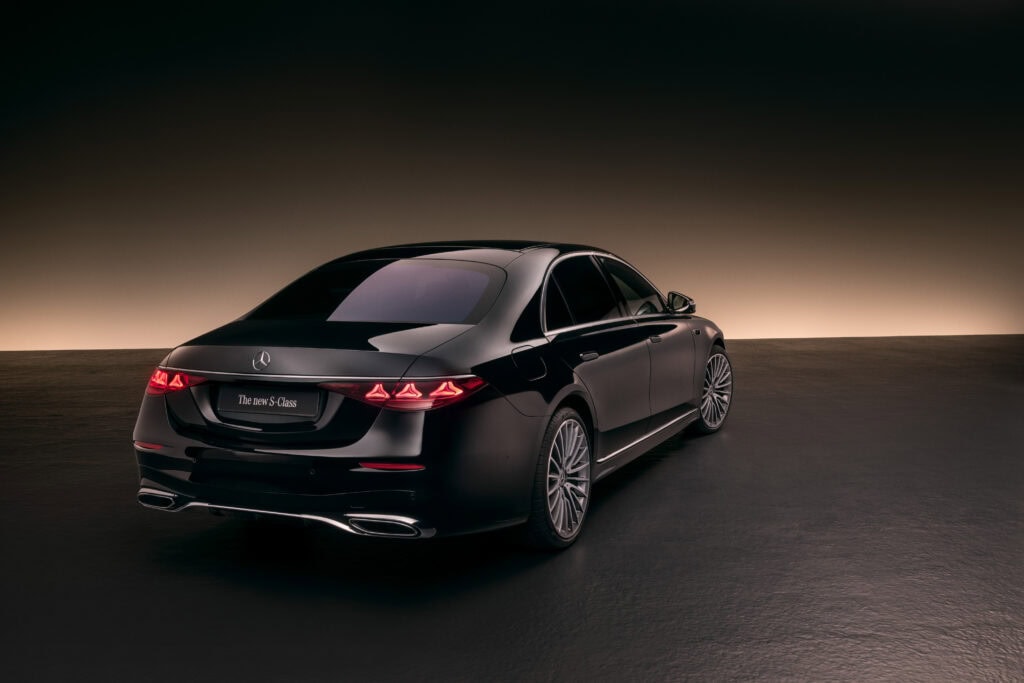
Then there’s the lighting strategy. The update leans hard into night identity and night confidence: an illuminated grille that’s described as around 20 percent larger, new twin-star DIGITAL LIGHT headlamp design, and new rear lights that reinforce the star motif. For drivers, the more meaningful claim is the new micro-LED-based DIGITAL LIGHT system, described as expanding the high-resolution illumination field by about 40 percent versus the predecessor. ULTRA RANGE high beam is quoted at nearly 2,000 feet of reach, with camera and map intelligence shaping the beam for better detection of poorly lit road users without dazzling others.
That lighting story isn’t just branding. It’s fatigue management. If you drive in the rain, on rural roads, or in uneven street lighting, better illumination reduces stress. In an era where many “innovations” are basically screen features, it’s refreshing to see a core driving task—seeing—treated as a flagship priority.
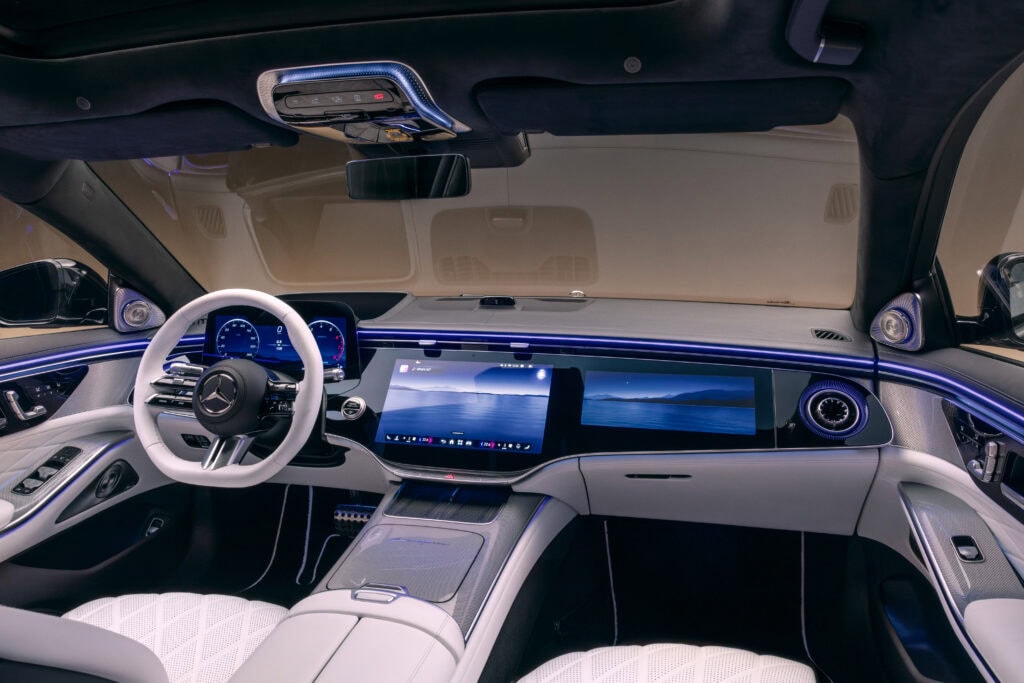
Inside, the new standard MBUX Superscreen matters less because it’s big and more because it’s integrated. Example being the continuous glass surface uniting the central and passenger displays, a refined Zero Layer interface, and a more conversational “Hey Mercedes” assistant designed for natural dialogue and short-term memory. In plain terms: fewer menus, smoother handoffs between tasks, and a cabin interface that aims to feel less like operating a device and more like using a tool.
Mercedes also notes that the fourth generation of MBUX integrates multiple AI agents, including ChatGPT, Microsoft Bing, and Google Gemini, to support the virtual assistant’s conversational abilities. That’s a big swing, and it signals where premium infotainment is going next: toward multi-turn conversation rather than command-and-control voice prompts.
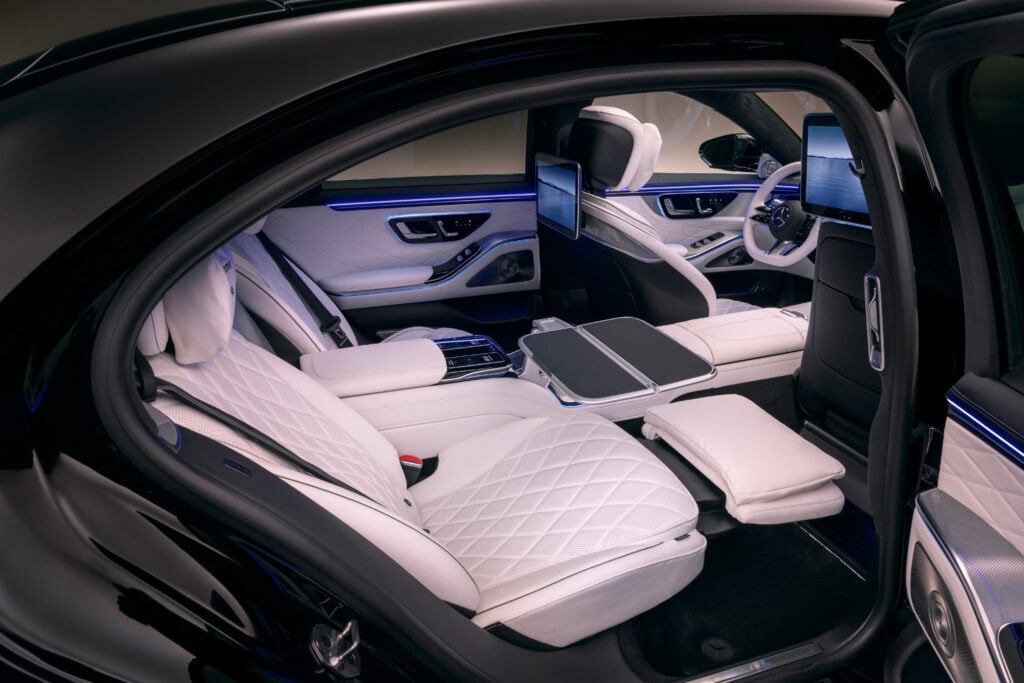
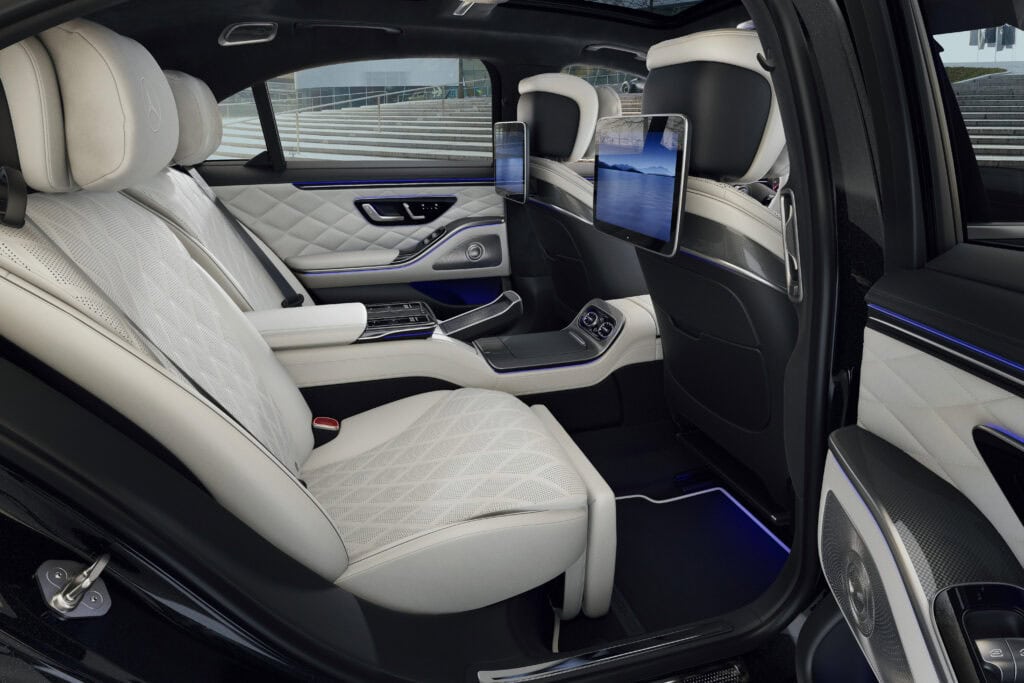
Rear-seat upgrades are where the S-Class leans into modern luxury’s real use case: blended time. The First-Class rear compartment and High-End Rear Seat Entertainment package described here include dual 13.1-inch displays, detachable remote controls, and integrated video conferencing through Microsoft Teams, along with Zoom and Webex support as stated. Folding tables, a rear business console, fast USB-C power delivery, wireless charging, and refrigeration features are all described as part of a rear environment that can function as an office or a recovery space.
Finally, the comfort and well-being features are not throwaway luxuries in this material—they’re engineered systems. A heated seat belt (up to 111°F as described), Digital Vent Control with personalised airflow scenarios, and an electric filtration concept tied to ENERGIZING AIR CONTROL are positioned as daily-life upgrades. Mercedes states that cabin air can be fully renewed roughly every 90 seconds under defined conditions. Whether you’re commuting through dense city traffic or spending hours on the highway, the value is simple: less fatigue, fewer irritants, and a calmer cabin environment.
If you want a quick example of why “quietly better” matters in 2026–2027 luxury cars, Test Miles recently took a similar angle on comfort-first design in the 2026 Honda Pilot review, which focused on low-stress usability rather than flash.
How does it compare to rivals or alternatives?
In this segment, everyone offers technology. The deciding factor is how that technology is integrated, how predictable it feels, and how little it asks of you on a normal day. The S-Class update is essentially a bet that cohesion beats spectacle.
Rival flagship sedans can match the S-Class in screen count, premium materials, and performance variants. Some alternatives also deliver a more overtly sporty feel or a more driver-first personality. If you want your flagship to feel eager and expressive, you may prefer a competitor that leans harder into handling and immediacy.
Where the S-Class refresh draws a clearer line is nighttime confidence and the “rear seat as a true workspace” approach. Mercedes is placing unusual emphasis on lighting sophistication, assisted-driving architecture, and rear-seat productivity. If your day includes late-night driving, airport runs, or long stretches where arriving calm matters more than arriving excited, this approach makes sense.
There’s also a meaningful alternative category now: fully electric flagship sedans. A dedicated EV platform can deliver a different kind of smoothness and instantaneous response, and for some buyers that becomes the defining luxury trait. This updated S-Class doesn’t try to pretend combustion and hybrids are obsolete; it tries to refine them into something quieter, cleaner, and more seamless. That means the “right” choice depends on what you value: EV purity and charging lifestyle, or the long-distance flexibility of refined electrified combustion and plug-in hybrid options.
On the technology side, Mercedes’ navigation story is built around Google Maps integration. The release describes MBUX Surround Navigation based on Google Maps, with in-vehicle conversation services using Google Cloud’s Automotive AI Agent. For readers curious about the platform direction, the broader ecosystem context is visible through Google Maps Platform, which underpins many modern automotive mapping and location services.
Another angle worth comparing is how brands handle design identity. Mercedes is leaning into illuminated signature elements—an optionally illuminated hood star and an illuminated grille. Some rivals prefer restrained understatement, while others chase aggressive visuals. If you want a flagship that announces itself at night, Mercedes is clearly leaning into that.
For a lens on how carmakers sometimes pivot identity to stay relevant, Test Miles recently covered brand and product shifts in a broader market context—like the discussion around flagship positioning and product strategy in Tesla’s Model S/X narrative.
Who is this for and who should skip it?
This S-Class update is for people who want luxury to feel supportive. Not performative. It’s for the buyer who notices friction and wants it designed out of the day.
This is for you if:
- You drive at night and care about visibility as a genuine safety feature, not a styling line item.
- You want a flagship that stays current longer through a unified software architecture and over-the-air updates.
- You use the rear seat as a real space—work calls, quiet travel, decompression—and want it treated like first-class infrastructure.
- You value customization and want the option to build something genuinely individual through MANUFAKTUR and Made to Measure choices.
You should probably skip it if:
- You want a sporty flagship first and a serene one second.
- You dislike big display surfaces and prefer a more analog control philosophy.
- Your lifestyle strongly favors the packaging and ride height of a luxury SUV.
- You want a fully electric ownership experience and don’t want to live in the hybrid/combustion middle ground.
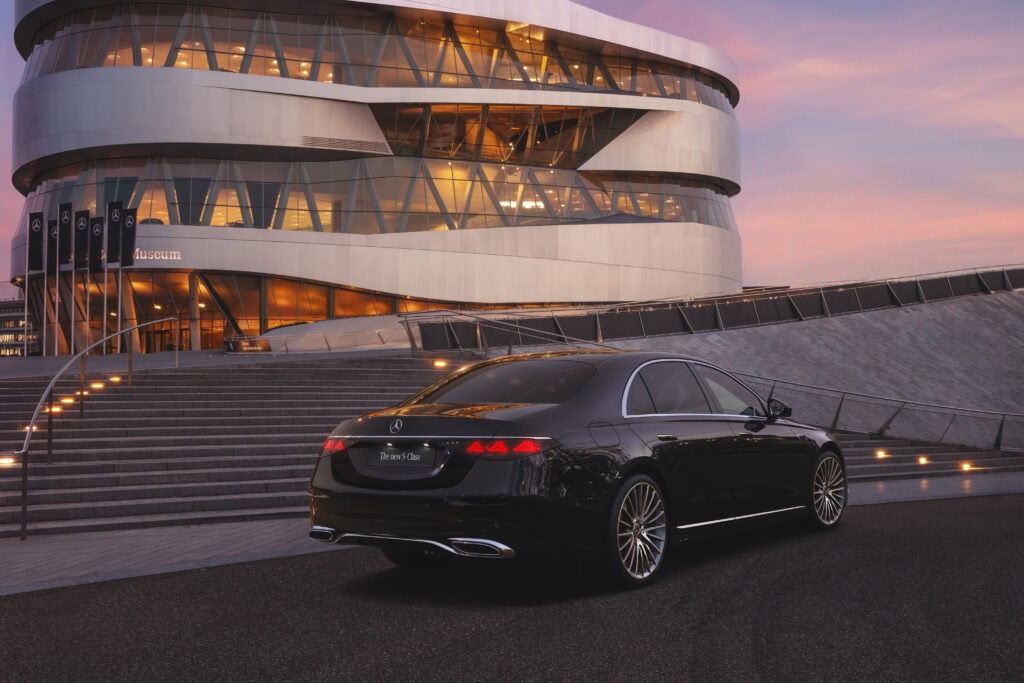
On personalization, Mercedes highlights MANUFAKTUR Made to Measure with more than 150 exterior colours and over 400 interior colours, supported by one-to-one consultation. If you enjoy the “bespoke” aspect of luxury ownership—and you’re willing to pay for it—this is a meaningful differentiator. It’s also a subtle reminder that the flagship sedan, more than most vehicles, is still treated as a canvas.
For a lighter but still telling example of how “personalization” is becoming a consumer expectation across categories, not just luxury cars, Test Miles recently explored the idea in a completely different lane with Mattel’s Mercedes-themed Brick Shop sets.
What is the long-term significance?
This update is a clean snapshot of where premium vehicles are heading: toward coherence, wellbeing, and software-defined longevity.
First, coherence. MB.OS is framed as a service-oriented architecture connecting assistance, infotainment, and vehicle functions. That’s the “software-defined vehicle” direction, but delivered in luxury language: fewer rough edges, fewer disjointed subsystems, and a clearer path for updates over time.
Second, well-being becomes engineering. Heated seat belts, Digital Vent Control, and advanced filtration tied to ENERGIZING AIR CONTROL reflect an industry recognizing what people actually feel in modern driving: stress, sensory overload, fatigue, and irritation from air quality and noise. The future of luxury isn’t just faster. It’s calmer.
Third, the rear seat is no longer a passive place. It’s an active environment. The combination of rear displays, conferencing capability, tables, and power delivery turns the back of the S-Class into a productivity zone or a recovery zone. That reflects a broader shift in mobility: travel time is increasingly treated as usable time, especially in premium segments.
The special-protection story reinforces another long-running S-Class role: it’s a platform for the most demanding use cases. Mercedes describes the S 680 GUARD 4MATIC as achieving certified VR10, the highest civilian protection level, validated through testing. For readers who want to understand the standards context, VPAM publishes the ballistic vehicle guidelines as formal documents, including VPAM’s vehicle guideline documentation.
Finally, there’s the cultural significance of lighting and presence. The illuminated grille, the optionally illuminated hood star, and the projection elements are a reminder that luxury branding is becoming more experiential—less about static badges and more about how the car feels when you approach it, enter it, and live with it at night.
If you want a simple way to sum up the direction: the S-Class is trying to make modern luxury feel less like operating a machine and more like inhabiting a calm space that happens to move. That’s not a loud kind of progress. But it’s the kind that makes you grateful on a cold morning, in bad traffic, on a dark road, long after the novelty is gone.
For a complementary perspective on why flagship sedans still matter as “trend-setters,” Test Miles recently touched the theme directly in Why the Mercedes-Benz S-Class Still Matters, which mirrors the broader point this update reinforces: the flagship’s job is to make the future feel normal.
If you’re curious about the model’s broader positioning and current details beyond this update, Mercedes maintains its consumer-facing overview on the S-Class Sedan page.