Brad Pitt Mercedes-AMG: Hollywood Meets Electric Power
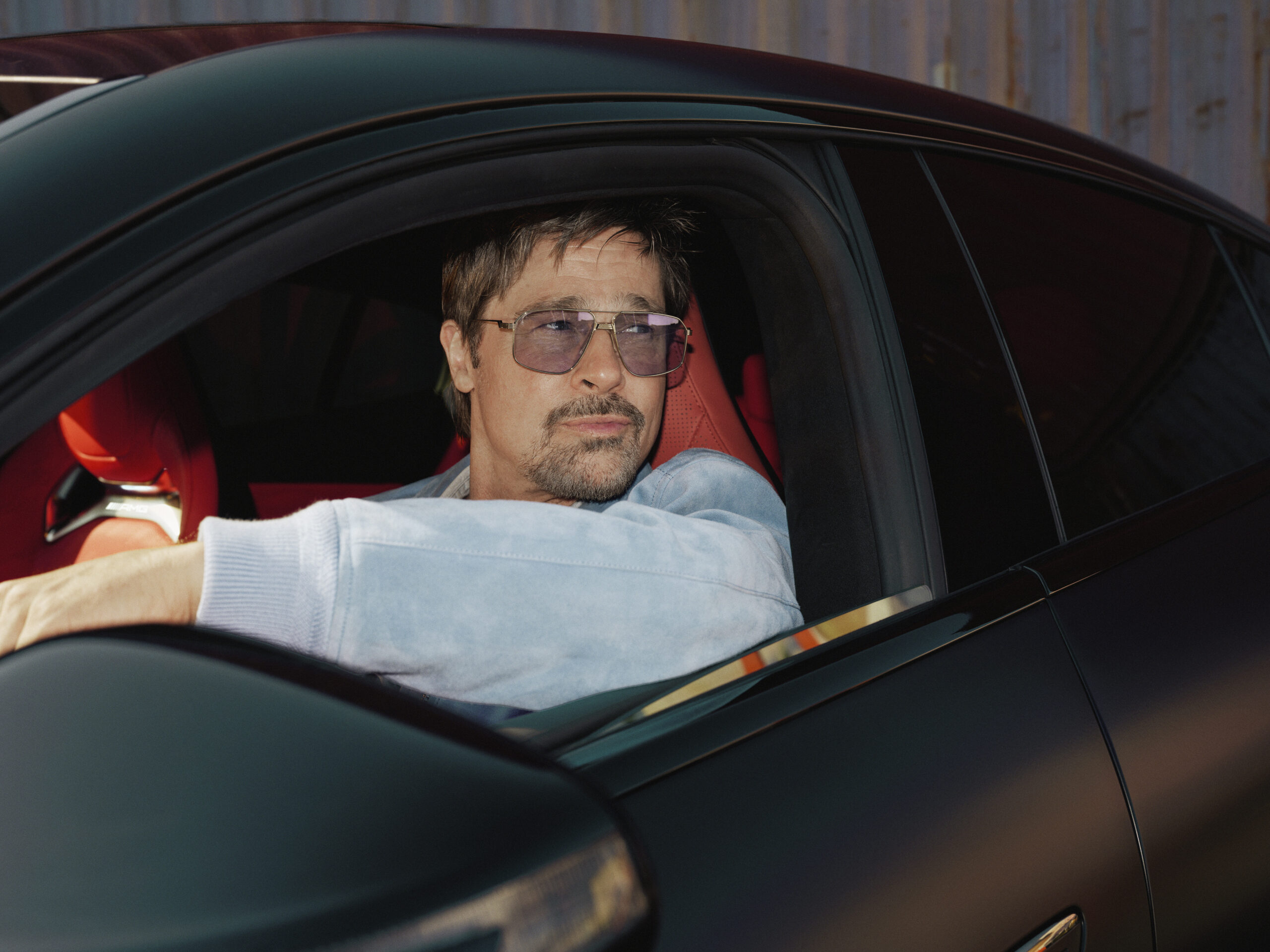
The Brad Pitt Mercedes-AMG campaign pairs Hollywood spectacle with the electric GT 4-Door Coupé and technology demonstrated at up to 1,169 horsepower.
Brad Pitt has driven some rather extraordinary cars on screen. Now Mercedes-AMG has given him another one to play with, and this time there isn’t a V8 under the hood.
There are three electric motors, an advanced battery-cooling system and the kind of performance engineering that would have sounded utterly ridiculous a decade ago.
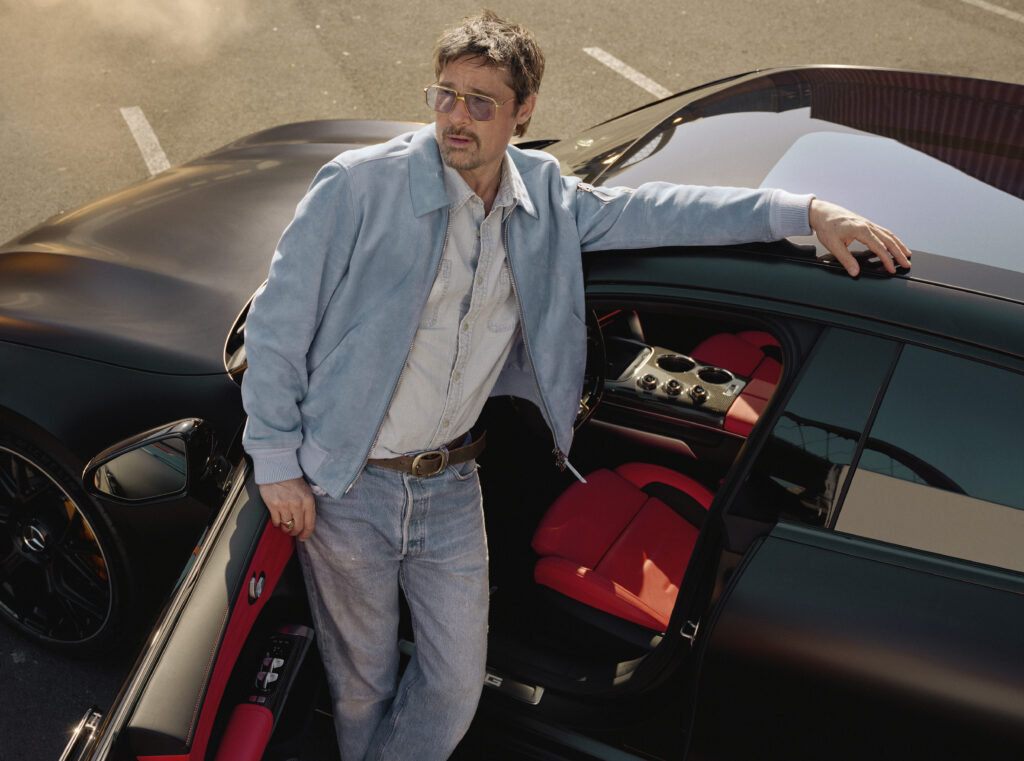
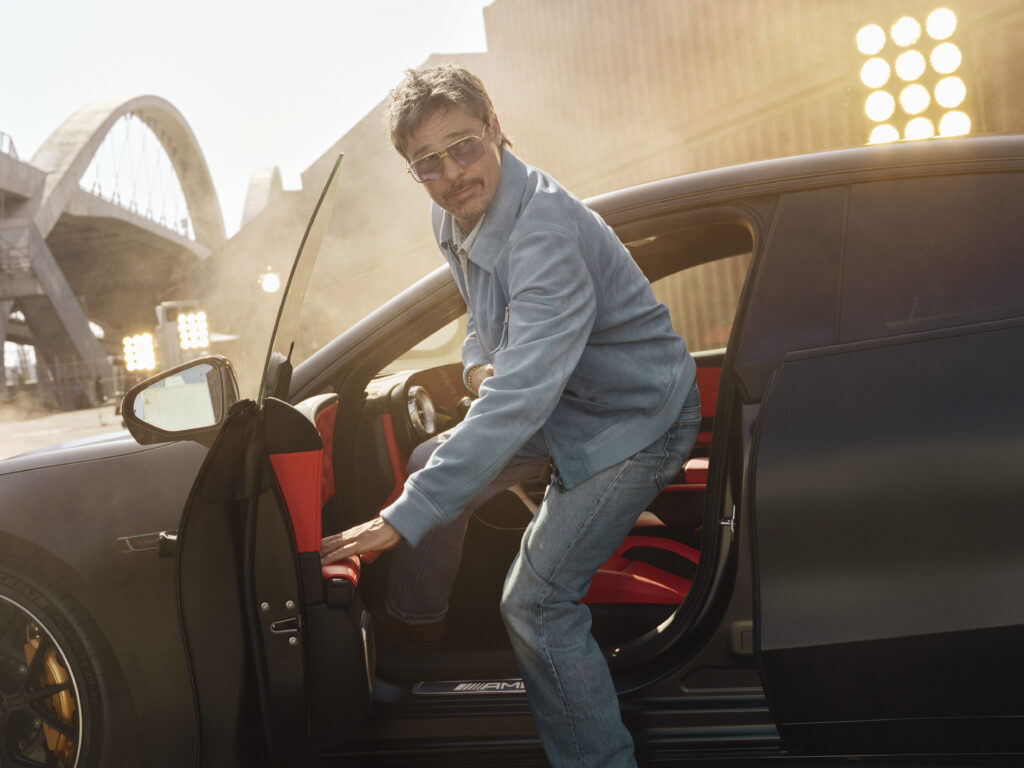
Mercedes-AMG’s new “Too Hard to Resist” advertising campaign, launched October 2, 2026, puts Pitt at the center of a lavish Los Angeles film production.
Then the car rather steals the show.
But I think the more interesting story is happening behind the cameras. Mercedes-AMG is attempting something considerably harder than convincing Hollywood audiences to admire a fast car.
It needs to convince traditional AMG enthusiasts that electric performance can be every bit as exciting as the gasoline engines that made the brand famous.
Brad Pitt Mercedes-AMG: A Hollywood Production With a Purpose
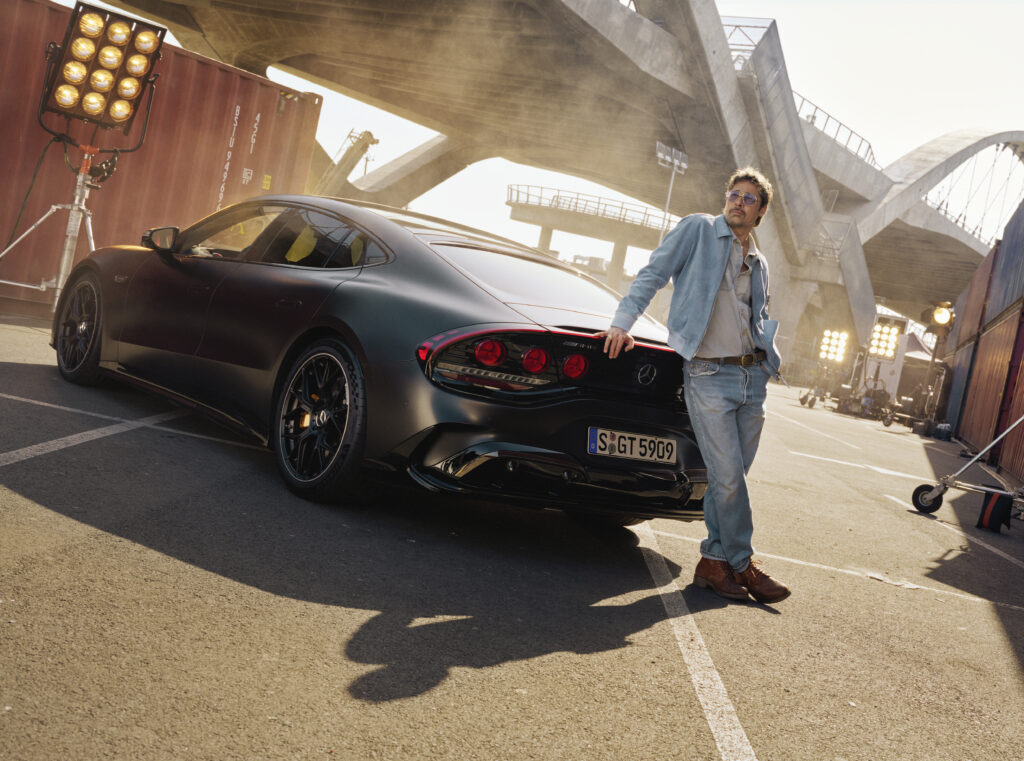
The advertising film is set on a Los Angeles production stage, complete with an elaborate crew and precisely arranged scenes.
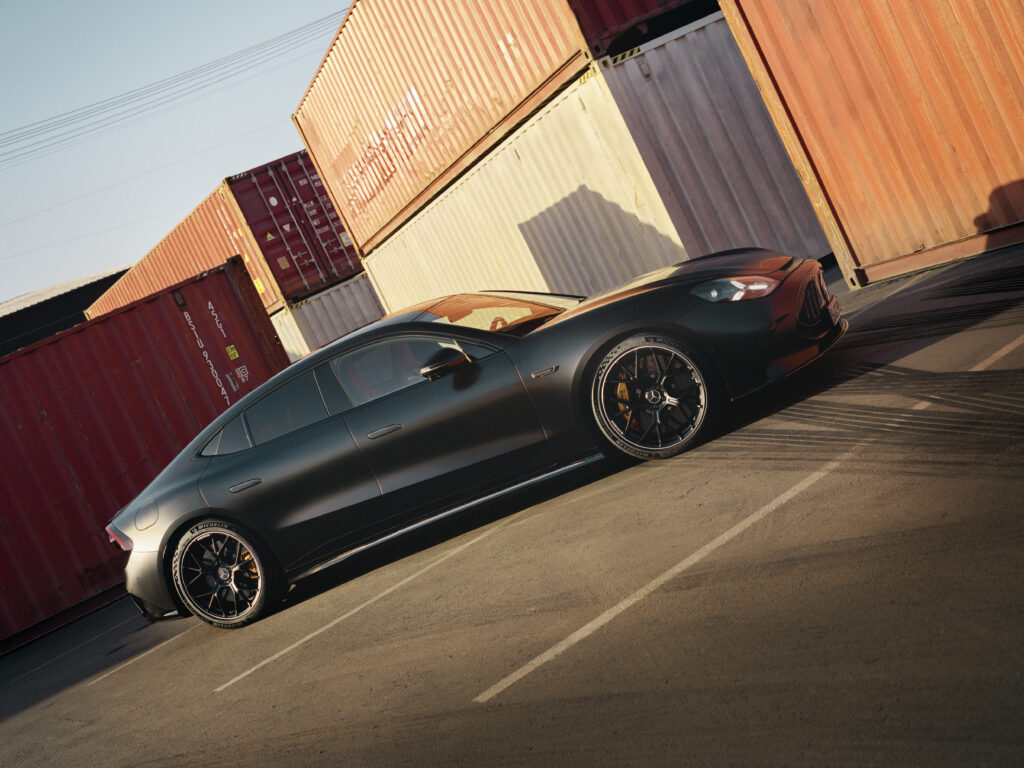
Pitt’s attention shifts toward the electric Mercedes-AMG GT 4-Door Coupé, which gradually becomes the central character.
The campaign was directed by Simon McQuoid and produced by Tony Petersen Film with team x.
Its appearance follows a memorable 2025 promotional stunt in Las Vegas featuring Pitt, Formula 1 driver George Russell and an AMG prototype.
There’s a certain logic to the partnership. Pitt brings international recognition, while Mercedes-AMG brings an enormous engineering program that needs explaining to customers.
And celebrity-led vehicle marketing isn’t new territory for Mercedes-Benz.
The company previously used musicians, designers and other creative personalities to introduce its next-generation CLA, turning vehicle marketing into something closer to a cultural event.
You may also enjoy: Mercedes-Benz Just Turned a Car Launch into a Pop Culture Power Play
The question is whether the technology underneath this particular four-door is interesting enough to justify the Hollywood treatment.
Three Electric Motors With an Unusual Design
Mercedes-AMG’s new performance platform is called AMG.EA, short for AMG Electric Architecture.
It uses axial-flux motors, a technology that differs from the radial-flux arrangement commonly found in electric vehicles.
Axial-flux motors arrange their magnetic components differently, potentially allowing substantial power output from relatively compact machinery.
The benefit isn’t simply a more impressive horsepower figure. Smaller powertrain components can give engineers additional flexibility when designing the vehicle’s structure, suspension and weight distribution.
The Department of Energy’s electric vehicle guide explains how electric motors, battery systems and vehicle architecture work together.
AMG has chosen a three-motor configuration for its high-performance approach, allowing sophisticated management of how power reaches the wheels.
That’s particularly important when you’re dealing with enormous levels of torque.
An electric motor can produce strong acceleration almost immediately, but the tires still have to transfer that power to the road.
Motor control, suspension calibration and traction management therefore become just as important as the headline output.
You may also enjoy: New Head of Mercedes Design Shares How AMG Keeps Its V8 Soul Alive in the Electric Age
Where the 1,169-Horsepower Number Really Comes From
This is where we need to separate genuinely impressive engineering from an unnecessarily confusing headline.
Mercedes-AMG’s October campaign announcement refers to technology producing up to 1,169 horsepower.
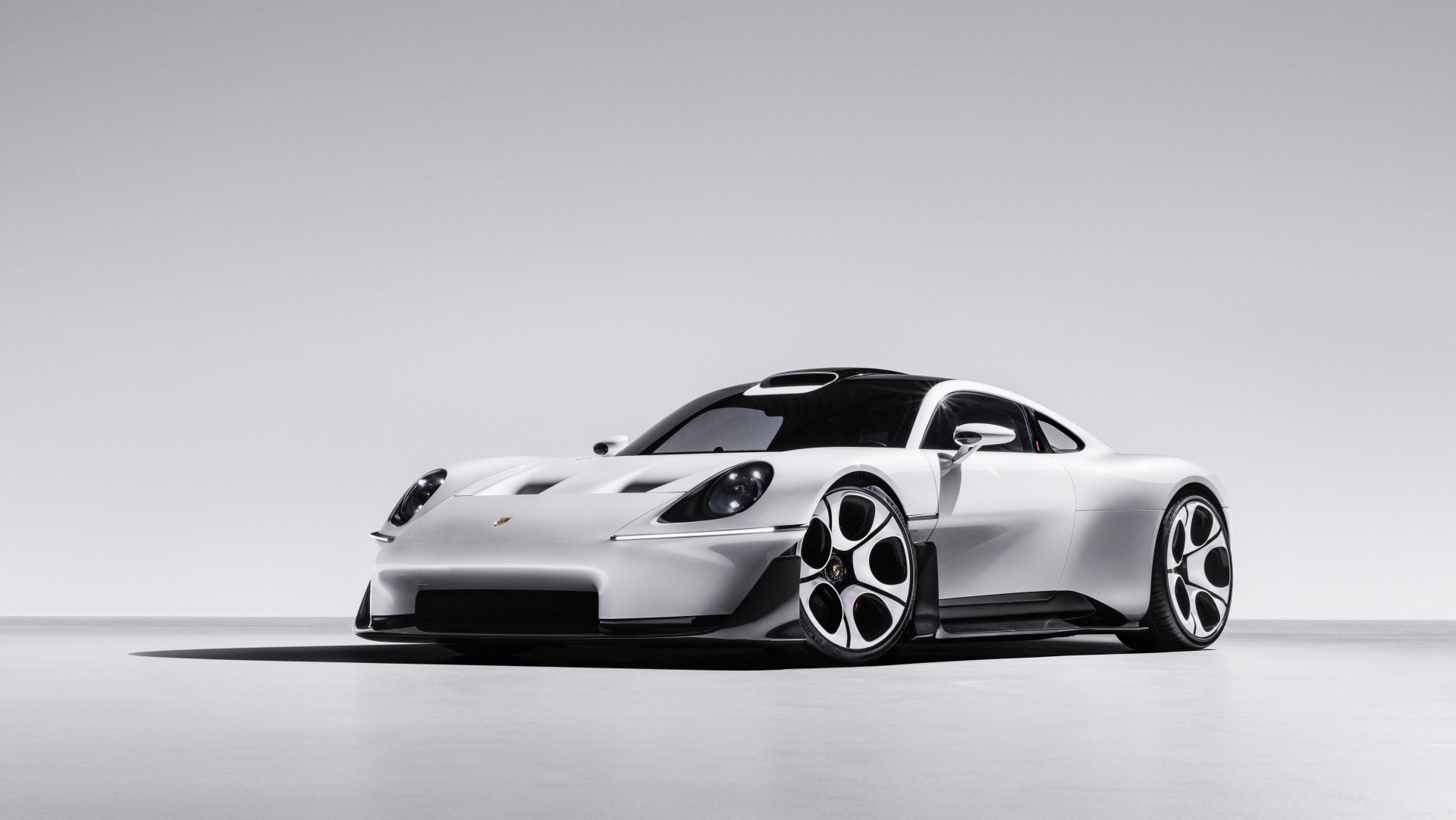
However, that figure describes a demonstration involving the CONCEPT AMG GT XX, not a fresh specification for every production GT 4-Door Coupé.
The GT XX was developed to demonstrate the capabilities of AMG’s new high-performance electric powertrain.
It has already generated considerable attention for its motor technology, battery cooling and extraordinary charging ambitions.
What matters to future owners is which technologies and specifications reach the exact model they eventually purchase.
Peak horsepower also tells only part of the story. Sustained output, thermal performance and consistency under repeated use can be more meaningful in a genuinely high-performance vehicle.
You may also enjoy: AMG GT XX Concept: 1,341 HP, Charges a Mile a Second, No Mercy

AMG’s Cleverest Trick Might Be Keeping the Battery Cool
Here is the piece of technology that deserves more attention than Brad Pitt’s latest acting assignment.
Mercedes-AMG uses directly cooled battery cells to manage the extreme demands of its electric performance system.
Heat is a serious consideration in powerful electric cars.
When a battery releases energy rapidly, internal resistance generates heat. Repeated high-output operation can make temperature control increasingly difficult.
Conventional thermal-management systems help prevent overheating, but maintaining consistent performance under sustained stress demands considerable engineering.
The National Highway Traffic Safety Administration explains why battery temperature management affects performance, longevity and safety.
AMG’s approach places cooling closer to individual battery cells, seeking better control during demanding operation.
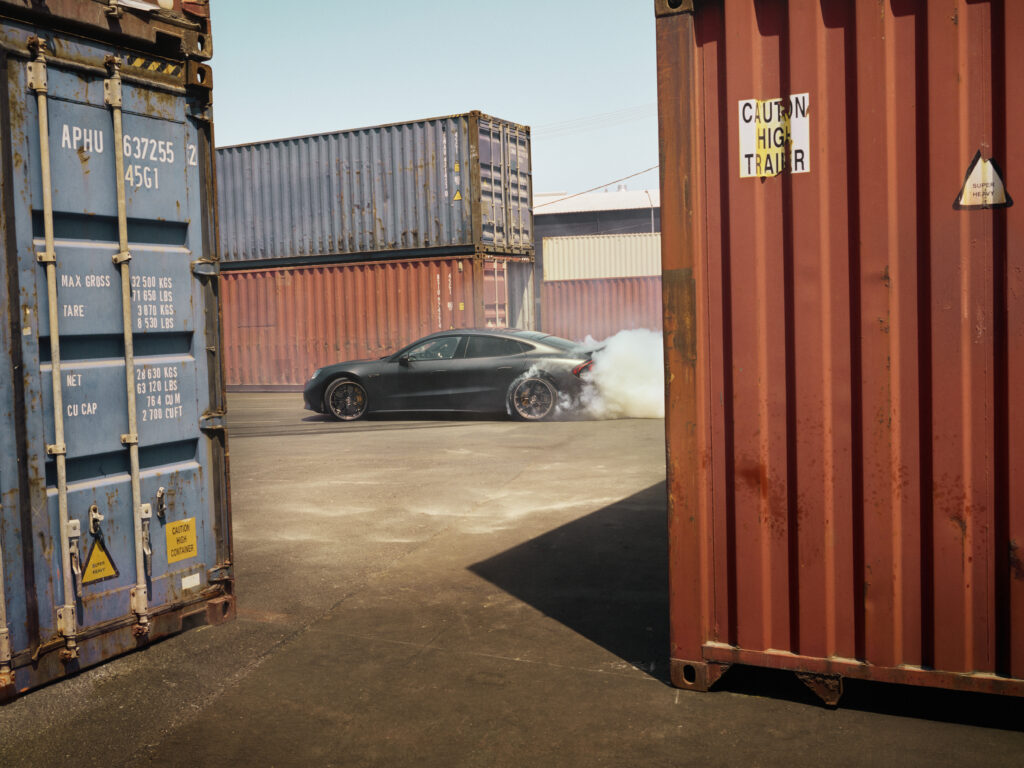
In practical terms, think about repeated hard acceleration on a closed course. The challenge is not achieving one extraordinary sprint; it’s maintaining useful power after the battery and motors have been working hard.
Whether the production system delivers that consistency will require independent testing.
You may also enjoy: Mercedes-Benz Unleashes Ultra-Fast Charging for AMG EVs
Can an Electric Mercedes Still Feel Like a Real AMG?
For years, AMG customers have bought cars because of their character as much as their performance figures.
A traditional AMG V8 has a recognizable soundtrack, distinctive throttle response and the mechanical personality that comes from hundreds of moving components.
Electric propulsion changes that experience completely.
Mercedes-AMG has already developed systems intended to recreate familiar engine sensations through coordinated sound, vibrations and simulated changes in power delivery.
That raises an interesting philosophical question.
Should an electric sports car imitate the machinery it replaces, or establish its own personality?
There isn’t a single correct answer. Some enthusiasts will appreciate familiar sound and sensations. Others may prefer the immediate response and relative silence of electric propulsion.
The EPA’s electric vehicle overview explains the underlying differences between gasoline and electric propulsion.
My concern is that artificial driving sensations should enhance feedback rather than distract from the actual behavior of the car.
You may also enjoy: Mercedes-AMG Electric GT 4-Door Coupe Sounds and Feels Like a Real V8
What American Buyers Should Actually Care About
Beyond the celebrity endorsement, shoppers need answers to questions that don’t generally make exciting television commercials.
How far can the vehicle travel between charges? Which charging stations can deliver the power it can accept? What will the tires cost? And how does sustained performance compare with a conventional AMG?
The Department of Energy’s consumer guidance recommends considering everyday driving requirements, charging access and ownership circumstances when evaluating an electric vehicle.
Those questions become especially important for a high-performance model whose capabilities may exceed the output available from many public charging stations.
There’s also a distinction between an electric car’s absence of tailpipe emissions and its wider environmental footprint.
The EPA’s electric vehicle research examines how electricity generation and battery production affect overall emissions.
For the enthusiast considering an expensive AMG, none of that diminishes the car’s performance potential. It simply provides a clearer picture of what ownership involves.
Affiliate shopping: If you are shopping for all-weather floor mats, Shop OEDRO directly or Shop OEDRO on Amazon. Use code NIKM20 at the OEDRO official store. Check current code terms and vehicle fitment before ordering. Test Miles may earn a commission from purchases made through these affiliate links.
My Take: Brad Pitt Gets the Attention, Engineering Deserves It
Mercedes-AMG has produced a spectacular advertising campaign, and Brad Pitt is an excellent way to attract people who might never normally watch a technical presentation about electric motors.
But AMG’s most impressive work is taking place somewhere considerably less glamorous than a Los Angeles film set.
It’s happening inside the battery, the motors and the systems responsible for delivering repeatable performance.
I’ll be more interested in how the finished car handles repeated acceleration, a challenging road and ordinary daily driving than in any single horsepower figure.
That’s where a genuinely great AMG earns its reputation.
Brad Pitt can provide the star power. The engineers must provide everything else.
And if they get it right, AMG might finally have an electric car capable of making even its most devoted V8 customers look twice.
.