Audi Georgia Factory: A $4 Billion Bet on Bigger SUVs
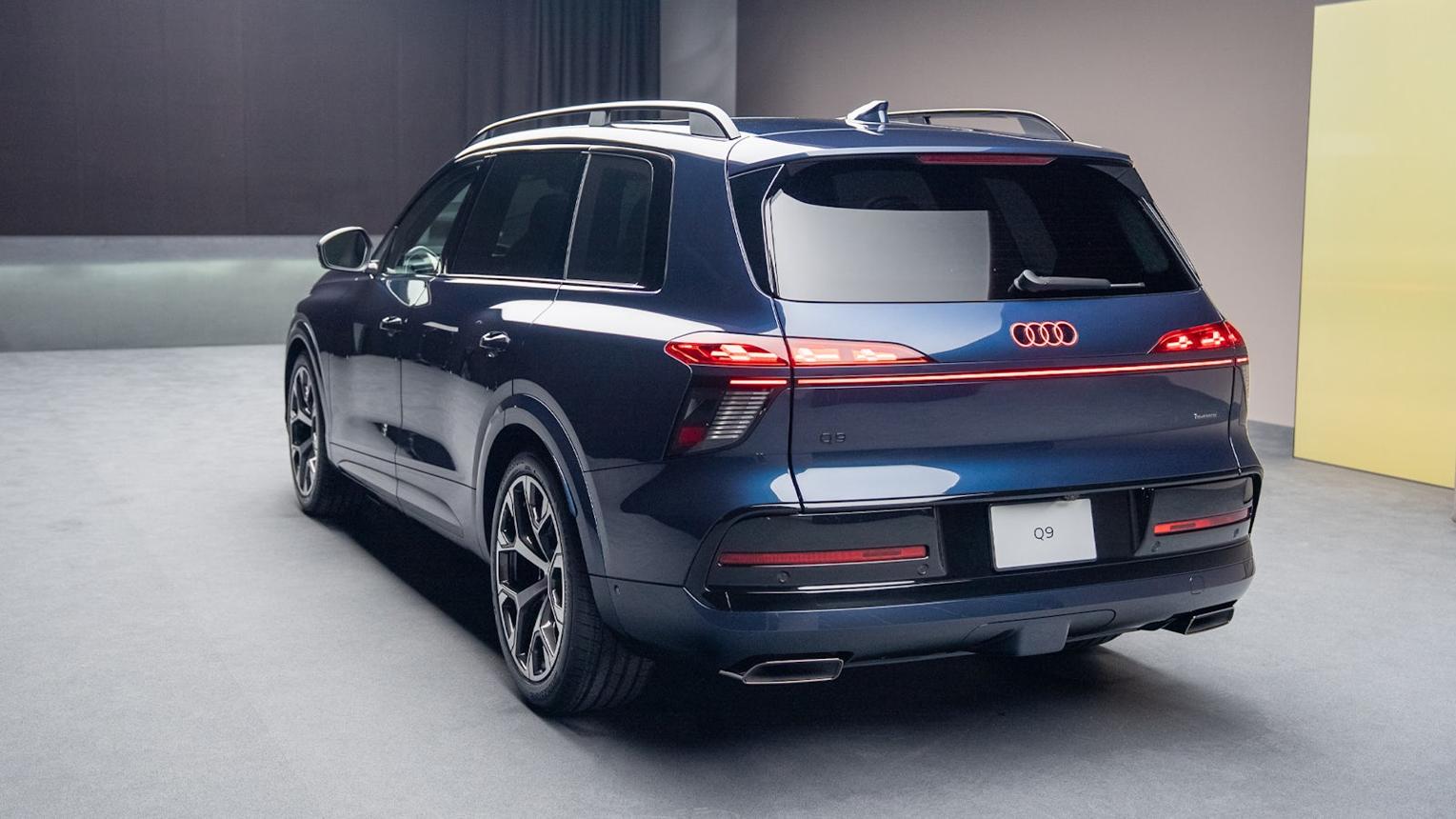
Audi’s Georgia factory plan promises $4 billion in investment and a new generation of American-built SUVs, but what will buyers actually gain?
By Nik J. Miles | October 25, 2026
Would you buy an American-built Audi?
For a manufacturer that has spent decades selling German luxury and engineering, that question would once have sounded rather peculiar. Yet Audi has announced plans for a $4 billion factory in Georgia, with space to manufacture as many as 200,000 vehicles annually.
It could become one of the company’s largest manufacturing operations anywhere in the world.
And the vehicles Audi wants to build there? Premium SUVs specifically intended for North America.
That immediately interests me, because Audi has always delivered plenty of things I admire: sophisticated lighting, serious performance and some genuinely clever technology.
Whether those qualities translate into the best vehicle for American family life is a different question.
Why the Audi Georgia Factory Matters
Look at where Audi’s German competitors manufacture their American-market SUVs.
BMW has an established production operation in South Carolina. Mercedes-Benz makes SUVs in Alabama. Both companies have spent years benefiting from manufacturing close to an important customer base.
Audi has been missing a comparable American assembly operation.
The proposed facility at the Middle Georgia Mega Site could change that. Audi expects construction to begin during 2027, with assembly operations starting in the early 2030s.
The intended scale is substantial: approximately 4,500 jobs and a manufacturing capacity of up to 200,000 vehicles annually.
There is an important distinction between capacity and production, however. A factory designed for 200,000 vehicles does not necessarily manufacture that many immediately, or even every year.
Volume depends on customer orders, production efficiency, model allocation and demand.
The broader importance of American automotive investment was already apparent when Test Miles examined the possibility of local Audi manufacturing in 2025.
The new announcement moves that discussion toward a specific site, investment amount and development timetable.
The Audi Q9 Makes This Particularly Interesting
My interest is less about the factory machinery than the vehicles that could eventually emerge from it.
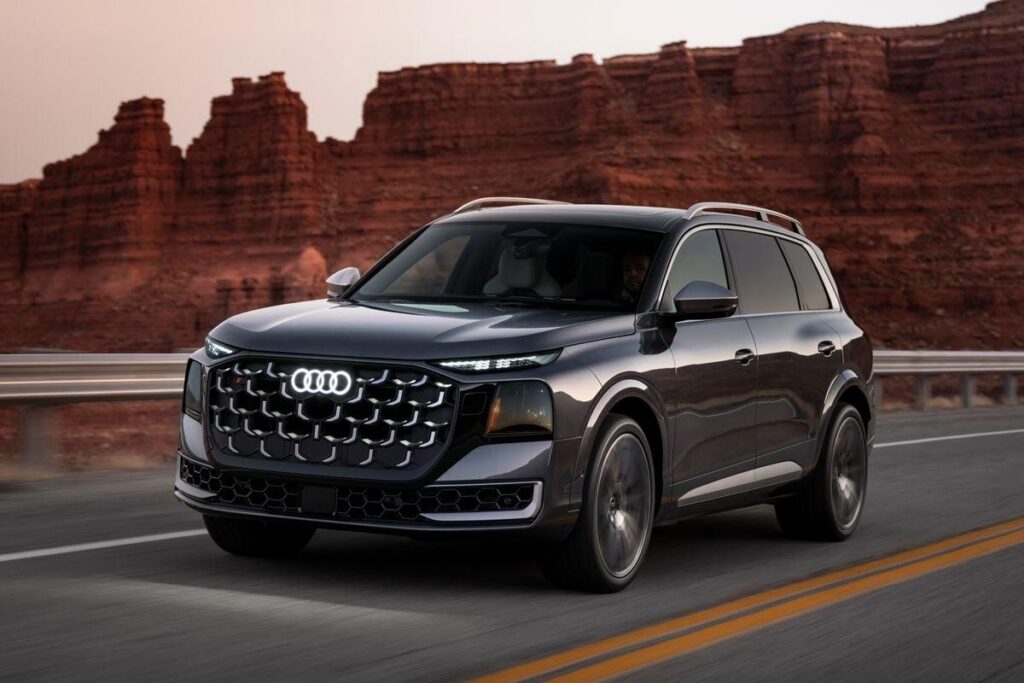
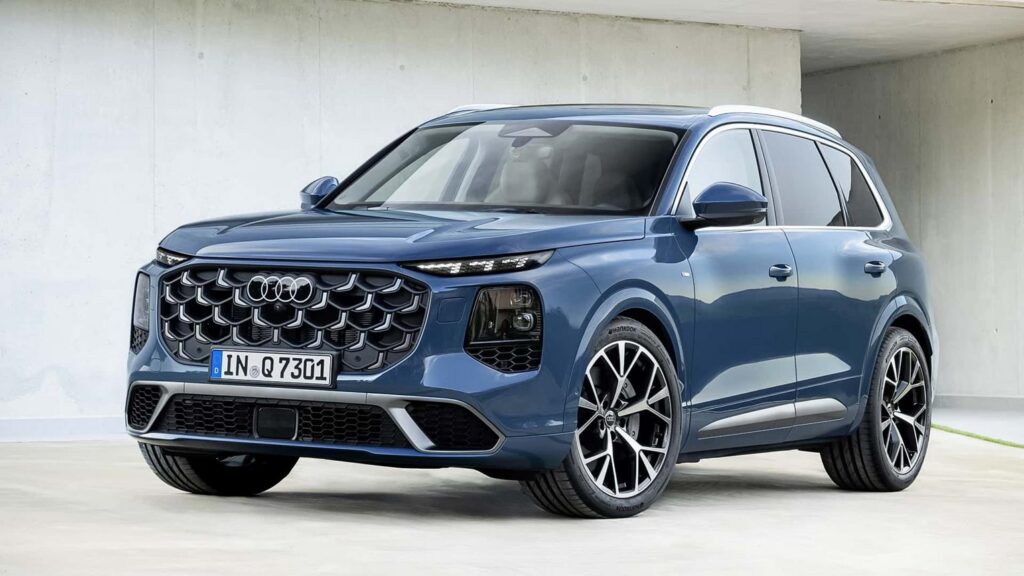
Audi’s SUV range includes the Q5, Q7 and Q8, while the newer Q9 takes the company further into the full-size luxury segment.
The Q9 is particularly relevant because its size and passenger configuration address a distinctly American demand for spacious family vehicles.
As we discussed in our 2027 Audi Q9 and SQ9 coverage, Audi has combined a seven-seat luxury format with technology and substantial performance.
That combination is attractive. But Audi has not confirmed that the Q9, Q7 or any other individually named vehicle will be assembled in Georgia.
The product announcement and the factory announcement remain separate pieces of news.
Six Dogs Make Luxury SUV Testing Rather Different
My household includes a German Shepherd, two Labradors, a Golden Retriever and two Beagles.
That tends to concentrate the mind when somebody tells me a vehicle is beautifully designed.
Of course it is. But can everyone get inside comfortably?
Can you load a large dog without an elaborate lifting operation? Is the cargo floor sensible? Will the upholstery survive the sort of muddy expedition that starts with a perfectly reasonable walk and ends with a Labrador discovering a swamp?
And can you clean everything without needing specialist restoration equipment?
These are genuine luxury-vehicle questions, at least in my world.
Our Audi Q5 dog-friendly SUV test explored precisely those everyday details, including cargo access, interior surfaces and the realities of travelling with dogs.
For drivers with similar requirements, the next American-focused Audi SUV needs more than another enormous touchscreen.
I would like to see generous usable cargo space, easy loading, durable finishes, comfortable rear seating and a genuinely intuitive cabin.
Those are preferences, not features Audi has promised for its Georgia-built vehicles.
What Audi Must Protect: Lighting, Technology and Performance
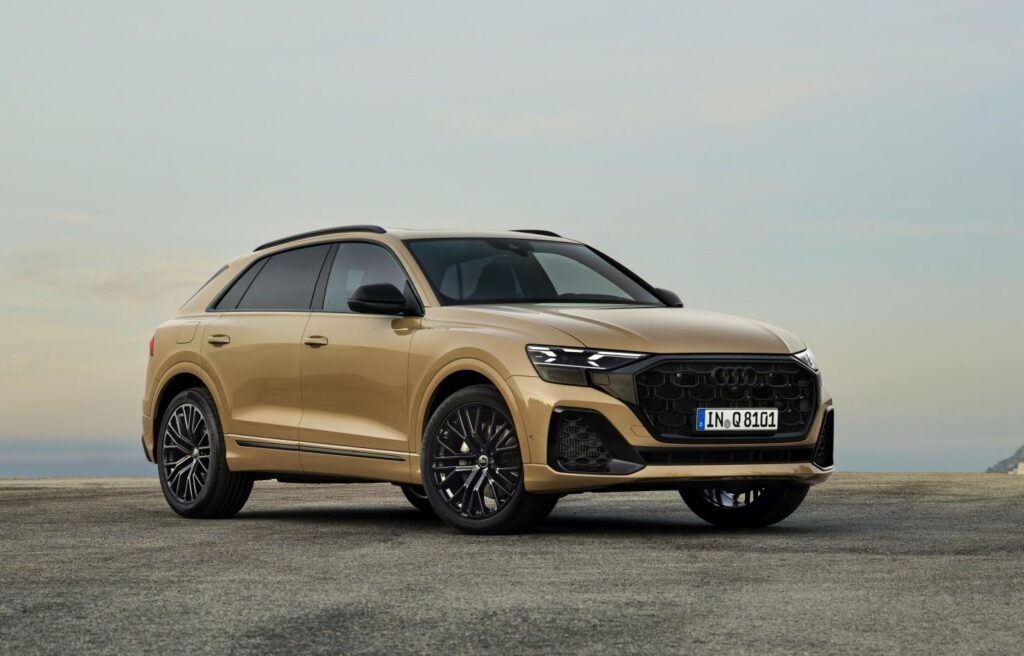
Audi already has an identity worth retaining.
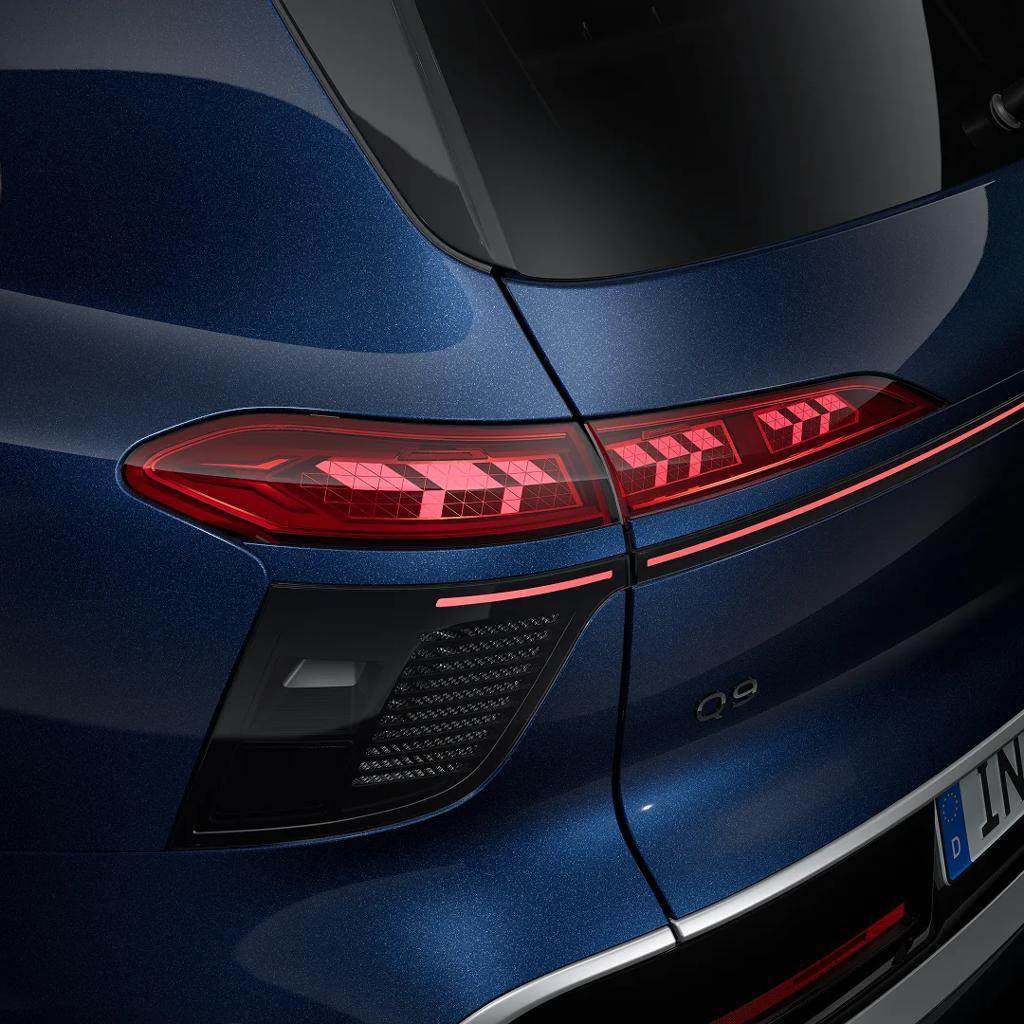
Its distinctive lighting technology has become an important part of the brand’s design language. Its performance models provide a different sort of appeal, combining acceleration, chassis engineering and all-weather capability.
Its interiors can be exceptionally sophisticated.
However, a clever feature only earns its place when it improves the experience of using the vehicle.
Lighting should help drivers see and be seen. An advanced display should make information easier to understand. Driver assistance should be assessed against actual capability rather than promotional language.
Buyers can examine independent NHTSA safety ratings and learn how the agency evaluates vehicle protection.
For the latest safety-technology developments, NHTSA’s 2027 testing announcement details its crashworthiness, pedestrian protection and driver-assistance assessment programs.
The luxury competition is getting stronger, too.
Our 2027 Mercedes-Benz GLE analysis explored how advanced displays and new digital architecture are changing what buyers expect from a modern premium SUV.
American Manufacturing Does Not Guarantee American Prices
Here is where I become slightly skeptical of the enthusiasm surrounding large factory announcements.
Building an Audi in Georgia could reduce certain transportation expenses and provide greater flexibility in sourcing and distribution.
But nobody should interpret the $4 billion investment as a promise that Audis will suddenly become affordable.
A large factory requires machinery, staff, utilities, components, logistics and substantial ongoing investment.
There is also the question of how much of each vehicle will actually be sourced domestically.
Local final assembly and predominantly American parts content are not the same thing.
The employment opportunity is significant, and the Bureau of Labor Statistics’ manufacturing employment research explains the range of engineering, production and technical occupations involved in modern industry.
For consumers, however, the eventual purchase price will matter more than the location of the factory entrance.
Gas, Hybrid or Electric? Audi Has Not Said
This may be the most intriguing unanswered question.
Audi has confirmed that the planned operation will focus on premium SUVs. It has not announced the full powertrain mix.
That matters enormously when the factory’s first vehicles are not expected until the early 2030s.
Electric vehicles offer significant efficiency advantages, as explained by the Department of Energy’s electric vehicle benefits guide.
But buyers face different practical circumstances. Some can charge conveniently at home, while others travel long distances or lack dependable charging access.
Gasoline and hybrid models present their own running-cost considerations, and the EPA’s fuel economy label guide provides a consistent way to compare efficiency estimates.
Audi’s challenge is to invest in production that remains relevant as those customer preferences change.
It is an expensive gamble, but one with potentially substantial rewards.
Should You Wait for an American-Built Audi?
For most buyers, I would say no.
If you need a vehicle in 2026 or 2027, waiting until the early 2030s for an unconfirmed model would be difficult to justify.
Evaluate the Audi vehicles available today against competitors on practicality, driving experience, equipment, pricing and ownership costs.
A closer look at Audi’s developing model range may help identify whether a particular upcoming vehicle deserves your attention.
If purchasing used, checking the vehicle’s history and any outstanding safety recalls remains worthwhile regardless of where it was assembled.
Affiliate shopping: If you are shopping for all-weather floor mats, Shop OEDRO directly or Shop OEDRO on Amazon. Use code NIKM20 at the OEDRO official store. Check current code terms and vehicle fitment before ordering. Test Miles may earn a commission from purchases made through these affiliate links.
My Take: Audi Has an Opportunity Worth Taking Seriously
I like much of what Audi represents. The performance appeals to me, the technology can be impressive, and its attention to lighting design remains distinctive.
But with six dogs in my family, I also know that the difference between a desirable SUV and a genuinely useful one can be found in the cargo area rather than the driver’s seat.
Audi has an opportunity to build vehicles that reflect both sides of that equation: sophisticated engineering and American practicality.
Four billion dollars will buy an enormous amount of industrial equipment.
It cannot guarantee the right product.
That is the part of Audi’s American experiment I will be watching most closely.