2026 Mazda CX-70 Review: Start With the Preferred
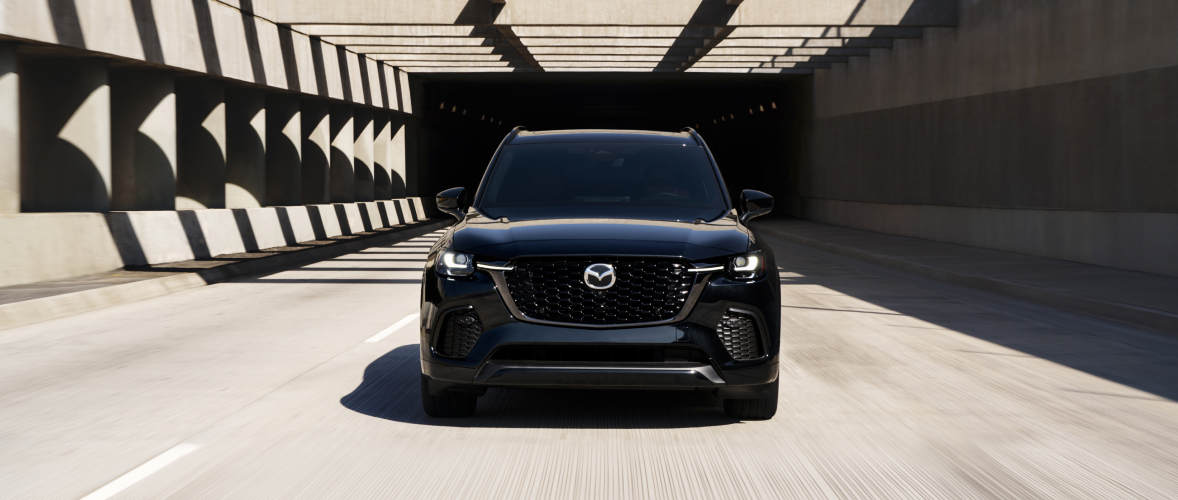
Our 2026 Mazda CX-70 review explains the inline-six driving character, generous cargo space, hybrid choices and the trims worth buying.
By Nik J. Miles
There is something slightly peculiar about the 2026 Mazda CX-70. It is essentially the size of a three-row SUV, has enough cargo room for a family holiday and offers the sort of six-cylinder engine increasingly difficult to find. Yet Mazda has deliberately given it only five seats.
Apparently somebody at Mazda decided the world had enough third rows occupied mostly by shopping bags and occasionally a slightly disgruntled teenager.
That decision makes the CX-70 interesting. Instead of trying to carry as many people as possible, Mazda has concentrated on luggage space, cabin quality and the sort of driving character normally associated with more expensive European SUVs.
For buyers who appreciate steering feedback and controlled handling, this is one of the CX-70’s strongest arguments. But its large dimensions, firm ride and occasionally awkward transmission responses mean it deserves a proper test drive before anyone signs a purchase agreement.
My recommendation is to start with the 3.3 Turbo Preferred at $42,750. The Turbo Premium deserves consideration if you need additional towing capability, more advanced assistance systems or its upgraded audio and displays.
The plug-in hybrid offers a completely different buying proposition, especially for households that can charge at home.
You may also enjoy this Video:
Why the Preferred Is the Sweet Spot
Mazda has made the entry-level CX-70 considerably more appealing for 2026.
The Turbo Preferred now includes ventilated front seats, heated rear seats and a heated steering wheel. That is equipment normally associated with more expensive configurations.
Leather upholstery, power-adjustable front seats, driver memory settings, a power sunroof and a power liftgate are also included.
The Preferred uses the 280-horsepower version of Mazda’s 3.3-liter turbocharged inline-six engine, paired with an eight-speed automatic and standard all-wheel drive.
Most buyers do not need to spend another ten thousand dollars simply to gain 60 additional horsepower.
The standard engine already provides useful acceleration, particularly during highway merging and overtaking.
The Turbo Premium, starting at $46,780, is the trim I would examine next. Its upgrades include a head-up display, a 12.3-inch digital instrument cluster, Bose audio and additional driver-assistance equipment.
It also increases the maximum towing rating to 5,000 pounds when properly equipped with Mazda Genuine Towing Accessories.
Higher trims introduce increasingly luxurious leather and interior finishes, but they do not fundamentally change the amount of passenger or cargo space.
That matters when you’re spending your own money.
Pros
- Strong standard turbocharged inline-six engine.
- Confident steering and unusually controlled handling for a large SUV.
- Excellent rear cargo versatility and useful concealed storage.
- Standard all-wheel drive across the lineup.
- Generous comfort equipment on the Preferred.
Cons
- Firm suspension, particularly with large wheels.
- Automatic transmission can be less smooth at low speeds.
- Large exterior dimensions without a third row.
- Some infotainment operations require learning Mazda’s rotary controller.
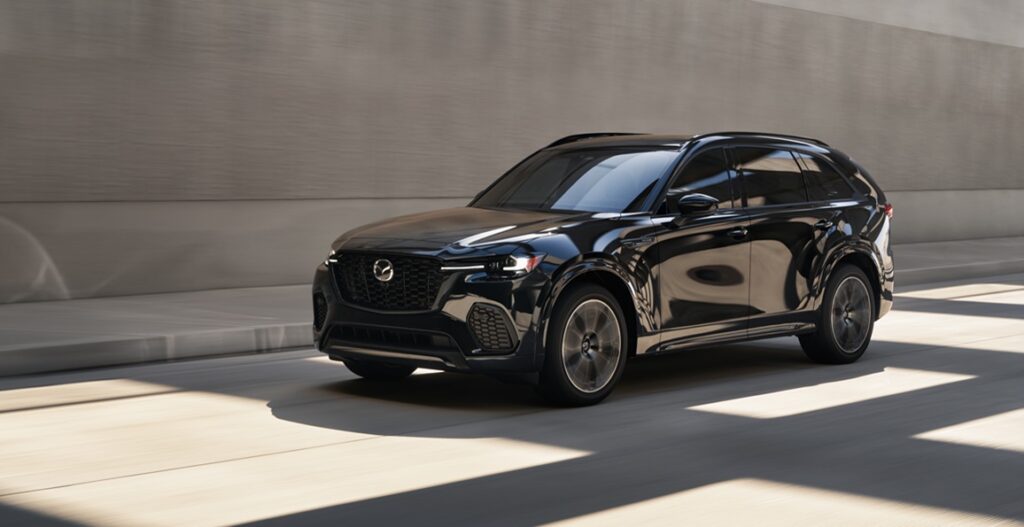
Driving Dynamics: A Large SUV That Still Wants to Be a Mazda
Most family SUVs are engineered to make the driver almost forget they are driving. Mazda takes a different approach with the CX-70.
The steering has a reassuring weight to it. Instead of the extremely light response common in many crossovers, the Mazda gives the driver a more deliberate connection to the front wheels.
That becomes especially valuable through a series of corners. The vehicle turns in with confidence and settles into bends without the excessive floating sensation that can make a tall SUV feel rather disconnected.
There is still body movement when cornering hard. Physics has not been persuaded to retire. But the suspension keeps that movement controlled enough to make the CX-70 feel more composed than its dimensions suggest.
The 3.3-liter turbocharged inline-six is an important part of the driving character.
Unlike the four-cylinder engines found in many similarly priced crossovers, the Mazda offers six-cylinder power delivery, with substantial strength available across the middle of the engine’s operating range.
That is useful in everyday driving. Joining a fast highway, accelerating past slower traffic or climbing a long grade with passengers aboard does not require the engine to be worked especially hard.
The standard 280-horsepower version has sufficient performance for most buyers. The 340-horsepower Turbo S provides stronger acceleration but is more difficult to justify strictly on practical grounds.
Braking response is another worthwhile part of the CX-70’s overall character. The pedal is designed to provide progressive, predictable stopping rather than an excessively sharp initial response.
The eight-speed automatic transmission is less consistently polished. Low-speed changes and some transitions between power delivery and gear selection can feel less smooth than expected.
It is not a reason to dismiss the CX-70, but buyers should make repeated low-speed accelerations, gentle stops and parking maneuvers part of their evaluation.
Ride comfort is the clearest compromise.
The suspension favors control over softness. On well-maintained roads, that creates a secure, planted sensation. Over damaged pavement, potholes and sharp surface changes, the same tuning allows firmer impacts to reach the cabin.
The large 21-inch wheels fitted to gasoline models are another factor. Their relatively low-profile tires leave less cushioning between the road and the passengers.
Highway behavior is generally settled, and the CX-70’s steering calibration gives it a stable, reassuring character at speed. Nevertheless, this is not the last word in luxury isolation, and both road noise and suspension impacts can become noticeable.
The CX-70 rewards drivers who enjoy being involved in the journey. Anybody looking for an exceptionally soft, floating ride may prefer something else.
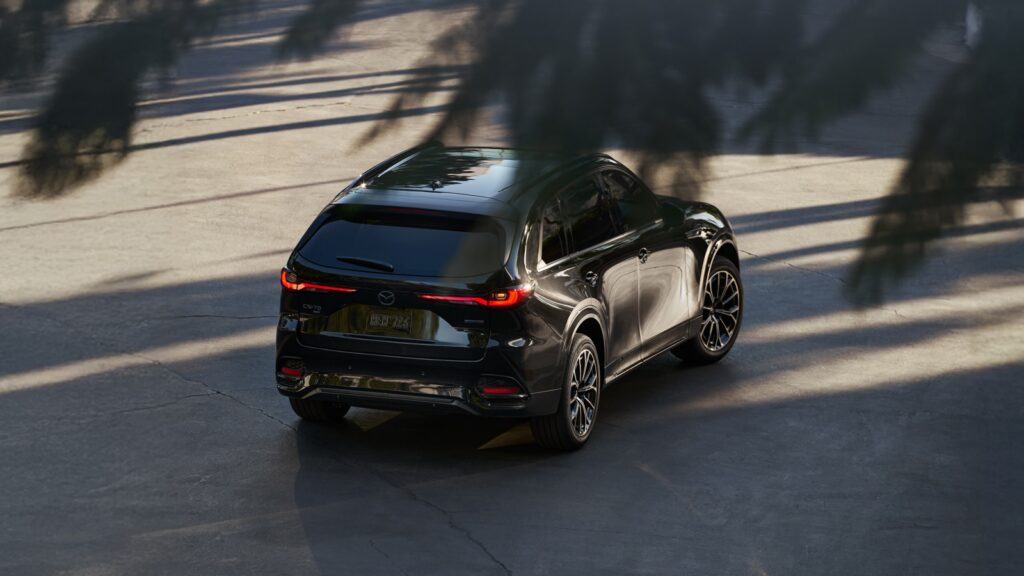
The Interior Feels More Expensive Than the Badge
Mazda has developed a recognizable approach to interior design. It uses relatively restrained dashboards, substantial-looking controls and materials that emphasize craftsmanship rather than decoration.
The CX-70 follows that formula.
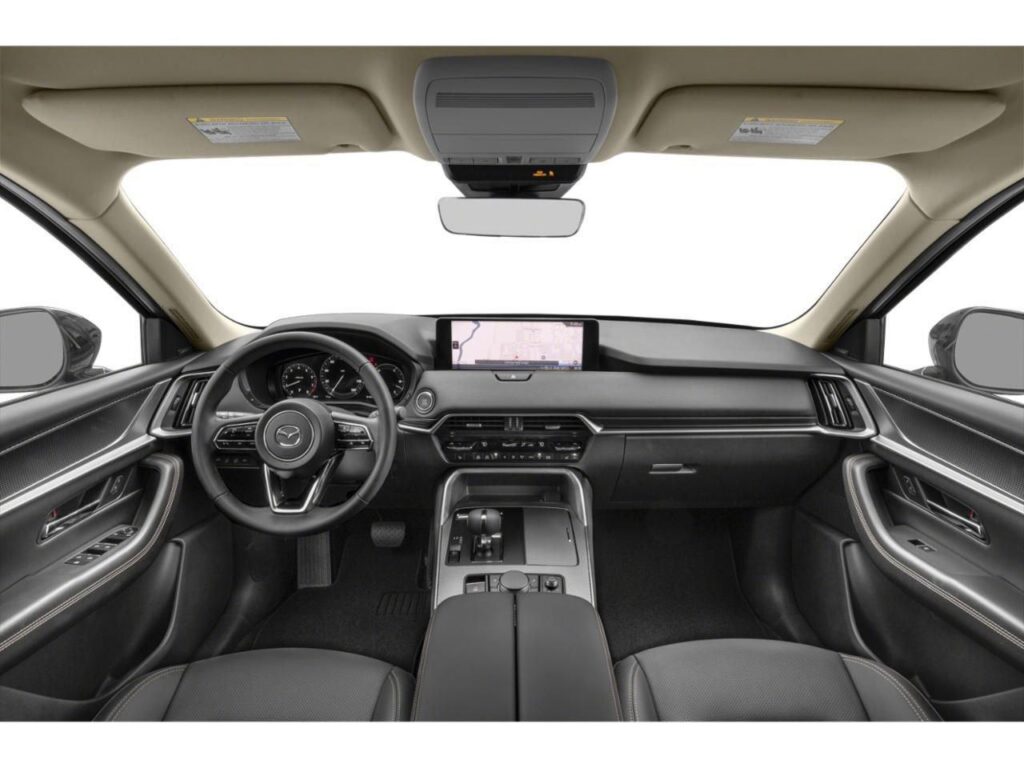
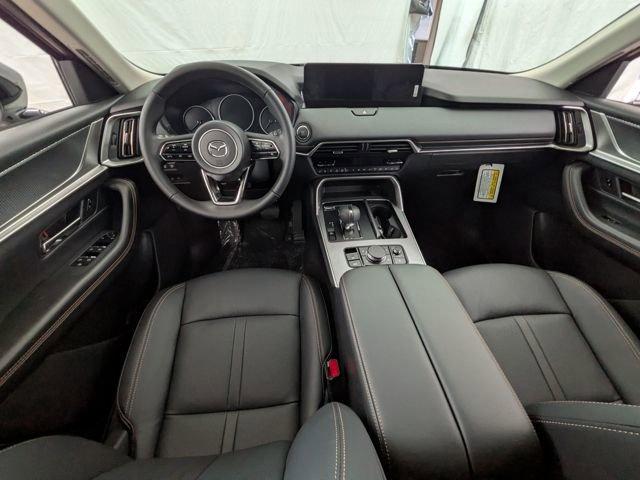
The dashboard has a clean horizontal layout, with a central display positioned high enough to glance at without looking too far away from the road.
Physical controls remain for important functions, including climate adjustment. Mazda also uses its familiar rotary infotainment controller.
That controller divides opinion. Drivers who become accustomed to it may appreciate being able to operate menus without reaching toward the screen. Others may find it unnecessarily complicated compared with a conventional touchscreen.
The front seats provide supportive cushioning and useful lateral support. Higher trims offer particularly attractive Nappa leather upholstery, with richer color combinations and more elaborate stitching.
There is considerable adjustment available for the driving position, although the wide center console can make the front compartment feel more enclosed than the exterior dimensions suggest.
The rear seat offers generous accommodation for two adults, with a usable center position for a third passenger.
Rear sunshades and rear-seat heating are valuable everyday details, especially for families making regular journeys with children.
There is no third row, which is precisely where the CX-70 becomes more interesting.
75.3 Cubic Feet of Cargo Room: What Does It Actually Mean?
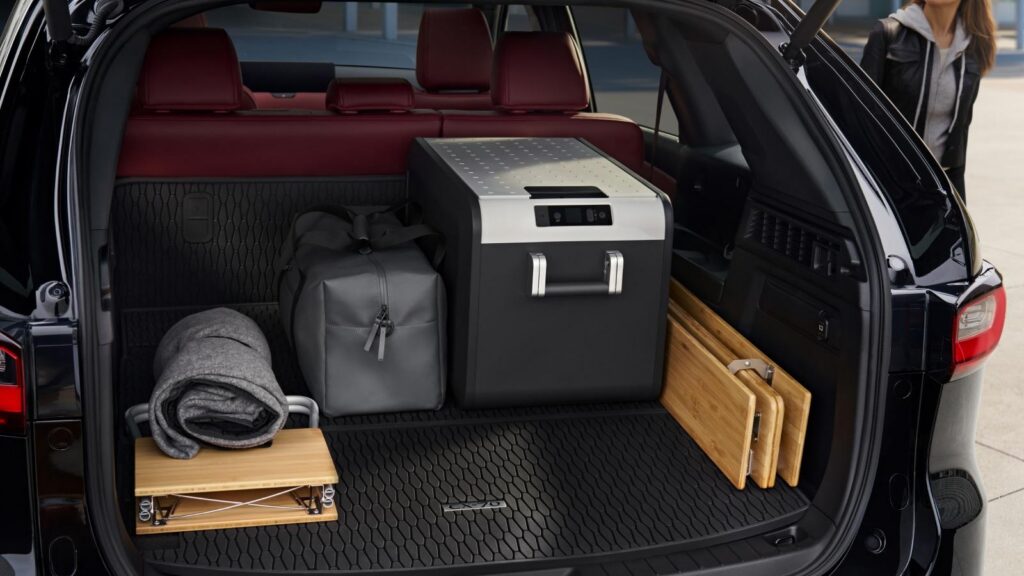
Mazda quotes up to 75.3 cubic feet of cargo capacity with the second row folded.
That is a useful amount of space, but the important details are the shape of the compartment and how easily owners can access it.
The CX-70 has a broad rear opening, remote-folding second-row seats and additional concealed storage beneath the load floor.
That arrangement is particularly useful for keeping smaller belongings separate from larger luggage.
For dog owners, the CX-70 makes an interesting case. There is no third row to fold out of the way, and the generous rear compartment can be configured around suitably secured crates, travel equipment and luggage.
Buyers should measure their actual dog crate before purchasing. Maximum cargo-volume figures do not establish the precise width or height available for a particular crate.
Anyone who travels with large dogs will also appreciate the value of secure, dedicated storage for leads, bowls, towels and cleaning supplies.
Those items may not appear glamorous in a vehicle brochure. Neither does trying to find a lead beneath four suitcases while a Labrador becomes increasingly convinced the journey has ended.
The CX-70 is more practical than a conventional luxury sedan, but its size should be considered carefully. It is more than 16 feet long, so owners with short garages or crowded parking areas should check the dimensions.
You may also enjoy: The 2026 Mazda CX-50 Delivers Luxury for Family Money.
Should You Choose the 2026 CX-70 Plug-In Hybrid?
The plug-in hybrid may be the most interesting version for buyers whose daily driving is relatively predictable.
Mazda combines a 2.5-liter gasoline engine with electric propulsion to produce up to 323 horsepower when using the recommended premium fuel.
For 2026, the U.S. specifications list an EPA-estimated 30 miles of electric driving range.
That means a driver with a short commute and access to regular charging could complete many daily journeys using electricity, although cold weather, speed and driving conditions will affect the actual distance.
Once the battery’s usable electric charge is depleted, the vehicle continues operating as a gasoline-electric hybrid.
The CX-70 PHEV can be charged from a conventional household outlet or a suitable Level 2 AC charger. Mazda estimates approximately 11 hours using the supplied Level 1 cable and around 2.5 hours with suitable Level 2 equipment for a full charge.
It does not support DC fast charging.
The PHEV SC starts at $44,450, while the better-equipped SC Plus starts at $47,450, before destination charges.
The SC Plus adds leather upholstery, heated and ventilated front seats, heated rear seats and a head-up display.
One difference worth checking is smartphone integration. The PHEV SC uses wired Apple CarPlay and Android Auto, while the gasoline Preferred offers wireless integration.
The plug-in hybrid is not automatically the cheapest choice over several years. Its financial advantage depends on how often it is charged, local electricity prices and how many miles are completed using electric propulsion.
If you cannot charge at home or work, the gasoline inline-six may be the simpler recommendation.
For another Mazda plug-in hybrid ownership comparison, see Mazda CX-90 PHEV: The Payment and Charging Equation.
Safety and Technology That Matter
The gasoline-powered 2026 Mazda CX-70 carries an Insurance Institute for Highway Safety Top Safety Pick+ designation.
The independent evaluations include strong results in front and side crashworthiness testing.
Buyers should check the exact powertrain covered by the published ratings. The IIHS notes that some CX-70 crash-test results do not apply to the plug-in hybrid.
Standard driver-assistance equipment includes Smart Brake Support, blind-spot monitoring, Mazda Radar Cruise Control with Stop & Go, lane-keeping assistance and rear cross-traffic alert.
Additional technology on higher trims includes a 360-degree camera system, see-through camera views and Trailer Hitch View to assist with trailer alignment.
The latter is genuinely useful for owners who tow. Trying to position a hitch beneath a trailer without a useful camera view is one of those activities that tends to attract an audience just as things become embarrassing.
The larger digital instrument display and available head-up display also help keep important information within the driver’s natural line of sight.
Driver-assistance features remain assistance systems. They are not autonomous driving technology, and the driver remains responsible for steering, braking and monitoring the road.
Readers interested in Mazda’s safety engineering can also explore How Mazda Uses Real World Crash Data To Make Every New Vehicle Safer.
Is the CX-70 Better Than the CX-90?
This is the question Mazda buyers should answer before considering any other competitor.
The CX-70 and CX-90 share much of their basic engineering and nearly identical external dimensions.
The major distinction is seating.
The CX-70 has two rows and five seats. The CX-90 has three rows and can accommodate up to eight passengers, depending on configuration.
Remarkably, the CX-90 starts at $39,300, below the CX-70’s $42,750 entry price.
That does not mean the CX-90 represents a better equipment-for-equipment deal. The CX-70 Preferred has a generous standard feature package, and equipment differences should be compared carefully.
But it does mean that buyers considering a CX-70 should sit in a CX-90 before making a decision.
If extra seats would genuinely help your family, the CX-90 may be the more versatile purchase.
If you want cargo flexibility without folding or managing a third row, the CX-70 makes sense.
For families requiring a smaller vehicle, the CX-50 presents another alternative. It is easier to accommodate in tight parking spaces, costs less and offers an efficient conventional hybrid option.
The Genesis GV70 is worth considering for buyers seeking a premium badge and a more compact luxury-oriented experience, although it cannot match the CX-70’s overall cargo packaging.
There is no universally correct answer. What matters is how many people you carry, what you need to transport and how much vehicle you genuinely want to live with.
What I Would Buy
The 2026 Mazda CX-70 3.3 Turbo Preferred is the place to begin.
It provides the satisfying six-cylinder engine, standard all-wheel drive and a remarkably strong collection of comfort features without requiring a luxury-brand price.
The Turbo Premium is worthwhile for drivers who value the upgraded assistance technology, head-up display and increased towing capacity.
I would be more cautious about paying substantially more for a Turbo S unless the additional performance and premium interior equipment are high priorities.
The plug-in hybrid is particularly attractive for somebody who charges regularly and wants to complete short journeys on electricity.
The CX-70’s strongest argument is its combination of practical cargo capacity, premium-feeling materials and a driving character that remains recognizably Mazda.
Its biggest weakness is that it cannot fully escape the compromises associated with a large, relatively firmly suspended SUV. Ride quality and transmission refinement deserve examination before purchasing.
There is also the obvious CX-90 question. Mazda will happily sell you something almost exactly the same size with an extra row of seats.
If you have no intention of using that third row, the CX-70 is a very appealing choice. If you regularly need additional passengers, buy the CX-90 and stop pretending a luggage compartment can double as a school bus.
2026 Mazda CX-70 Frequently Asked Questions
Is the 2026 Mazda CX-70 a good family SUV?
Yes, particularly for families that need five seats and substantial cargo space. The second row is spacious, and its wide rear opening and concealed cargo storage are useful for luggage and equipment. Its large external dimensions and relatively firm ride are worth considering during a family test drive.
Does the 2026 Mazda CX-70 have a third row?
No. The CX-70 is a two-row, five-passenger SUV. Buyers who need a third row should consider the mechanically related Mazda CX-90. Both are approximately the same overall length, but the CX-90 allocates part of the cabin to additional seating.
How much horsepower does the Mazda CX-70 have?
The standard 3.3-liter turbocharged inline-six produces 280 horsepower. The Turbo S increases output to 340 horsepower with recommended premium fuel. The plug-in hybrid produces up to 323 horsepower, also with recommended premium gasoline. All three versions use an eight-speed automatic transmission and standard all-wheel drive.
How far can the 2026 Mazda CX-70 PHEV drive on electricity?
The U.S. 2026 CX-70 PHEV has an EPA-estimated 30 miles of electric range. Actual distance depends on temperature, road speed, elevation, heating or air-conditioning use and driving style. Once the usable electric charge is depleted, the vehicle continues operating with its gasoline-electric powertrain.
How much can the 2026 Mazda CX-70 tow?
Properly equipped gasoline Turbo Premium and Turbo S models can tow up to 5,000 pounds with Mazda Genuine Towing Accessories. The plug-in hybrid is rated for up to 3,500 pounds. Owners should verify the vehicle’s exact towing and payload limits, trailer equipment and loaded weights before towing.
Should I buy the Mazda CX-70 Preferred or Premium?
Start with the Preferred if comfort and value are your main priorities. It already includes leather seats, ventilated front seats, a heated steering wheel and substantial technology. Choose the Premium if the additional driver-assistance features, Bose audio, head-up display or higher towing rating justify the approximately $4,000 difference in starting MSRP.