2027 Jeep Wrangler JL-2A: Is the Heritage Worth It?
By Robert R Guio
The 2027 Jeep Wrangler JL-2A pairs Rubicon hardware with 1945-inspired details, but its $4,995 package needs careful context.
The most interesting number attached to Jeep’s newest heritage Wrangler is not 1945. It is $115.
Jeep says the 2027 Jeep Wrangler JL-2A package costs $4,995, yet the special edition’s unique content is only $115 more than a comparably equipped Rubicon. That sounds like a bargain until you read the sentence precisely. Jeep is not saying the JL-2A is a $115 step up from a basic Rubicon. It is saying that once a Rubicon is equipped to a similar level, the extra cost attributed to the JL-2A treatment is $115.
That distinction is where this story becomes useful to a shopper. The JL-2A is a handsome piece of Jeep history, but the buying decision should be based on the complete vehicle price, the Rubicon hardware underneath it, and whether you actually value the special colors and interior. The supplied release does not provide a final as-built MSRP for each two-door and four-door configuration, and Jeep has not put a production JL-2A in our hands. So this is the point to separate what is confirmed from what still needs to be checked when order banks open in October 2026.
2027 Jeep Wrangler JL-2A price: read the fine print
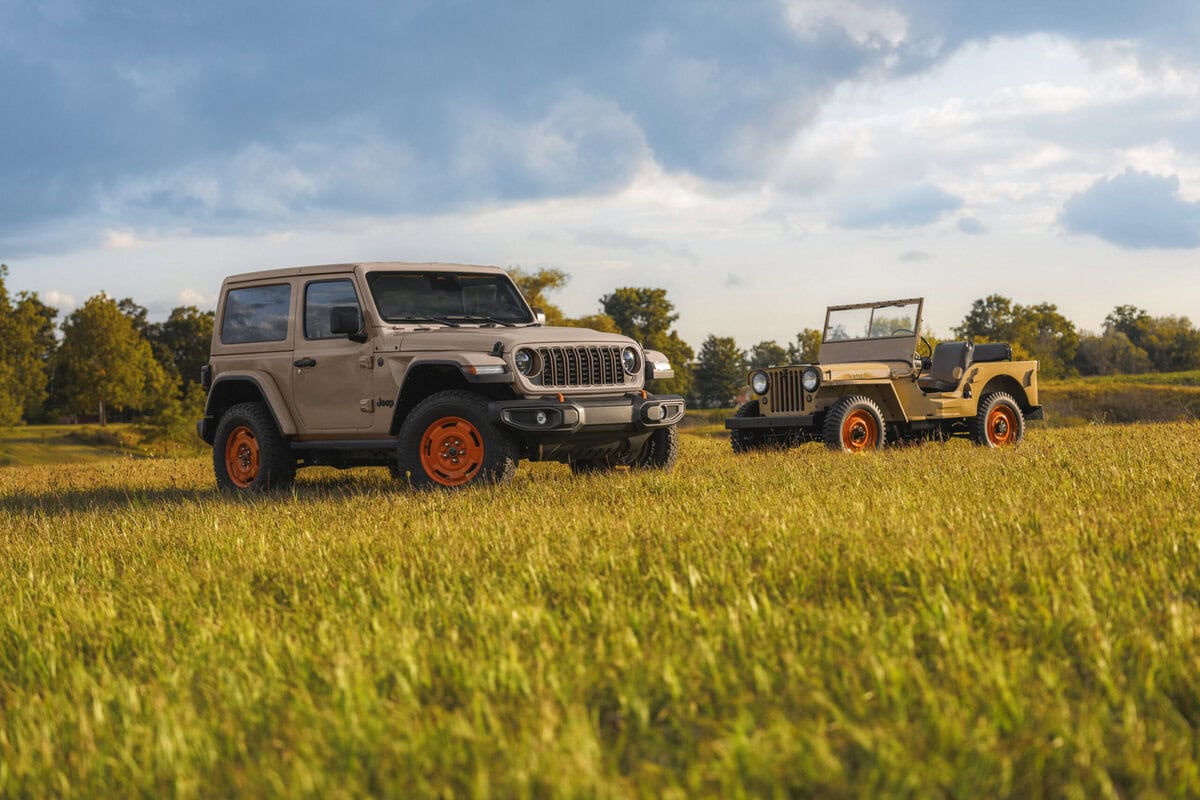
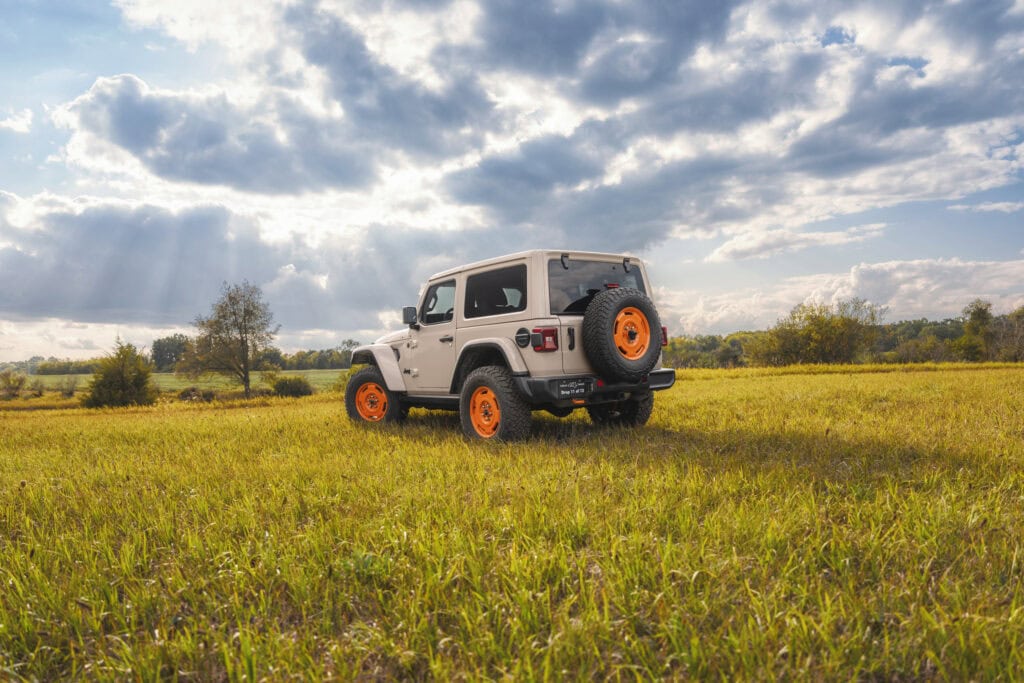
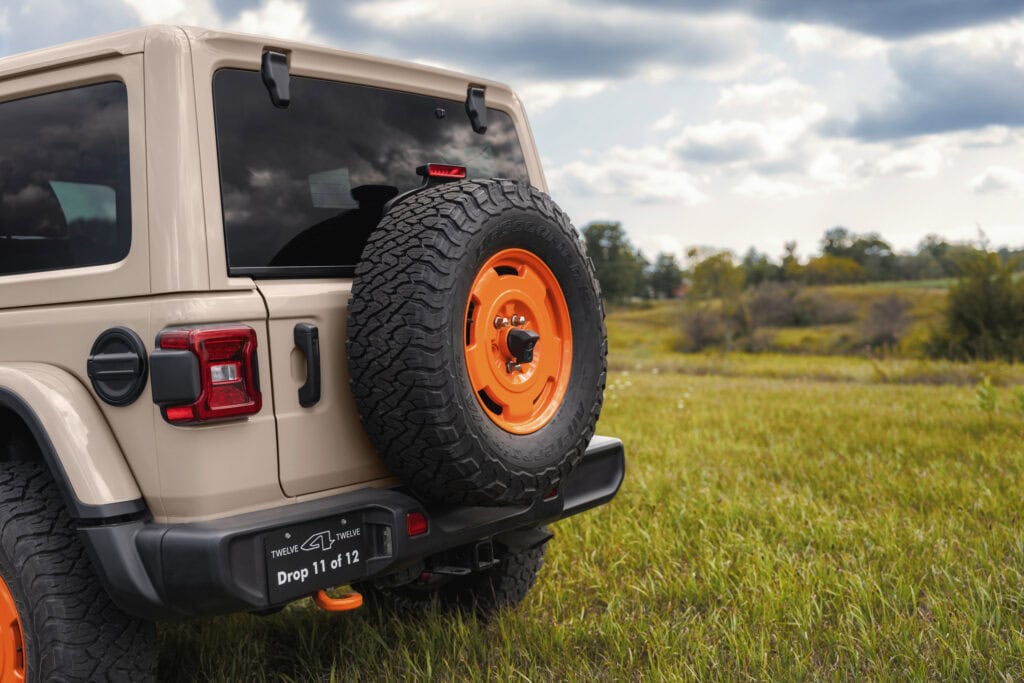
The $4,995 package includes the identity pieces that make this Wrangler different: retro 17-inch wheels painted Joose, orange tow hooks, Heritage Tan and Bison Brown cabin materials, Desert Orange stitching, heritage graphics, a special shifter medallion and a rear swing-gate plaque modeled on original CJ-2A data-plate artwork. Jeep also lists the Convenience Group and a front TrailCam with an integrated washer as standard JL-2A equipment.
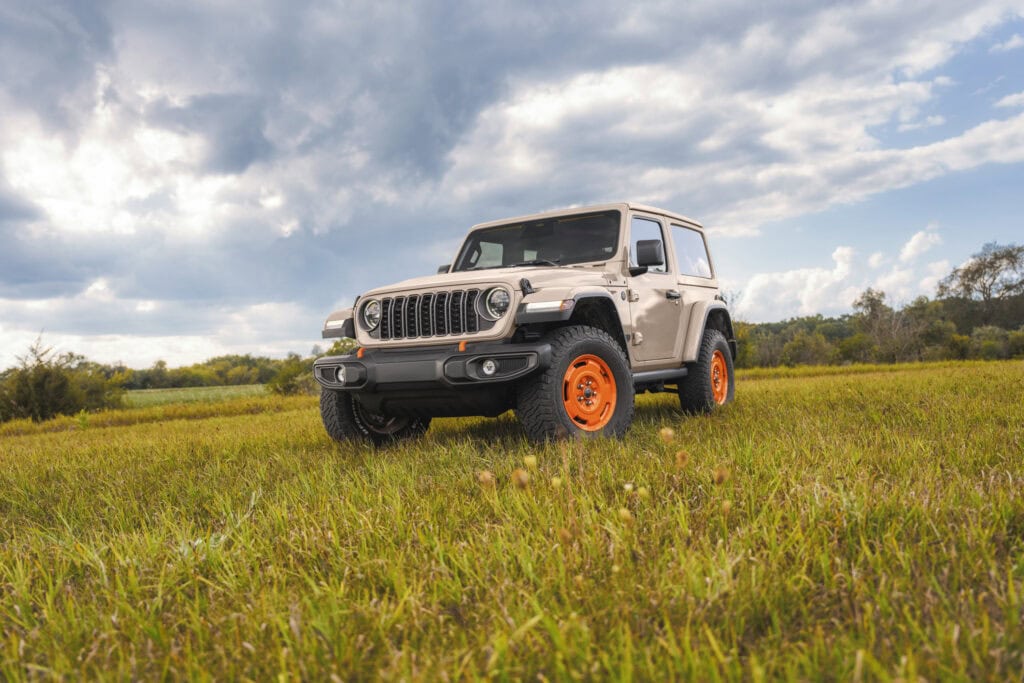
The company’s “$115 more” comparison can be meaningful, but only for somebody who was already planning to buy a Rubicon with similar equipment. If you had chosen a less expensive Wrangler and added your own wheels later, the relevant comparison is not $115. It is the final JL-2A window sticker versus the Wrangler you would actually have bought.
That is why I would not place an order based on the package number alone. Ask for the complete factory build sheet, destination charge, and dealer-installed items before discussing monthly payment. When the production vehicles arrive, the federal fuel-economy label will also provide standardized information about estimated fuel use and annual fuel cost; the EPA explains how to read that label. Until a 2027 label exists for the exact configuration, using an older Wrangler’s figures as a promise would be sloppy.
You may also enjoy: The Jeep Reset: How the Brand Is Rebuilding to Survive
The hardware matters more than the commemorative plaque
A heritage edition can become an expensive costume if the vehicle underneath it does not support the story. Jeep has avoided that problem by starting with a Rubicon. On the company’s current JL-2A product page, Jeep specifies electronic locking differentials front and rear, an electronic sway-bar disconnect, the Rock-Trac HD part-time four-wheel-drive system, and a 4.10 rear axle ratio. Those are functional off-road components, not anniversary jewelry.
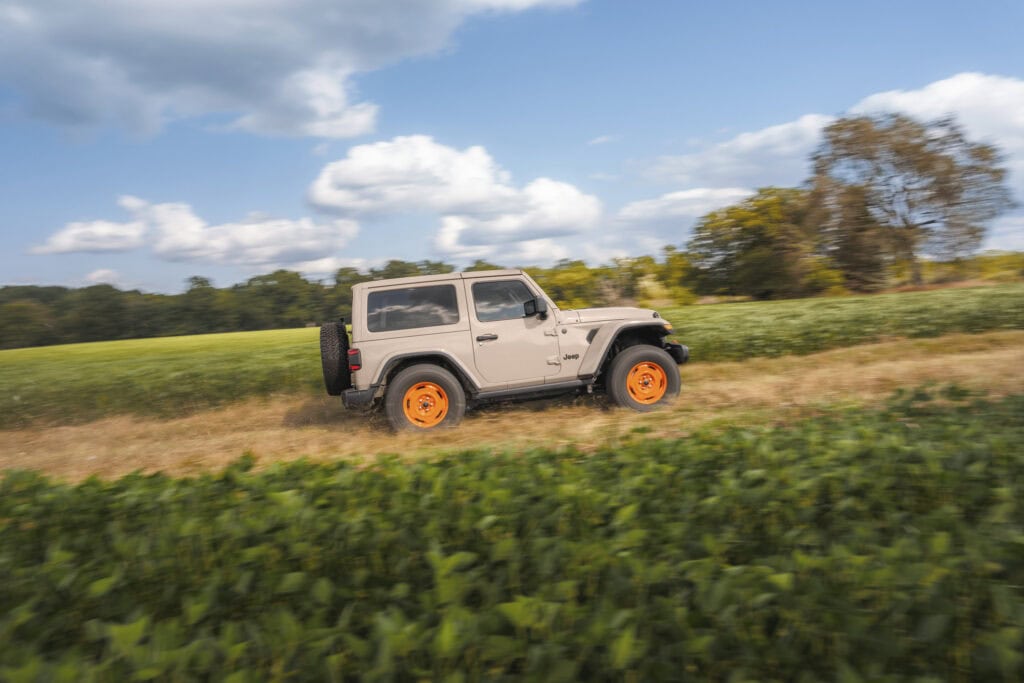
The standard 33-inch BFGoodrich KO2 all-terrain tires are another clue to the mission. They give the JL-2A the stance buyers expect from a Rubicon and are designed to work across pavement and loose surfaces. The tradeoff is worth understanding: the National Highway Traffic Safety Administration’s TireWise guidance stresses that tire type, condition, pressure, and loading all affect safety and performance. A tire chosen for mixed-terrain ability is not a reason to ignore ordinary road manners, wear, inflation, or stopping distance.
The front TrailCam is easier to appreciate in real life than on a spec sheet. A forward-facing camera can help the driver see the path immediately ahead when the hood blocks the view over an obstacle. The integrated washer matters because trail cameras have a habit of becoming mud cameras at precisely the moment you would like to use them.
Jeep calls the JL-2A Trail Rated, but that is a manufacturer designation. It should not be confused with an independent safety or durability rating. The useful takeaway is simpler: the special edition begins with hardware intended for off-road work rather than relying on visual cues alone.
You may also enjoy: Jeep Unveils Six Concepts at 60th Easter Jeep Safari in Moab
The 1945 references are unusually specific
The history is more convincing once you understand what the CJ-2A represented. The military Jeep became an icon because of the mobility demanded during World War II; the U.S. Army Transportation Museum documents the Jeep’s wartime transportation role. Willys-Overland then adapted the concept for civilian customers, introducing the CJ-2A in July 1945 with practical changes for farms, ranches, and industry.
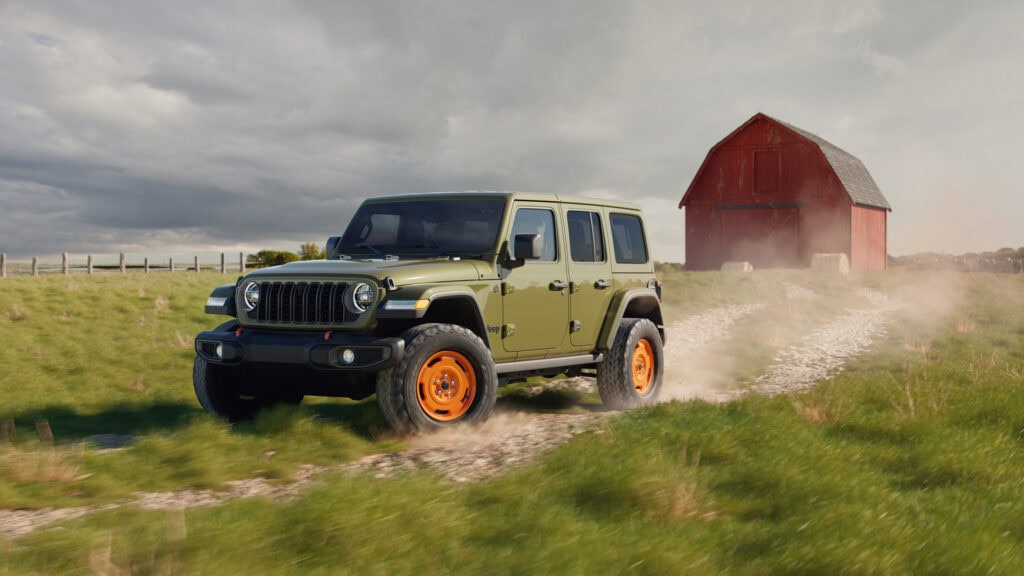
That is why the modern colors are not simply a retro mood board. The original CJ-2A was offered in combinations that included Harvest Tan with Sunset Red wheels. On the JL-2A, Gobi is the modern tan reference, while the orange Joose finish on the wheels recalls the warm wheel color of the postwar machine. Jeep also offers ’41, Bright White, Sting Gray, Ghost, and Joose, depending on configuration.
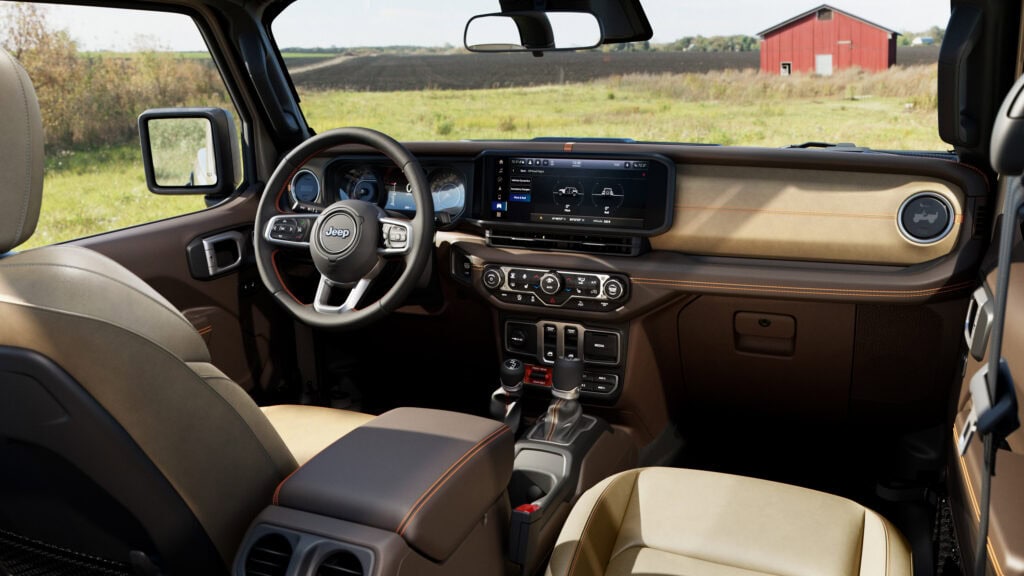
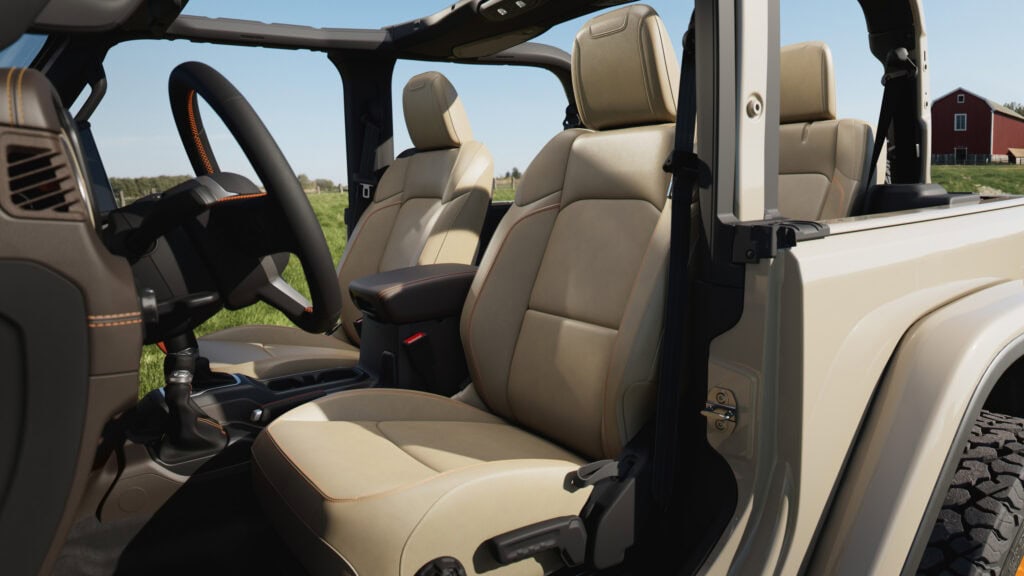
The cabin may be the strongest part of the tribute. Heritage Tan Nappa leather is paired with Bison Brown lower surfaces, then stitched in Desert Orange. The Willys-Overland shifter medallion and the vent graphics are small enough not to turn the dashboard into a museum gift shop. More importantly, the swing-gate plaque uses farm and factory scenes to point back to what the civilian Jeep was built to do.
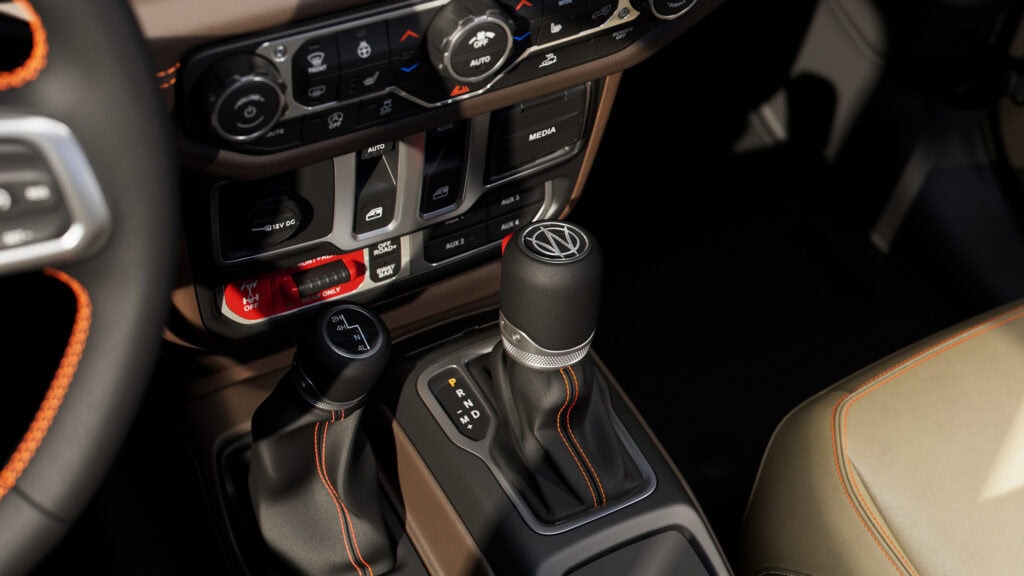
There is a useful design lesson here. A good heritage product does not merely reproduce an old color; it explains why the color and the object mattered. The CJ-2A was a working vehicle that helped move the Jeep formula into peacetime life. Putting those references on a capable Rubicon makes more sense than attaching them to a pavement-oriented appearance trim.
You may also enjoy: The Halo Car Didn’t Disappear. It Got Taller and Tougher.
Who should buy the JL-2A, and who should skip it?
The strongest candidate is already a Rubicon buyer. If you want the locking differentials, sway-bar disconnect, and trail-focused hardware, and you also like the historical colors, the JL-2A gives you a factory-integrated theme rather than a collection of aftermarket parts. For that person, the company’s $115 comparison with a similarly equipped Rubicon is relevant.
A second good candidate is the collector-minded owner who still intends to use the vehicle. Jeep’s own consumer page says quantities will be limited, although the press release does not state a production number. Limited availability may add desirability, but it should not be mistaken for guaranteed future value. Cars are not savings bonds with removable doors.
I would be more cautious if your Wrangler will spend almost all of its life commuting, if you do not need Rubicon hardware, or if you are attracted mainly by the tan-and-orange look. A lower trim can be the rational choice if the capability is surplus to your needs. I would also compare the JL-2A with other modern off-road SUVs rather than shopping entirely inside the Jeep showroom.
Ford’s Bronco is the obvious conceptual rival because it also mixes open-air appeal, off-road hardware, and frequent special editions. Toyota’s 4Runner approaches the problem differently, with a fixed-roof SUV format and its own long history of trail-oriented trims. Those vehicles are not direct copies of the Wrangler experience, but they help answer the important question: are you paying for the capability you will use, or the image you enjoy?
You may also enjoy: The Ford Bronco Filson Was Built For America’s Outdoor Boom
You may also enjoy: The 2025 Toyota 4Runner: A New Tank for Toyota
What Jeep still has to prove before delivery
Jeep’s official JL-2A page labels the vehicles shown as preproduction models and warns that production versions may vary. That is normal before launch, but it is a useful reminder not to treat photography as the final build sheet. The release also does not spell out every powertrain choice, complete vehicle MSRP by body style, final destination charge, or the exact standard and optional safety equipment for each production configuration.
Safety is another area where model-year precision matters. The Insurance Institute for Highway Safety’s 2026 Wrangler ratings apply to the tested 2026 configurations, not automatically to a 2027 JL-2A. IIHS lists an Acceptable combined small-overlap rating for the 2026 four-door, with Good ratings in its updated moderate-overlap and updated side evaluations; headlight performance varies by equipment. Those results are useful background, but shoppers should look for ratings that explicitly apply to the 2027 vehicle once testing and applicability are established.
Owners should also make recall checking part of routine vehicle ownership rather than waiting for social media to sound the alarm. NHTSA’s recall lookup allows a VIN or license plate to be checked for unrepaired safety recalls after a vehicle is built and registered in the system. That advice applies to any new vehicle, special edition or otherwise.
So where does the JL-2A land before we drive it? Better than many heritage packages, because the historical references are specific and the foundation is mechanically serious. The orange wheels are not pretending to create capability; the Rubicon hardware is already there. The interior does more than place an old logo on a seatback, and the original civilian Jeep provides a coherent reason for the colors and graphics.
But I would still wait for the complete price sheet before calling it a value. I would want to see a production example, confirm the powertrain and safety equipment on the exact order, and compare the final sticker against a Rubicon configured the way I would genuinely buy it. That is the difference between appreciating the story and paying for it intelligently.
The best version of the 2027 Jeep Wrangler JL-2A story is not that Jeep found another anniversary to monetize. It is that the brand has connected a modern trail machine to the moment its original vehicle became a civilian tool. If the production model arrives with the details shown, and the final pricing supports Jeep’s narrow $115 comparison, this is one heritage edition where the substance underneath the nostalgia deserves as much attention as the paint.