MINI Rally Team Makes Racing a Dealer Training Ground
By Robert R Guio
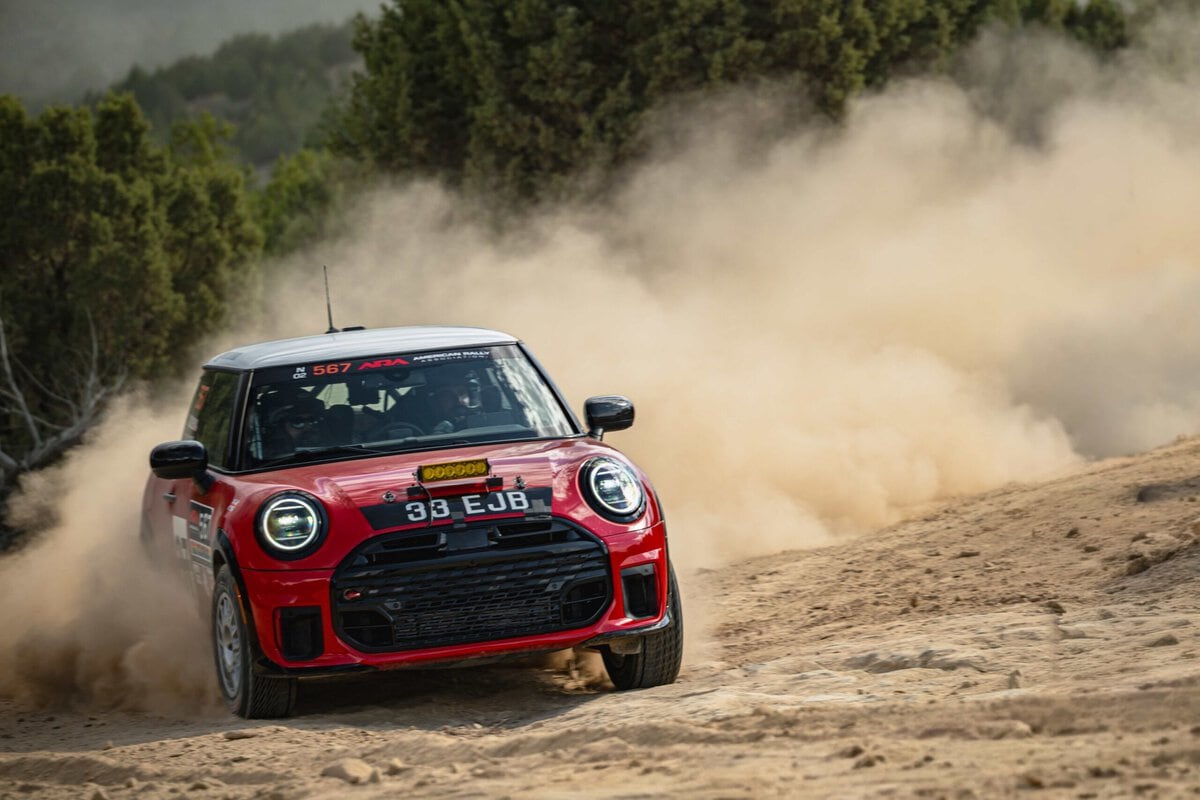
The MINI rally team is using two John Cooper Works cars and rotating dealer technicians to connect competition with real-world expertise.
MINI’s return to serious U.S. stage rallying is easy to understand if you stop at the obvious part. The company has a famous rally history, John Cooper Works remains its performance badge, and the American Rally Association gives MINI a national championship in which to put that story back on dirt.
But the more interesting part of the 2026 program is happening in the service area. MINI USA and LAP Motorsports are bringing selected technicians from the dealer network into the race team at certain events, giving four technicians at a time the chance to work alongside the professional crew. That turns a factory-backed motorsport effort into something closer to an operating laboratory for the people who eventually return to dealerships and work on customer vehicles.
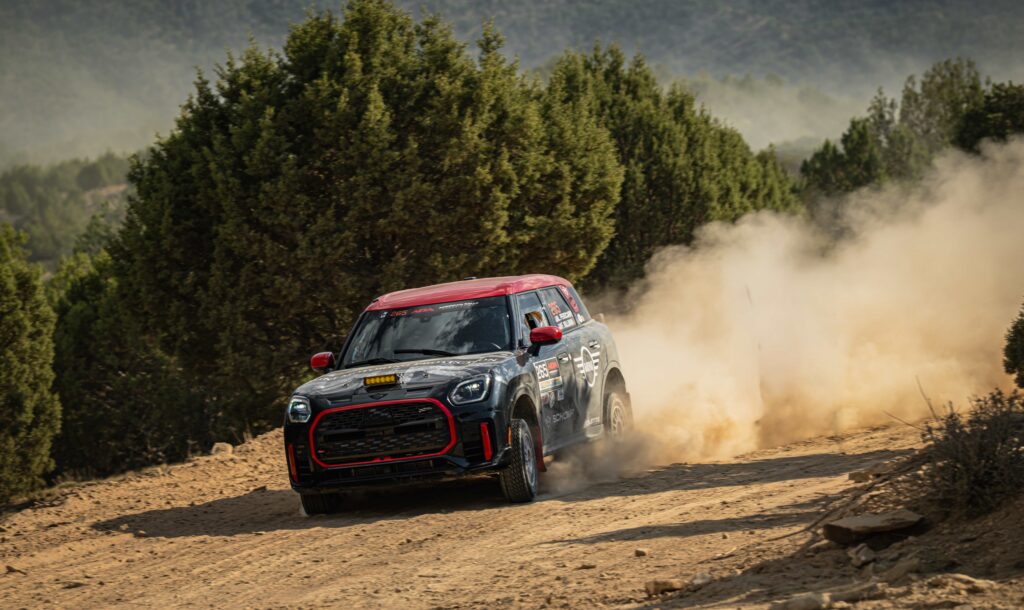
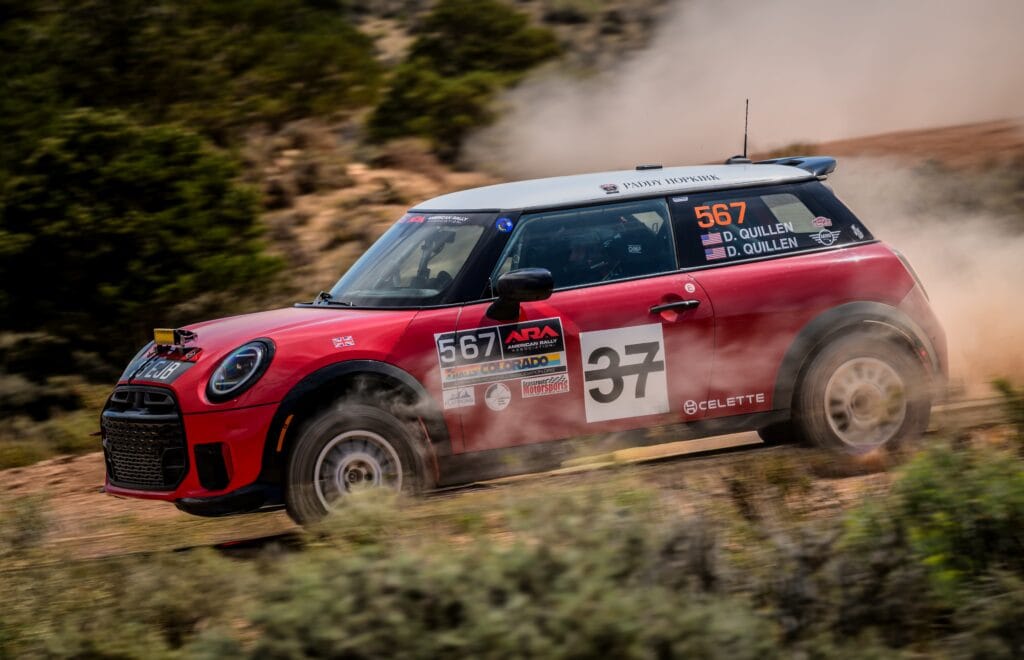
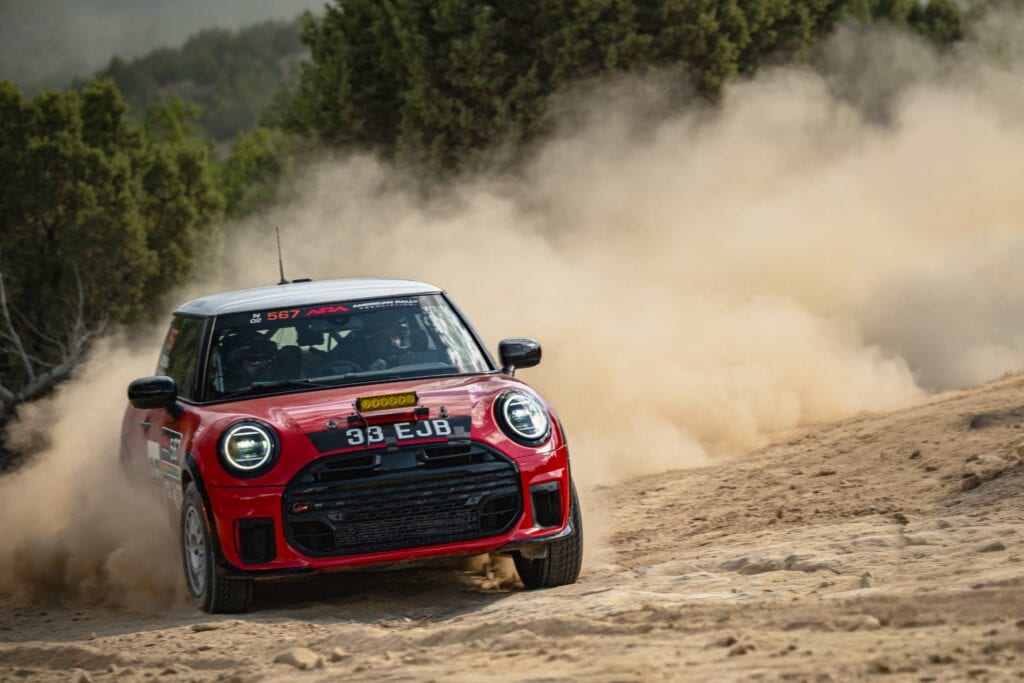
The Ojibwe Forest Rally in Minnesota, round six of the eight-event ARA National Championship, provided a particularly useful setting for that idea. MINI entered a John Cooper Works Countryman ALL4 in Limited 4 Wheel Drive and a John Cooper Works 2-Door in Open 2 Wheel Drive. The two cars represent very different ends of the modern MINI range, but both are being used to support the same claim: the character behind the John Cooper Works badge should survive outside a showroom and under genuine competitive stress.
Why the MINI rally team matters beyond trophies
Manufacturers have several reasons to race. Winning is the easiest to explain, but it is rarely the only one. Motorsport can support engineering development, train personnel, give a brand a credible performance story and create a place where customers can see road-car ideas pushed much harder than they would be in normal use.
MINI’s approach is especially interesting because the company is not limiting that experience to engineers and professional racing staff. Its dealer technician program brings the retail service network into the competition. According to MINI, four high-performing technicians can join the LAP Motorsports crew at selected races during the season.
That matters because dealership service work has become increasingly technical. A modern technician may be diagnosing software, electronic controls, complex drivetrains and networked vehicle systems in addition to traditional mechanical failures. A rally does not reproduce the daily environment of a dealership, and nobody should pretend that a weekend in a service park replaces formal technical training. What it can do is sharpen a different set of skills: working quickly, communicating clearly, identifying problems under time pressure and understanding how individual components behave after sustained punishment.
For MINI owners, that makes the program more relevant than a conventional heritage exercise. The people turning wrenches at the event are not all isolated racing specialists. Some are technicians who normally work inside the same dealer network customers rely on.
You may also enjoy: Mini JCW X Deus Ex Machina Collaboration Unveils Two Show Cars
Ojibwe exposes what a spec sheet cannot
The Ojibwe route is a useful reminder that rallying tests more than acceleration. MINI’s pre-event material described 143 competition miles around Bemidji, Minnesota, with fast and flowing stages where cars spend substantial time in higher gears. Those roads are mixed with narrow access sections containing large rocks and deep ruts.
That kind of variation places different demands on a car within the same event. High-speed sections reward stability, predictable braking and confidence. Rougher roads increase the punishment delivered to suspension components, wheels, tires, cooling systems and the underside of the vehicle. The route can therefore expose weaknesses that might remain hidden during a short track session or promotional drive.
The American Rally Association publishes its current rules and bulletins, while the event’s official Ojibwe page explains the rally’s dirt-and-sand surface and 143-mile competitive distance. For readers unfamiliar with the discipline, the FIA’s rally safety resources and its 2026 Rally Safety Guidelines show how much organization sits behind what can look, from the outside, like cars simply attacking forest roads at improbable speeds.
MINI says the relevant ARA categories permit relatively limited alteration from factory components after the necessary safety modifications. That does not make these showroom cars, and the press material does not provide enough technical detail to calculate exactly how closely each rally entry mirrors a customer vehicle. It does, however, make the choice of platform significant.
You may also enjoy: Why American Cars Keep Getting Bigger
The Countryman and 2-Door tell different stories
The John Cooper Works Countryman ALL4 is the obvious expression of what MINI has become. The Countryman has grown into a compact SUV with more passenger and cargo usefulness, all-wheel-drive capability and a footprint that would have seemed enormous next to the classic Mini. That growth reflects the market rather than nostalgia. Buyers increasingly want performance without giving up crossover practicality.
The John Cooper Works 2-Door is the counterpoint. Its compact dimensions and short wheelbase keep it much closer to the proportions that made the brand famous. MINI still talks about “go-kart” handling, a phrase that has been attached to the marque for years, but rallying gives the company a chance to attach a measurable cost to that slogan. If the car is going to be agile, it also has to survive the landings, ruts, braking loads and surface changes that come with stage competition.
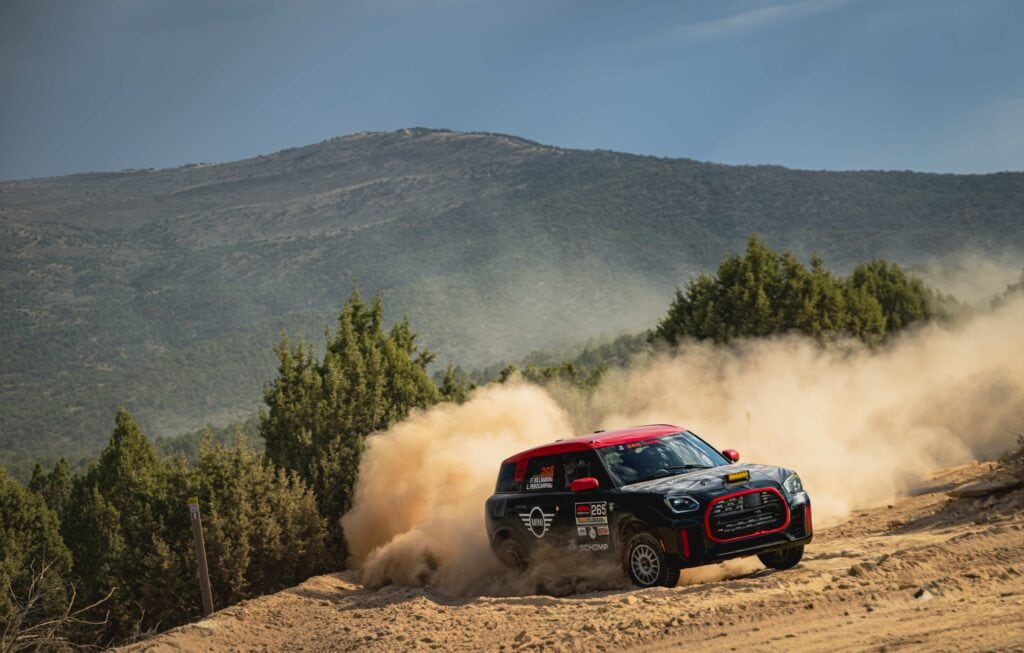
For the Minnesota round, David and Drew Quillen were listed in the 2-Door, while LAP Motorsports owner Luis Perocarpi and Carlos Schrunder were assigned to the Countryman ALL4. Before the event, Perocarpi said the cars had “consistently demonstrated their performance and toughness throughout the ARA season,” pointing to class podiums already earned during the year.
That history gives the program credibility without proving more than it should. A rally podium is evidence that a competition car and team performed well in that class on that weekend. It is not a warranty statement about every Countryman or Cooper on the road. Shoppers should be skeptical whenever racing is used as a shortcut to a consumer claim.
You may also enjoy: Exciting New Cars Under $30,000 This Summer
MINI’s rally heritage works because the origin story is real
Many brands use heritage because it is cheaper than creating a new identity. MINI has a stronger case. The classic Mini Cooper S scored Monte Carlo victories in 1964, 1965 and 1967. Its compact dimensions and agility allowed it to beat machinery with considerably more power. The story fits because the original Mini was not created as an exotic performance car. Alec Issigonis designed it around packaging efficiency, and John Cooper recognized that the same architecture could become a competition advantage.
That idea still matters to the modern brand. MINI’s current vehicles are larger, safer, more powerful and far more complicated, but the company continues to sell the notion that clever packaging and responsive handling are central to its identity.
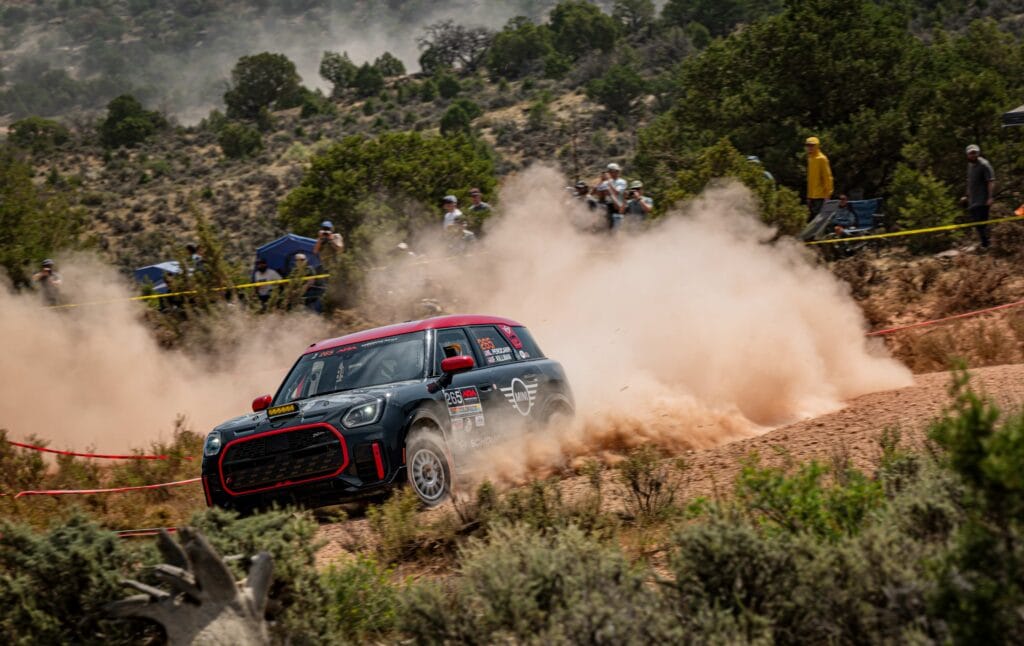
The 2026 ARA program also follows a long relationship with LAP Motorsports. MINI says the partnership dates to 2015 and has included IMSA ST, SRO and TC America competition before the team moved into rally. That history is more meaningful than a one-off factory entry because it shows a racing organization learning the brand over multiple seasons and disciplines.
Readers who want the broader regulatory context can explore the FIA regulations library, which collects sporting and technical regulations across international motorsport.
You may also enjoy: Why Americans Stopped Buying Convertibles
The buyer takeaway is not “race car equals road car”
The most useful way to interpret MINI’s rally program is to avoid the lazy conclusion. A customer Countryman ALL4 is not the same machine as a rally-prepared Countryman. A road-going John Cooper Works 2-Door is not being asked to spend a weekend clipping apexes between trees. Competition parts, safety requirements, tires, setup and maintenance make the environments fundamentally different.
What shoppers can reasonably take from the effort is narrower and more interesting. MINI is choosing to put two core John Cooper Works body styles into a national rally championship where durability and serviceability matter. It is also letting dealer technicians see the consequences of hard use from inside the team rather than from a presentation slide.
That second part could have longer-lasting value. Automakers are in a period when service quality is becoming as important as product quality. More electronics and software can make vehicles better, but they can also make diagnosis harder. Anything that improves communication between a manufacturer, its competition program and the people who service customer cars deserves attention.
There is still a question MINI should answer more fully: what, specifically, do participating technicians take back to their dealerships? The press release explains the opportunity but does not detail a formal curriculum, certification, required debrief or process for sharing lessons across the wider dealer network. If the program is primarily a reward for top technicians, that has value. If it becomes a structured knowledge-transfer exercise, it could be more significant.
You may also enjoy: 2026 BMW M2 CS Review: BMW’s Compact Weapon Just Got Sharper and Louder
MINI’s 2026 campaign connects parts of the company that are often separated: racing, retail service, performance branding and heritage. The John Cooper Works cars provide the visual hook, but the technician program is what gives the effort a practical dimension.
That makes this more than another manufacturer spending money to put logos on a competition car. The best motorsport programs create something that survives after the podium ceremony. They generate engineering knowledge, improve people and give the road-car organization a reason to pay attention.
MINI has not yet supplied enough evidence to say how much technical knowledge from the ARA season will reach ordinary owners, and that is worth watching. But bringing dealer technicians into the working crew is a credible first step because it puts real employees into a place where mistakes are visible, time is scarce and mechanical decisions matter immediately.
For the MINI rally team, that may be the strongest argument for being in the forest at all. The trophies can stay on a shelf. Experience can go back to work on Monday.