BMW’s American X5 Factory Is Training Humanoid Robots
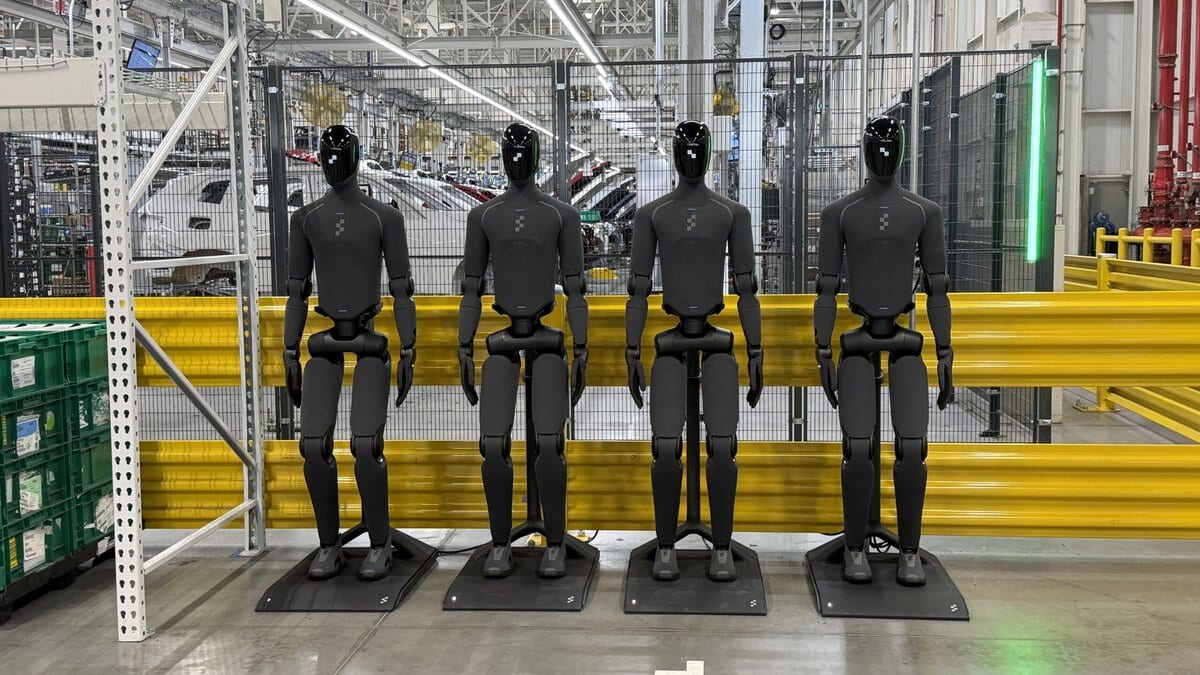
BMW’s South Carolina factory is using AI, humanoid robots and a new battery plant to build the X5 and move more production to America.
BMW’s New X5 Is Really a Factory Story
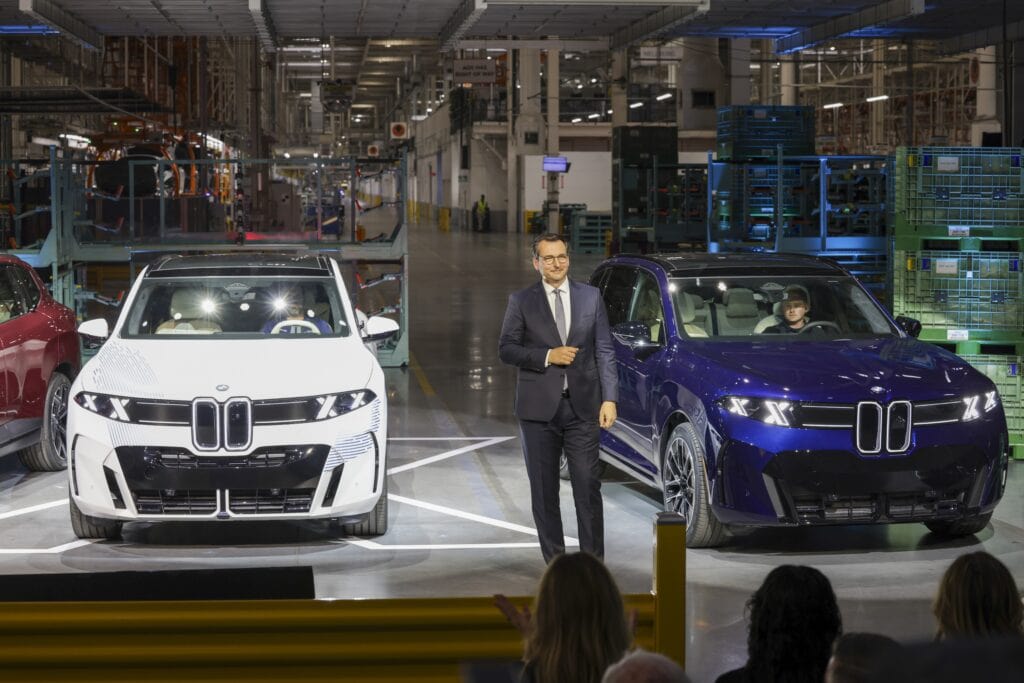
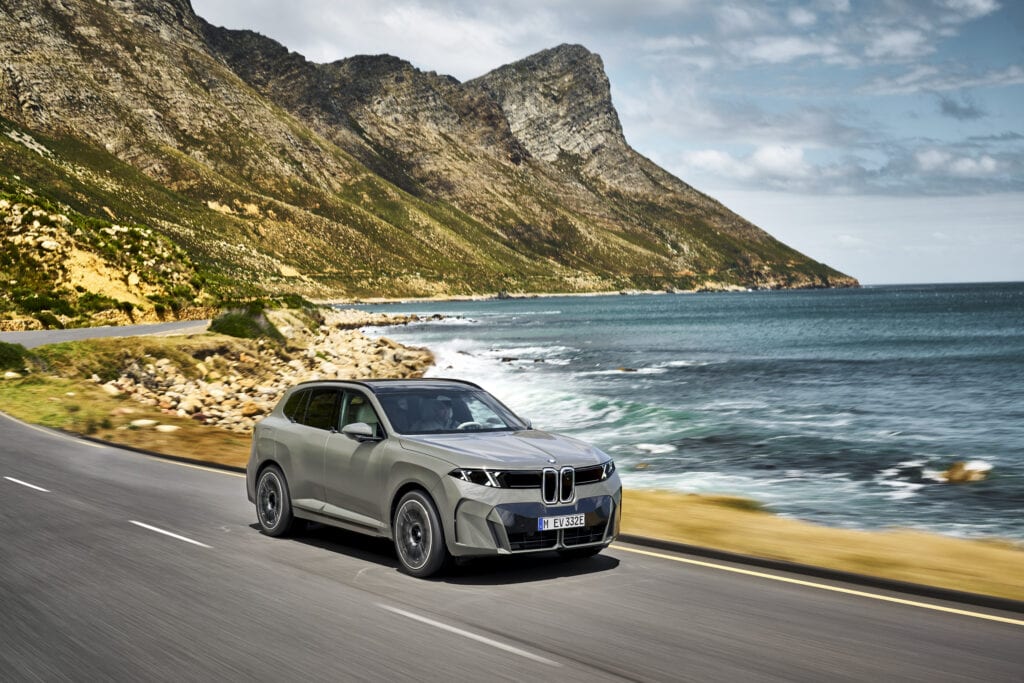
The new fifth-generation BMW X5 looks like another luxury SUV launch until you follow it through the doors of BMW Plant Spartanburg. Then the bigger story appears. This is not simply a redesign with fresh screens, sharper lights and another round of horsepower figures. It is a manufacturing strategy built around American production, artificial intelligence, battery assembly, humanoid robots and a vehicle designed to accept five different types of propulsion.
That combination makes the X5 unusually important. BMW is not asking one model to predict a single clean automotive future. It is preparing the same core SUV for gasoline, diesel in markets outside the United States, plug-in hybrid power, a full battery-electric system and hydrogen fuel-cell propulsion. That is a complicated answer to an industry that keeps demanding simple declarations, but real buyers rarely live according to a tidy corporate roadmap.
South Carolina Is Already the Home of BMW X Vehicles
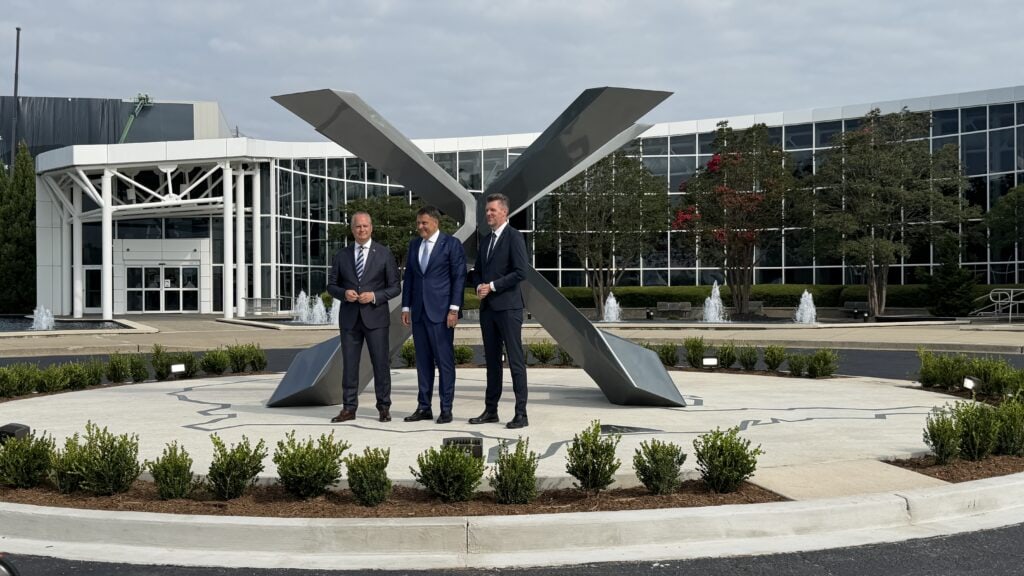
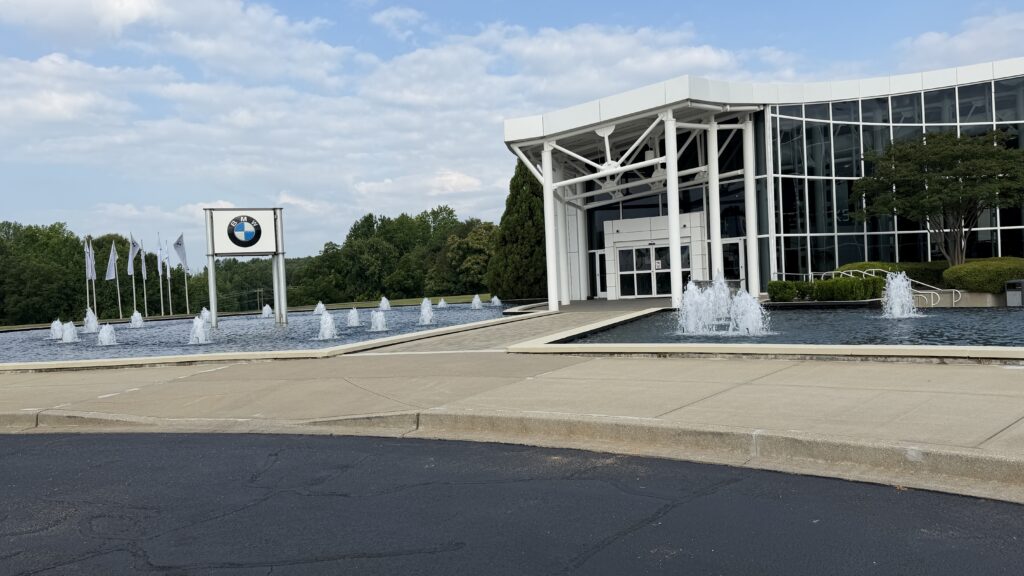
BMW now calls Spartanburg the “Home of X,” and the numbers give the phrase some substance. The plant assembled 412,799 BMW X models in 2025, the seventh year it passed the 400,000-vehicle mark. Since production began in 1994, more than 7.3 million BMW vehicles have been assembled in South Carolina.
Spartanburg is also BMW Group’s largest production facility in the world and the company’s global center of competence for X models. The X3, X4, X5, X6, X7 and XM have all been tied to the plant, giving this corner of South Carolina an unusual role in the luxury-vehicle business. A BMW SUV may wear a German badge, but a very large portion of the brand’s global SUV story begins on an American assembly line.
That matters because the plant is not merely supplying U.S. dealerships. BMW says approximately half of Spartanburg’s production is exported to nearly 120 countries. In 2025 alone, the plant exported nearly 200,000 BMW X models worth about $9 billion, helping BMW remain the largest automotive exporter from the United States by value.
The Export Story Changes the Usual Luxury-Car Assumption
The phrase “imported luxury SUV” no longer tells you where a vehicle was built. An X5 delivered in Europe, Asia or the Middle East may have started life in South Carolina, moved through the Port of Charleston and crossed an ocean before reaching its buyer. That makes Spartanburg both a domestic manufacturing operation and a global export engine.
This is also why the new X5 reveal carried more weight than a normal model introduction. BMW used the event to mark completion of a $1.7 billion investment in its South Carolina operations, including an expanded Spartanburg plant and the new Woodruff battery facility nearby. The company was not just showing a new vehicle. It was showing the industrial system intended to build several versions of that vehicle for customers around the world.
You may also enjoy: The New Auto Factories Rebuilding America
AI Is Leaving the Screen and Entering the Factory
Artificial intelligence in a car factory does not always look like a humanoid robot walking down an aisle. Much of it is less theatrical and arguably more useful. BMW says Plant Spartanburg uses artificial intelligence in manufacturing for visual and acoustic quality inspection, combining cameras and sensors with software that can provide immediate feedback to employees.
BMW also uses digital factory tools to simulate production areas and human movement before processes are finalized. That can help planners spot awkward reaches, inefficient steps or potential bottlenecks before thousands of vehicles move through the line. The useful version of factory AI is not a talking machine trying to impress visitors. It is software that removes friction, improves repeatability and helps people catch problems earlier.
Humanoid Robots Are Doing Real Work, Not a Stage Show
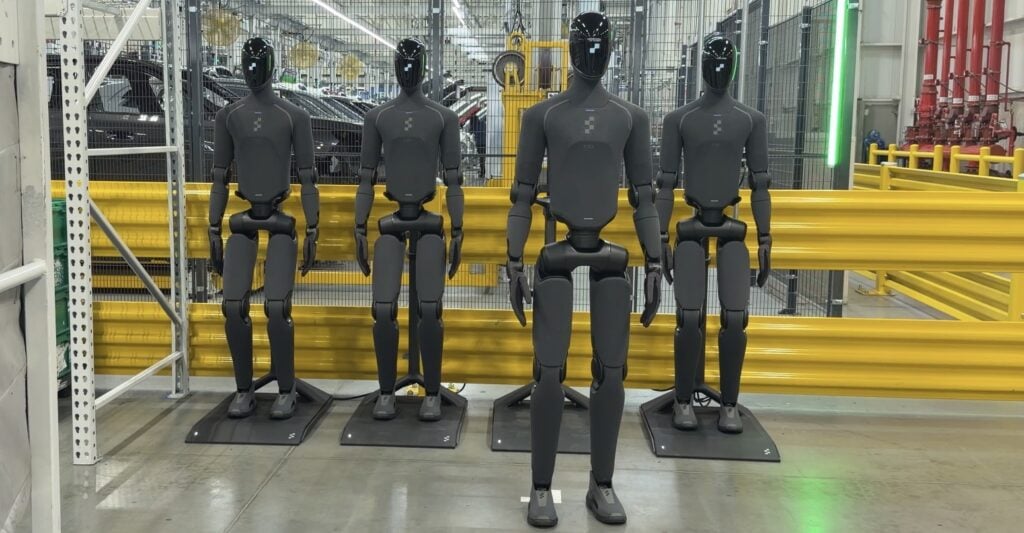
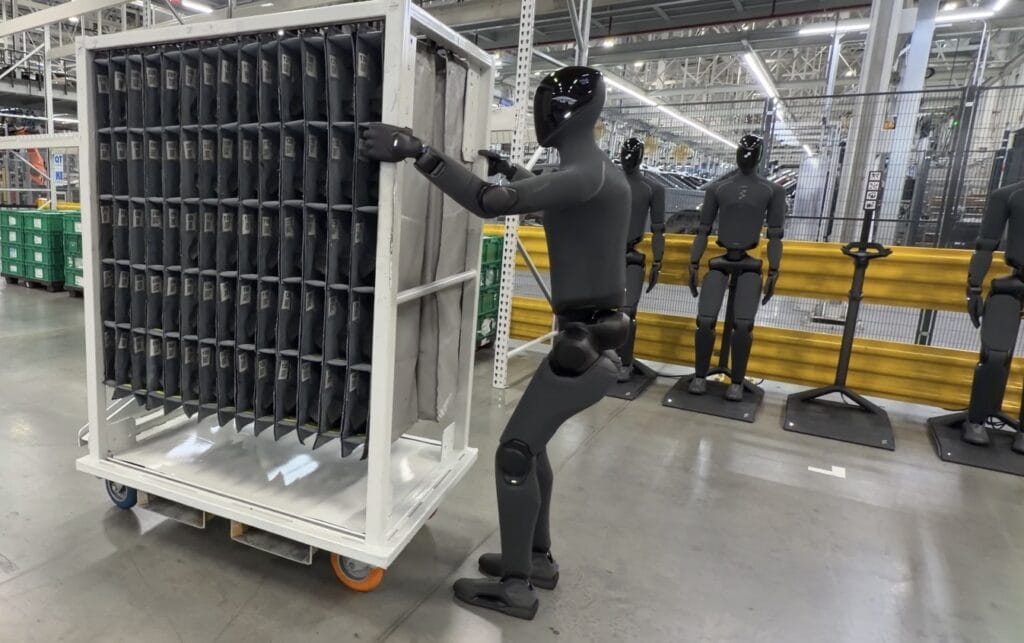
The humanoid robots are still the part most people will remember. BMW worked with Figure AI to deploy the Figure 02 robot, an example of what NIST describes as Physical AI for manufacturing robotics, at Spartanburg in real production conditions. According to BMW, the robot supported production of more than 30,000 BMW X3 vehicles over ten months by inserting sheet-metal parts for a welding process.
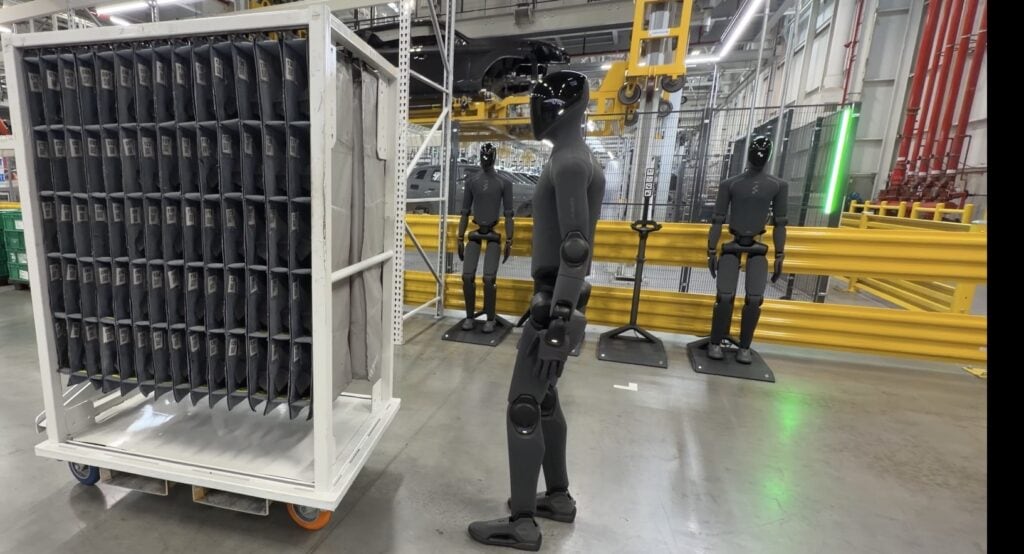
BMW is now moving to the newer Figure 03 robot for a logistics sequencing job. Components arrive in larger containers, and the robot is expected to pick and sort them into the correct order for delivery to assembly workers. This is less dramatic than a robot fitting an engine, but sequencing mistakes can stop a production line quickly. In a factory building many configurations, getting the correct part to the correct vehicle at the correct moment is serious work.
You may also enjoy: BMW’s Humanoid Robots Are Learning The Night Shift
The Best Case Is People and Robots Sharing the Load
BMW presents humanoid robotics as a complement to its workforce, particularly for monotonous, ergonomically difficult or safety-sensitive tasks. That distinction deserves scrutiny, because every major change in automation eventually affects the kind of work people do and the number of people required for certain jobs. It would be naïve to pretend otherwise.
What can be said is that the robots are working inside a real factory rather than a laboratory demonstration. They are being measured against production requirements, safety expectations and the unforgiving reality of a line that cannot pause for a machine having a thoughtful moment. AI becomes meaningful when it performs reliably while wearing safety shoes, not when it produces a good promotional video.
BMW’s iFACTORY Has to Manage Five Different X5s
The new X5 creates exactly the kind of complexity BMW’s iFACTORY strategy is designed to manage. A gasoline X5, a plug-in hybrid X5, a battery-electric iX5 and a hydrogen fuel-cell iX5 do not arrive at the line with identical components. They require different energy-storage systems, hardware, testing procedures, software and safety checks.
BMW says Spartanburg will become the first plant in its global network capable of assembling one vehicle with five drivetrain technologies on a single line. That is a striking claim because factories traditionally prefer repetition. Every variation introduces another opportunity for the wrong component, instruction or tool to appear at the wrong time.
Digital planning, automated logistics and AI-supported quality checks are how BMW intends to keep that complexity manageable. The business advantage is flexibility. If demand for one powertrain rises while another slows, BMW has more room to adjust production without building an entirely separate factory for every version.
You may also enjoy: Inside BMW’s Factory and What It Could Mean for America
Woodruff Makes the Electric X5 a South Carolina Product
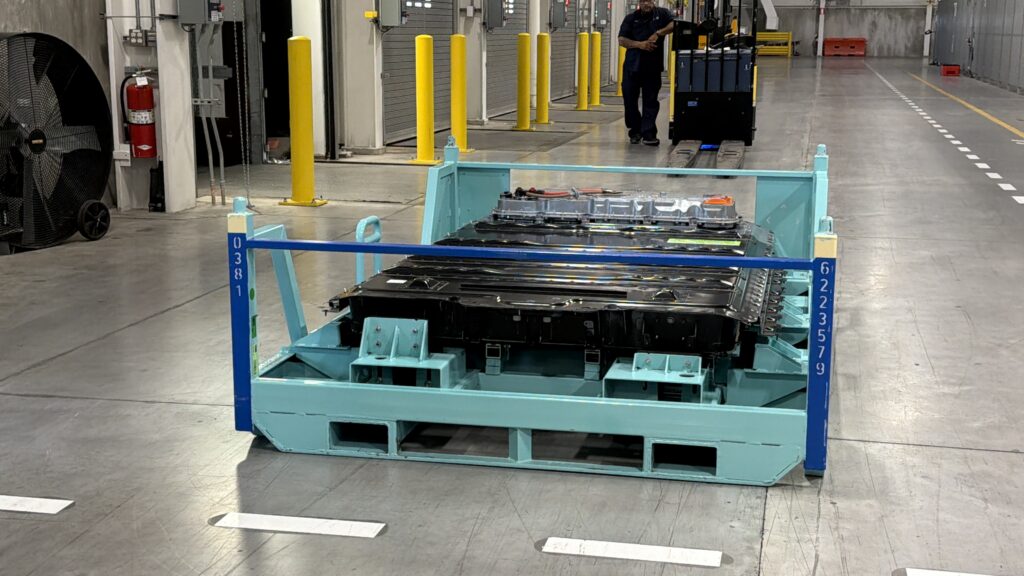
The battery side of the plan sits just down the road at BMW Plant Woodruff. The new facility is designed to assemble sixth-generation high-voltage battery packs for fully electric BMW vehicles built at Spartanburg. BMW says the two plants now operate as an integrated production network.
That gives the electric iX5 a distinctly American manufacturing story. BMW has confirmed that battery-electric iX5 production at Spartanburg begins in December 2026, making it the first fully electric BMW assembled in the United States. U.S. retail deliveries are expected after production starts, with the electric model joining the 2027 X5 lineup.
The X5 Is Becoming BMW’s Technology Sampler
For buyers, the five-powertrain plan is less about factory sophistication and more about choice. Gasoline remains familiar and convenient. A plug-in hybrid electric vehicle can cover many local trips electrically while keeping an engine for long-distance travel. The iX5 offers full electric driving, while diesel remains relevant in markets where it is still widely used.
The plan also protects BMW from having to pretend it knows exactly how quickly every market will change. Charging access is uneven. Fuel prices move. Regulations shift. Some owners can charge at home, while others park on the street or drive hundreds of miles in areas with limited infrastructure. One answer will not fit all of them.
You may also enjoy: New 2027 BMW X5 Features That Actually Matter
Inside the New X5, Software Has to Reduce Work
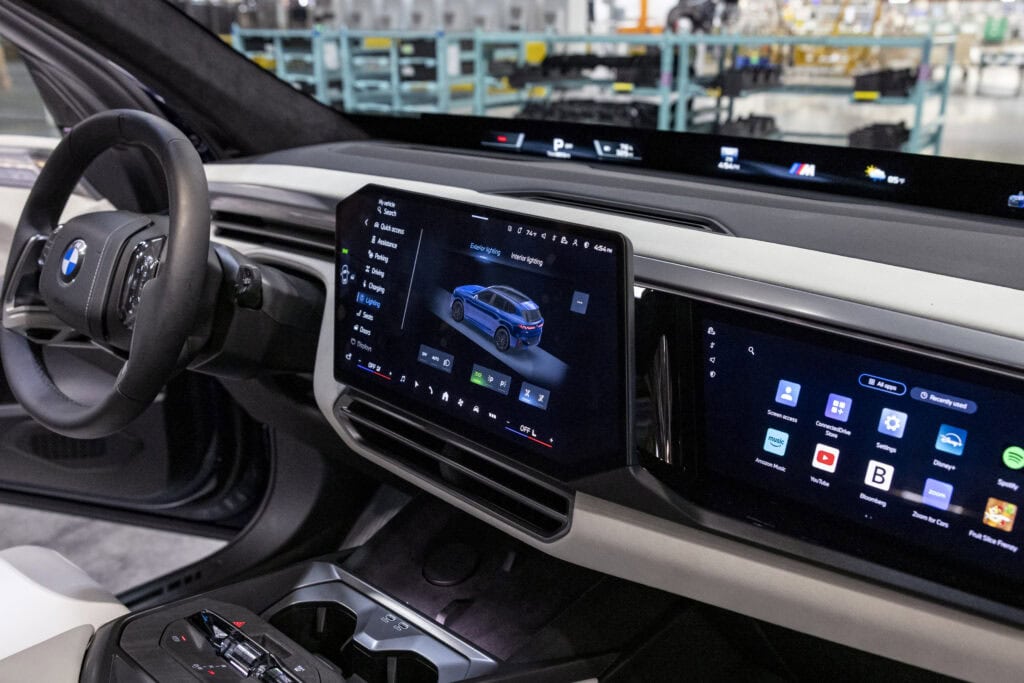
The new X5 brings BMW’s Panoramic iDrive and Operating System X into the cabin. Panoramic Vision places information across the lower windshield, higher and closer to the driver’s normal line of sight, while a large central display handles deeper functions. An available passenger screen adds another layer of digital entertainment and control.
BMW’s challenge is to make advanced technology disappear into normal use. A screen is not automatically progress, and artificial intelligence is not useful merely because it can answer a question. The winning system is the one that shortens a task, presents the right information at the right time and leaves the driver with more attention for driving.
Hydrogen Is Fascinating, but Infrastructure Is Still the Problem
BMW says the iX5 Hydrogen will enter series production in 2028 using a third-generation fuel-cell system developed with Toyota. A fuel-cell electric vehicle is still an electric vehicle at the wheels. Hydrogen is stored onboard and used to generate electricity, offering the possibility of quick refueling and long range without relying solely on a large battery.
The difficulty is finding somewhere to fill it. Passenger-vehicle hydrogen stations remain extremely limited in the United States and are concentrated largely in California. Even there, station reliability and fuel availability have been persistent concerns. A technically impressive hydrogen SUV is not useful to an owner who cannot refuel it.
That does not make the engineering irrelevant. Hydrogen may eventually make more sense in particular regions, commercial applications or long-distance use cases. For now, the iX5 Hydrogen should be viewed as a serious production technology with a very incomplete supporting network, not as a mass-market replacement for gasoline or battery EVs in 2028.
You may also enjoy: BMW’s Hydrogen Gamble Starts With The X5
The Political Backdrop Makes BMW’s Timing Useful
The Trump administration has used tariffs and policy changes intended to encourage domestic automobile production. BMW’s South Carolina story fits that direction, but it did not begin with the current political cycle. Plant Spartanburg opened in 1994, and the company has spent more than three decades expanding its American manufacturing base.
That history gives BMW a stronger response than a hastily announced future promise. It is already building hundreds of thousands of vehicles in the United States, exporting many of them and adding domestic battery-pack assembly. The new X5 arrives at a moment when “made in America” has renewed political value, but BMW can point to a long operating record rather than a press conference and a rendering.
What This Means for BMW X5 Buyers
The buyer takeaway is not that a humanoid robot makes the X5 better by itself. A customer should still judge the SUV by comfort, reliability, range, charging, performance, price and how easily the technology works. Factory innovation matters only when it improves consistency, gives buyers useful choices or helps BMW respond to demand without creating quality problems.
The larger advantage may be confidence. BMW has placed vehicle assembly, battery-pack production, AI-supported inspection, advanced logistics and multiple drivetrain strategies in one South Carolina network. That gives the company several ways to adapt if electric demand rises, gasoline remains strong, plug-in hybrids gain momentum or hydrogen develops beyond its current niche.
The fifth-generation BMW X5 is therefore more than another luxury SUV with an illuminated grille and a large screen. It is BMW’s attempt to make one American-built vehicle flexible enough for several versions of the future. The robots are part of that story, but the real achievement will be making all this complexity feel ordinary to the person behind the wheel.