2026 Subaru WRX review: Start With the Premium
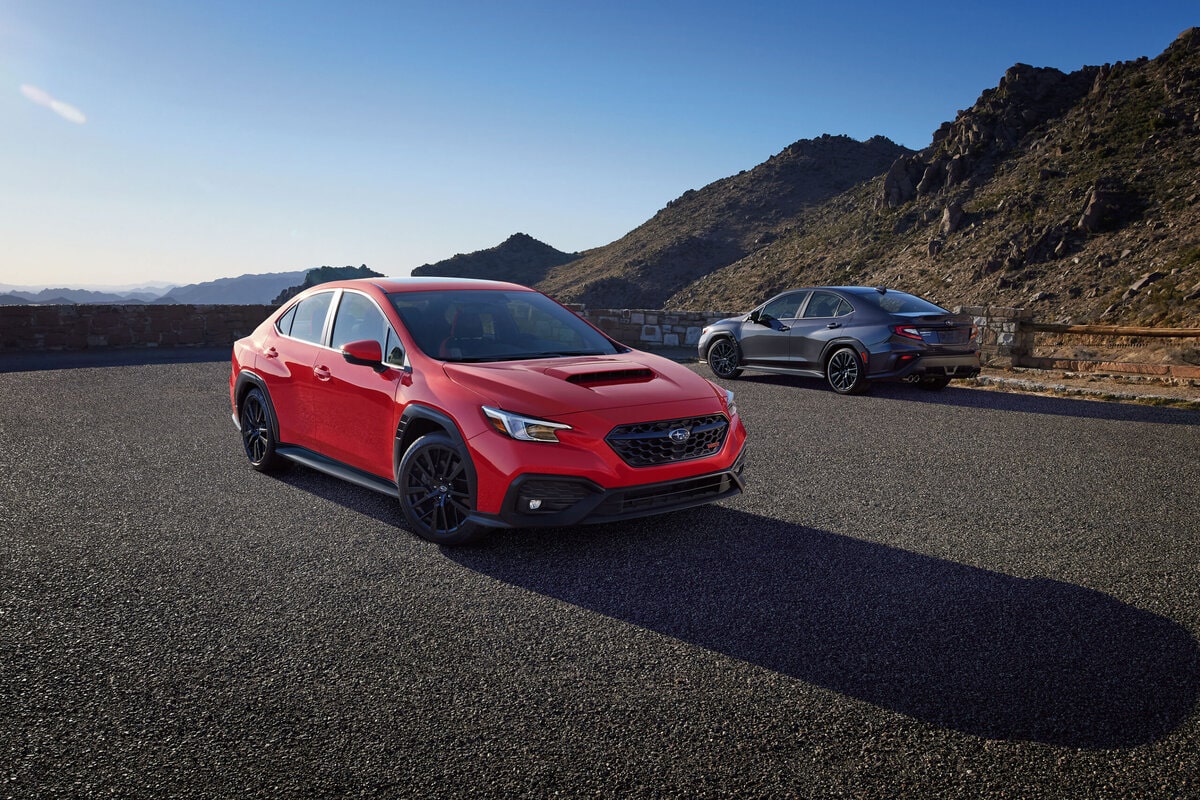
2026 Subaru WRX review: The Premium makes the strongest everyday case, but automatic buyers face a bigger bill and winter use needs suitable tires.
By Nik J. Miles
The first option I would price on a 2026 WRX is heated seats. Subaru charges $1,500 to move from Base to Premium, and that upgrade adds useful cold-weather equipment without changing the engine. For somebody buying a manual sedan to keep through several winters, it deserves consideration before expensive performance hardware.
This 2026 Subaru WRX review is a specification-based vehicle analysis. No new driving notes, test vehicle, measured economy or track results were provided. The buying recommendation concerns verified equipment and prices; ride quality and steering feel still need a road test.
Best for: Drivers wanting a manual, all-wheel-drive sedan who will use its performance and can budget for premium fuel and seasonal tires.
Skip if: You need an inexpensive automatic commuter, prioritize fuel economy or require the loading flexibility of a hatchback.
You may also like this Video:
2026 Subaru WRX review: the useful gains and compromises
Pros
- All-wheel drive and 271 horsepower are standard, including on Base.
- The returning entry trim gives manual buyers a lower starting point.
- Wireless Apple CarPlay and Android Auto do not require an expensive upgrade.
- Manual versions retain standard driver assistance.
Cons
- The automatic starts with Limited rather than Base or Premium.
- Premium gasoline and modest published economy increase the importance of a fuel budget.
- Summer tires require a separate plan for winter conditions.
- Blind-spot and rear cross-traffic warnings require Limited or above.
The WRX belongs on a shortlist because its core mechanical package survives the inexpensive trim. That makes choosing equipment an unusually meaningful exercise: you can buy convenience without pretending it adds horsepower.
Buy the equipment you will use every week
My starting recommendation is Premium, at $33,995 MSRP. Heated seats, heated mirrors and a windshield wiper deicer are practical reasons to spend the extra $1,500 over Base. Rear charging ports also make sense when passengers bring their own devices. The upgrade’s value depends on climate and use, rather than on the badge.
In a warm climate, or with a strict budget, Base is a credible alternative. Do not spend more simply because a salesperson describes it as the enthusiast choice. Subaru’s published pricing makes the entry car $33,690 with the standard listed destination charge, while Premium becomes $35,190.
Limited is where the conversation changes. Its extra equipment includes blind-spot detection, rear cross-traffic alert and a power driver’s seat. Someone who needs those particular features has a stronger reason to upgrade than somebody who merely likes a longer equipment list.
The Subaru-issued pricing announcement separates trim prices, options and delivery charges. Use that separation when reading a dealer quote.
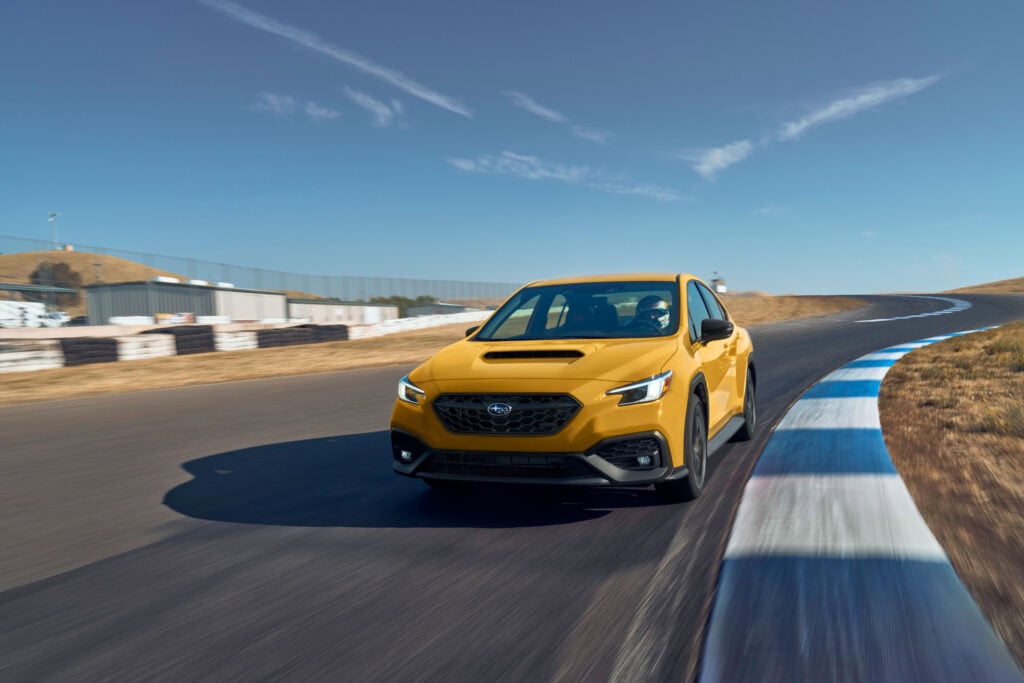
The numbers before the dealer adds anything
| Version | Transmission | MSRP | With $1,195 destination |
|---|---|---|---|
| Base | Six-speed manual | $32,495 | $33,690 |
| Premium | Six-speed manual | $33,995 | $35,190 |
| Limited | Six-speed manual | $38,995 | $40,190 |
| Limited | Subaru Performance Transmission | $39,995 | $41,190 |
| GT | Subaru Performance Transmission | $44,995 | $46,190 |
| tS | Six-speed manual | $44,995 | $46,190 |
| Series.Yellow | Six-speed manual | $45,995 | $47,190 |
These are advertised prices and calculated totals, not transaction prices or a price as tested. Delivery can vary by state; taxes, registration, paint, options and accessories are additional. Check the actual window sticker before comparing offers.
Vehicle snapshot: U.S.-market four-door sedan; turbocharged 2.4-liter four-cylinder; 271 horsepower; standard all-wheel drive. No specific test trim, test distance or as-tested price is available for this assignment.
Decide on the transmission before picking a color
Someone who wants a manual can start at the bottom of the range. Someone who wants an automatic must start at Limited. That $7,500 entry-price difference is substantial enough to reshape the shortlist before anybody discusses paint.
Subaru calls its automatic the Subaru Performance Transmission. It is a continuously variable transmission with paddle shifters and an eight-speed manual mode, rather than a conventional eight-speed gearbox. A buyer comparing it with another manufacturer’s automatic should sample both in ordinary traffic.
Manual shoppers should also test the clutch in the conditions they actually encounter. A short demonstration on an empty road cannot tell you how much you will enjoy changing gears through your daily queue. Ask every regular household driver to try the configuration before committing.
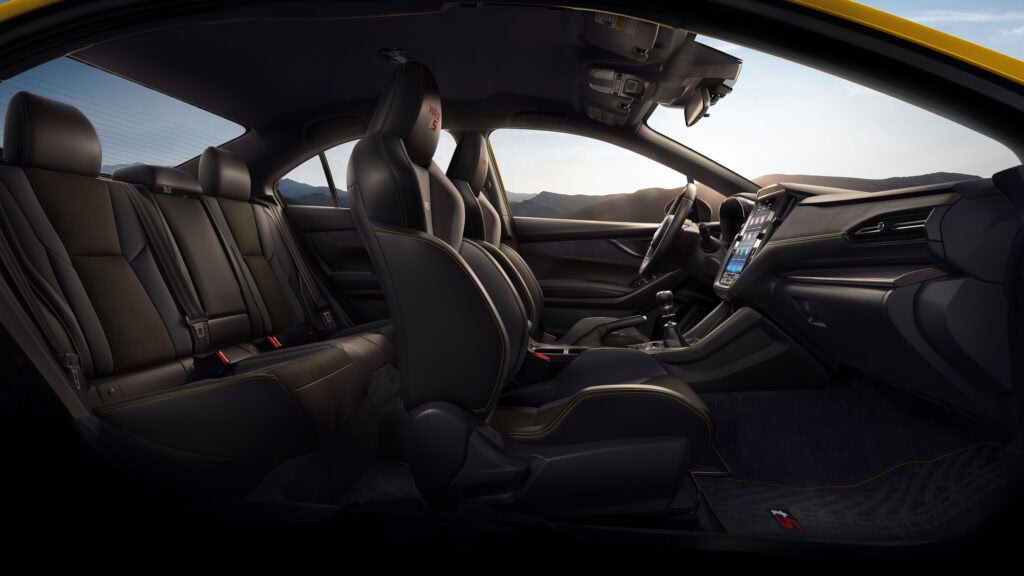
What the tS premium actually buys
The tS costs $11,000 more than Premium before destination. Its appeal is chassis equipment: STI-tuned electronically adjustable dampers, Brembo brakes and Recaro seats. The engine still produces 271 horsepower.
Subaru offers Comfort, Normal and Sport damper settings. These change the suspension’s response, giving owners more adjustment than a fixed setup. Whether the available settings deliver the comfort you want over broken pavement requires a test on broken pavement. The menu alone cannot answer it.
Bigger brakes have a credible purpose for repeated demanding use, but this assignment has no heat-management measurements or track findings. Paying for that hardware should follow your intended use rather than a vague hope that the school run might become a qualifying session.
Series.Yellow adds distinctive presentation to the tS package and is limited to 350 cars. Scarcity does not establish future resale value. Buy the color because you want to look at it.
You may also enjoy: Subaru WRX TR vs WRX tS: When Rally Roots Meet Track Day Refinement. That earlier article provides background, rather than current 2026 pricing.
Budget for fuel and tires together
Subaru’s current comparison sheet lists premium unleaded of at least 91 octane as required. It also publishes 19/26 mpg city/highway for the manual and 18/25 for the automatic. There is no original Test Miles fuel result here.
Use your annual mileage and local premium-gas price to estimate costs. Then add the tire plan. Standard summer performance tires should not be treated as winter tires just because the drivetrain powers all four wheels.
Drivers living with cold winters should obtain a quote for suitable tires, installation and any seasonal storage before purchase. That gives the ownership budget a more honest starting point than adding the expense after the first snowfall.
Make the cabin prove its everyday usefulness
The sedan has a split-folding rear seat, but its trunk opening still deserves attention. Bring the equipment you regularly carry. Dog crates, bulky cases and folded pushchairs can expose a loading problem that a capacity figure would miss.
The standard 11.6-inch touchscreen includes wireless smartphone integration. Try your own phone, find the climate settings and inspect the reversing-camera view. Connectivity on a specification sheet establishes availability; it does not establish how easily you will operate the system.
EyeSight and DriverFocus are standard. Keep their role clear: they assist an attentive driver. Check the owner’s manual for operating limitations, and confirm the specific warning systems on your chosen trim. This analysis does not assign an independently verified 2026 crash-test rating.
Compare the car with your actual priorities
The 2026 Honda Civic Si is a genuine manual-sedan alternative, with 200 horsepower and front-wheel drive. Honda publishes 27 city and 37 highway mpg. If you value a manual but do not require AWD, its efficiency makes it worth examining.
Hyundai’s Elantra N is another performance-sedan alternative. Compare the desired transmission, tire specification and delivered quote rather than matching badges or engine output alone. A drive on the same roads would be more informative than declaring a handling winner from brochures.
If the performance requirement disappears when you examine your commute, widen the search. Our 2026 Honda Civic analysis covers a different ownership proposition, while the 2026 Toyota Corolla Hybrid analysis is relevant to buyers weighing efficiency and available AWD. Neither is a substitute for the WRX’s manual performance brief.
My recommendation is to shortlist Premium first, keep Base in the calculation and require a clear use case before spending tS money. Automatic buyers should compare the Limited’s full price with alternatives. Choose the WRX because you want its particular combination of transmission, power and drivetrain, then make the everyday costs work.
Buyer questions
What changed for the 2026 WRX?
Subaru restored a Base trim, reduced prices on several existing versions and added the limited Series.Yellow. These changes mainly alter affordability, equipment choices and presentation. The returning entry model retains the standard engine output and all-wheel drive, which is why it deserves consideration alongside the more expensive versions.
Which trim offers the best everyday value?
Premium is the starting recommendation for manual buyers who will use its heated seats and cold-weather equipment. Base makes more sense when those features have little value or the budget is firm. Limited becomes relevant when an automatic transmission or its additional warning systems are requirements rather than optional luxuries.
Is the WRX ready for snow as delivered?
Do not assume that. Subaru specifies summer performance tires. All-wheel drive helps distribute propulsion, but it does not make that tire category appropriate for winter conditions. Confirm the actual fitted tires and arrange suitable seasonal equipment before using the car in sustained cold, snow or ice.
Does the tS have more horsepower?
No. Subaru lists the same 271-horsepower engine across the range. The tS focuses spending on adjustable suspension, brakes, seats and associated equipment. Its value depends on how much you will use those differences. No new road or track test supports a claim here that it is faster or more comfortable.