Lincoln U.S. Production Will Expand Beginning in 2030

Lincoln U.S. production will expand in 2030 as Ford ends China imports, adds domestic capacity and promises thousands of American jobs.
Lincoln U.S. Production Marks a Strategic Shift
Ford Motor Company says it will increase Lincoln U.S. production beginning in 2030, while gradually ending imports of Lincoln vehicles from China for American buyers. The move represents a significant manufacturing shift for Ford’s luxury division and a long-term bet on domestic assembly.
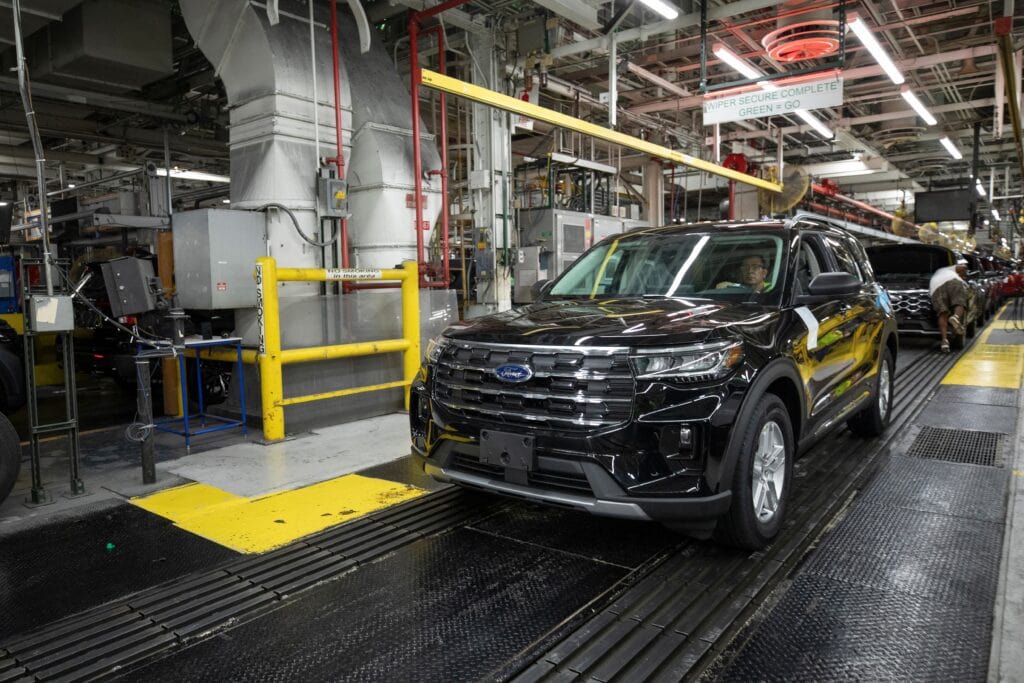
Lincoln already builds two of its most important vehicles in America. The full-size Navigator shares Ford’s Kentucky Truck Plant in Louisville with the Expedition and Super Duty, while the three-row Aviator is assembled alongside the Ford Explorer at Chicago Assembly Plant. Ford’s official plant directory identifies the products currently assigned to each operation.
Ford has not yet disclosed which additional Lincoln models will move to American factories, which plants will receive them, or how much it intends to invest. The company says the expansion should generate thousands of direct and indirect jobs, but detailed employment estimates and production volumes have not been released.
That makes this an important announcement rather than a complete manufacturing plan. The destination is clear; Ford still owes workers, dealers and customers the road map.
You may also enjoy: 2025 Lincoln Navigator Review: When Your SUV Becomes a Spa, Lounge, and Boardroom on Wheels
You may also like this Lincoln Video:
Why Ending China Imports Matters
The decision to phase out Chinese-built Lincoln vehicles is about more than putting a different location on the window sticker. It could reduce Ford’s exposure to tariffs, trade disputes, shipping costs and the political uncertainty surrounding vehicles imported from China.
Automotive supply chains are complicated. A vehicle can be assembled in an American factory while using engines, transmissions, electronics and other components produced elsewhere. Likewise, a foreign-branded vehicle assembled in the United States may support more American factory employment than a domestic nameplate built overseas.
The American Automobile Labeling Act requires new passenger vehicles to disclose final assembly location, U.S. and Canadian parts content, and the origin of the engine and transmission. Those details give buyers a more complete picture than the badge on the grille.
Lincoln’s decision should therefore be judged by more than final assembly. The unanswered questions include where major components will come from, how much work will reach American suppliers and whether Ford will expand an existing plant or assign Lincoln production to a new operation.
The 2030 starting date gives Ford several years to make those decisions. It also gives the company time to prepare factories, negotiate labor requirements and develop vehicles intended for American production rather than simply transferring today’s models from one plant to another.
You may also enjoy: The Most American Cars? Not Who You Think

Thousands of Jobs Could Reach Beyond Ford Plants
Ford expects the expansion to create thousands of direct and indirect U.S. jobs. Direct jobs could include assembly workers, engineers, skilled tradespeople, quality-control specialists and plant supervisors. Indirect employment could extend to parts suppliers, logistics companies, equipment manufacturers and other businesses serving Ford factories.
Those secondary effects help explain why vehicle-production announcements receive attention far beyond the auto industry. An assembly plant purchases seats, glass, tires, electronics, metal stampings and thousands of other components. It also supports trucking, rail transportation, construction, maintenance and professional services.
The Bureau of Labor Statistics automotive-industry data tracks employment, earnings and working hours across motor-vehicle manufacturing, parts production, wholesaling and retailing.
The eventual job total will depend on the scale and location of Ford’s investment. Adding one Lincoln model to an existing line would have a different economic effect from constructing or extensively retooling a plant. Automation levels and the percentage of components sourced domestically will matter as well.
Ford has not promised that every job will be located inside a Ford factory. Its wording deliberately includes indirect employment, so the final figure should be examined carefully once the company releases plant assignments, production targets and investment amounts.
You may also enjoy: Nissan’s Comeback Rides on a Mississippi Truck
Ford Builds on an Existing American Base
Ford says it assembled more than two million vehicles in the United States during 2025, making it the country’s largest vehicle assembler. The company also says it led American automakers in U.S. vehicle exports and employed approximately 56,300 hourly manufacturing workers.
Those figures give Lincoln’s announcement more weight than a general pledge to consider additional domestic production. Ford already operates a substantial American manufacturing network, and the Navigator and Aviator demonstrate that Lincoln vehicles can be integrated into high-volume Ford assembly plants.
Vehicle exports are an important part of that network. The U.S. Department of Commerce reports that the country exported more than $87 billion in motor vehicles during 2024, in addition to more than $85 billion in automotive parts.
The challenge will be finding capacity for additional Lincoln products without disrupting other profitable vehicles. Kentucky Truck Plant builds some of Ford’s most commercially important trucks and SUVs, while Chicago Assembly Plant carries major responsibility for Explorer and police-vehicle production.
Ford could expand one of those operations, retool another plant or assign future Lincoln vehicles to a location not currently associated with the brand. Until those decisions are announced, claims about which communities will benefit remain speculation.
You may also enjoy: Ford’s Boldest SUV Yet? The 2025 Expedition Reboots American Muscle
What It Means for Lincoln Buyers
For customers, a move to American production will not automatically change the way a Lincoln drives, feels or performs. It may, however, influence availability, pricing stability and the brand’s ability to respond to U.S. demand.
Producing vehicles closer to their primary market can shorten parts of the logistics chain and reduce dependence on overseas shipping. It can also help manufacturers adjust production more quickly when consumer preferences change, although local assembly does not eliminate global supply risks.
Manufacturing work also reaches far beyond the assembly line. The Bureau of Labor Statistics explains the range of careers and wages in modern manufacturing, including engineering, production, maintenance and skilled technical occupations.
The announcement also gives Lincoln a clearer brand story. Ford CEO Jim Farley described Lincoln as “a quintessentially American brand” and said the company was betting again on American manufacturing. That message may resonate with luxury buyers who care about domestic employment, but the finished vehicles will still have to compete on quality, technology, comfort and value.
Lincoln’s 2030 plan is consequential precisely because it is measurable. Ford will eventually have to identify the vehicles, factories, investment and jobs behind the promise. If the company follows through at meaningful scale, Lincoln will become a more American-made luxury brand in substance as well as identity.
You may also enjoy: Five Million Sprinters and Counting: How American Production Supports a Global Vehicle