Nissan e-POWER 1,230-mile record: What It Means
The Nissan e-POWER 1,230-mile record shows the system’s potential, but the Colombia run is no promise of everyday U.S. range.
Automotive records are useful when they illuminate engineering and less useful when they become brochure confetti. Nissan’s latest Guinness title does both, giving us a reason to examine its unusual hybrid system.
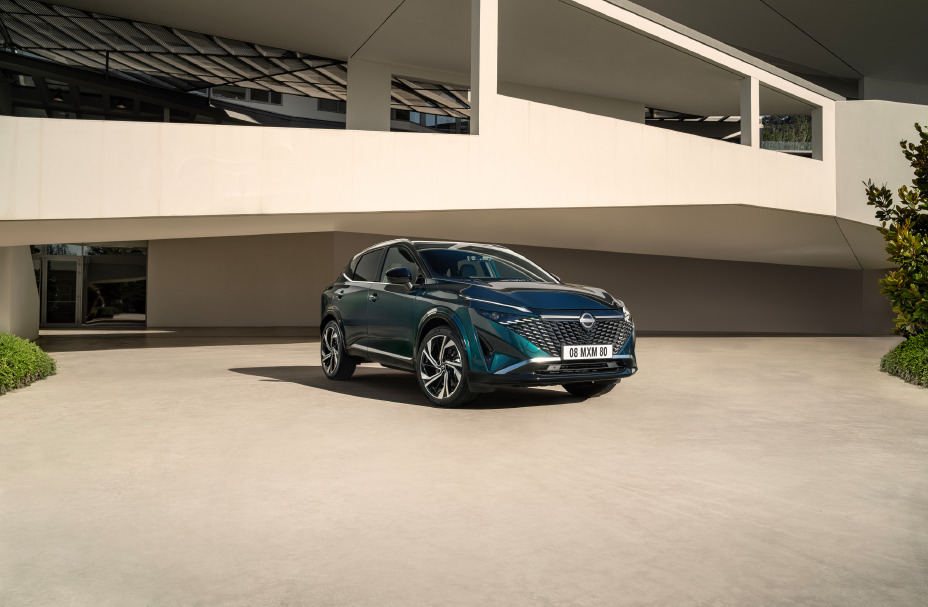
Nissan reports that a Qashqai equipped with the latest e-POWER system covered 1,980 kilometers, or about 1,230 miles, in Colombia without refueling or receiving an external charge. The drive ran from Bogotá to the Caribbean coast from July 14 through July 17, 2026. Guinness recognized it as the longest journey completed by a non-plug-in extended-range electric SUV without external charging or refueling.
It is not a prediction that the 2027 Nissan Rogue Hybrid will carry an American family 1,230 miles between fuel stops. Records reward controlled execution. Owners supply weather, traffic, luggage and the occasional right foot apparently late for a coronation.
You may also enjoy: 2027 Nissan Rogue Hybrid Delivers Better MPG Without Plugging In
You may also enjoy this video:
How Nissan Set the e-POWER 1,230-Mile Record
The Qashqai began in high-altitude Bogotá and traveled toward Colombia’s Caribbean coast across urban streets, highways and mountain roads. Nissan says the vehicle completed the full route on one tank, with no external charging. The company’s third-generation e-POWER hardware and regenerative braking were central to the attempt.
The geography matters. Descending from elevation creates opportunities to recover energy, although this was not simply a 1,230-mile downhill coast. The federal FuelEconomy.gov driving guidance explains how speed and behavior change mileage. A record team can plan the drive with a precision unlike a Tuesday commute.
Nissan has not presented this drive as an EPA fuel-economy test, and buyers should not treat it as one. The achievement proves that the system can stretch a fixed supply of gasoline impressively under a specific, supervised set of conditions. It does not establish a repeatable consumer range figure for every road or driver.
You may also enjoy: 2026 Toyota RAV4 Woodland Review: Vehicle Analysis
Why e-POWER Drives Differently From a Normal Hybrid
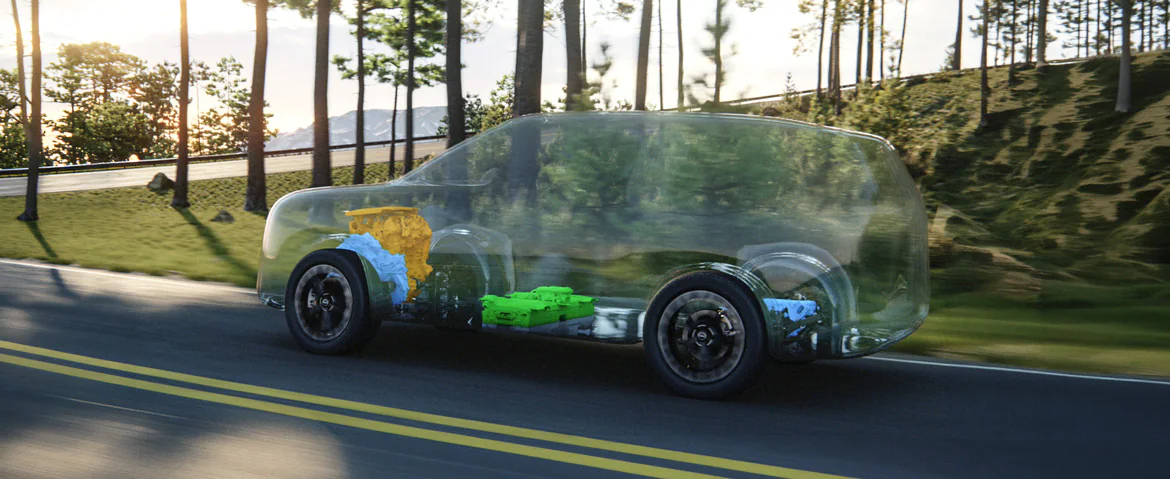
In a conventional parallel hybrid, the gasoline engine and electric motor can both contribute mechanical power to the wheels. The U.S. Department of Energy’s hybrid-electric vehicle explainer describes the broader category. Nissan’s e-POWER arrangement takes another route. The gasoline engine generates electricity, while the traction motor drives the wheels. The driver therefore gets the immediate response and smooth power delivery associated with an electric motor, but refuels at a gas pump and never plugs the vehicle in.
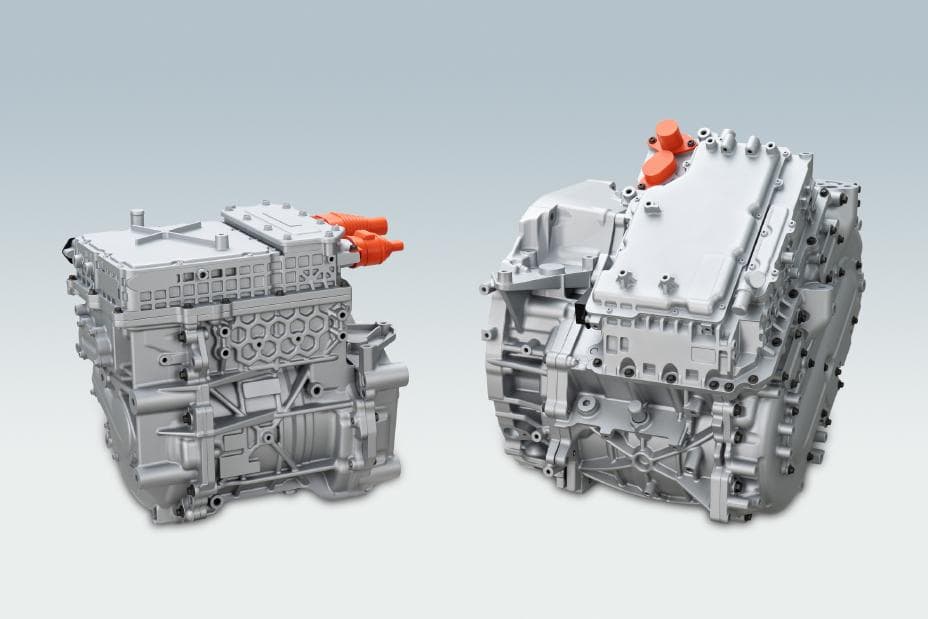
Nissan’s third-generation e-POWER briefing says the latest design combines the electric motor, generator, inverter, reducer and increaser in a compact five-in-one unit. A battery acts as an energy buffer, taking electricity from the engine-driven generator and energy recovered through regenerative braking. Software decides when to run the engine and how to manage that electrical flow.
The system is sometimes described as extended-range electric, although it is sold as a non-plug-in hybrid. At the curb, the distinction is simple: the engine does not mechanically drive the wheels. Gasoline remains the onboard energy source, and there is no charging cable.
You may also enjoy: Can the New Leaf Save Nissan?
What the Nissan e-POWER 1,230-mile record proves
The Nissan e-POWER 1,230-mile record demonstrates the efficiency potential of keeping wheel propulsion electric and operating the gasoline engine primarily as a generator. Electric motors deliver strong low-speed torque, regenerative braking can recover some energy that friction brakes would turn into heat, and the control system can run the engine according to electricity demand rather than tying its speed directly to road speed.
What it does not prove is just as important. Nissan has not released a U.S. EPA rating for the upcoming Rogue Hybrid e-POWER, and the Qashqai used for the record is a different vehicle operating on a different continent. Tank size, curb weight, aerodynamics, tires, all-wheel drive, climate control and calibration can all change the result.
EPA fuel-economy testing uses defined laboratory cycles so shoppers can compare vehicles on a common basis. An EPA testing and labeling guide notes that driving, climate and terrain can affect efficient hybrids. A Guinness attempt is evidence of capability, not a substitute for the window sticker or an independent road test.
You may also enjoy: 2026 Hyundai Ioniq 5 Review: The Value Is Back
Why This Matters for the 2027 Nissan Rogue Hybrid
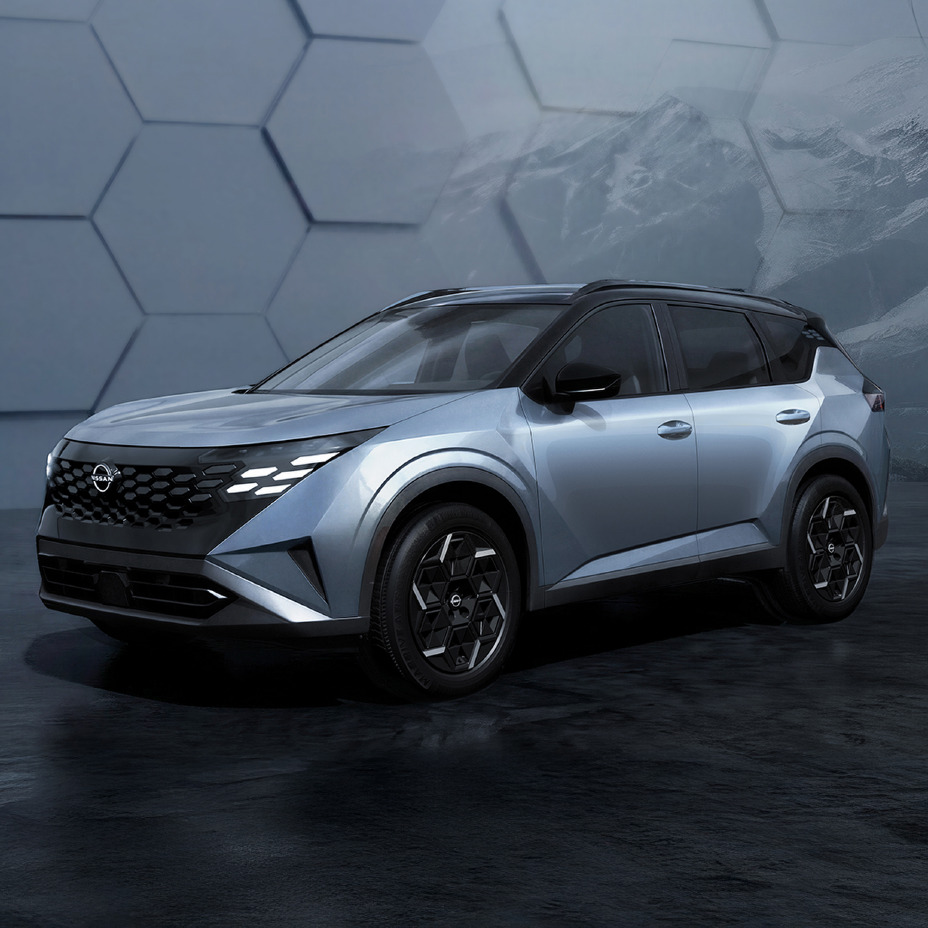
The record arrives at the right moment for Nissan in the United States. The all-new 2027 Rogue Hybrid e-POWER is scheduled for late 2026 and will introduce the company’s third-generation system here. Nissan says two electric motors will power the wheels, there will be no conventional transmission, and Intelligent All-Wheel Drive will be standard. Nearly two million earlier e-POWER vehicles have been sold globally since 2016.
For American buyers, the appeal is not a four-digit range claim. It is the prospect of electric-motor response without home charging, public charging plans or a change in refueling habits. That could make the Rogue particularly relevant to apartment dwellers, high-mileage drivers and families who want hybrid efficiency but are not ready for a plug.
Important details remain missing. Nissan has not announced final U.S. fuel economy, pricing or the complete specification sheet. The Rogue’s body, all-wheel-drive system and North American calibration mean its results cannot be borrowed from the Colombian Qashqai. Anyone claiming otherwise has outrun the engineering department.
The sensible conclusion is encouraging but measured. The run shows that e-POWER is more than a different name for familiar hybrid hardware. When the Rogue arrives, its EPA label and independent testing will tell us how much of that promise survives traffic, weather and a cargo area full of real life.
You may also enjoy: 2027 Toyota bZ Woodland Packs 375 HP and Real Utility