2027 Toyota bZ Woodland Packs 375 HP and Real Utility
By Robert R Guio
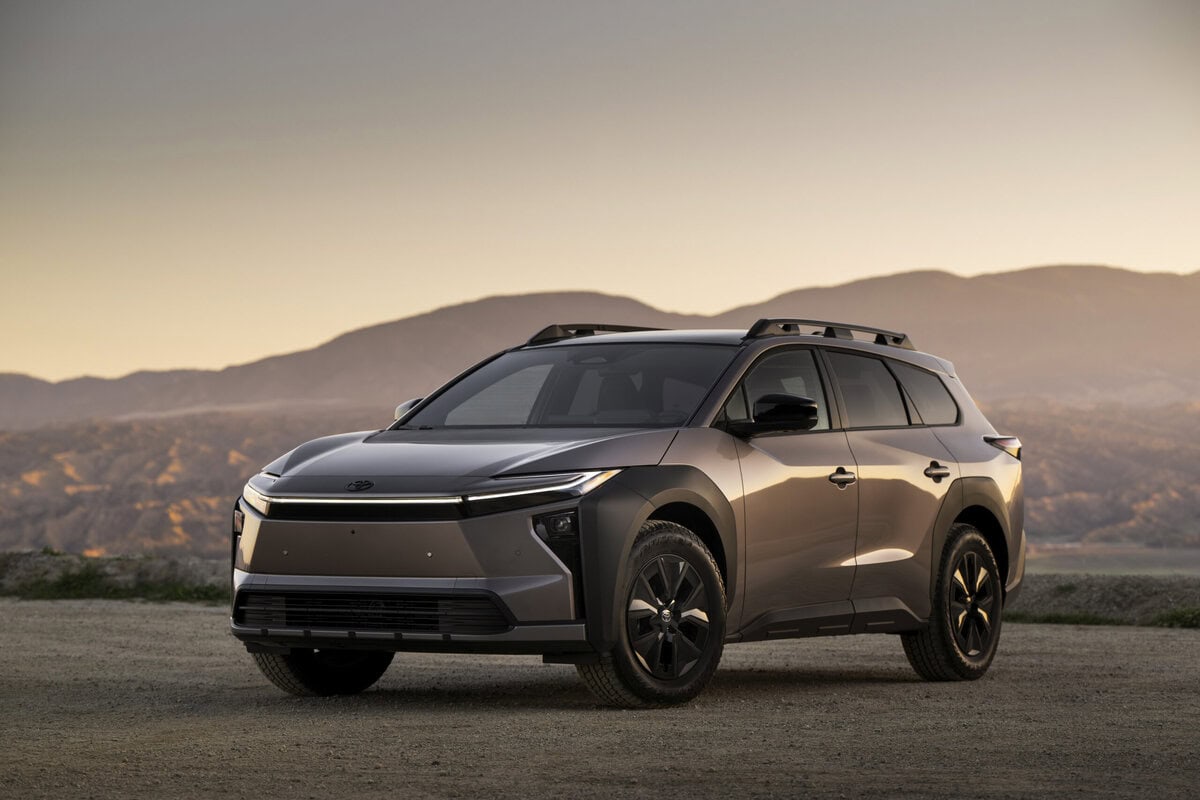
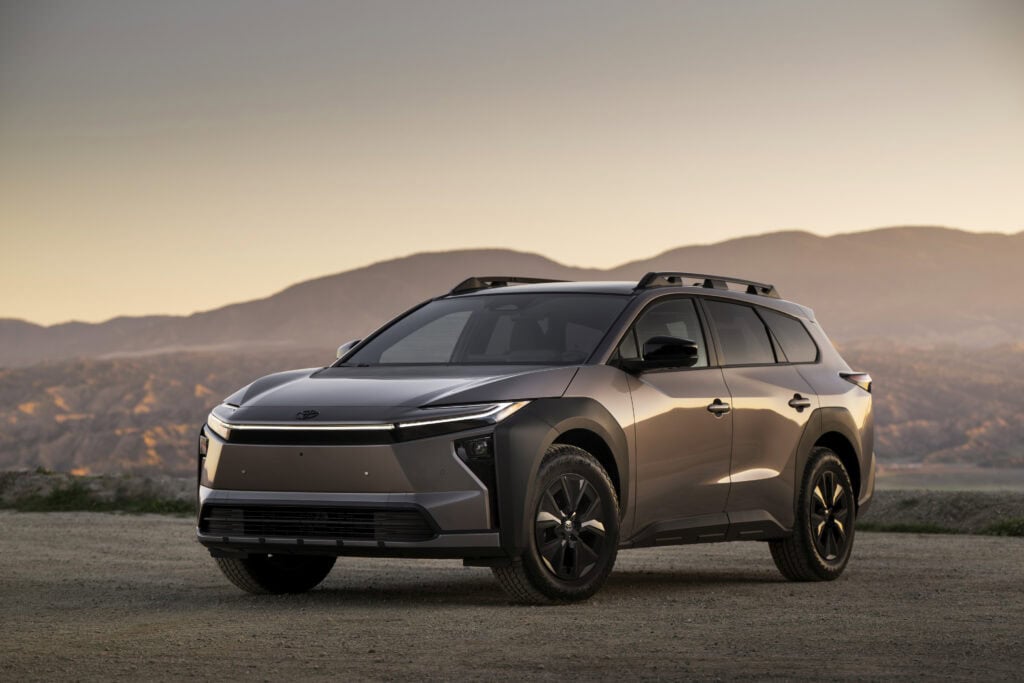
The 2027 Toyota bZ Woodland returns for its second model year without major changes, but that may be the point. Toyota already gave this electric SUV standard all-wheel drive, useful range, meaningful cargo space, and enough ground clearance to venture beyond the daily commute.
Pricing starts at $45,380 before dealer processing and handling fees. Every bZ Woodland uses a dual-motor system producing 375 horsepower, which Toyota estimates is enough to reach 60 mph in 4.5 seconds. That’s serious pace for a midsize SUV intended to carry muddy boots, dogs, camera equipment and a weekend itinerary.
The Woodland sits between an everyday crossover and a serious off-roader. Toyota has focused on traction, space, towing and charging features that could make an EV easier to live with.
You may also like: 2026 Toyota bZ Woodland: Off-Road Soul, All-Electric Heart, and Just Enough Madness
Why the 2027 Toyota bZ Woodland Is More Than Styling
Standard all-wheel drive places electric motors at the front and rear axles, while X-MODE adjusts braking and power delivery to improve traction. Grip Control can maintain a low, steady speed over difficult surfaces, allowing the driver to concentrate on steering.
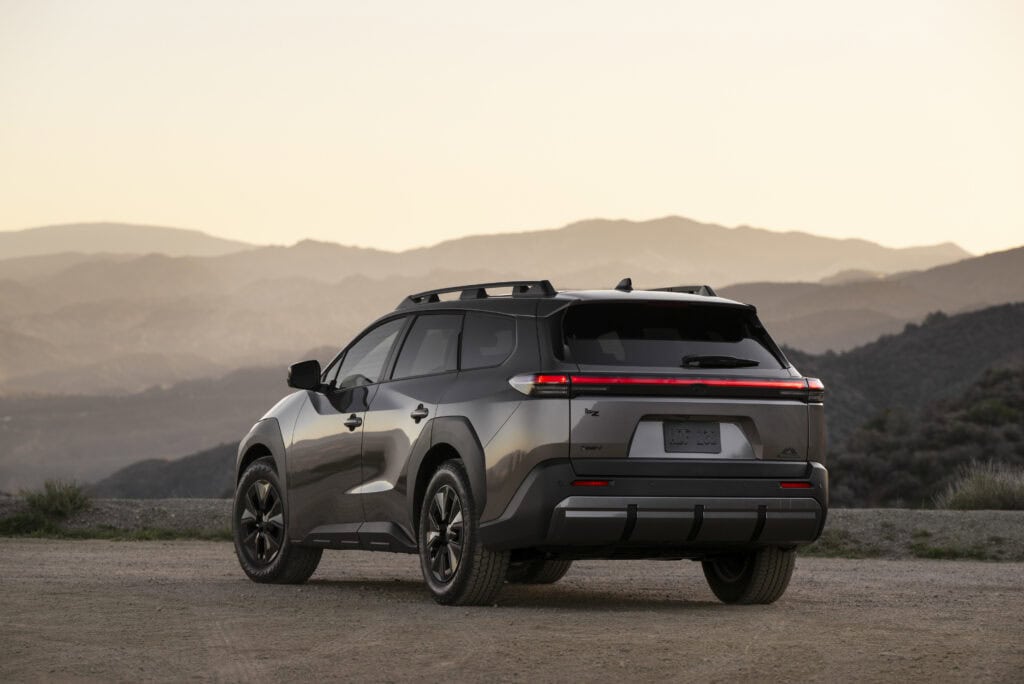
The bZ Woodland has 8.4 inches of ground clearance and can tow up to 3,500 pounds. Its 74.7-kWh lithium-ion battery sits beneath the floor to lower the center of gravity, while additional cross-framing is intended to improve rigidity. Those details matter more than black trim because they affect how the vehicle should behave when loaded, towing, or traveling over uneven ground.
You may also like: 2026 Toyota bZ First Drive: The EV for People Who’ve Been Waiting for Toyota to Act Like Toyota
Range and Charging Come With a Clear Tradeoff
Toyota estimates 281 miles of range with the standard all-season tires. Choosing the available all-terrain tires lowers that estimate to 260 miles. That 21-mile difference is an honest illustration of what aggressive tires cost in efficiency. Buyers should choose based on how they actually drive.
The standard NACS port broadens access to compatible DC fast charging stations. Under ideal conditions, Toyota says the battery can charge from 10% to 80% in around 30 minutes. Battery preconditioning helps in cold weather, while Plug & Charge can simplify payment on compatible networks.
An 11-kW onboard charger, dual-voltage 120/240-volt cable, and J1772 and CCS1 adapters are included. That’s the less glamorous side of EV ownership, but it’s where Toyota has made the Woodland feel thoughtfully developed.
You may also like: Toyota C-HR 2026 EV: 287 Miles, 338 HP, Real Cargo
Cargo Space and Comfort Are Standard Equipment
With the second row folded, the bZ Woodland provides up to 74.3 cubic feet of cargo space. It also gains nearly six inches of cargo length and almost an inch of rear cargo height compared with the standard bZ, making it better suited to bicycles, camping equipment or bulky household gear.
The base model includes SofTex-trimmed seats, heated front and outboard rear seating, a heated steering wheel, dual-zone climate control, roof rails and two wireless phone chargers. A 14-inch Toyota Audio Multimedia touchscreen supports wireless Apple CarPlay and Android Auto, while a 1,500-watt cargo-area outlet can power equipment away from home.
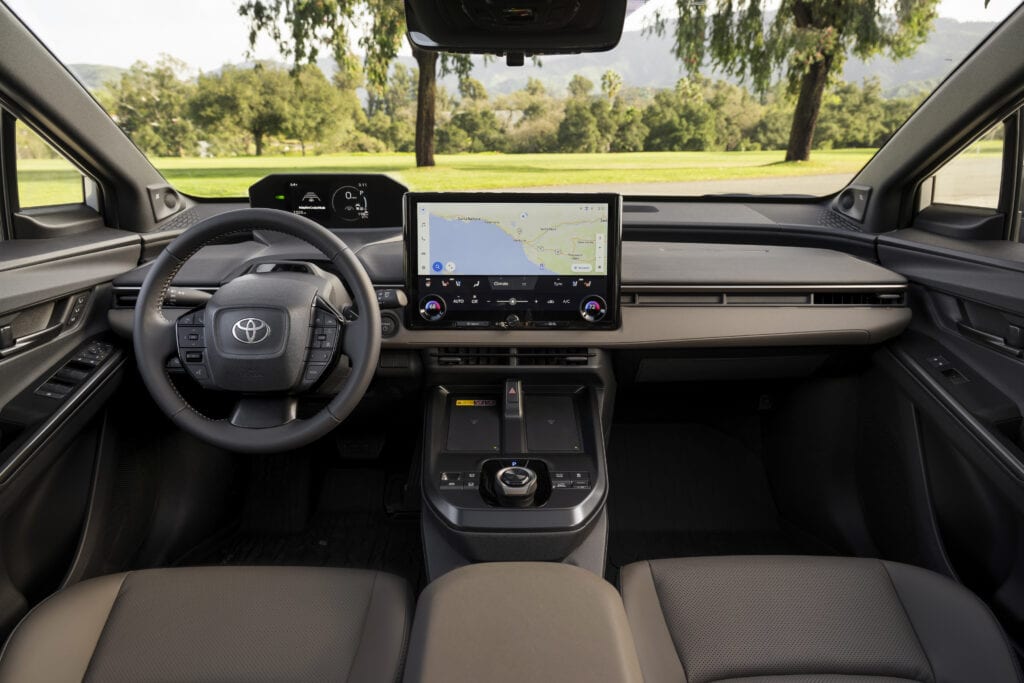
Premium models add ventilated front seats, driver memory, radiant foot and leg heating, a digital rearview mirror, a panoramic glass roof and a nine-speaker JBL audio system. Both grades also include a panoramic view monitor and Toyota Safety Sense 3.0.
You may also like: 2026 Toyota EV Lineup Finally Fits Real Life
The bZ Woodland Makes Its Best Case Through Restraint
The 2027 bZ Woodland’s specifications remain unchanged from 2026, and Toyota has resisted adding another trim maze or cosmetic package. What remains is a straightforward choice between a well-equipped base model and a more luxurious Premium grade.
Its appeal will depend on whether buyers value capability over maximum range. The standard tires travel farther, while the all-terrain option better supports the Woodland’s adventurous character. Either way, this is an electric Toyota built around useful compromises rather than impossible promises. For many households, that may be exactly what makes it worth considering.