Goodwood’s Fastest Cars Left Gas Power in the Dust
By Robert R Guio
There are still people who treat electric performance as a clever party trick: impressive from a stoplight, less convincing once corners, heat and repeated hard use enter the conversation. The 2026 Goodwood Festival of Speed offered a rather direct reply.
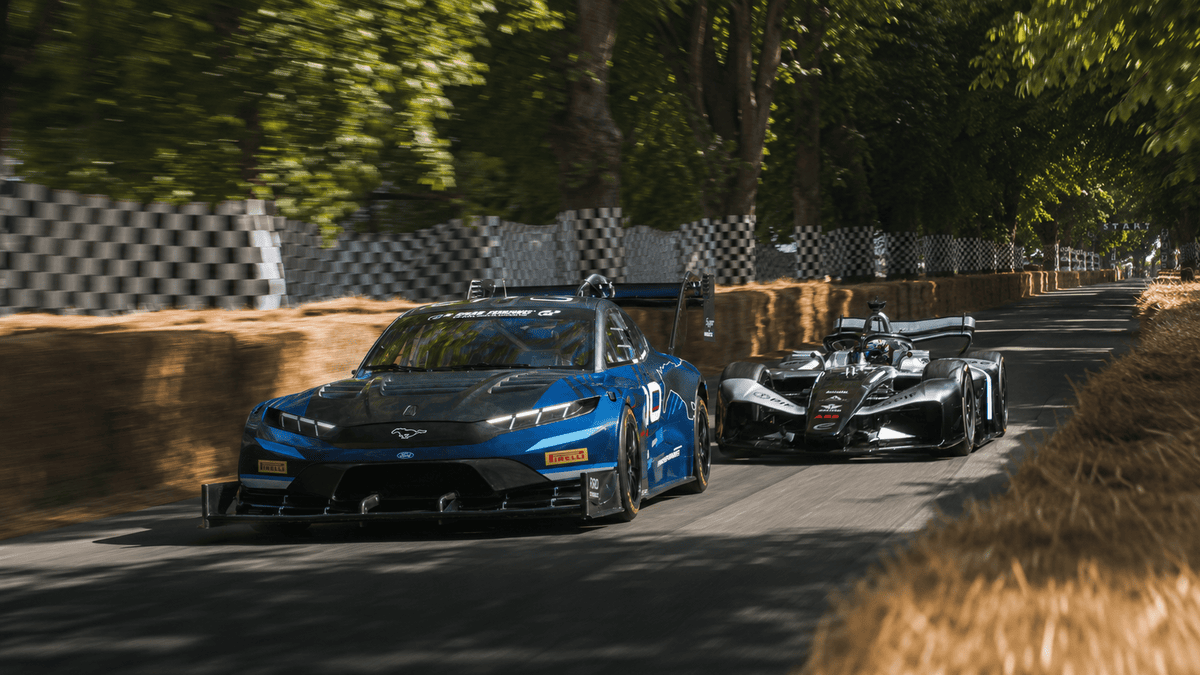
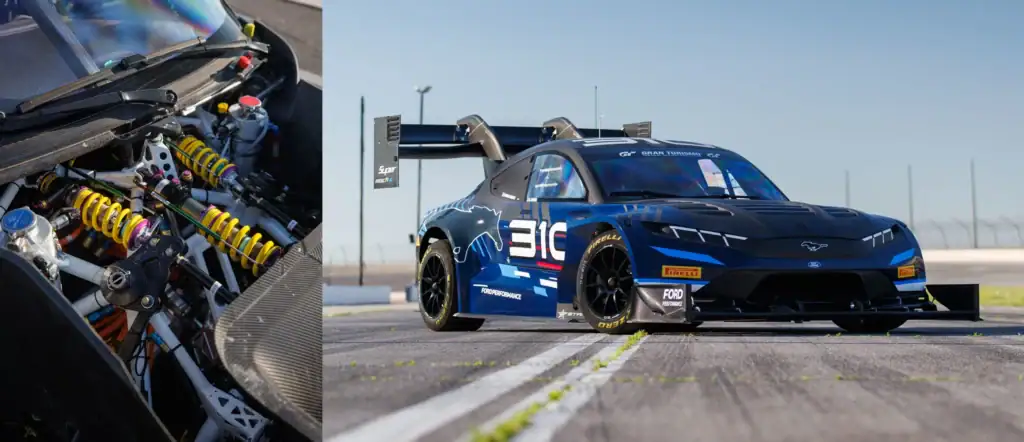
The two fastest finishers in Sunday’s Timed Shoot-Out were fully electric. Romain Dumas won in Ford’s Super Mustang Mach-E with a 41.97-second run. Dan Ticktum finished second in the new Formula E GEN4, stopping the clock at 42.46 seconds.
Only 0.49 second separated them. Dumas finished 4.33 seconds ahead of the fastest combustion-powered entry, while Ticktum was 3.84 seconds clear. On a short, narrow and unforgiving hillclimb, electric vehicles didn’t merely participate. They controlled the sharp end of the results.
You may also like: How IndyCar Hybrid Tech Boosts Your Next Honda Hybrid
Goodwood’s Clock Delivered the Verdict
Goodwood’s famous hill is only 1.16 miles long, but it exposes weaknesses quickly. Drivers face changing grip, bumps, dust, limited runoff and corners that punish hesitation. Horsepower helps, but traction, braking, balance and confidence matter just as much.
Dumas and Ticktum delivered under those conditions. Dumas made it three consecutive Timed Shoot-Out victories for himself and Ford, while Ticktum came within half a second in a car making its public debut. Third-place finisher Alex Summers recorded a 46.30 in the Shadow DN4, underlining how far the two EVs had pulled clear.
You may also like: BMW’s Electric M3 Has to Prove It Has a Soul
Ford Built an EV for One Ruthless Job
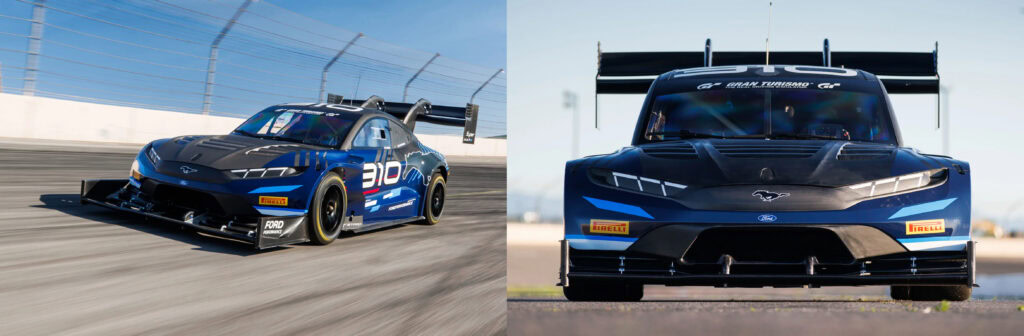
The Super Mustang Mach-E shares a name and general silhouette with Ford’s electric roadgoing SUV, but this is not a showroom vehicle with a large wing. It is a purpose-built competition machine created to climb mountains and attack short timed courses.
Ford says its three electric motors produce more than 1,400 horsepower through all four wheels. A relatively compact 50-kWh battery helps keep the package focused on maximum output rather than road-trip range. The enormous aerodynamic surfaces are equally functional, generating the grip Dumas needs when the road gets fast and narrow.
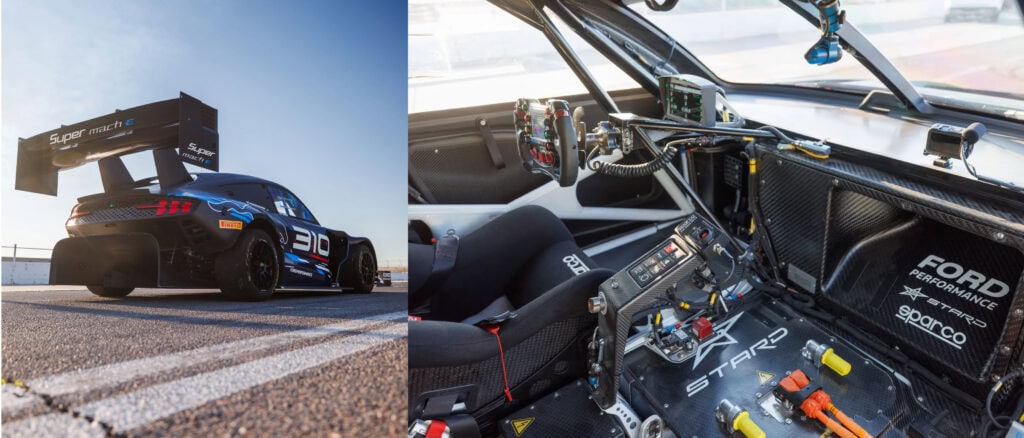
The result is an EV engineered around the task, not compromised by the need to carry groceries quietly on Monday.
You may also like: Ford’s Fourth of July Deal Meets America at 250
Formula E’s GEN4 Nearly Stole the Show
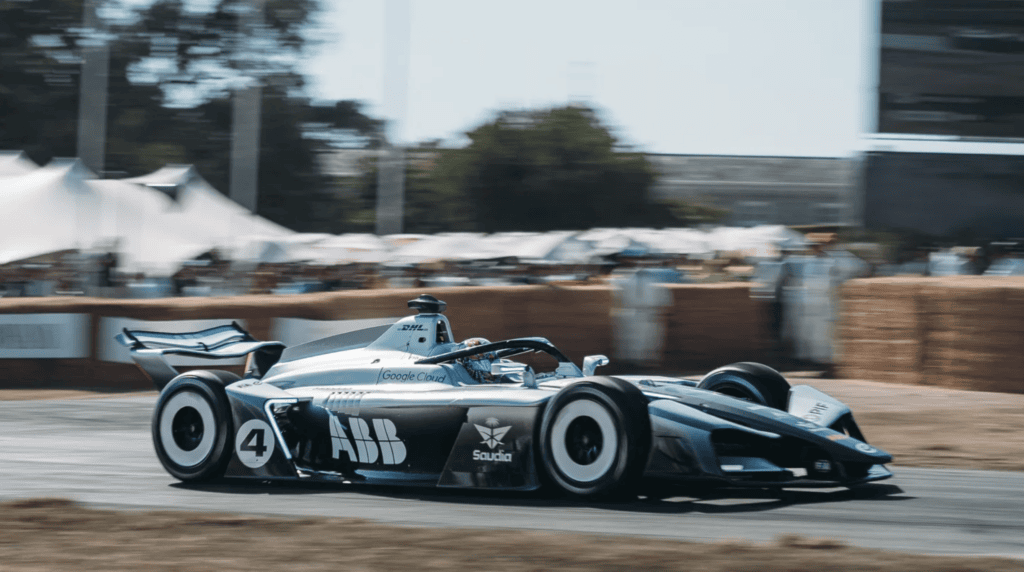
The Formula E GEN4 approached Goodwood from a different direction. It is designed for circuit racing, not hillclimbing, yet Ticktum immediately made it competitive on one of motorsport’s most unusual stages.
GEN4 can deliver up to 600 kW, or about 815 horsepower, in its highest-power mode. It also uses all-wheel drive and can recover up to 700 kW through regenerative braking. Those numbers matter because electric racing is no longer only about instant acceleration. Energy recovery, software, thermal control and power delivery have become central performance tools.
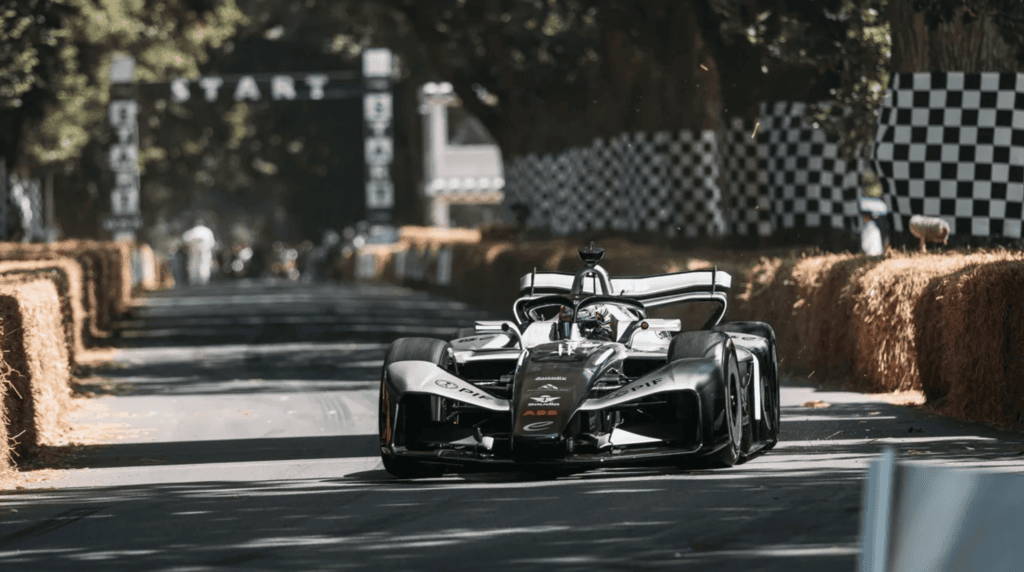
Ticktum’s 42.46-second run showed how quickly those systems can translate to speed outside Formula E’s normal street circuits.
You may also like: Why the Rivian R2 Could Be America’s Next Big EV SUV
Electric Racing Has Moved Beyond Proving a Point
EV race cars once arrived carrying an unspoken question: could they complete the event without overheating, losing power or running short of energy? At Goodwood, the question was different. Could anyone catch them?
That shift matters. Electric motors respond instantly, permit precise torque control and can power individual axles without the packaging demands of a conventional engine and transmission. Batteries still add weight, and sustained racing remains a difficult engineering challenge, but teams are learning to manage those disadvantages rather than apologize for them.
Competition accelerates that learning because the stopwatch is wonderfully indifferent to marketing.
You may also like: 2026 Chevrolet Corvette E-Ray Hybrid The Smartest Supercar Move Yet
What Goodwood Means for Road Cars
Nobody should confuse the Super Mustang Mach-E with the family EV in a Ford showroom, and Formula E’s GEN4 is even further removed from everyday transportation. Still, racing has always been a laboratory for materials, cooling, braking, controls and energy management.
The lesson from Goodwood isn’t that every future race car must be electric, or that combustion has suddenly become irrelevant. It is that electric power can now compete at the highest level on performance alone.
At the 2026 Festival of Speed, the two quickest cars in the shootout happened to be EVs. Increasingly, the word “happened” feels unnecessary.