Electric vehicle batteries have always had one obvious problem: they are powerful, expensive, heavy, and generally shaped like bricks. Engineers then spend years designing cars around them. But what if the battery could be designed around the car instead?
That is the promise behind a new wave of 3D-printed battery technology. It sounds like science fiction, but it is already moving from laboratory curiosity to early commercial development. Companies including Material Hybrid Manufacturing and Sakuu are working on battery manufacturing systems that can print cells or battery components in new shapes, with less wasted space and potentially less manufacturing complexity.
This does not mean your next family SUV will roll into the driveway with a fully printed battery pack next week. It does mean one of the most important parts of the electric car may be entering a new design era.
You may also like: BYD’s Five-Minute EV Battery Charge Is Detroit’s Problem
Why 3D-Printed Batteries Matter
Traditional EV batteries usually rely on standardized cell formats. Cylindrical, pouch, and prismatic cells each have advantages, but they also force engineers to work within fixed shapes. Those shapes affect the floor height, cabin layout, crash structure, cooling system, weight distribution, and even cargo space.
3D-printed batteries could loosen some of those constraints.
Material Hybrid Manufacturing says its HYBRID3D platform can print full-stack batteries in place, including anode, cathode, separator, and casing. The big idea is not simply printing a battery because it sounds clever. It is printing energy storage into shapes that conventional manufacturing struggles to make.
That could matter enormously in vehicles. EVs are already packaging miracles, but they are still full of awkward unused spaces. If future battery cells could be shaped to fit into structural areas, body cavities, or unusual spaces, engineers might recover room that would otherwise be wasted.
You may also like: Mercedes EQS Sets 749-Mile Solid-State Battery Record
A Better Way To Build EV Batteries
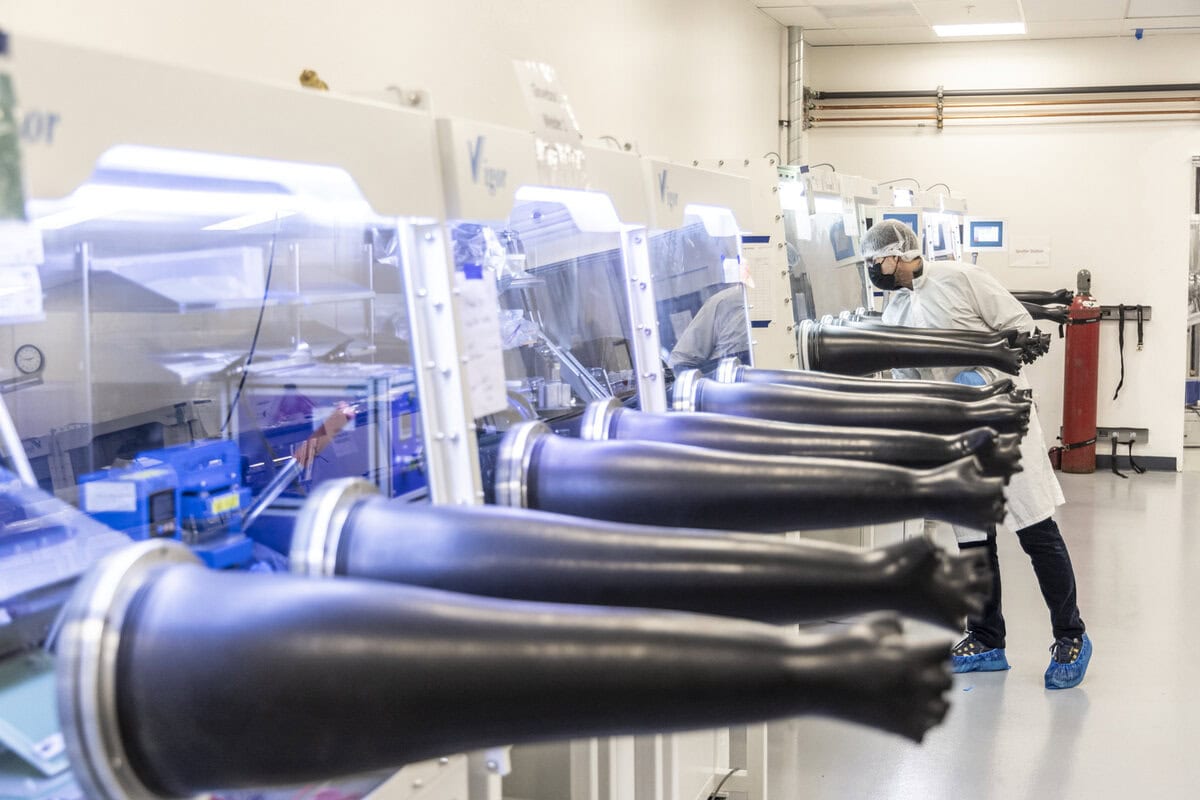
Sakuu has taken a different but equally interesting approach. The company has announced work on custom-shaped battery manufacturing and a dry-process manufacturing platform called Kavian. Dry processing matters because conventional battery production can require energy-intensive coating and drying steps.
If dry manufacturing can scale, it could help reduce factory complexity, energy use, and production cost. That is a major issue because EV affordability is not just about cheaper raw materials. It is also about making batteries faster, cleaner, and more efficiently.
The automotive industry has already learned that battery chemistry alone will not solve every problem. Range, cost, charging speed, durability, safety, and packaging all matter together. A battery breakthrough that improves manufacturing could be just as important as one that improves chemistry.
This is why 3D printing is so intriguing. It is not only about more range. It is about rethinking how batteries are designed, made, cooled, protected, and integrated into the vehicle.
You may also like: Why the Rivian R2 Could Be America’s Next Big EV SUV

What It Could Mean For Car Buyers
For buyers, the benefits would be simple to understand if the technology reaches production vehicles. Better packaging could mean more interior space. Lower manufacturing waste could help reduce costs. More flexible cell shapes could allow sleeker vehicles, lighter structures, or batteries designed for very specific jobs.
A sports car might prioritize low weight and tight packaging. A truck might need durability and energy capacity. A family SUV might benefit from a flatter floor and more usable cabin space. In each case, batteries that are less locked into fixed shapes could give designers more freedom.
There are still real hurdles. Automotive batteries must survive years of vibration, heat, cold, fast charging, crashes, and daily abuse. They also have to function as a reliable traction battery pack in massive volumes at prices regular buyers can live with. That is a brutal test for any new technology.
But the direction is exciting. The EV conversation often gets stuck on charging stations, tax credits, and range anxiety. 3D-printed batteries offer a more optimistic angle: the possibility that the car itself can be designed with fewer compromises.
The next big battery breakthrough may not just be what is inside the cell. It may be the shape of the cell itself.